Director Appointment In Egm In California
Description

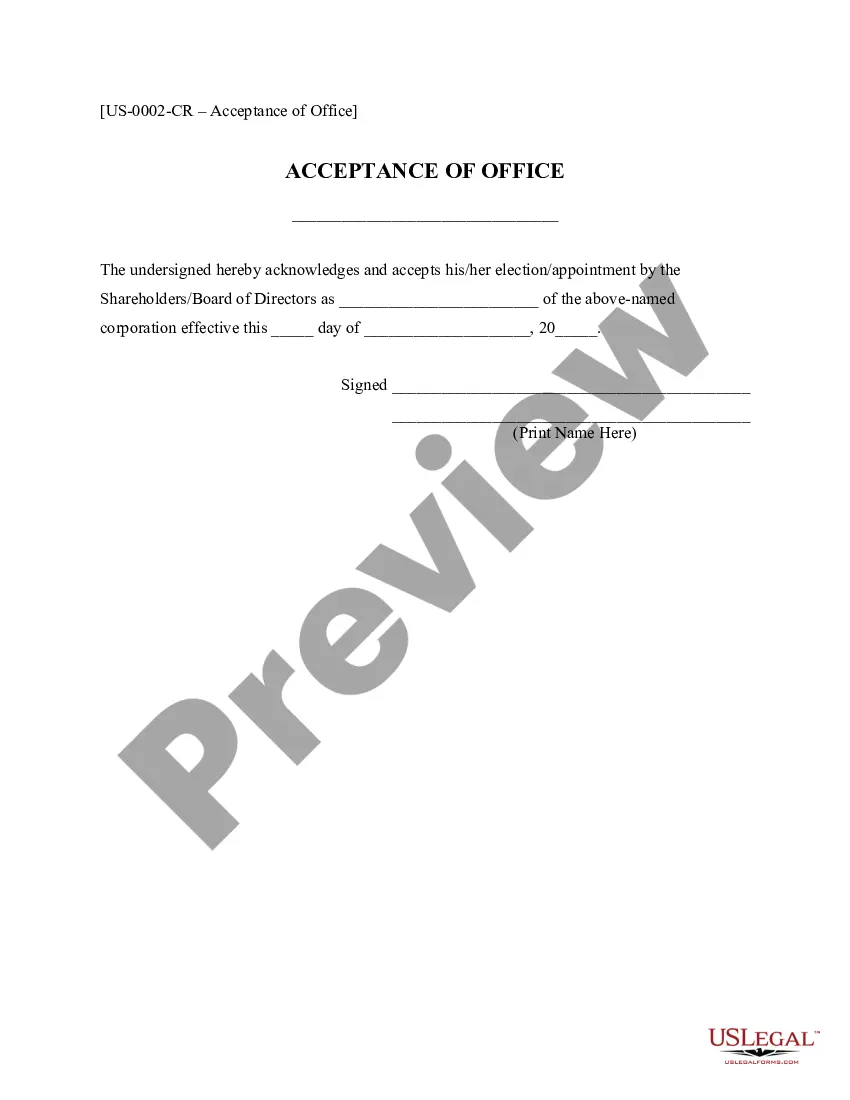

Get your form ready online
Our built-in tools help you complete, sign, share, and store your documents in one place.
Make edits, fill in missing information, and update formatting in US Legal Forms—just like you would in MS Word.
Download a copy, print it, send it by email, or mail it via USPS—whatever works best for your next step.
Sign and collect signatures with our SignNow integration. Send to multiple recipients, set reminders, and more. Go Premium to unlock E-Sign.
If this form requires notarization, complete it online through a secure video call—no need to meet a notary in person or wait for an appointment.
We protect your documents and personal data by following strict security and privacy standards.

Make edits, fill in missing information, and update formatting in US Legal Forms—just like you would in MS Word.

Download a copy, print it, send it by email, or mail it via USPS—whatever works best for your next step.

Sign and collect signatures with our SignNow integration. Send to multiple recipients, set reminders, and more. Go Premium to unlock E-Sign.

If this form requires notarization, complete it online through a secure video call—no need to meet a notary in person or wait for an appointment.

We protect your documents and personal data by following strict security and privacy standards.
Looking for another form?





Form popularity
FAQ
(1) The articles of a company may confer on its Board of Directors the power to appoint any person, other than a person who fails to get appointed as a director in a general meeting, as an additional director at any time who shall hold office up to the date of the next annual general meeting or the last date on which ...
Get approval to appoint a new director In the case of companies that have adopted Model articles, the appointment of a new director can be approved by way of a simple majority of votes at a board meeting. Alternatively, a written resolution can achieve the same result, but it must be unanimous.
Directors are appointed through a resolution passed at a General Meeting, either an AGM or an EGM, as per company needs. What is a Director Identification Number (DIN)? DIN is a unique identifier required for anyone looking to be appointed as a director, ensuring legal compliance.
Pursuant to the provisions of Section 152 (2) of the Companies Act, 2013, every Director shall be appointed in a General Meeting by way of Ordinary Resolution. Hence, the proposed resolution is recommended for the consideration and approval of the Members of the Company.
The company may pass a resolution to appoint a director in an Annual General Meeting (AGM). If the company decides to appoint a director in the middle of the year, it may appoint a director by passing a resolution in an Extraordinary General Meeting (EGM).
Pursuant to the provisions of Section 152 (2) of the Companies Act, 2013, every Director shall be appointed in a General Meeting by way of Ordinary Resolution. Hence, the proposed resolution is recommended for the consideration and approval of the Members of the Company.
Board of directors In the case of companies that have adopted Model articles, the appointment of a new director can be approved by way of a simple majority of votes at a board meeting. Alternatively, a written resolution can achieve the same result, but it must be unanimous.
If the company decides to appoint a director in the middle of the year, it may appoint a director by passing a resolution in an Extraordinary General Meeting (EGM). In such a case, a company must conduct a board meeting to pass a resolution for conducting an Extraordinary General Meeting (EGM).
Approving the accounts It is also common for a company's articles to permit directors to make decisions by unanimous written resolution (eg see Article 8 of the model articles for a private company limited by shares) and, therefore, it may be possible for them to approve a company's accounts in this way.

