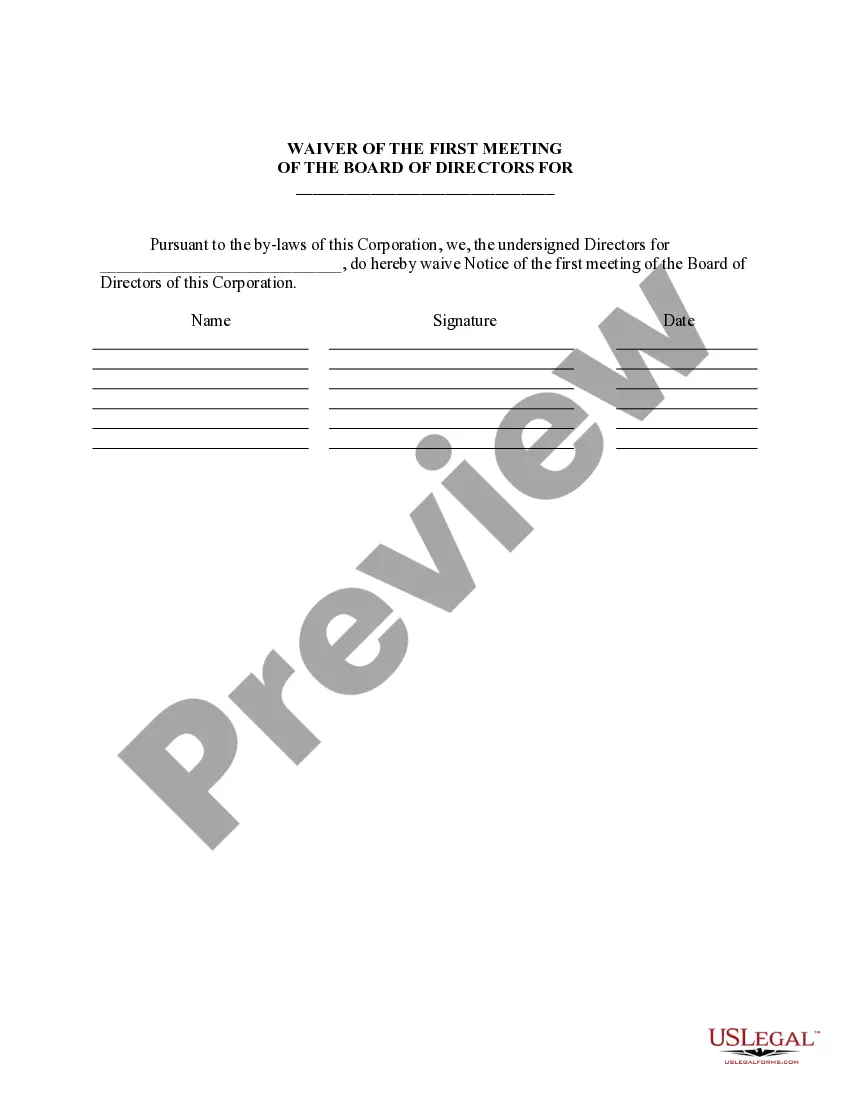
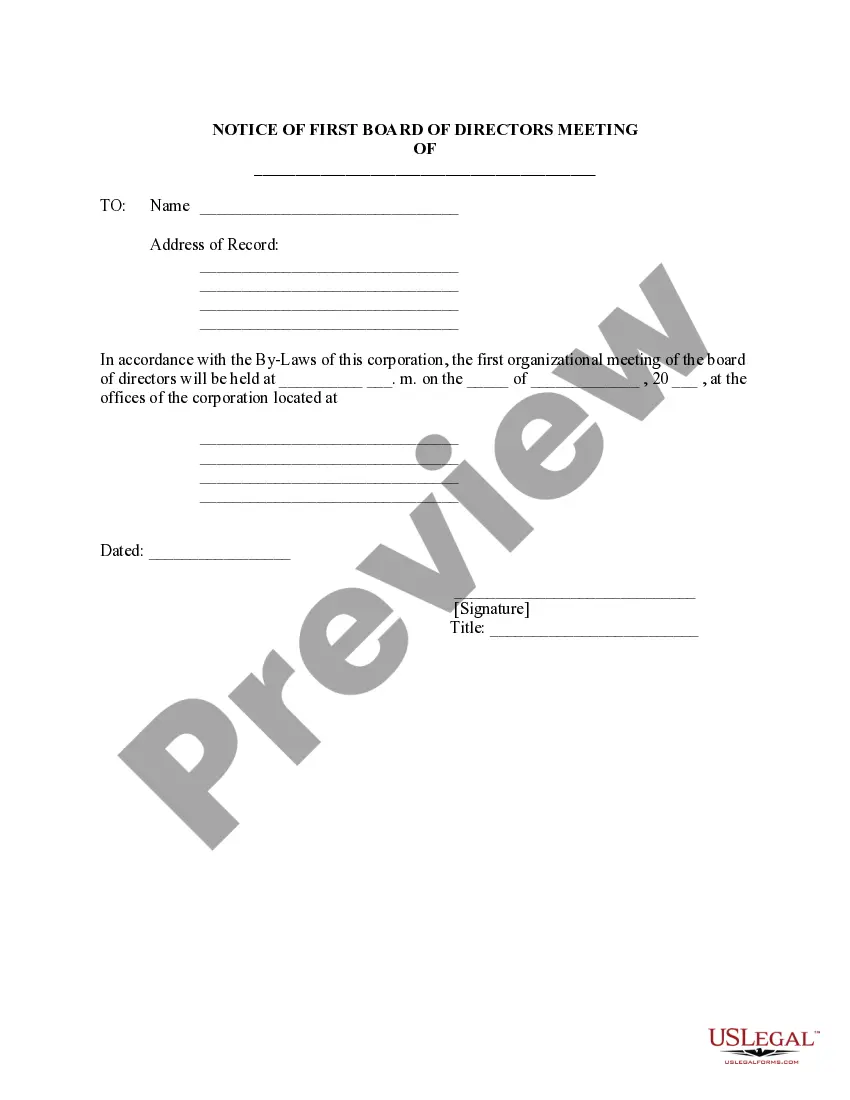
Board Directors Corporate Without In North Carolina
Description


Get your form ready online
Our built-in tools help you complete, sign, share, and store your documents in one place.
Make edits, fill in missing information, and update formatting in US Legal Forms—just like you would in MS Word.
Download a copy, print it, send it by email, or mail it via USPS—whatever works best for your next step.
Sign and collect signatures with our SignNow integration. Send to multiple recipients, set reminders, and more. Go Premium to unlock E-Sign.
If this form requires notarization, complete it online through a secure video call—no need to meet a notary in person or wait for an appointment.
We protect your documents and personal data by following strict security and privacy standards.

Make edits, fill in missing information, and update formatting in US Legal Forms—just like you would in MS Word.

Download a copy, print it, send it by email, or mail it via USPS—whatever works best for your next step.

Sign and collect signatures with our SignNow integration. Send to multiple recipients, set reminders, and more. Go Premium to unlock E-Sign.

If this form requires notarization, complete it online through a secure video call—no need to meet a notary in person or wait for an appointment.

We protect your documents and personal data by following strict security and privacy standards.
Looking for another form?
Form popularity
FAQ
A company that has no directors can be struck off. This would have serious implications for the building, as there would be no management, and it could be hard to sell any flats in the building. The process for striking off does not occur immediately.
Steps in becoming a board member Identify an organization you're interested in serving. If you are already a volunteer in an organization, you might investigate the possibility of joining its board. Contact the organization. Exchange information. Understand the expectations. Moving forward.
You might think that a board of directors is something that only big companies have, but all S corporations and C corporations—even small businesses—are legally required to have boards of directors.
Consider creating a project or program within another organization rather than spending your time and energy establishing a new organization. Board of Directors. North Carolina law requires only one board member, but best practices recommend that you have at least five; a minimum of seven is preferable.
A corporation must have a board of directors if it is required to do so by its state of incorporation or by its governing documents. For example, a publicly traded company will almost always have a board of directors.
If your business is a corporation, then you are required by law to have a board of directors. Depending on your particular corporate structure and your state, one or two directors may be all that's legally required.
Becoming a member of a board of directors requires a combination of relevant experience, a nomination and election process, and adherence to the organization's governance policies. Networking and demonstrating expertise in relevant areas can also enhance one's chances of being considered for a board position.
All corporations, regardless of the state, must have a shareholder-elected Board of Directors. An LLC is not required to have a Board of Directors, but can adopt this form of management if the members (the owners of the LLC) choose to do so.
Action without meeting. (a) Unless the articles of incorporation or bylaws provide otherwise, action required or permitted by this Chapter to be taken at a board of directors' meeting may be taken without a meeting if the action is taken by all members of the board.