Notice Stockholders Meeting For Windows In Wake
Description
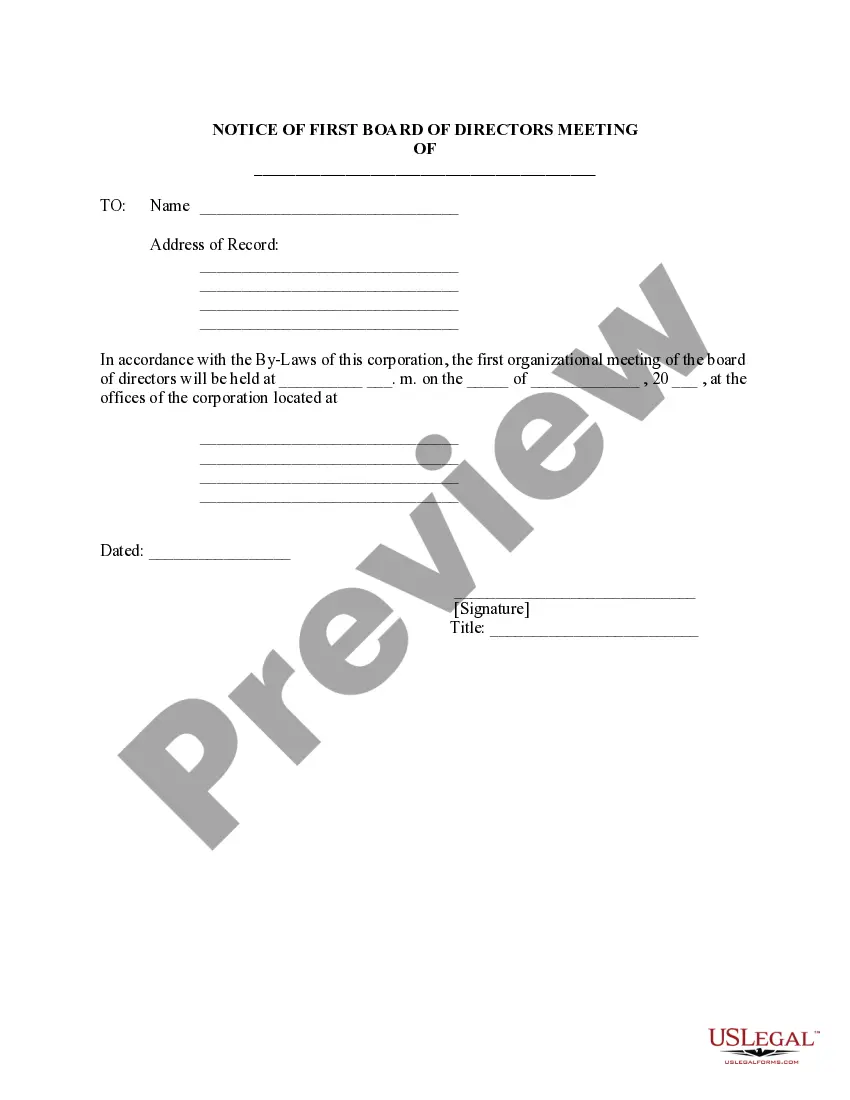


Get your form ready online
Our built-in tools help you complete, sign, share, and store your documents in one place.
Make edits, fill in missing information, and update formatting in US Legal Forms—just like you would in MS Word.
Download a copy, print it, send it by email, or mail it via USPS—whatever works best for your next step.
Sign and collect signatures with our SignNow integration. Send to multiple recipients, set reminders, and more. Go Premium to unlock E-Sign.
If this form requires notarization, complete it online through a secure video call—no need to meet a notary in person or wait for an appointment.
We protect your documents and personal data by following strict security and privacy standards.

Make edits, fill in missing information, and update formatting in US Legal Forms—just like you would in MS Word.

Download a copy, print it, send it by email, or mail it via USPS—whatever works best for your next step.

Sign and collect signatures with our SignNow integration. Send to multiple recipients, set reminders, and more. Go Premium to unlock E-Sign.

If this form requires notarization, complete it online through a secure video call—no need to meet a notary in person or wait for an appointment.

We protect your documents and personal data by following strict security and privacy standards.
Looking for another form?





Form popularity
FAQ
The general meeting called within six months of the end of the previous fiscal year is known as the “annual” general meeting (or “AGM”). If a general meeting is held outside that time frame, it is “extraordinary” (“EGM”) and meant to address urgent or pressing matters that couldn't be settled at the AGM.
In general, companies require a letter or similar notification from investors having a sufficient number of shares, demanding a special meeting and stating the purpose for that meeting. The company can then set the date for the meeting, typically within a 30 to 90 day time period after receipt of the demand.
Section 601 - Notice of shareholders' meeting or report (a) Whenever shareholders are required or permitted to take any action at a meeting a written notice of the meeting shall be given not less than 10 (or, if sent by third-class mail, 30) nor more than 60 days before the date of the meeting to each shareholder ...
Of course, shareholders have a legal right to attend annual meetings. It is, after all, the one time each year they have an opportunity to sit in the same room with representatives from the company.
In contrast, a special board meeting is a meeting that is not scheduled well in advance and is called by someone – authorized either under the law or the organization's bylaws – for a special purpose.
The special meeting aims to enable the shareholders to know the company's affairs and vote on the management's recommendations in the proposed resolution. The shareholders are equally essential in the decision-making process.
Follow these steps to host an annual shareholder meeting. Planning and Preparation. A successful annual shareholder meeting requires detailed preparation. Notification to Shareholders. Organize the Meeting Logistics. Conducting the Meeting. Post-Meeting Follow-Up.
An Extraordinary General Meeting (EGM) is an urgent meeting called to address pressing company issues or emergencies. These matters require the immediate attention of the board, shareholders and senior company executives. An EGM is also referred to as a special general meeting or an emergency general meeting.
Board directors and shareholders are the only members of the company that can make company resolutions. When the board of directors make a formal decision, it is referred to as a board resolution, whereas when the company shareholders make a formal decision, it is referred to as a shareholder resolution.
Annual General Meeting (AGM) During these meetings, corporate board members present annual financial reports and accounts to be ratified by shareholders. Shareholders can also question board decisions and vote on the appointment, election, or removal of company directors.

