Annual Shareholder Meeting Form In Suffolk
Description



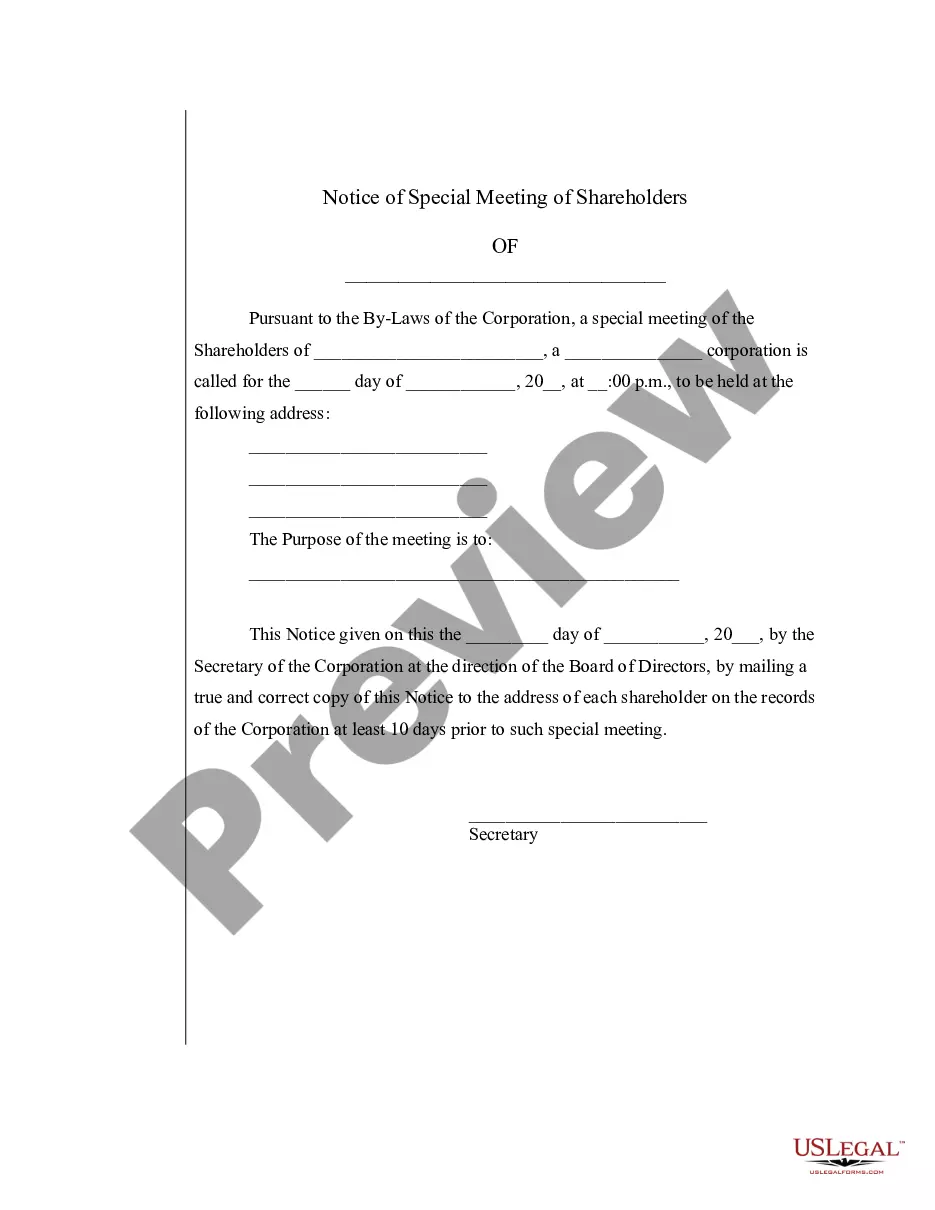
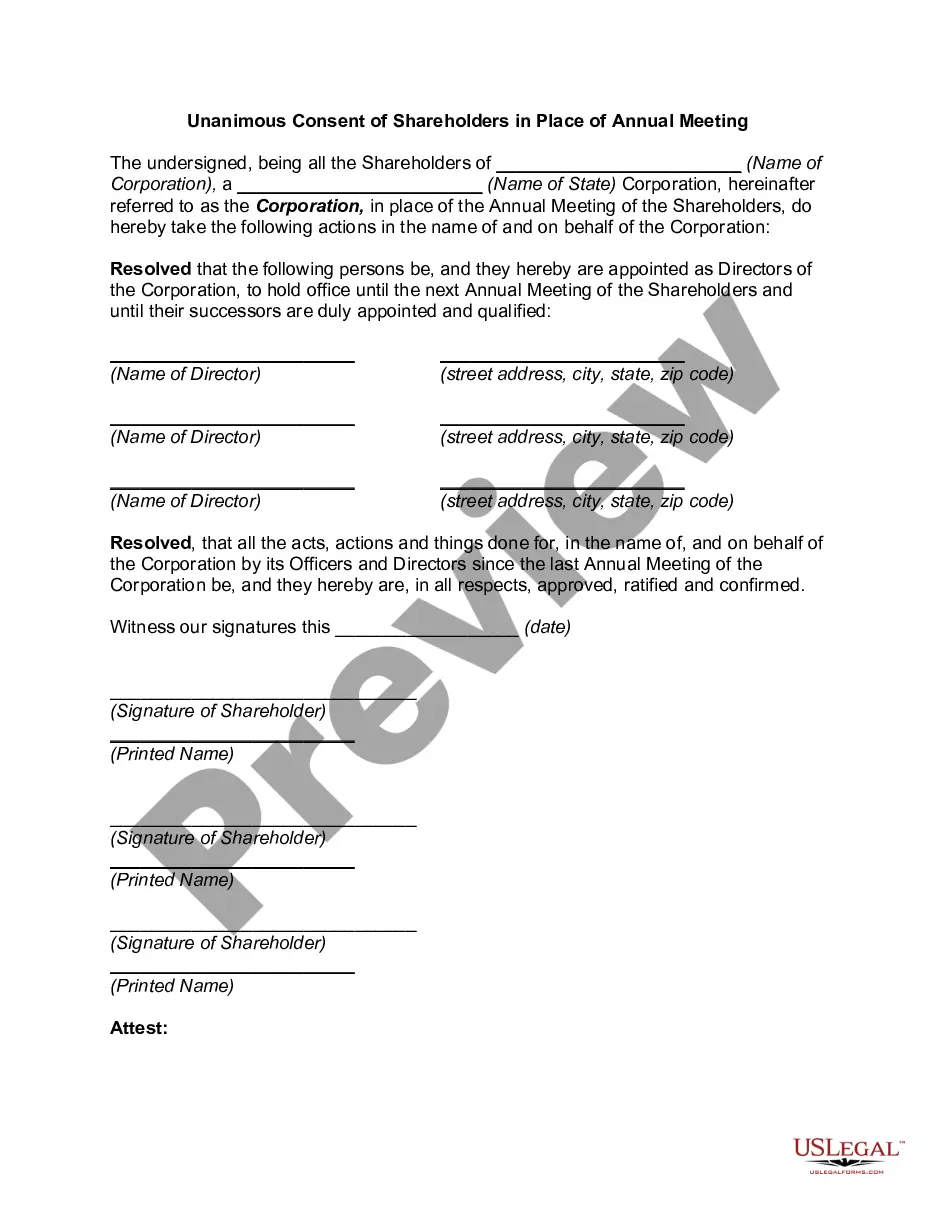
Get your form ready online
Our built-in tools help you complete, sign, share, and store your documents in one place.
Make edits, fill in missing information, and update formatting in US Legal Forms—just like you would in MS Word.
Download a copy, print it, send it by email, or mail it via USPS—whatever works best for your next step.
Sign and collect signatures with our SignNow integration. Send to multiple recipients, set reminders, and more. Go Premium to unlock E-Sign.
If this form requires notarization, complete it online through a secure video call—no need to meet a notary in person or wait for an appointment.
We protect your documents and personal data by following strict security and privacy standards.

Make edits, fill in missing information, and update formatting in US Legal Forms—just like you would in MS Word.

Download a copy, print it, send it by email, or mail it via USPS—whatever works best for your next step.

Sign and collect signatures with our SignNow integration. Send to multiple recipients, set reminders, and more. Go Premium to unlock E-Sign.

If this form requires notarization, complete it online through a secure video call—no need to meet a notary in person or wait for an appointment.

We protect your documents and personal data by following strict security and privacy standards.
Looking for another form?

Form popularity
FAQ
An Annual General Meeting (AGM) is a yearly gathering where a company's shareholders and board of directors meet to discuss important aspects of the company. At the AGM, the directors present an annual report to update shareholders on the company's performance, strategy, and management.
The terms “Annual General Meeting” and “annual meeting” are frequently used interchangeably, though they can have distinct meanings. An AGM specifically refers to a formal meeting held by organizations, such as corporations or nonprofits, where key issues are discussed.
Not complying with regulations regarding annual shareholder meetings can put your company, and its owners, at personal risk for liability.
Menu Inversionistas. In ance with the current Statutes, two types of general assemblies can be held: ordinary and extraordinary. Ordinary general shareholders meetings are those convened to discuss any matter that is not reserved for extraordinary general shareholders meetings.
A General Meeting is simply a meeting of shareholders and 21 days' notice must be given to shareholders, but this can be reduced to 14 days, or increased to 28 days, in certain situations.
General meetings include any meetings of members (usually shareholders) such as annual general meetings (AGMs), meetings of different classes of members and creditors' meetings.
Prepare copies of the meeting agenda and any relevant reports (financial statements, proxy statements, etc.) for attendees, either in physical form or through a secure online portal. Determine the voting method (electronic voting platform, paper ballots, etc.) and ensure everyone understands the process.
A company's annual shareholder meeting is a fundamental part of sound corporate governance. These formal gatherings provide the perfect opportunity for shareholders (also known as stakeholders) and the board of directors to take stock of the current business and discuss potential paths forward for the organization.
An AGM meeting, also known as an 'Annual General Meeting', or simply 'AGM', is an instrumental meeting in which all of the shareholders of an organisation meet and discuss aspects of the company. Several key activities take place, and this is the primary event through which companies engage in the democratic process.
Annual General Meeting is a statutory requirement for Private Limited Company and Limited Company in India. Every Company whether, public or private, limited by shares or guarantee, with or without share capital or unlimited company is required to hold an AGM every year.

