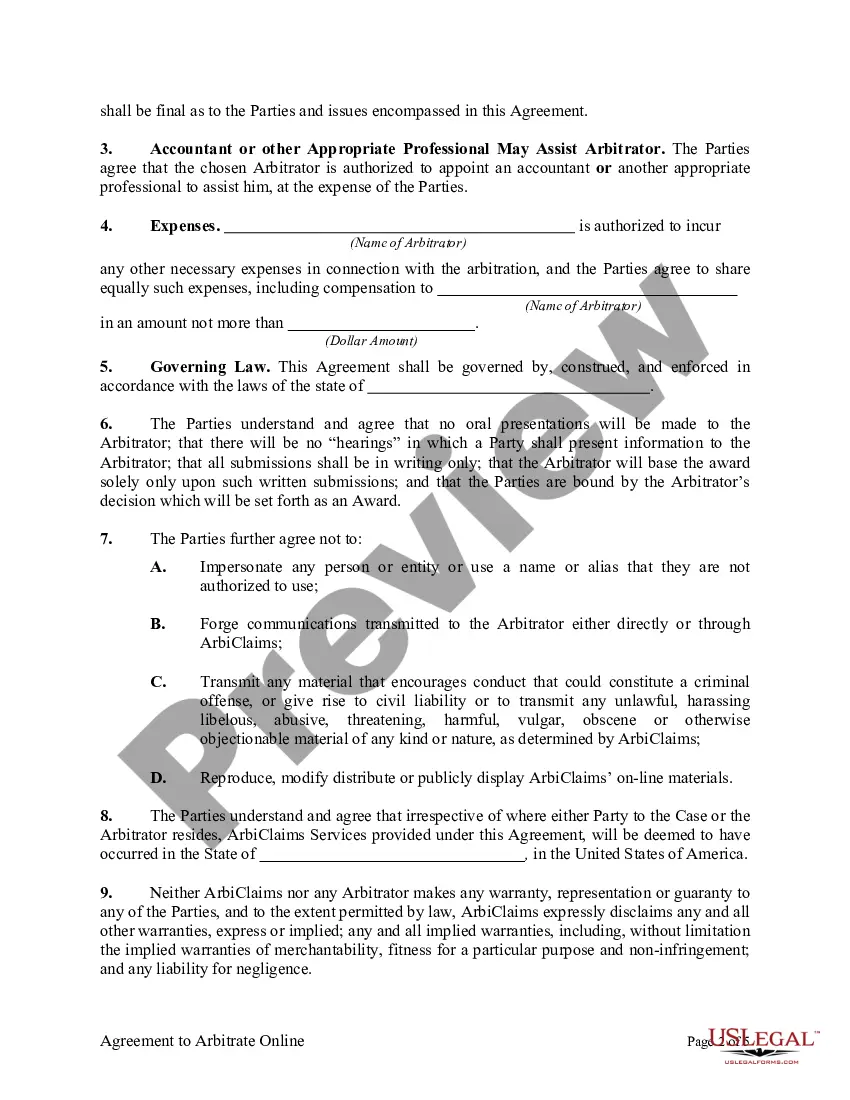
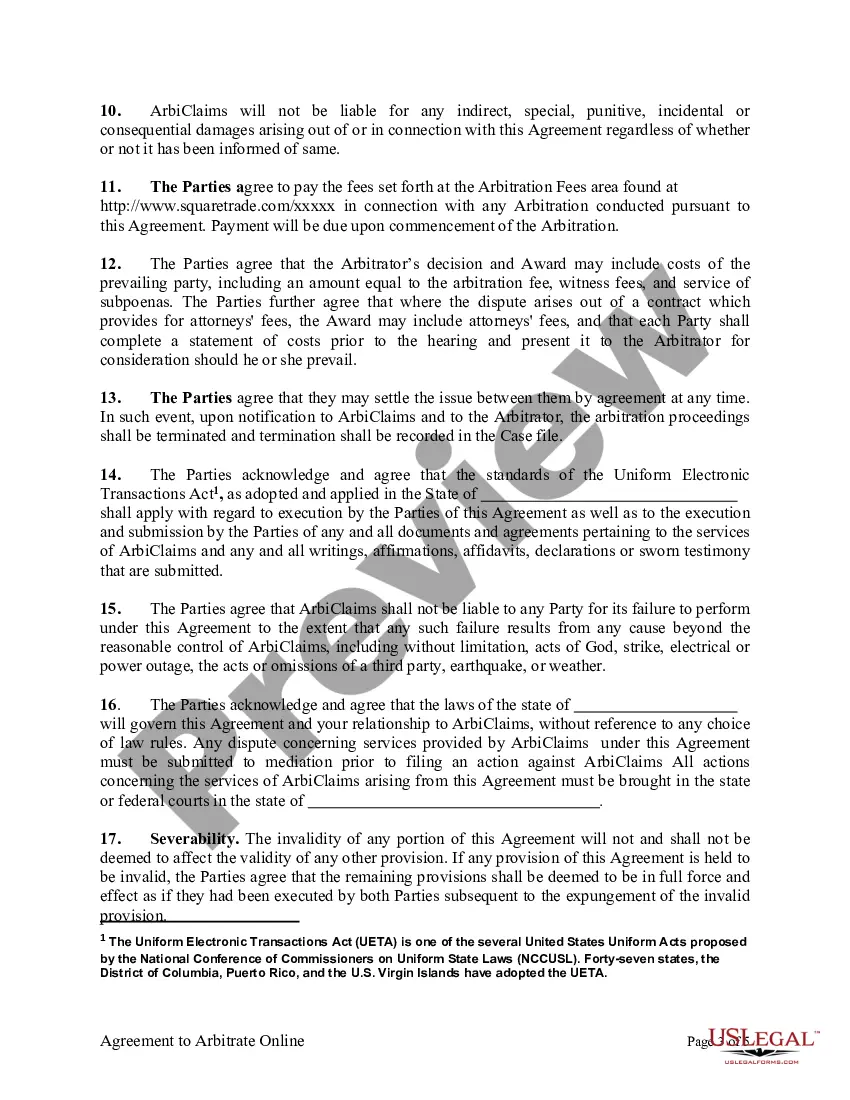
Agreement Arbitrate Document With Insurance Company In Illinois
Description





Get your form ready online
Our built-in tools help you complete, sign, share, and store your documents in one place.
Make edits, fill in missing information, and update formatting in US Legal Forms—just like you would in MS Word.
Download a copy, print it, send it by email, or mail it via USPS—whatever works best for your next step.
Sign and collect signatures with our SignNow integration. Send to multiple recipients, set reminders, and more. Go Premium to unlock E-Sign.
If this form requires notarization, complete it online through a secure video call—no need to meet a notary in person or wait for an appointment.
We protect your documents and personal data by following strict security and privacy standards.

Make edits, fill in missing information, and update formatting in US Legal Forms—just like you would in MS Word.

Download a copy, print it, send it by email, or mail it via USPS—whatever works best for your next step.

Sign and collect signatures with our SignNow integration. Send to multiple recipients, set reminders, and more. Go Premium to unlock E-Sign.

If this form requires notarization, complete it online through a secure video call—no need to meet a notary in person or wait for an appointment.

We protect your documents and personal data by following strict security and privacy standards.
Looking for another form?


Form popularity
FAQ
In voluntary or non-binding arbitration, the insurer and the policyholder agree to meet with an arbitrator to review the claim. Once the arbitrator makes their decision on the claim, both parties then have the option to accept or reject it. If the decision is ultimately denied, the case can then be appealed.
In voluntary or non-binding arbitration, the insurer and the policyholder agree to meet with an arbitrator to review the claim. Once the arbitrator makes their decision on the claim, both parties then have the option to accept or reject it. If the decision is ultimately denied, the case can then be appealed.
The insurance companies might choose to let an arbitrator settle the case when negligence and liability are unclear and ardently contested. This could be the case if: There were no witnesses, or they can no longer be located. The evidence is less than compelling.
If a party signs a contract that includes an arbitration clause, then that clause will generally be enforceable, even if the dispute that results involves personal injury.
States have varying requirements for arbitrators, but most require you to have at least a bachelor's degree in law, political science or a similar field. You can gain experience for this role by completing internships and working in entry-level positions under the supervision of an experienced arbitrator.
A claimant will typically start arbitration by sending a document known as a “request for arbitration” or a “notice to arbitrate” to its opponent.
While it is true that arbitration is generally private because the public is excluded from the arbitration hearing, it does not follow that the arbitration proceedings remain confidential.
A claimant will typically start arbitration by sending a document known as a “request for arbitration” or a “notice to arbitrate” to its opponent.
