Agreement Arbitrate Sample With No Experience In Arizona
Description






Form popularity
FAQ
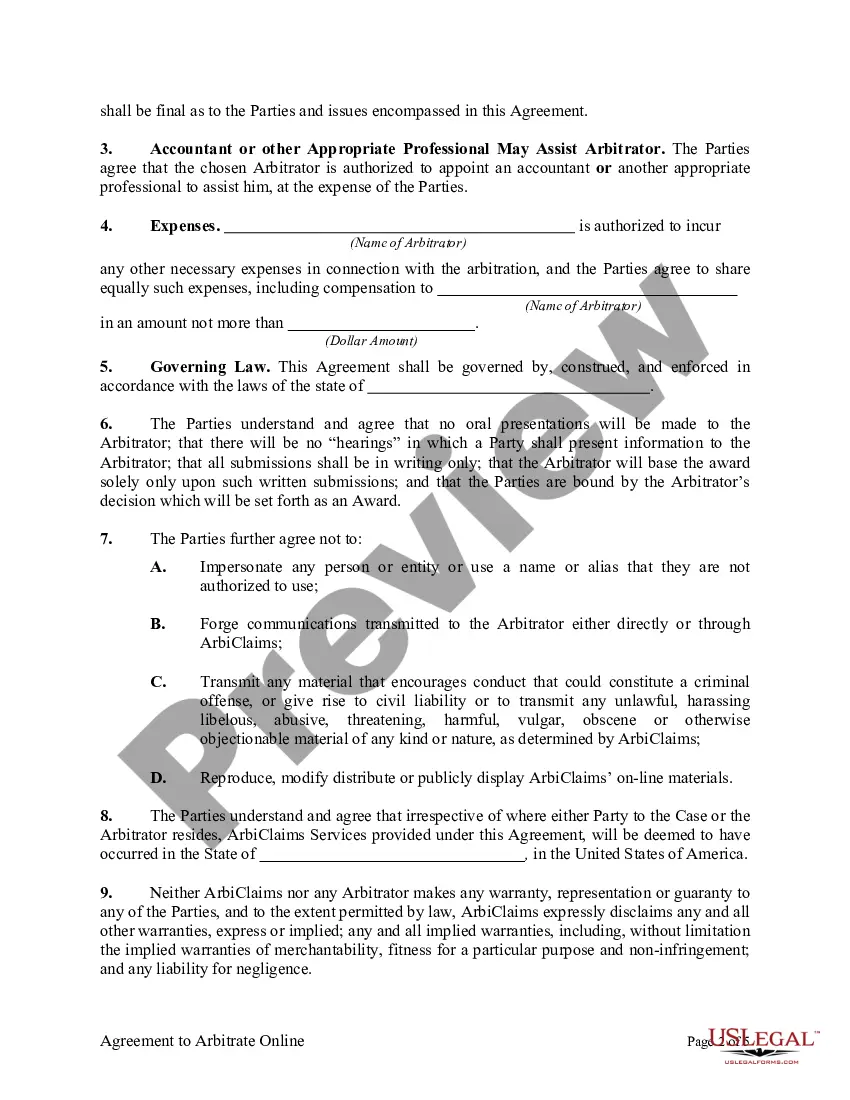
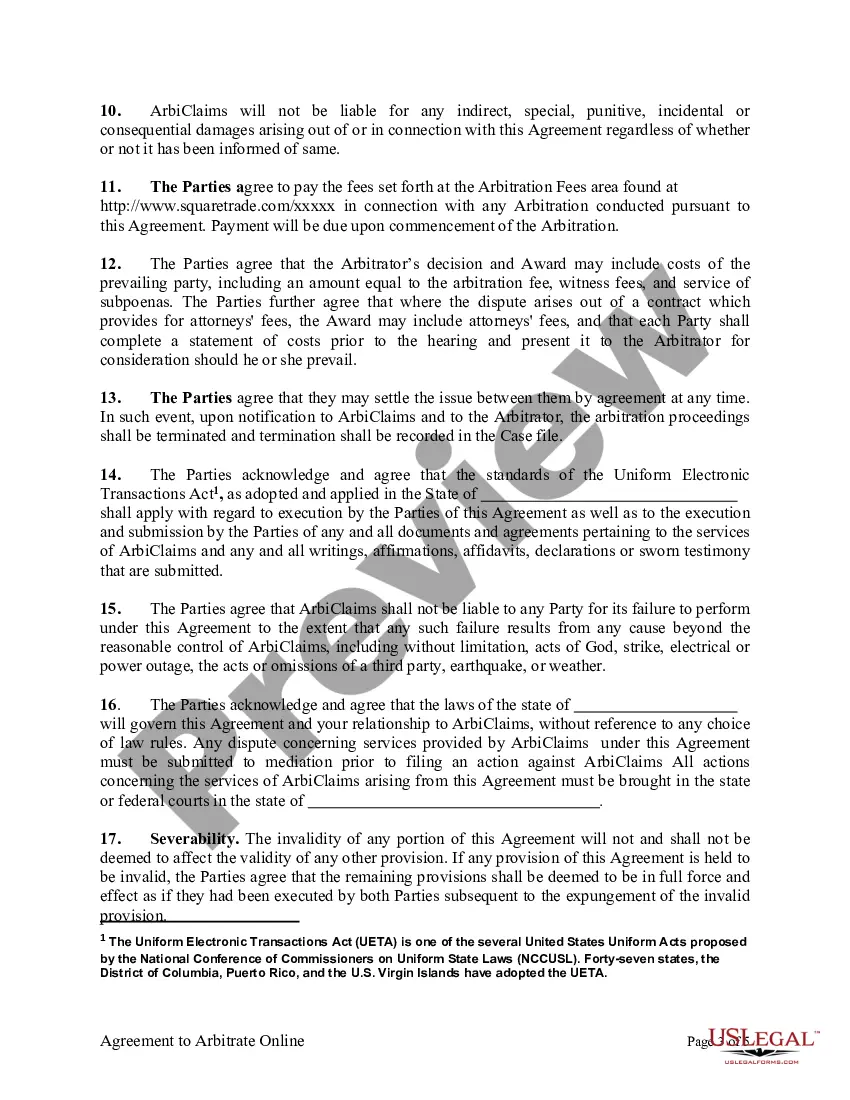
An arbitration clause should clearly set forth (1) whether the submission of a dispute to arbitration is mandatory or optional, (2) what disputes will be arbitrated, (3) whether a court or arbitrator will decide whether the arbitration agreement is enforceable, (4) the rules that will govern the arbitration, (5) ...
"A dispute having arisen between the parties concerning , the parties hereby agree that the dispute shall be referred to and finally resolved by arbitration under the LCIA Rules. The number of arbitrators shall be one/three. The seat, or legal place, of arbitration shall be City and/or Country.
An example of a mandatory arbitration clause UberEATS imposes on its delivery workers: “This Arbitration Provision requires all such claims to be resolved only by an arbitrator through final and binding individual arbitration and not by way of court or jury trial.”
“Any dispute arising out of or incidental or in connection with this Contract / Agreement, including any question regarding its existence, operation, termination, validity or breach thereof, shall be referred to and finally resolved by Arbitration administered by 'Hyderabad Arbitration Centre' (HAC), in ance with ...
"A dispute having arisen between the parties concerning , the parties hereby agree that the dispute shall be referred to and finally resolved by arbitration under the LCIA Rules. The number of arbitrators shall be one/three. The seat, or legal place, of arbitration shall be City and/or Country.
The Scope of the Clause. This section of the clause is critical; it sets the boundaries for which disputes the tribunal is authorised to determine. Choice of Rules. The Number of Arbitrators. Appointing Authority. Choice of Venue. The language of the proceedings. Finality. Exclusion of the right of appeal.
Much like the opening statement in a trial, your arbitration statement should lay out what the “evidence” – the written material – will show regarding the proper credit on the project. The Arbitration Statement is not established fact, just your assessment of the material.
There are typically seven stages of the arbitration process: Claimant Files a Claim. Respondent Submits Answer. Parties Select Arbitrators. Parties Attend Initial Prehearing Conference. Parties Exchange Discovery. Parties Attend Hearings. Arbitrators Deliberate and Render Award.
Arizona generally recognizes arbitration agreements as enforceable and irrevocable contracts, absent legal or equitable reasons to justify their unenforceability, where the following elements are present: (1) a mutuality of obligation; (2) formal requirements such as writing and signature; (3) consideration by both ...
The arbitrator's decision usually is legally binding (enforceable by the courts), but it can also be non-binding (only recommended) if that is what the parties have agreed to.
