Arbitration Agreement For Medical Malpractice In Alameda
Description

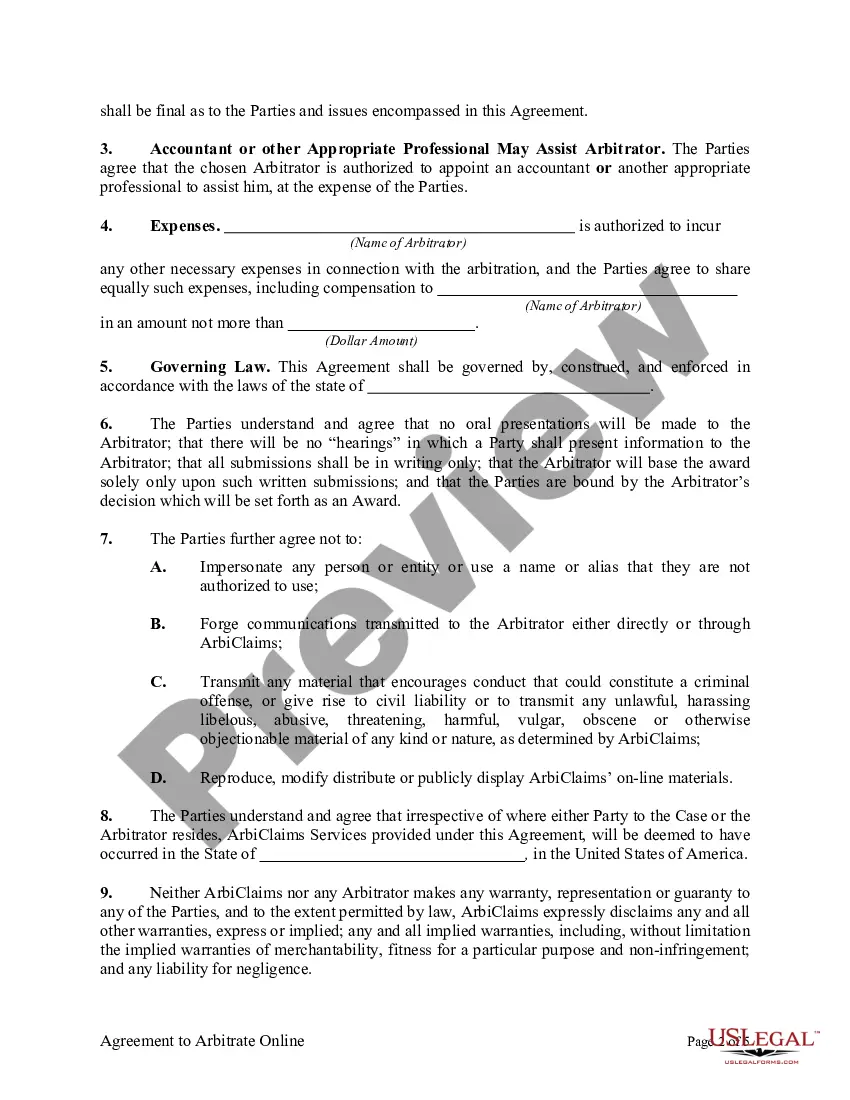
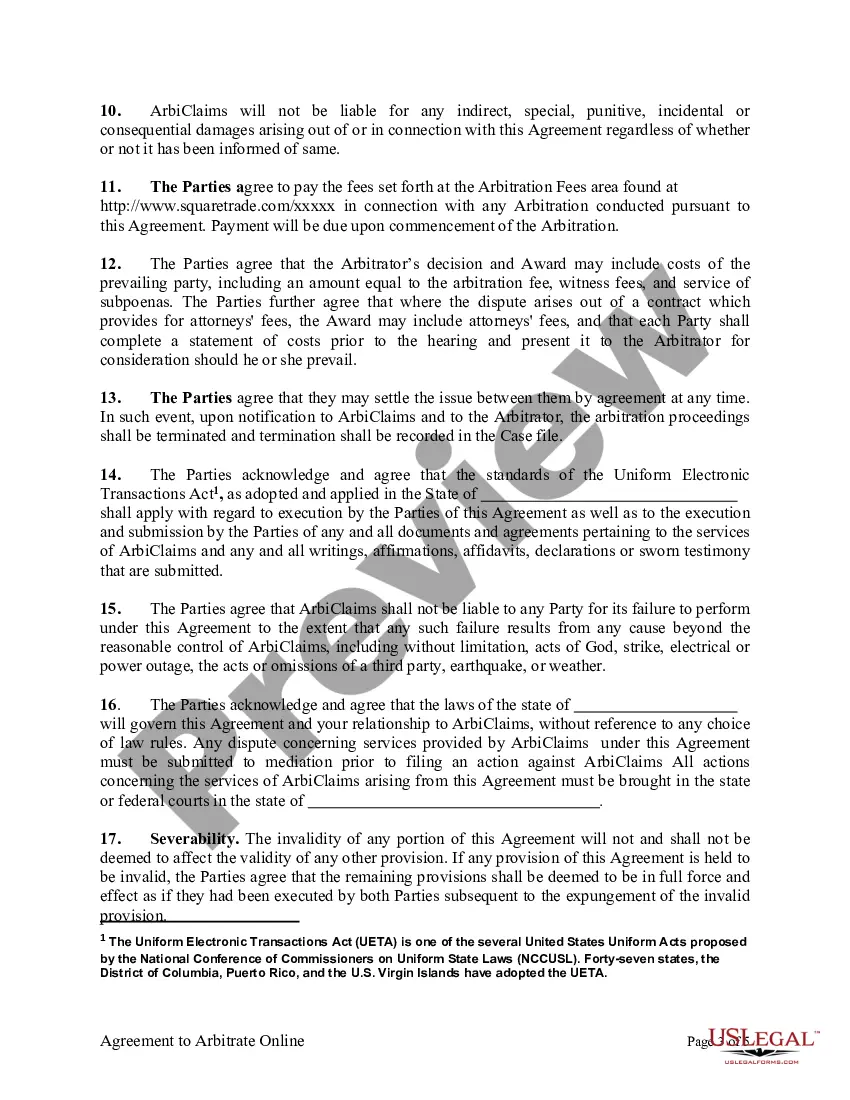




Get your form ready online
Our built-in tools help you complete, sign, share, and store your documents in one place.
Make edits, fill in missing information, and update formatting in US Legal Forms—just like you would in MS Word.
Download a copy, print it, send it by email, or mail it via USPS—whatever works best for your next step.
Sign and collect signatures with our SignNow integration. Send to multiple recipients, set reminders, and more. Go Premium to unlock E-Sign.
If this form requires notarization, complete it online through a secure video call—no need to meet a notary in person or wait for an appointment.
We protect your documents and personal data by following strict security and privacy standards.

Make edits, fill in missing information, and update formatting in US Legal Forms—just like you would in MS Word.

Download a copy, print it, send it by email, or mail it via USPS—whatever works best for your next step.

Sign and collect signatures with our SignNow integration. Send to multiple recipients, set reminders, and more. Go Premium to unlock E-Sign.

If this form requires notarization, complete it online through a secure video call—no need to meet a notary in person or wait for an appointment.

We protect your documents and personal data by following strict security and privacy standards.
Looking for another form?
Form popularity
FAQ
A claimant will typically start arbitration by sending a document known as a “request for arbitration” or a “notice to arbitrate” to its opponent.
Always get straight to the merits without berating the other side or whining about how badly it has treated you. Another threat to your credibility is the “kitchen sink” arbitration demand or a response that includes numerous claims or defenses that have little chance of succeeding.
Under CCP § 583.310, an action must be brought to trial within five years after it is commenced against the defendant. An action “commences” on the date the original complaint is filed with the court against the defendant. If other defendants are later added, those actions will have a different date of commencement.
The current options include different types of arbitration. Some states have voluntary binding and non-binding arbitration; others have mandatory arbitration for all medical malpractice claims, while in others it is mandatory if the damage claims are under a specific amount.
In some instances, you may be able to sue if you signed a valid arbitration agreement. While courts generally favor arbitration agreements, they will allow you to file a lawsuit if either you didn't understand your rights or your claims fall outside the arbitration provision's scope.
FINRA requires investors and other parties to file their arbitration claims via the DR Portal—except for investors representing themselves, who have the option to file by mail. If you are new to the DR Portal, please create an account. Login to the DR Portal and select “File a New Arbitration Claim” in the left column.
A claimant will typically start arbitration by sending a document known as a “request for arbitration” or a “notice to arbitrate” to its opponent.
Healthcare arbitration agreements are written agreements between patients and healthcare providers that state that any dispute that arises will be handled through arbitration. The patients sign the agreement before a procedure or treatment.
Mediation is appealing because it allows parties to reach a collaborative settlement, but it could end in impasse. Arbitration, on the other hand, can wrap up a dispute conclusively, but it doesn't give disputants much say in the outcome.
Mediation does not impose a solution and it is not binding until the parties reach and sign a settlement agreement. If a settlement cannot be reached, the parties are welcome to continue with the arbitration process. Unlike an arbitrator, a mediator has no power to decide a dispute.