Agreement Arbitrate Draft For The Future
Description

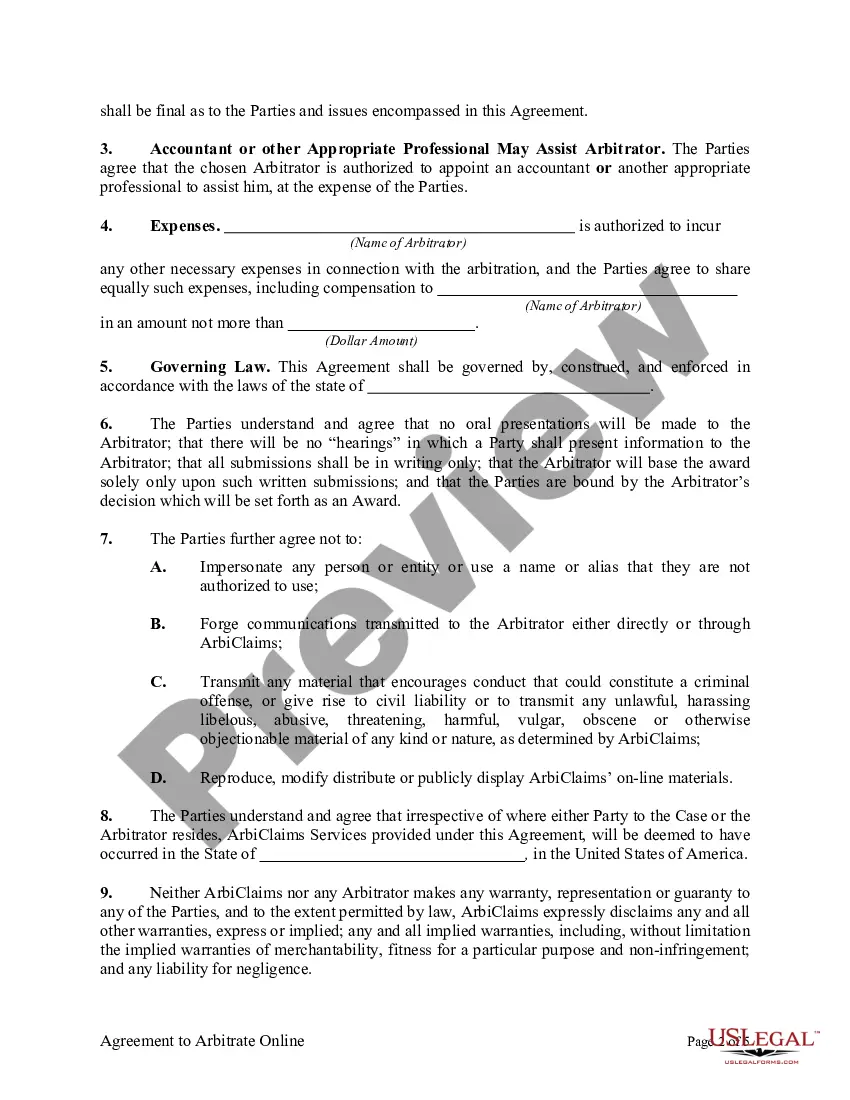
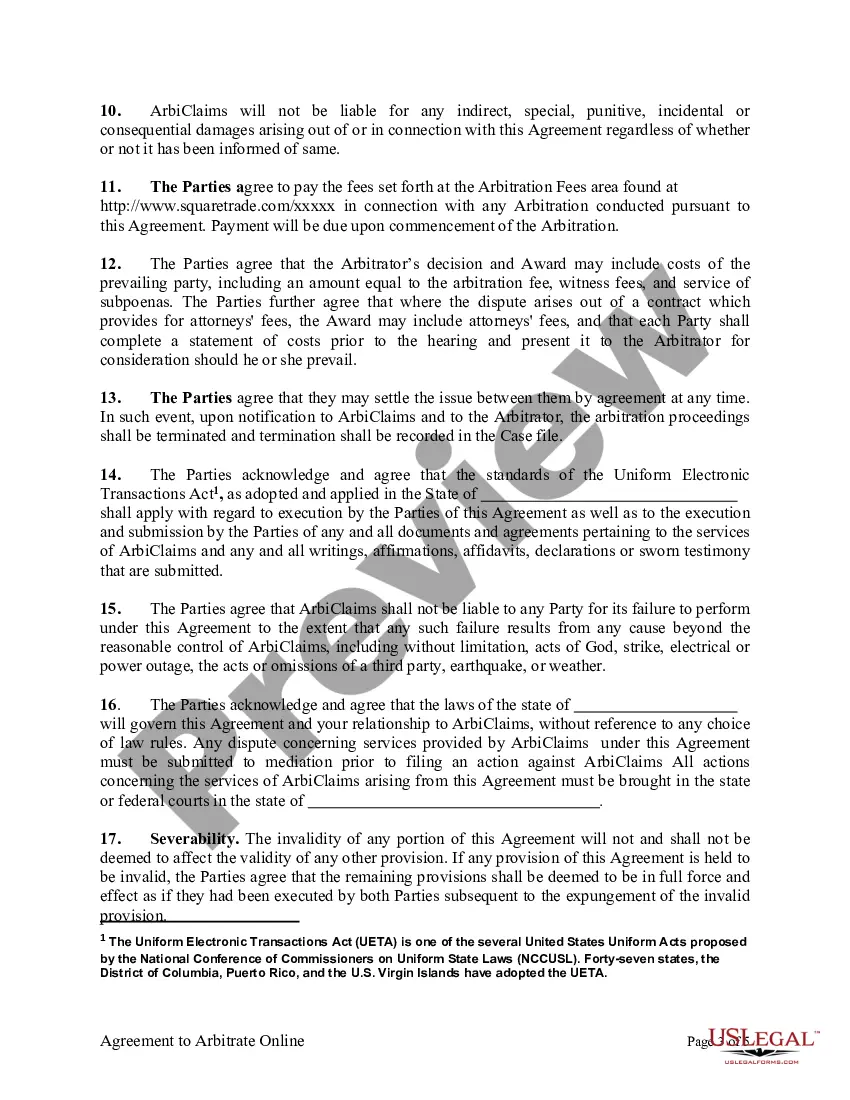

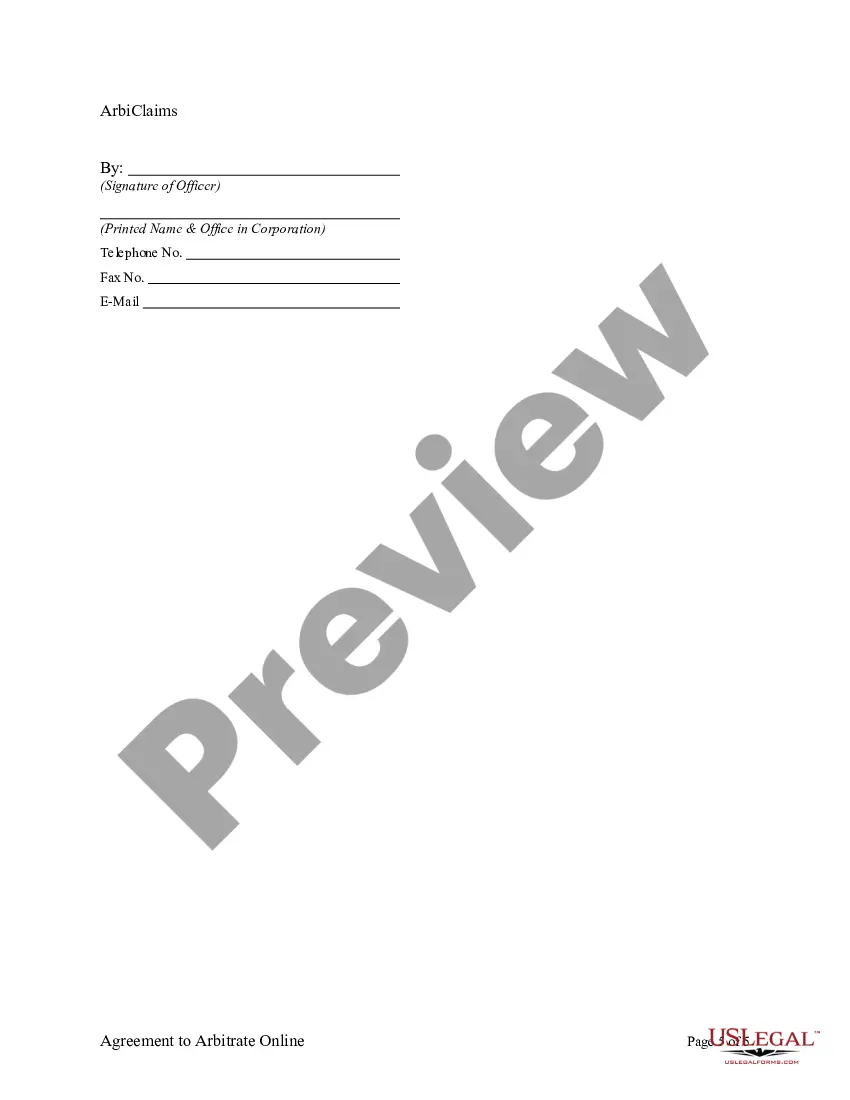








How to fill out Agreement To Arbitrate Online?
- If you're a returning user, log in to your account and download the necessary template by clicking the Download button. Ensure your subscription is active; renew if necessary according to your payment plan.
- For first-time users, start by checking the Preview mode and form description to confirm that you have selected the appropriate document for your needs and that it adheres to jurisdictional requirements.
- If you need a different template, use the Search tab to find the appropriate form. Ensure the new selection meets your criteria before proceeding.
- Purchase the document by clicking the 'Buy Now' button. Opt for a subscription plan that suits your needs and create an account to access the forms library.
- Complete your purchase using your credit card details or PayPal account for the subscription plan.
- Download your completed form to your device and access it anytime via the My Forms section of your profile.
By utilizing US Legal Forms, you ensure that your arbitration agreements are drafted accurately and efficiently. Their extensive library empowers users with the resources needed to create legally sound documents without unnecessary hassle.
Ready to draft your agreement? Explore the benefits of using US Legal Forms today!
Form popularity
FAQ
Finding an arbitration agreement can be straightforward if you know where to look. Start by searching through legal document platforms, like USLegalForms, which offer various templates, including an agreement arbitrate draft for the future. You can also consult with legal professionals who can guide you in drafting an effective agreement tailored to your specific needs. By using these resources, you can secure a solid foundation for resolving future disputes.
Writing an arbitration claim requires a structured approach, starting with the identification of parties and facts surrounding the dispute. Reference the agreement arbitrate draft for the future to support your claims and clearly articulate the relief sought. Use straightforward language to enhance understanding.
To draft an arbitration notice, include the names of the parties, the subject of the arbitration, and a clear statement of the dispute. Reference important timelines and deadlines as stipulated in the agreement arbitrate draft for the future. Provide sufficient details to ensure all parties understand the nature of the arbitration.
Drafting arbitration begins with a thorough understanding of the arbitration process outlined in the agreement arbitrate draft for the future. Ensure that all procedural aspects are covered, including timelines and communication methods. This clarity will facilitate a smoother arbitration experience.
To draft an arbitration agreement, outline the intent of the parties to resolve disputes through arbitration. Include essential terms such as the scope of arbitration, the selection process for arbitrators, and reference the agreement arbitrate draft for the future. Clarity in drafting can prevent misunderstandings later.
Drafting an arbitration claim begins with a detailed account of the dispute and the legal basis for your claims. Incorporate specifics from the agreement arbitrate draft for the future that support your position. Be straightforward and use clear language to outline the relief you seek.
When drafting an arbitration award, clearly state the findings of fact and conclusions of law. Address each issue presented in the arbitration, and reference the agreement arbitrate draft for the future when applicable. Ensure that the award is concise, unambiguous, and includes instructions for enforcement.
To draft a request for arbitration, start with clear identification of the parties involved and the nature of the dispute. Include a statement of the facts, the relief sought, and the relevant provisions of the agreement arbitrate draft for the future. Ensure that your request complies with the arbitration rules applicable to your case.
Arbitration can be a good idea when both parties seek a resolution without lengthy litigation. It provides a private setting, often promoting more open communication. When you approach it with a well-prepared agreement arbitrate draft for the future, it can lead to satisfactory results. Assess your situation and goals to decide if arbitration aligns with your needs.
One downside of arbitration is the limited ability to appeal decisions. This means that if you disagree with the outcome, your options are restricted. Additionally, arbitration may come with fees that can add up. Thus, when creating your agreement arbitrate draft for the future, it’s essential to weigh the pros and cons thoroughly.