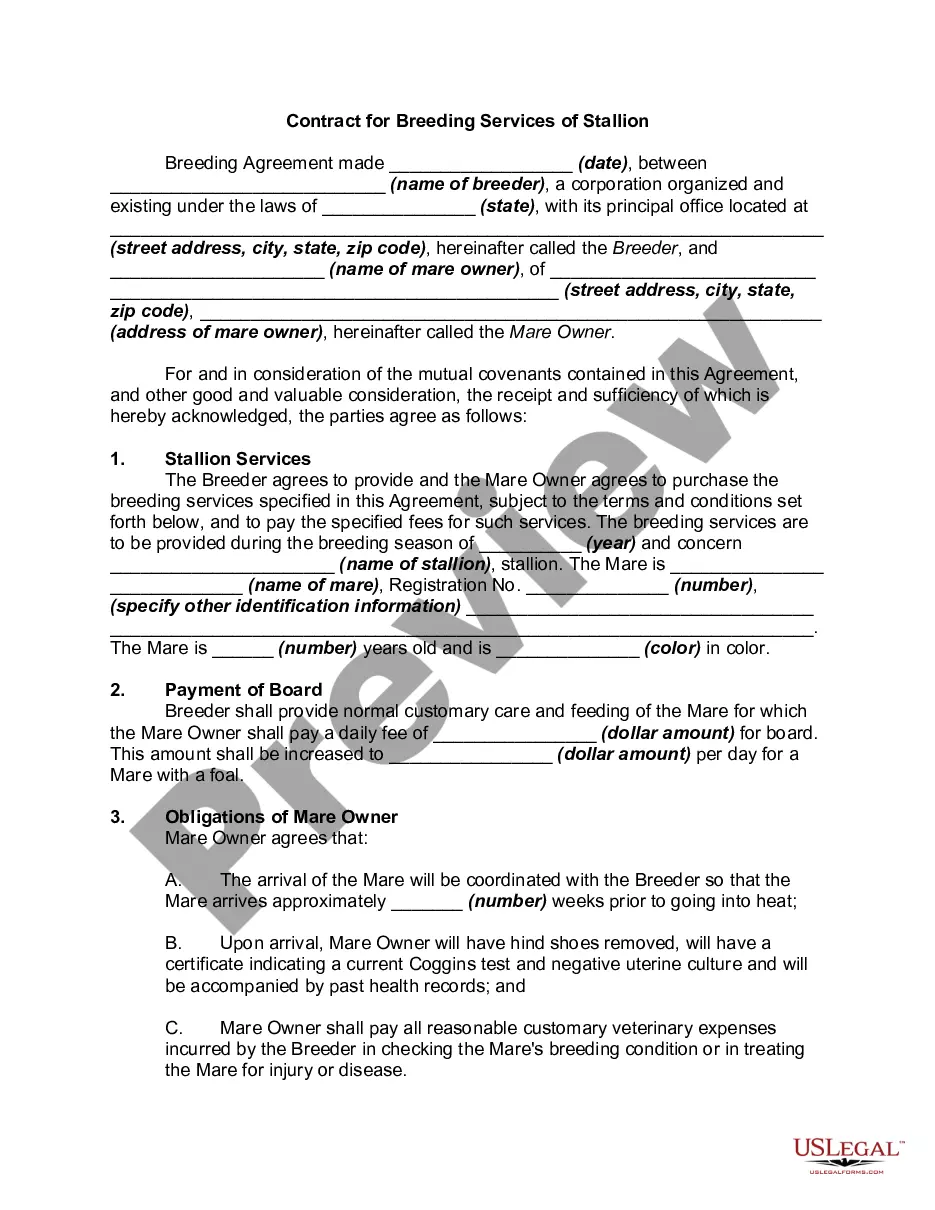
Stallion Breeding Contract Forms In Hennepin
Description
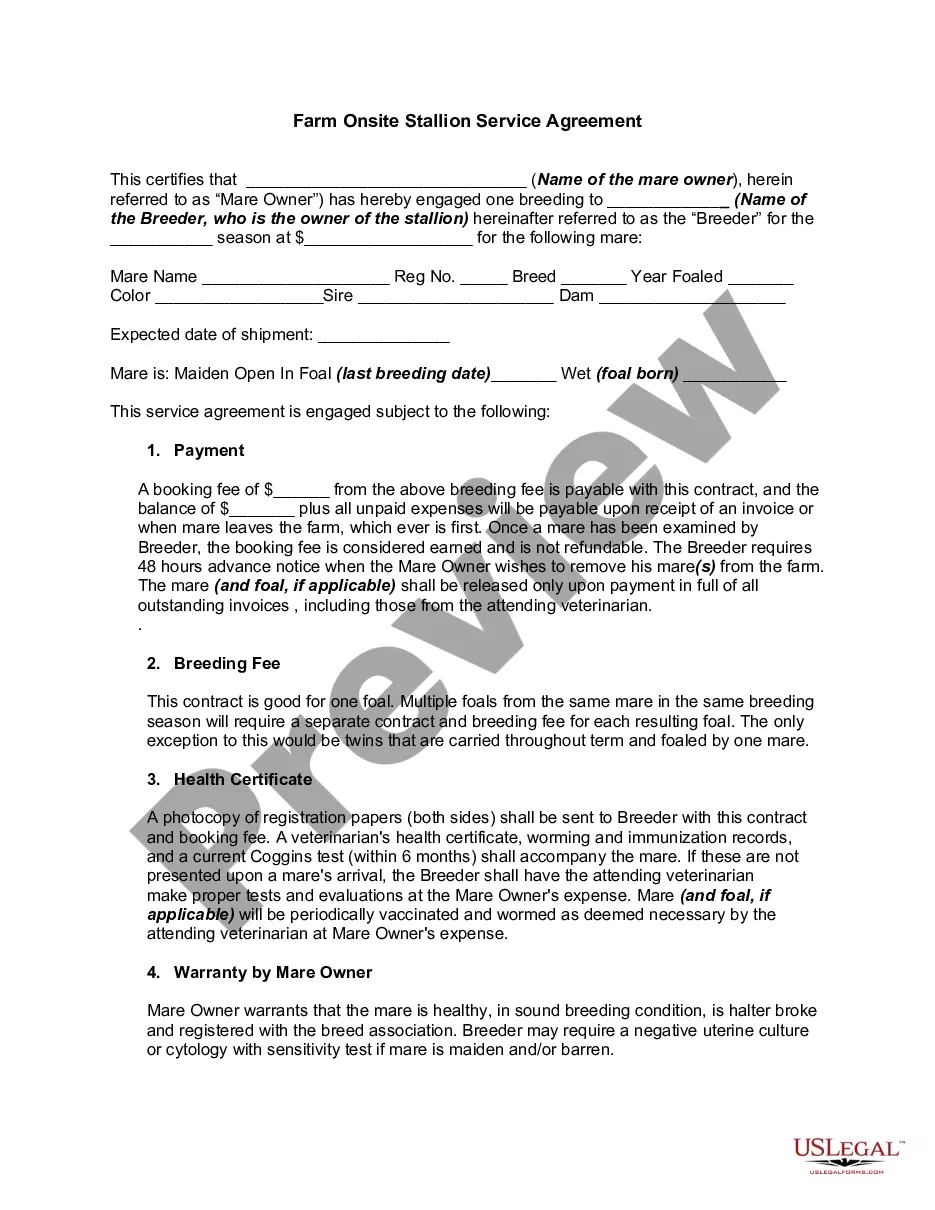
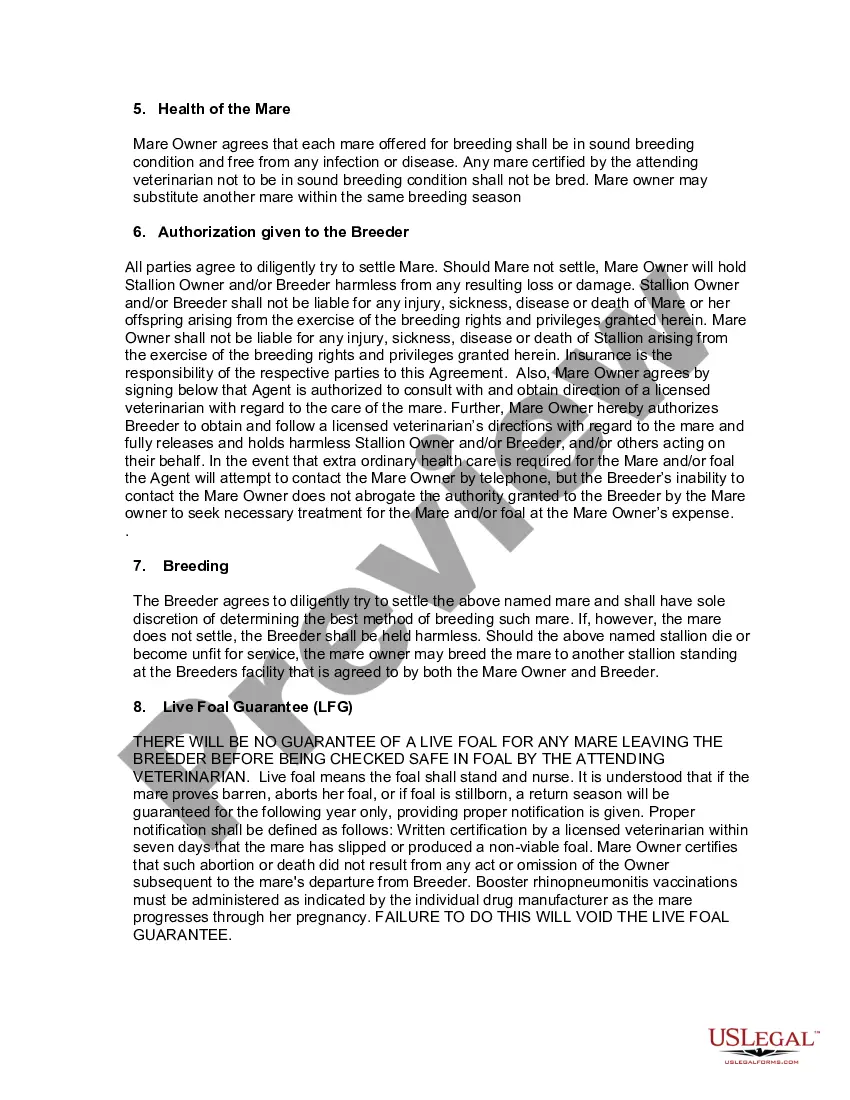
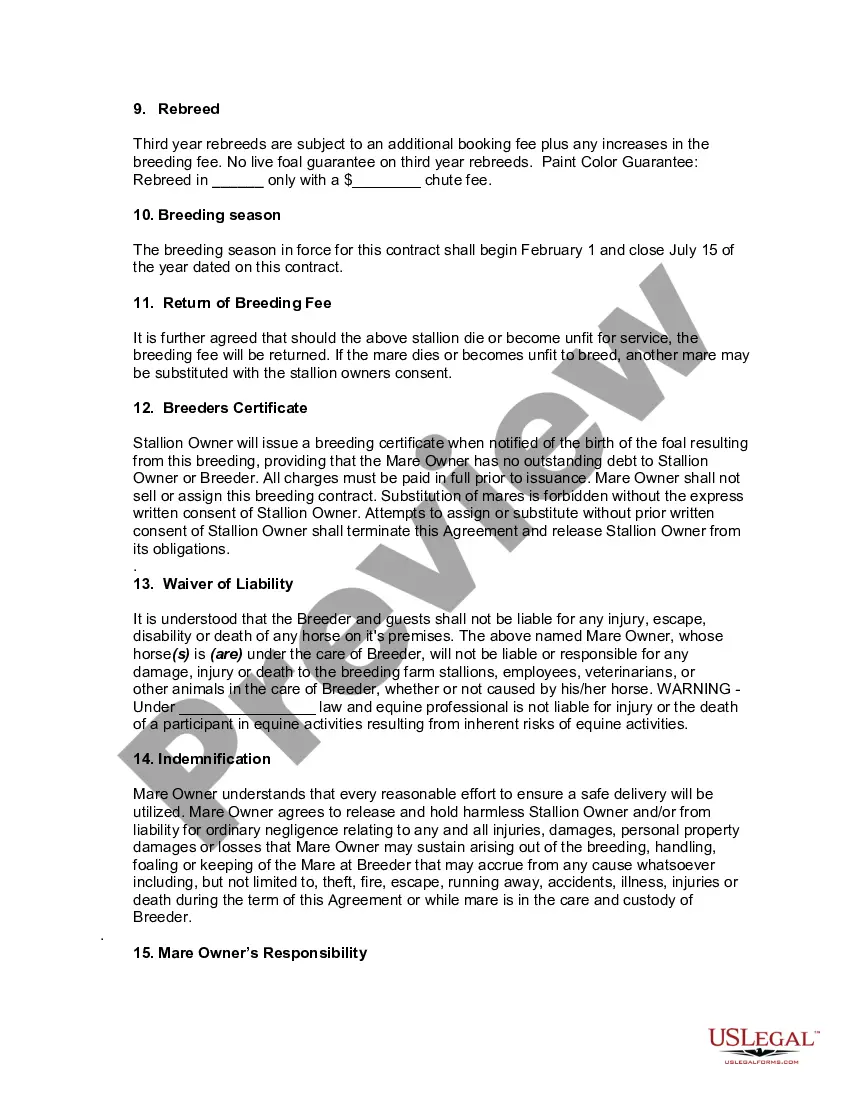
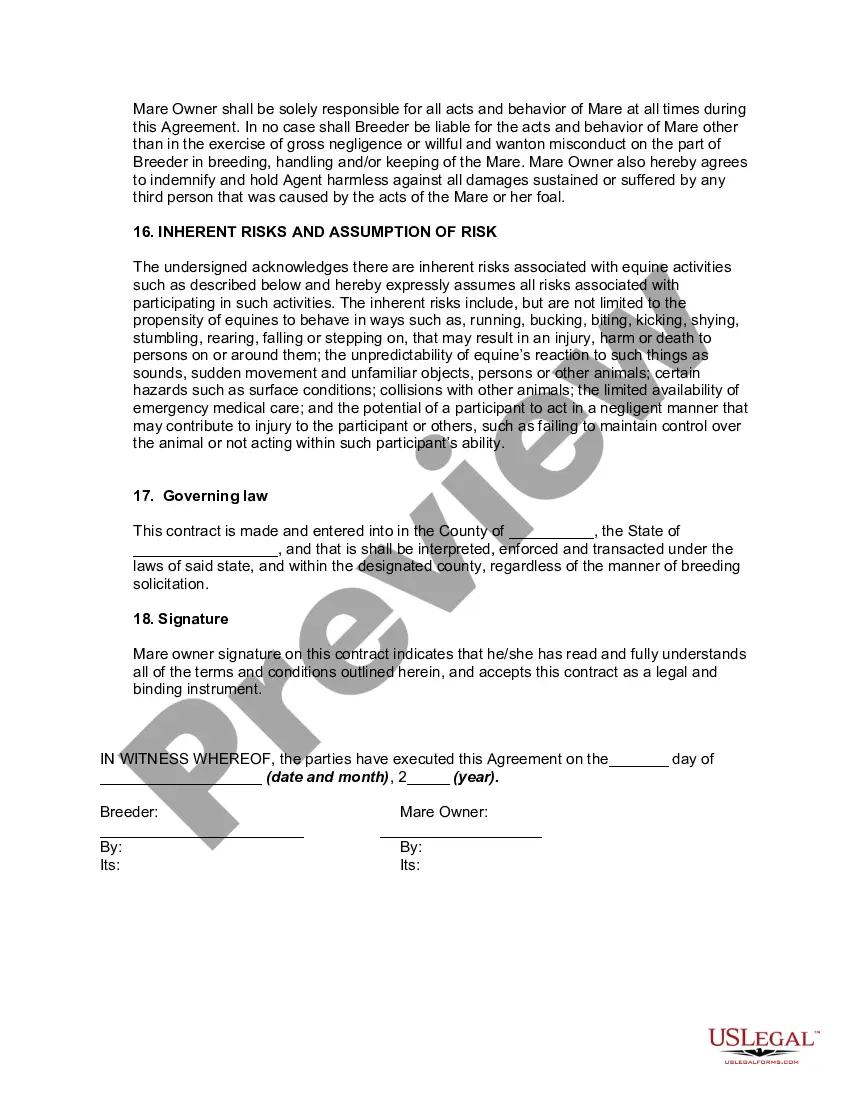
Get your form ready online
Our built-in tools help you complete, sign, share, and store your documents in one place.
Make edits, fill in missing information, and update formatting in US Legal Forms—just like you would in MS Word.
Download a copy, print it, send it by email, or mail it via USPS—whatever works best for your next step.
Sign and collect signatures with our SignNow integration. Send to multiple recipients, set reminders, and more. Go Premium to unlock E-Sign.
If this form requires notarization, complete it online through a secure video call—no need to meet a notary in person or wait for an appointment.
We protect your documents and personal data by following strict security and privacy standards.

Make edits, fill in missing information, and update formatting in US Legal Forms—just like you would in MS Word.

Download a copy, print it, send it by email, or mail it via USPS—whatever works best for your next step.

Sign and collect signatures with our SignNow integration. Send to multiple recipients, set reminders, and more. Go Premium to unlock E-Sign.

If this form requires notarization, complete it online through a secure video call—no need to meet a notary in person or wait for an appointment.

We protect your documents and personal data by following strict security and privacy standards.
Looking for another form?
Form popularity
FAQ
A STALLION SERvICE REPORT must be filed prior to midnight, january 15 of the following year by the recorded owner or recorded lessee at the time of exposure or use of a registered stallion that was exposed to or whose semen was used to inseminate a registered mare anytime during the preceding twelve (12) consecutive ...
It is always important to keep in mind that stallions are originally breed for reproduction and that they are aware of this. It is therefore natural for them to be on the alert when a mare approaches.
A stallion used for breeding is known as a stud. A castrated stallion is commonly called a gelding. Formerly, stallions were employed as riding horses, while mares were kept for breeding purposes only.
A. Most yearlings and two-year-olds can and will breed under good circumstances.
Some stallions are used for both equestrian uses and for breeding at the same general time of year.
Stud farm. A stud farm or stud in animal husbandry is an establishment for selective breeding of livestock. The word "stud" comes from the Old English stod meaning "herd of horses, place where horses are kept for breeding".
While racehorse stallions start their breeding career after having finished their performance career, riding horse stallions are often simultaneously used for breeding and performance.
Live cover breeding refers to the natural process where a stallion and mare are brought together to mate without any Assisted Reproductive Techniques (ART). It contrasts with artificial insemination, where semen is collected from the stallion and then introduced into the mare's uterus.
A stallion used for breeding is known as a stud.
Stallions may always be “on,” but that doesn't mean they can constantly breed. After all, they do need time to eat, sleep, exercise, and socialize. A stallion can typically cover one to three mares a day and about 30 to 40 mares in one year.
