Wrongful Interference With A Business Relationship Example
Description


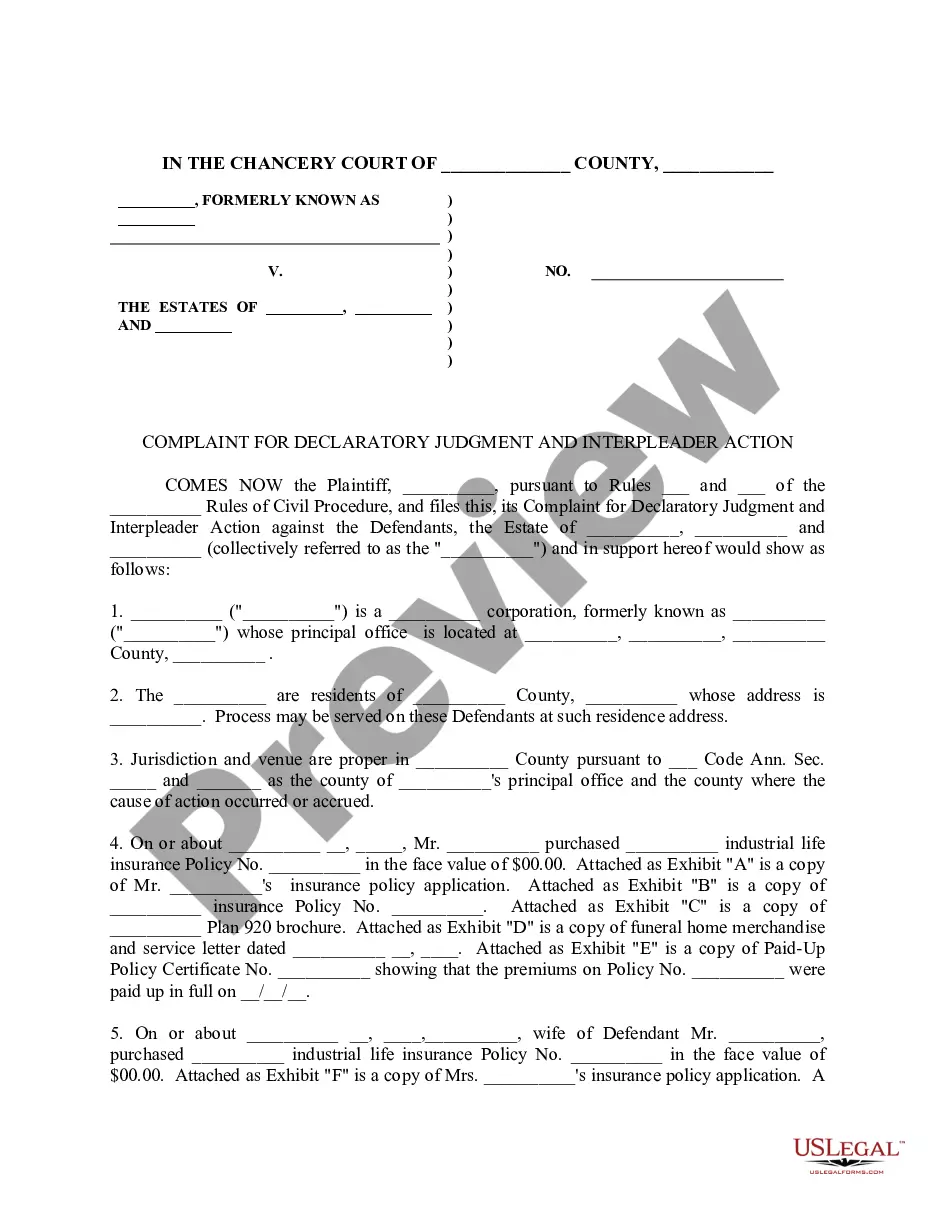
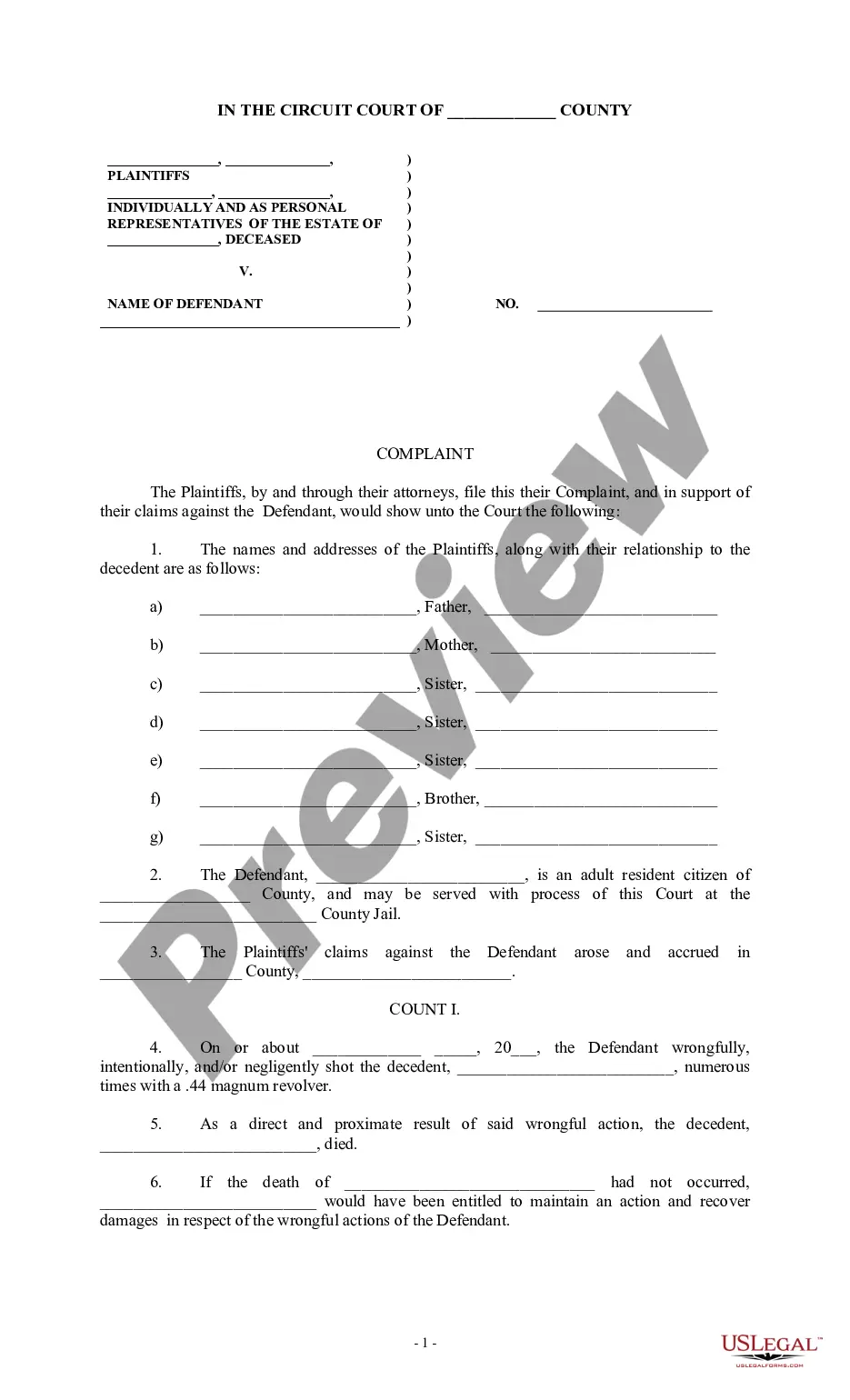
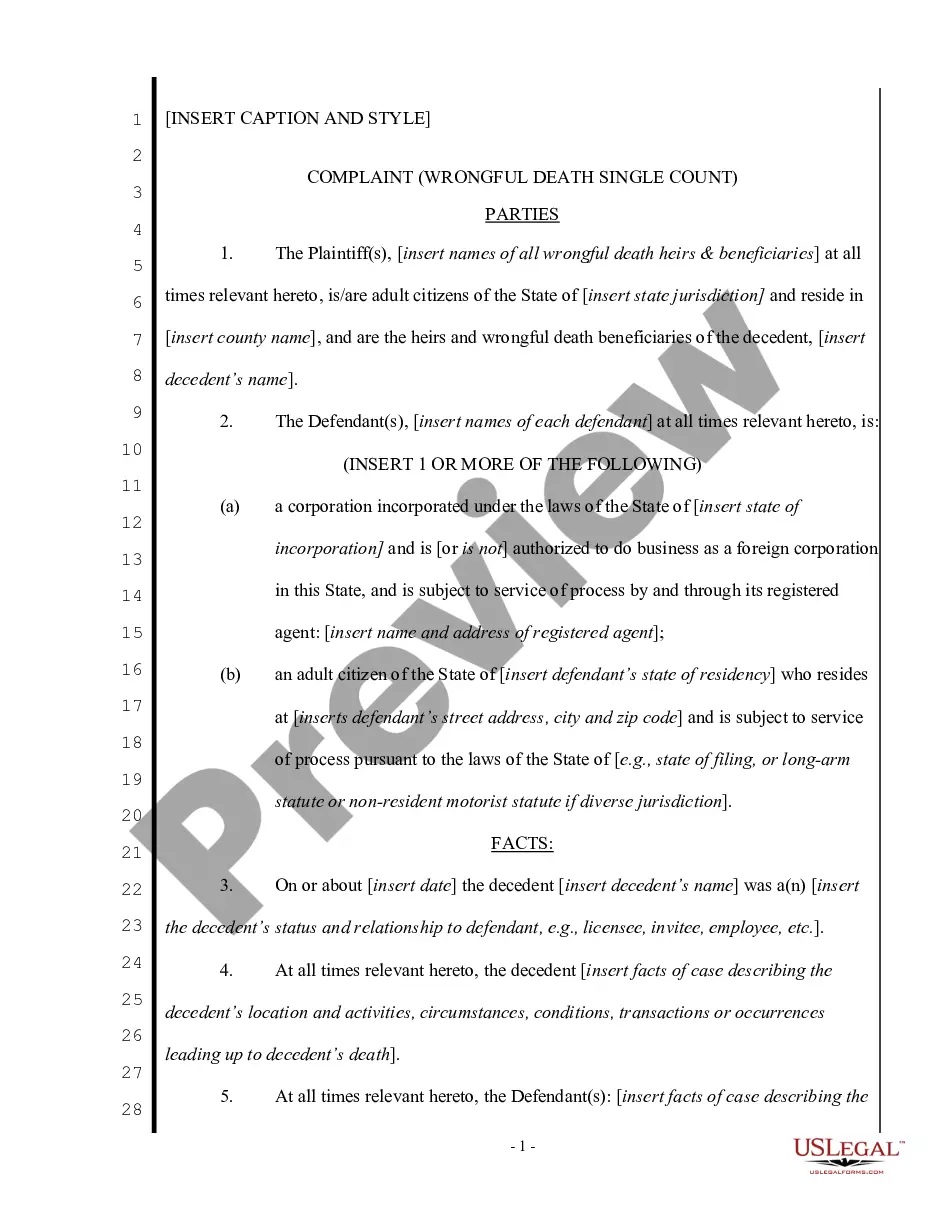
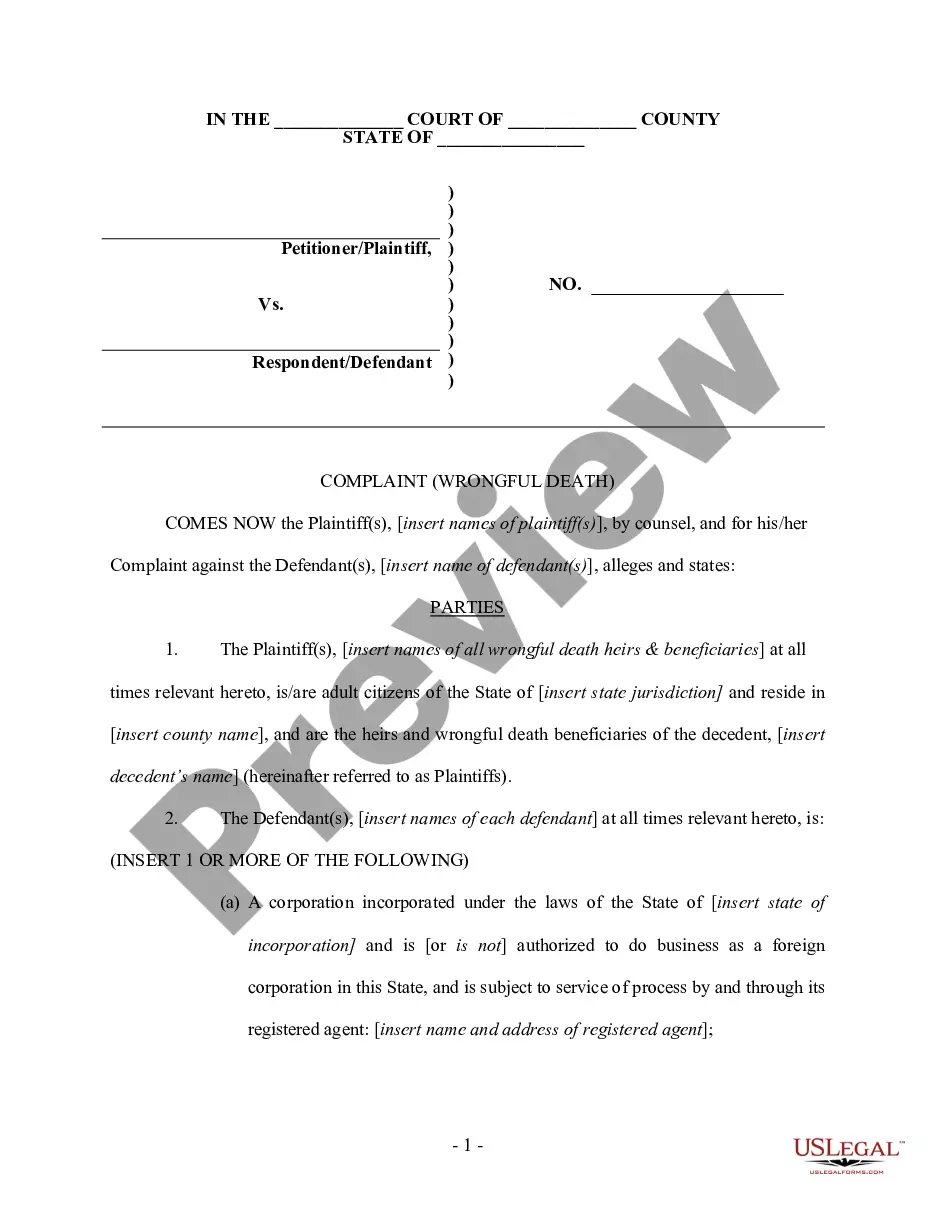
Get your form ready online
Our built-in tools help you complete, sign, share, and store your documents in one place.
Make edits, fill in missing information, and update formatting in US Legal Forms—just like you would in MS Word.
Download a copy, print it, send it by email, or mail it via USPS—whatever works best for your next step.
Sign and collect signatures with our SignNow integration. Send to multiple recipients, set reminders, and more. Go Premium to unlock E-Sign.
If this form requires notarization, complete it online through a secure video call—no need to meet a notary in person or wait for an appointment.
We protect your documents and personal data by following strict security and privacy standards.

Make edits, fill in missing information, and update formatting in US Legal Forms—just like you would in MS Word.

Download a copy, print it, send it by email, or mail it via USPS—whatever works best for your next step.

Sign and collect signatures with our SignNow integration. Send to multiple recipients, set reminders, and more. Go Premium to unlock E-Sign.

If this form requires notarization, complete it online through a secure video call—no need to meet a notary in person or wait for an appointment.

We protect your documents and personal data by following strict security and privacy standards.
Looking for another form?
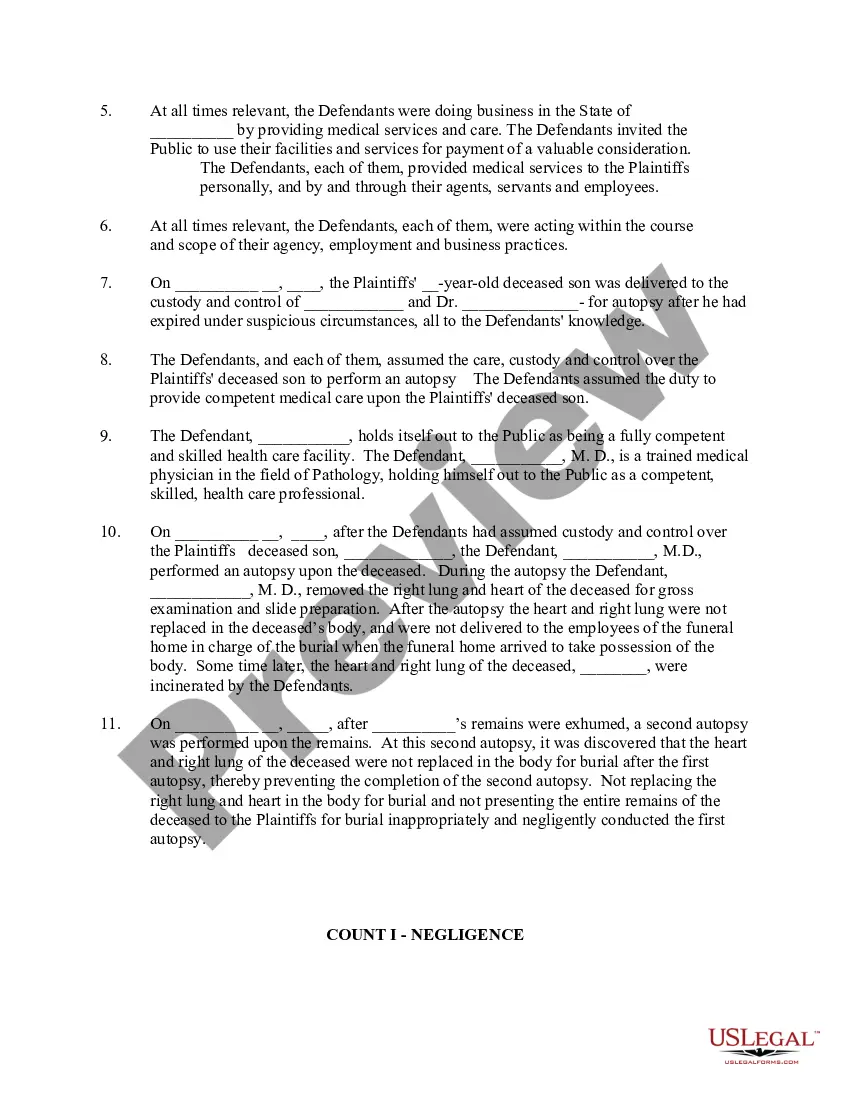
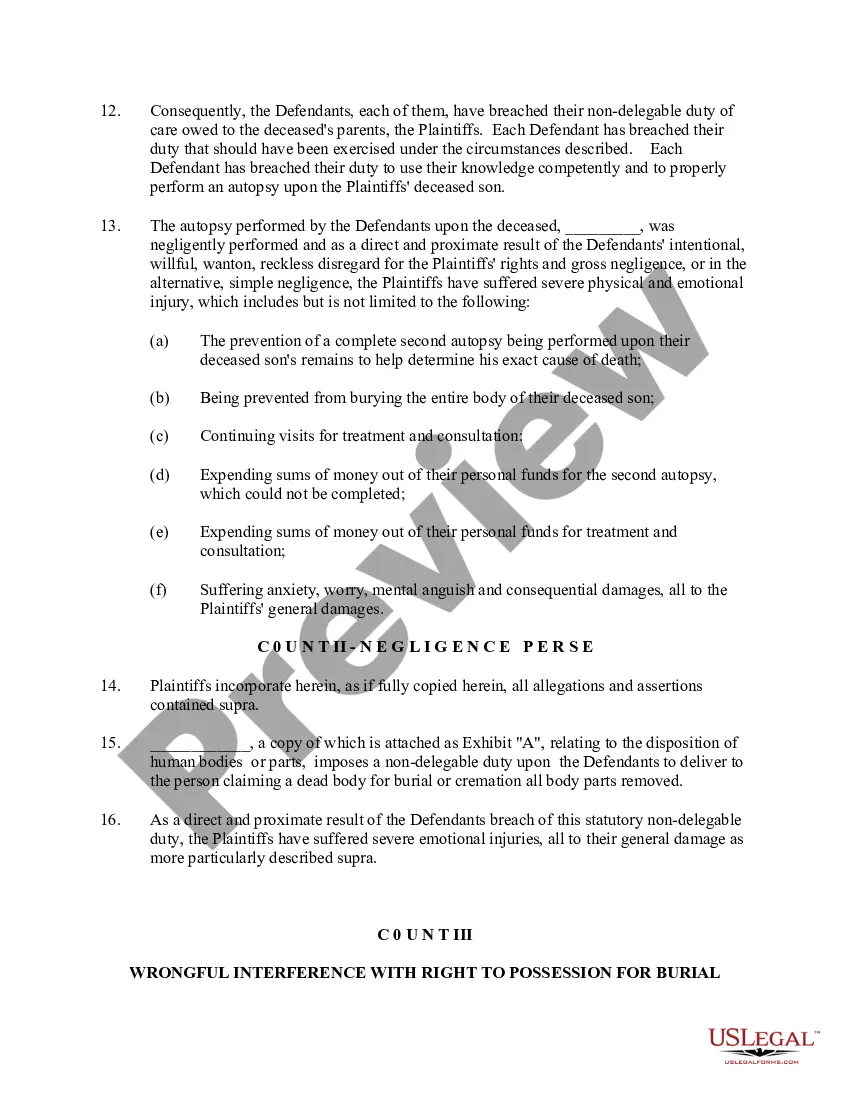
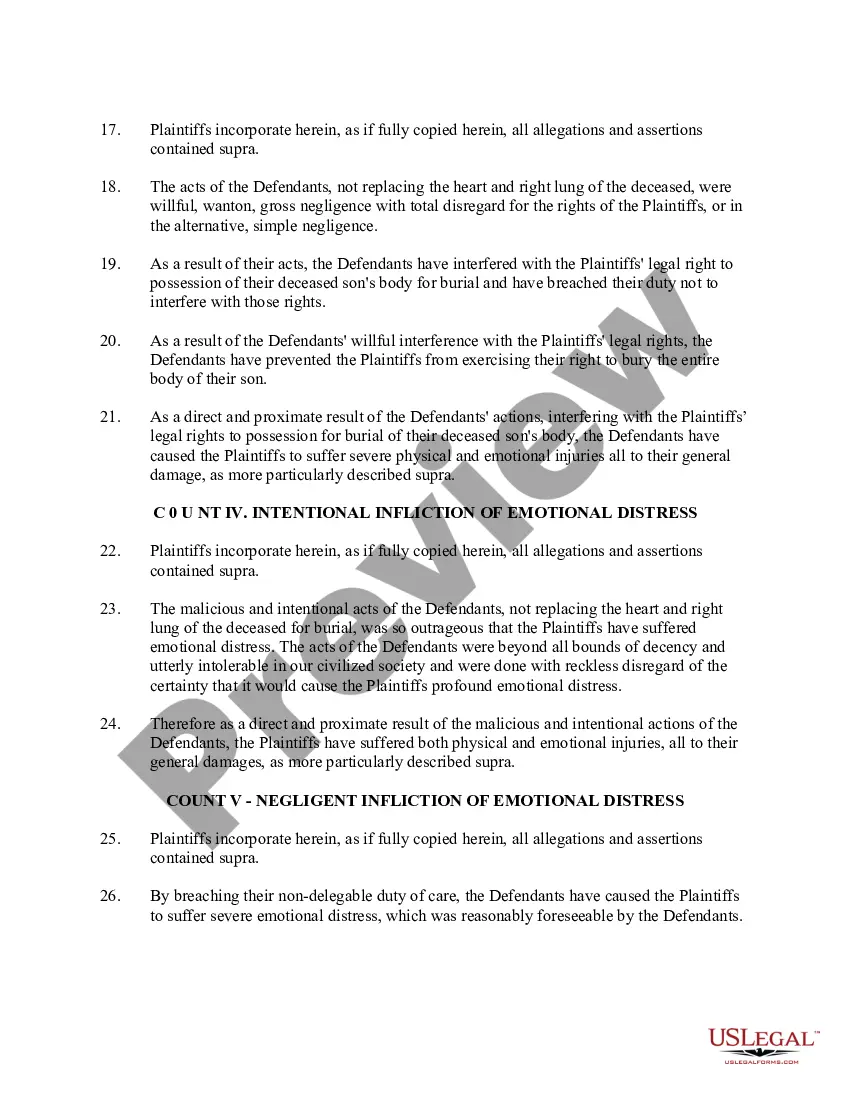
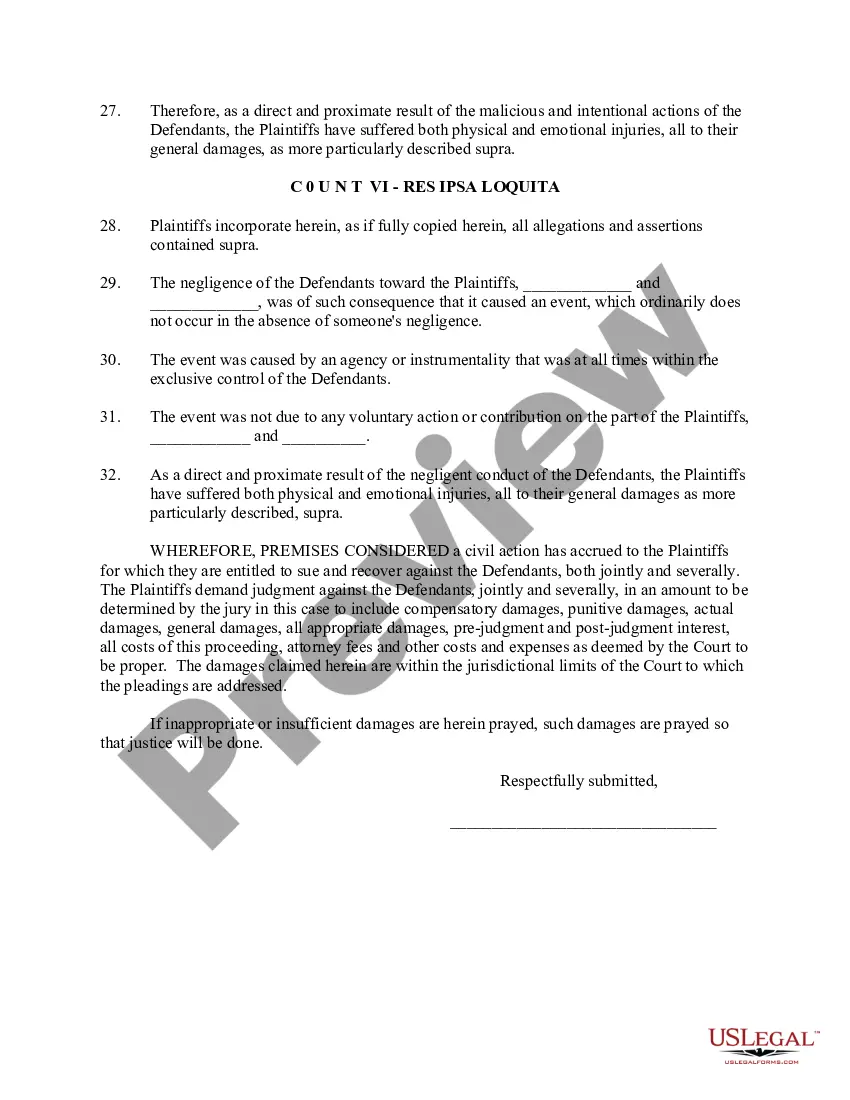
How to fill out Complaint For Wrongful Interference With Right To Possession For Burial?
Managing legal paperwork can be overwhelming, even for the most adept professionals.
When you're seeking an example of Wrongful Interference With A Business Relationship and don't get the opportunity to invest time searching for the correct and updated version, the processes can be challenging.
US Legal Forms fulfills any needs you might have, ranging from personal to commercial paperwork, all consolidated in one location.
Utilize cutting-edge tools to complete and oversee your Wrongful Interference With A Business Relationship Example.
Here are the steps to follow after acquiring the form you desire: Validate that this is the correct document by previewing it and reviewing its details.
- Tap into a repository of articles, guides, handbooks, and resources related to your circumstances and requirements.
- Conserve effort and time sourcing the documents you need, and leverage US Legal Forms' sophisticated search and Preview feature to find the Wrongful Interference With A Business Relationship Example and download it.
- If you hold a subscription, Log In to your US Legal Forms account, search for the necessary document, and download it.
- Visit the My documents section to review the documents you have previously downloaded and organize your folders as required.
- If you're new to US Legal Forms, create a complimentary account and gain unlimited access to all the platform's advantages.
- Utilize a robust online form repository to tackle these scenarios proficiently.
- US Legal Forms is a frontrunner in online legal documentation, boasting over 85,000 state-specific legal forms at your fingertips whenever you require.
- With US Legal Forms, you can access various state- or county-specific legal and business documentation.
Form popularity
FAQ
To establish a case of wrongful interference with a business relationship example, you must demonstrate that the interference caused harm to an existing or potential business relationship. This typically involves showing that the interfering party knew about the relationship and purposely acted to disrupt it. As a legal concept, it emphasizes the need for intention or knowledge of the existing relationship, along with proof of damages resulting from the interference.
Wrongful interference with a business relationship occurs when one party intentionally disrupts the relationship between two other parties, causing harm to one of them. For instance, imagine a competitor spreading false information to divert clients from your business. In this scenario, the competitor's actions exemplify wrongful interference with a business relationship, as they undermine your ability to operate effectively. Understanding this concept can help you identify potential legal remedies available to protect your business interests.
Both types of tortious interference require proof that the conduct was intentional. This requires proof that either: The primary purpose of the defendant's conduct was to cause the breach of contract or interfere with the business relationship or expectation; or.
Wrongful interference in a contract means disrupting a contractual relationship. For instance, a business contracts with a delivery company to ship goods. If the defendant tried to induce the delivery company to breach the contract, it would be tortious interference with the contract.
Tortious interference occurs when one party interferes with an advantageous business relationship of another party, causing economic harm. It is important to remember that this must be an intentional act, and proving it can be challenging. This is where you need a knowledgeable team of lawyers.
Deceiving another company's employees to lure them to work for you instead. Making false claims about a competitor to deter business. Threatening a logistics company if they make a supply delivery to a competitor. Interfering with a party's ability to uphold its contractual obligations.
In California, to establish interference with prospective economic relations, a plaintiff must show that: (1) plaintiff and a third party had an economic relation; (2) the relation between plaintiff and the third party would likely have led to future benefits; (3) defendant knew of the relation; (4) defendant ...