Amended Trial Information In Texas
Description



Get your form ready online
Our built-in tools help you complete, sign, share, and store your documents in one place.
Make edits, fill in missing information, and update formatting in US Legal Forms—just like you would in MS Word.
Download a copy, print it, send it by email, or mail it via USPS—whatever works best for your next step.
Sign and collect signatures with our SignNow integration. Send to multiple recipients, set reminders, and more. Go Premium to unlock E-Sign.
If this form requires notarization, complete it online through a secure video call—no need to meet a notary in person or wait for an appointment.
We protect your documents and personal data by following strict security and privacy standards.

Make edits, fill in missing information, and update formatting in US Legal Forms—just like you would in MS Word.

Download a copy, print it, send it by email, or mail it via USPS—whatever works best for your next step.

Sign and collect signatures with our SignNow integration. Send to multiple recipients, set reminders, and more. Go Premium to unlock E-Sign.

If this form requires notarization, complete it online through a secure video call—no need to meet a notary in person or wait for an appointment.

We protect your documents and personal data by following strict security and privacy standards.
Looking for another form?


Form popularity
FAQ
A motion for new trial may be filed and amended within thirty days from the date the judgment is signed, is overruled by operation of law seventy-five days after the judgment is signed, and the trial court has power over its judgment for 30 more days.
The court may permit an information to be amended at any time before verdict or finding if no additional or different offense is charged and if substantial rights of the defendant are not prejudiced. Leave of court is required for the prosecutor to amend.
The Due Order of Pleading rule provides that certain defenses are waived if not presented in "due order." As a general rule, the defendant's answer may include any defenses he has, whether of law or fact, dilatory or merits-based, 2 and the trial court may take up these issues in any order it directs.
The court may allow a pleading to be amended less than 7 days before trial if the amendment will not operate as a surprise to the opposing party. (b)Insufficient Pleadings. A party may file a motion with the court asking that another party be required to clarify a pleading.
Texas Rule of Civil Procedure 99(b) instructs, “The citation shall direct the defendant to file a written answer to the plaintiff's petition on or before a.m. on the Monday next after the expiration of twenty days after the date of service thereof.”
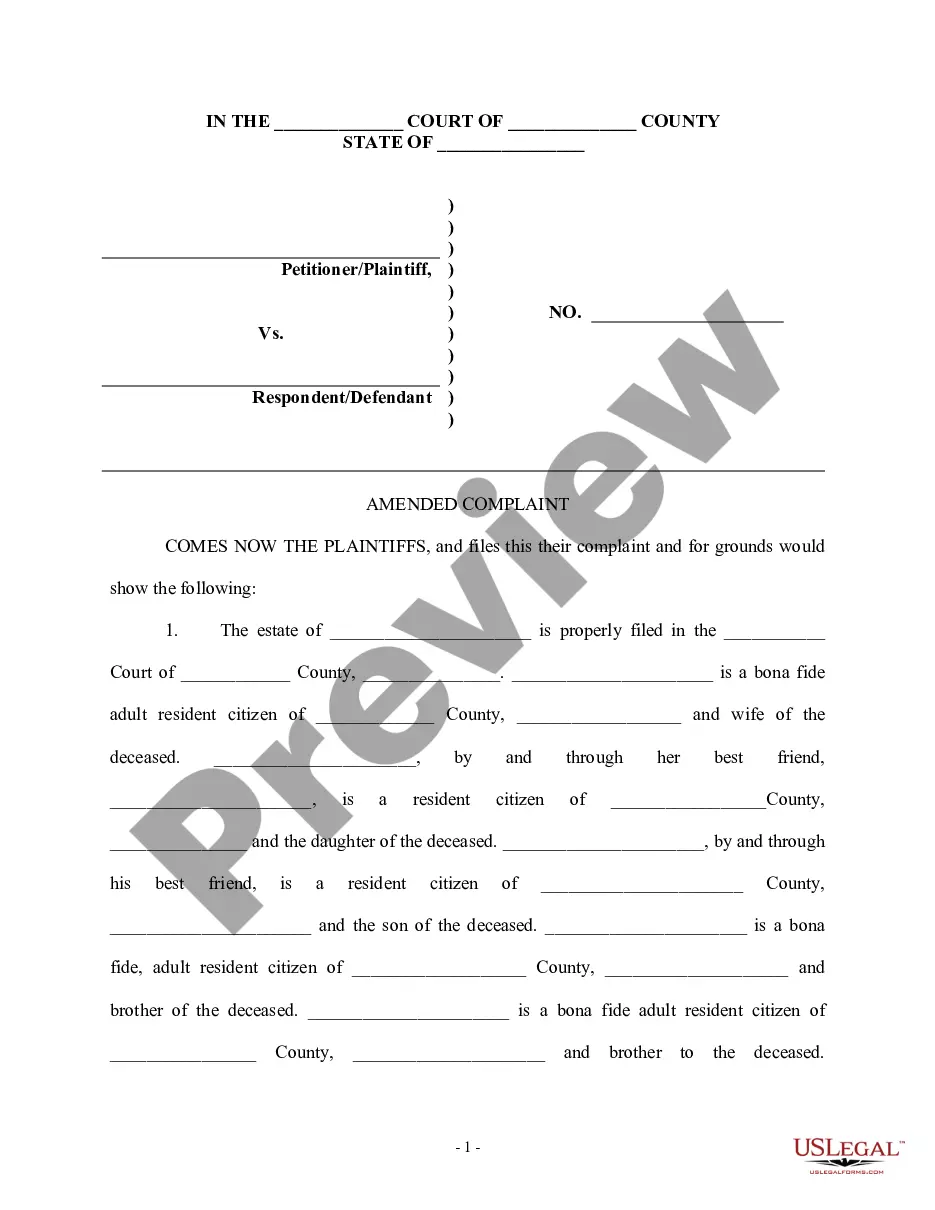
An amended pleading is a revision of a pleading filed in an action. It is re-filed by the party who filed the original pleading and takes the place of the original pleading for all substantive purposes.
The court may permit an information to be amended at any time before verdict or finding if no additional or different offense is charged and if substantial rights of the defendant are not prejudiced. Leave of court is required for the prosecutor to amend.
A motion for new trial may be filed and amended within thirty days from the date the judgment is signed, is overruled by operation of law seventy-five days after the judgment is signed, and the trial court has power over its judgment for 30 more days.
A case may be dismissed for want of prosecution on failure of any party seeking affirmative relief or his attorney to appear for any hearing or trial of which the party or attorney had notice, or on failure of the party or his attorney to request a hearing or take other action specified by the court within fifteen days ...
V. to alter or change by adding, subtracting, or substituting. One can amend a statute, a contract or a written pleading filed in a law -suit. The change is usually called an amendment.
