Advocate For Client In California
Description






Get your form ready online
Our built-in tools help you complete, sign, share, and store your documents in one place.
Make edits, fill in missing information, and update formatting in US Legal Forms—just like you would in MS Word.
Download a copy, print it, send it by email, or mail it via USPS—whatever works best for your next step.
Sign and collect signatures with our SignNow integration. Send to multiple recipients, set reminders, and more. Go Premium to unlock E-Sign.
If this form requires notarization, complete it online through a secure video call—no need to meet a notary in person or wait for an appointment.
We protect your documents and personal data by following strict security and privacy standards.
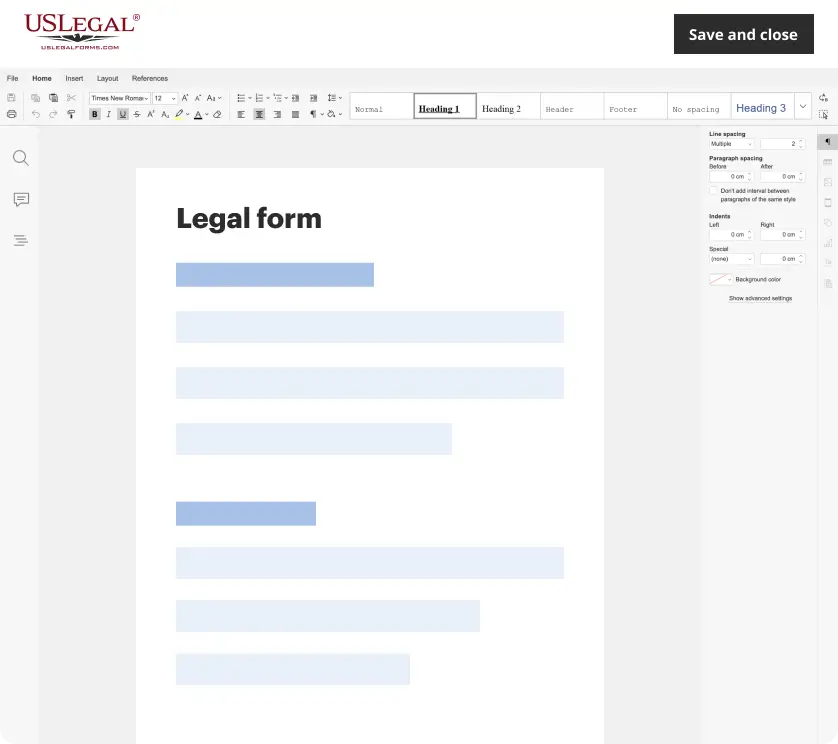
Make edits, fill in missing information, and update formatting in US Legal Forms—just like you would in MS Word.
Download a copy, print it, send it by email, or mail it via USPS—whatever works best for your next step.
Sign and collect signatures with our SignNow integration. Send to multiple recipients, set reminders, and more. Go Premium to unlock E-Sign.

If this form requires notarization, complete it online through a secure video call—no need to meet a notary in person or wait for an appointment.
We protect your documents and personal data by following strict security and privacy standards.
Looking for another form?




Form popularity
FAQ
Examples of being an individual advocate for others: Helping an elderly neighbor figure out local shuttle and bus schedules so she or he can continue to live independently without driving. Contacting school officials after learning a child was bullied at school.
Step #1: Define the goal of your customer advocacy program The first step is always clear goal-setting to outline what you want to achieve. Whether it's increasing customer engagement or generating greater referrals, specific goals better guide your strategy.
It's important to advocate for your own healthcare needs and to ensure that your concerns are taken seriously. If you feel that your complaints are not being properly addressed, you may also consider seeking advice from a patient advocacy organization or a legal professional to help you navigate the situation.
Here are some strategies to increase customer advocacy: Provide exceptional customer service: Delivering outstanding customer service is the foundation of customer advocacy. Build strong relationships: Develop meaningful relationships with your customers by engaging with them on a personal level.
Create a medical summary. Explain to the patient how important and helpful a current medical summary is during the hospital admission process. Acquire personal health knowledge. Use trusted sources to help choose a new doctor. Avoid unnecessary hospitalizations. Request good communication.
For example, you might help a client fill out an application for housing assistance, accompany a client to a court hearing, or negotiate with a landlord on behalf of a client. Micro-level advocacy requires skills such as communication, negotiation, problem-solving, and empathy.
Who pays for Independent Patient Advocates? Independent Patient Advocates are not yet covered by health insurance. They are hired directly by patients and their loved ones to provide individualized guidance and support that the traditional healthcare system is not equipped to handle.
To find a patient advocate you can try the following approaches: 1. Ask your healthcare provider. Doctors, nurses and hospital staff often have recommendations for patient advocates. 2. Hospital or Clinic Resources: Many hospitals and clinics have patient advocacy departments or staff. 3. Insurance Company.
OCRA has a Clients' Right Advocate (CRA) at each regional center. The CRA can help regional center consumers and their families get services; provide information about rights and services; provide training; represent regional center consumers in hearings; and investigate complaints about denial of rights in a facility.