Amendment Of Constitution Article 368 In Pima
Description






Get your form ready online
Our built-in tools help you complete, sign, share, and store your documents in one place.
Make edits, fill in missing information, and update formatting in US Legal Forms—just like you would in MS Word.
Download a copy, print it, send it by email, or mail it via USPS—whatever works best for your next step.
Sign and collect signatures with our SignNow integration. Send to multiple recipients, set reminders, and more. Go Premium to unlock E-Sign.
If this form requires notarization, complete it online through a secure video call—no need to meet a notary in person or wait for an appointment.
We protect your documents and personal data by following strict security and privacy standards.
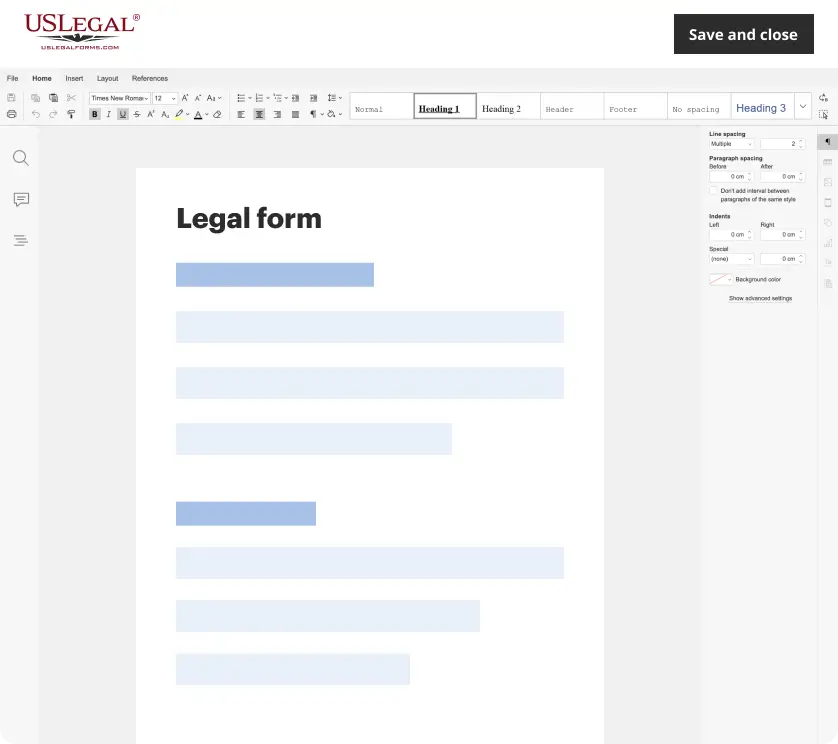
Make edits, fill in missing information, and update formatting in US Legal Forms—just like you would in MS Word.
Download a copy, print it, send it by email, or mail it via USPS—whatever works best for your next step.
Sign and collect signatures with our SignNow integration. Send to multiple recipients, set reminders, and more. Go Premium to unlock E-Sign.

If this form requires notarization, complete it online through a secure video call—no need to meet a notary in person or wait for an appointment.
We protect your documents and personal data by following strict security and privacy standards.
Looking for another form?
Form popularity
FAQ
It would be a rare person indeed who would accurately respond that the guarantee to each state of equal suffrage in the Senate is the only constitutional provision that is now expressly unamendable under the Constitution's own terms.
An amendment of the Constitution can be initiated only by the introduction of a Bill in either House of Parliament. The Bill must then be passed in each House by a majority of the total membership of that House and by a majority of not less than two-thirds of the members of that House present and voting.
An amendment may be proposed by a two-thirds vote of both Houses of Congress, or, if two-thirds of the States request one, by a convention called for that purpose. The amendment must then be ratified by three-fourths of the State legislatures, or three-fourths of conventions called in each State for ratification.
The amendment process is very difficult and time consuming: A proposed amendment must be passed by two-thirds of both houses of Congress, then ratified by the legislatures of three-fourths of the states.
A Constitution Amendment Bill which aims to affect changes to the basic values of the Constitution requires a supporting vote of at least 75% of the members of the National Assembly and of at least six provinces in the NCOP in order to be passed.
Art. V ( The Congress, whenever two thirds of both Houses shall deem it necessary, shall propose Amendments to this Constitution, or, on the Application of the Legislatures of two thirds of the several States, shall call a Convention for proposing Amendments. . .. ).
The Constitution provides that an amendment may be proposed either by the Congress with a two-thirds majority vote in both the House of Representatives and the Senate or by a constitutional convention called for by two-thirds of the State legislatures.
An amendment may be proposed by a two-thirds vote of both Houses of Congress, or, if two-thirds of the States request one, by a convention called for that purpose. The amendment must then be ratified by three-fourths of the State legislatures, or three-fourths of conventions called in each State for ratification.
44th Amendment Act, 1978 was introduced to provide adequate safeguards against the recurrence of the tendency to take over the fundamental rights by the transient majority in the future and to ensure to the people an effective voice in determining the form of government under which they are to live.
Unalterable, "impossible to change." The things you've done in the past are unalterable. The only things you have the power to change are the things you're doing right now or that you will do in the future.
