Amendment Jury Trial In Civil Cases In Nevada
Description






Get your form ready online
Our built-in tools help you complete, sign, share, and store your documents in one place.
Make edits, fill in missing information, and update formatting in US Legal Forms—just like you would in MS Word.
Download a copy, print it, send it by email, or mail it via USPS—whatever works best for your next step.
Sign and collect signatures with our SignNow integration. Send to multiple recipients, set reminders, and more. Go Premium to unlock E-Sign.
If this form requires notarization, complete it online through a secure video call—no need to meet a notary in person or wait for an appointment.
We protect your documents and personal data by following strict security and privacy standards.
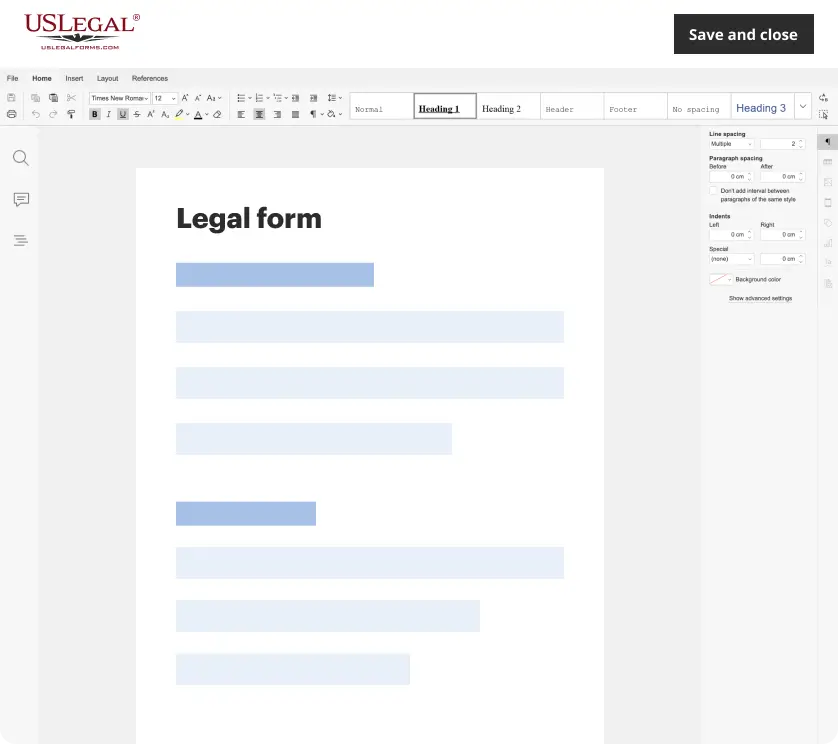
Make edits, fill in missing information, and update formatting in US Legal Forms—just like you would in MS Word.
Download a copy, print it, send it by email, or mail it via USPS—whatever works best for your next step.
Sign and collect signatures with our SignNow integration. Send to multiple recipients, set reminders, and more. Go Premium to unlock E-Sign.

If this form requires notarization, complete it online through a secure video call—no need to meet a notary in person or wait for an appointment.

We protect your documents and personal data by following strict security and privacy standards.
Looking for another form?
Form popularity
FAQ
The Seventh Amendment right to a jury trial applies on the federal level. Unlike the Sixth Amendment, states are not required to guarantee civil trials under the Seventh Amendment.
No person shall be held to answer for a capital, or otherwise infamous crime, unless on a presentment or indictment of a Grand Jury, except in cases arising in the land or naval forces, or in the Militia, when in actual service in time of War or public danger; nor shall any person be subject for the same offence to be ...
In Suits at common law, where the value in controversy shall exceed twenty dollars, the right of trial by jury shall be preserved, and no fact tried by a jury, shall be otherwise re-examined in any Court of the United States, than ing to the rules of the common law.
Sixth Amendment Criminal Prosecutions - Jury Trial, Right to Confront and to Counsel (1791) (see explanation) Seventh Amendment Common Law Suits - Jury Trial (1791) (see explanation) Eighth Amendment Excess Bail or Fines, Cruel and Unusual Punishment (1791) (see explanation)
Constitutional Amendments – Amendment 7 – “The Right to Jury Trial in Civil Affairs”
“In all criminal prosecutions, the accused shall enjoy the right to a speedy and public trial, by an impartial jury of the State and district wherein the crime shall have been committed, which district shall have been previously ascertained by law, and to be informed of the nature and cause of the accusation; to be ...
Any party may use a deposition to contradict or impeach the testimony given by the deponent as a witness, or for any other purpose allowed by Nevada law of evidence.
If a nonmovant shows by affidavit or declaration that, for specified reasons, it cannot present facts essential to justify its opposition, the court may: (1) defer considering the motion or deny it; (2) allow time to obtain affidavits or declarations or to take discovery; or (3) issue any other appropriate order.
Seventh Amendment: In Suits at common law, where the value in controversy shall exceed twenty dollars, the right of trial by jury shall be preserved, and no fact tried by a jury, shall be otherwise re-examined in any Court of the United States, than ing to the rules of the common law.
The seventh amendment gives the right to a jury trial for any civil case over property more than $20.
