Amendment Jury Trial In Civil Cases In Maricopa
Description






Get your form ready online
Our built-in tools help you complete, sign, share, and store your documents in one place.
Make edits, fill in missing information, and update formatting in US Legal Forms—just like you would in MS Word.
Download a copy, print it, send it by email, or mail it via USPS—whatever works best for your next step.
Sign and collect signatures with our SignNow integration. Send to multiple recipients, set reminders, and more. Go Premium to unlock E-Sign.
If this form requires notarization, complete it online through a secure video call—no need to meet a notary in person or wait for an appointment.
We protect your documents and personal data by following strict security and privacy standards.
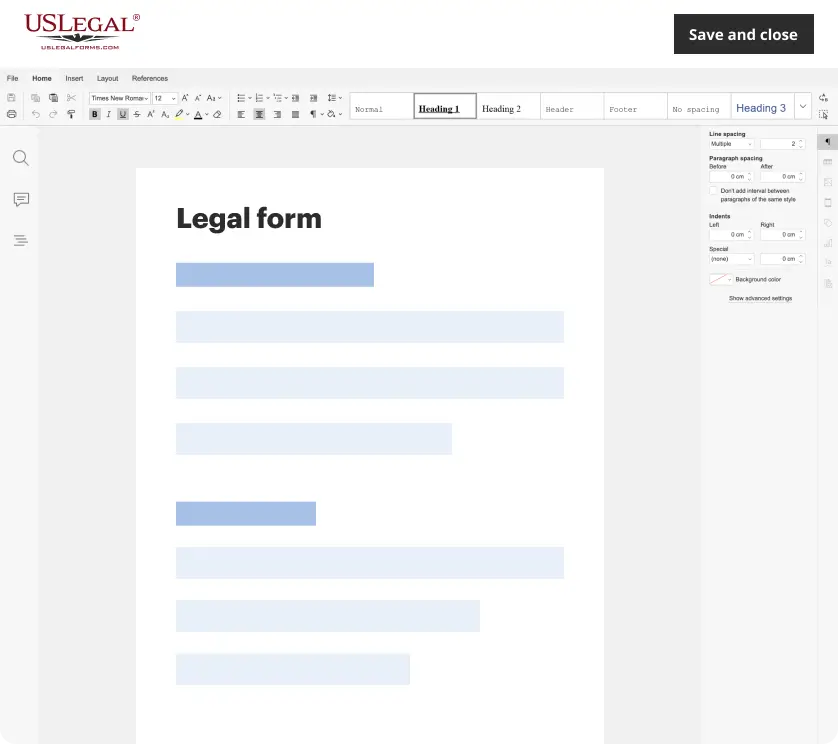
Make edits, fill in missing information, and update formatting in US Legal Forms—just like you would in MS Word.
Download a copy, print it, send it by email, or mail it via USPS—whatever works best for your next step.
Sign and collect signatures with our SignNow integration. Send to multiple recipients, set reminders, and more. Go Premium to unlock E-Sign.

If this form requires notarization, complete it online through a secure video call—no need to meet a notary in person or wait for an appointment.
We protect your documents and personal data by following strict security and privacy standards.
Looking for another form?
Form popularity
FAQ
Introduction: Nature of the Binding Summary Jury Trial: A summary jury trial is generally a one-day jury trial with relaxed rules of evidence similar to arbitration. However, a jury decides factual issues and renders a verdict as a jury would in a traditional trial and the parties waive all appeals.
The rules of evidence are relaxed and the jury decision is recommended, not binding in nature. The process gives the parties an opportunity to experience an official court hearing and to see how a jury of their peers would view the case. A summary jury trial is usually finished in a day or less.
In the court context, the parties select six jurors from a panel of ten to twelve jurors. After a brief voir dire by the court or the attorneys, the jurors are empaneled. Case presentation is usually limited to one hour, including rebuttal, although this time period may be extended if the case is unusually complex.
A Summary Jury Trial is a jury trial that will take no longer than one day in the selection of the jury, presentation of evidence, argument by counsel and the commencement of jury deliberations.
Once selected, jurors go directly to the courtroom. A juror who is summoned and who willfully and without reasonable excuse fails to appear for jury service may be found by the court to be in contempt and subject to penalties provided by law.
In Suits at common law, where the value in controversy shall exceed twenty dollars, the right of trial by jury shall be preserved, and no fact tried by a jury, shall be otherwise re-examined in any Court of the United States, than ing to the rules of the common law.
The court shall grant summary judgment if the moving party shows that there is no genuine dispute as to any material fact and the moving party is entitled to judgment as a matter of law.
Constitutional Amendments – Amendment 7 – “The Right to Jury Trial in Civil Affairs”
The defendant has 20 calendar days from service of process to file an answer (Form No. AOCLJCV4F) to the lawsuit. An answer is your written response that you file with the court admitting or denying the creditor's claims and the reasons why. The answer should respond to each element of the complaint.
“In all criminal prosecutions, the accused shall enjoy the right to a speedy and public trial, by an impartial jury of the State and district wherein the crime shall have been committed, which district shall have been previously ascertained by law, and to be informed of the nature and cause of the accusation; to be ...
