Arrest Without Disposition
Description






Get your form ready online
Our built-in tools help you complete, sign, share, and store your documents in one place.
Make edits, fill in missing information, and update formatting in US Legal Forms—just like you would in MS Word.
Download a copy, print it, send it by email, or mail it via USPS—whatever works best for your next step.
Sign and collect signatures with our SignNow integration. Send to multiple recipients, set reminders, and more. Go Premium to unlock E-Sign.
If this form requires notarization, complete it online through a secure video call—no need to meet a notary in person or wait for an appointment.
We protect your documents and personal data by following strict security and privacy standards.

Make edits, fill in missing information, and update formatting in US Legal Forms—just like you would in MS Word.

Download a copy, print it, send it by email, or mail it via USPS—whatever works best for your next step.

Sign and collect signatures with our SignNow integration. Send to multiple recipients, set reminders, and more. Go Premium to unlock E-Sign.

If this form requires notarization, complete it online through a secure video call—no need to meet a notary in person or wait for an appointment.

We protect your documents and personal data by following strict security and privacy standards.
Looking for another form?
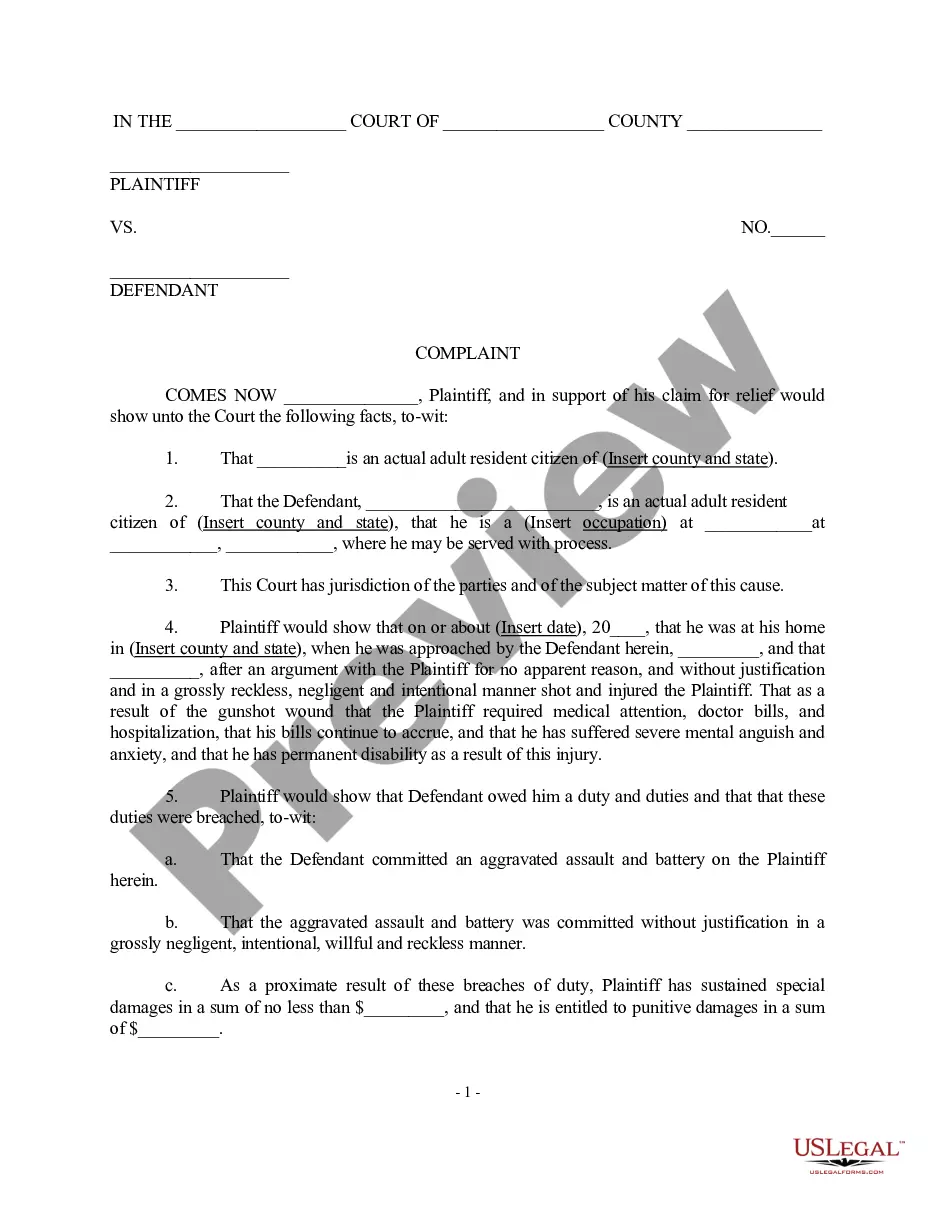
How to fill out Complaint For False Arrest And Imprisonment - 4th And 14th Amendment, US Constitution - Jury Trial Demand?
Finding a reliable source for the latest suitable legal templates is a significant part of navigating bureaucracy.
Identifying the appropriate legal documents requires precision and vigilance, which is why it is essential to acquire samples of Arrest Without Disposition exclusively from credible providers, such as US Legal Forms.
Eliminate the hassle associated with your legal documentation. Browse the comprehensive US Legal Forms catalog where you can discover legal templates, verify their suitability for your case, and download them instantly.
- Utilize the catalog navigation or search bar to find your example.
- Review the form’s details to determine if it meets the standards of your state and county.
- View the form preview, if one is available, to ensure it aligns with your requirements.
- Return to your search to locate the correct document if the Arrest Without Disposition does not match your needs.
- If you are confident about the form’s applicability, proceed to download it.
- As an authorized user, click Log in to validate and access your selected templates in My documents.
- If you do not have an account yet, click Buy now to purchase the form.
- Select the pricing option that suits your requirements.
- Continue to the registration process to finalize your acquisition.
- Complete your transaction by choosing a payment method (credit card or PayPal).
- Select the document format for downloading Arrest Without Disposition.
- After downloading the form to your device, you can edit it using the editor or print it and complete it by hand.
Form popularity
FAQ
The disposition of an inmate refers to the legal outcome of an individual’s criminal charges. It involves how the court has decided to handle the case, which could include sentencing, release, or other legal remedies. For those navigating challenges related to an arrest without disposition, counseling and legal resources can be invaluable in determining the next steps.
Typically, house arrest can show up on a background check. Depending on the jurisdiction, this may appear as part of the criminal record associated with an arrest without disposition. For those seeking employment or housing, understanding how house arrest is reported can be vital in preparing for future opportunities.
The nature of a disposition can be good or bad depending on the individual case. A favorable disposition can lead to a case being dismissed or a minor penalty, while an unfavorable one may involve more serious consequences. For someone with an arrest without disposition, a positive resolution can significantly impact their future opportunities and peace of mind.
Deposition refers to a formal statement taken under oath, often used in legal proceedings, but it is not specifically a term related to jail. In the context of criminal law, it can help gather evidence outside of court. It plays a role in cases where an arrest without disposition may lead to further legal action, ensuring all sides get a fair chance to present evidence.
No, a disposition is not the same as a sentence. A disposition refers to the final outcome of a criminal case, which may include various legal resolutions like dismissal, plea bargains, or other judgments. In contrast, a sentence specifically pertains to the punishment imposed by the court. Understanding the difference can help clarify what occurs during and after an arrest without disposition.
A final notice of disposition is a formal notification indicating the resolution of your case and the status of your criminal records. This document is crucial, particularly if you face an arrest without disposition, since it provides clarity about what has occurred legally. Our platform, US Legal Forms, can assist you in obtaining and interpreting such documents, ensuring you stay informed and empowered regarding your records.
In the context of a criminal case, final disposition signifies the ultimate outcome, which could be a guilty plea, a verdict of not guilty, or other resolutions like case dismissals. It is essential to know your final disposition if you have experienced an arrest without disposition, as it shapes your legal history and potential repercussions. To better understand how this applies to your situation, check out the tools offered by US Legal Forms.
The final disposition of records refers to the conclusion of a criminal case, which indicates how the case was resolved. This may involve a conviction, acquittal, or dismissal of charges. Understanding the final disposition is vital, especially if you have an arrest without disposition, as it can impact your legal standing and record. If you need help navigating this process, US Legal Forms provides valuable resources to clarify these terms.
In Maryland, the time frame to press charges varies depending on the type of crime. Generally, the statute of limitations for felony offenses is three years, while misdemeanors typically have a one-year limitation. If you have concerns about an arrest without disposition, it’s wise to consult with a legal professional to ensure you act within the required time frame. Delays can impact your ability to seek justice.
To press charges in Maryland, you need to contact your local law enforcement agency or the state's attorney's office. When you report the incident, provide all relevant information and evidence regarding your arrest without disposition. After an investigation, the state's attorney will determine whether to file charges. It's important to document everything thoroughly to support your case.