Investor Term Sheet Template With Confidentiality Statement In Harris
Description

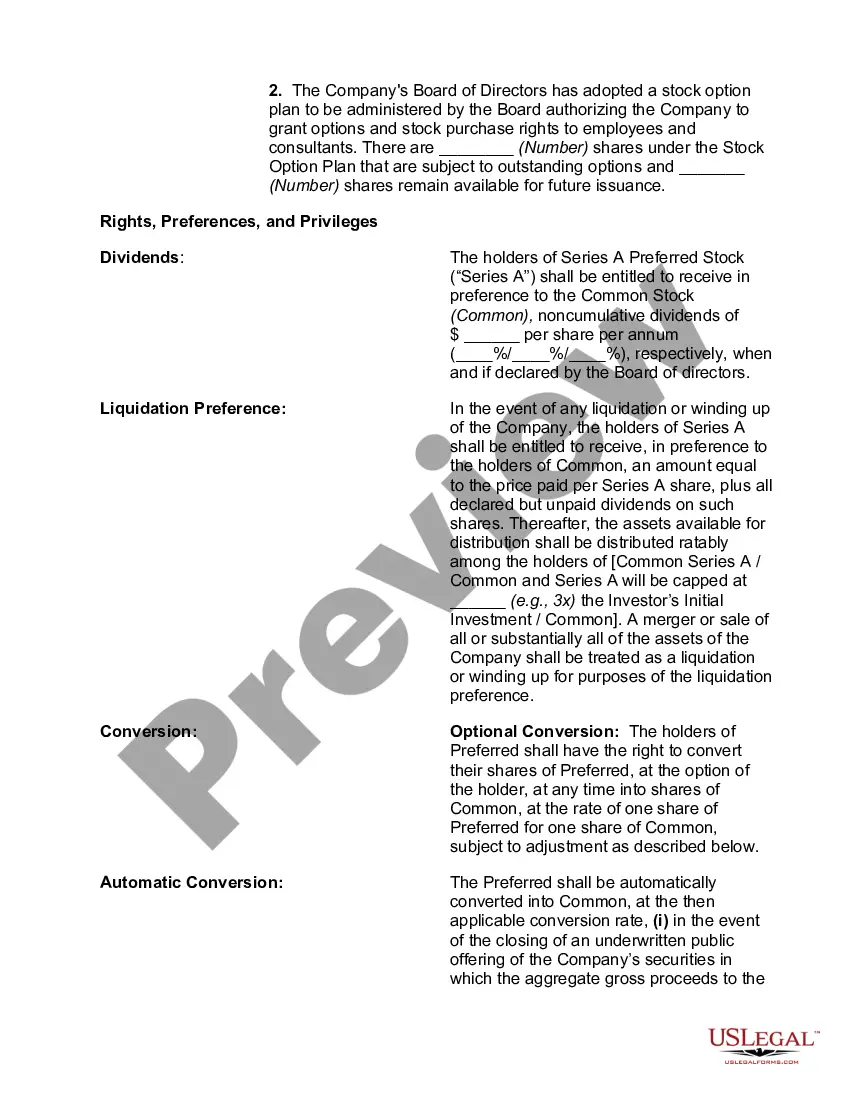
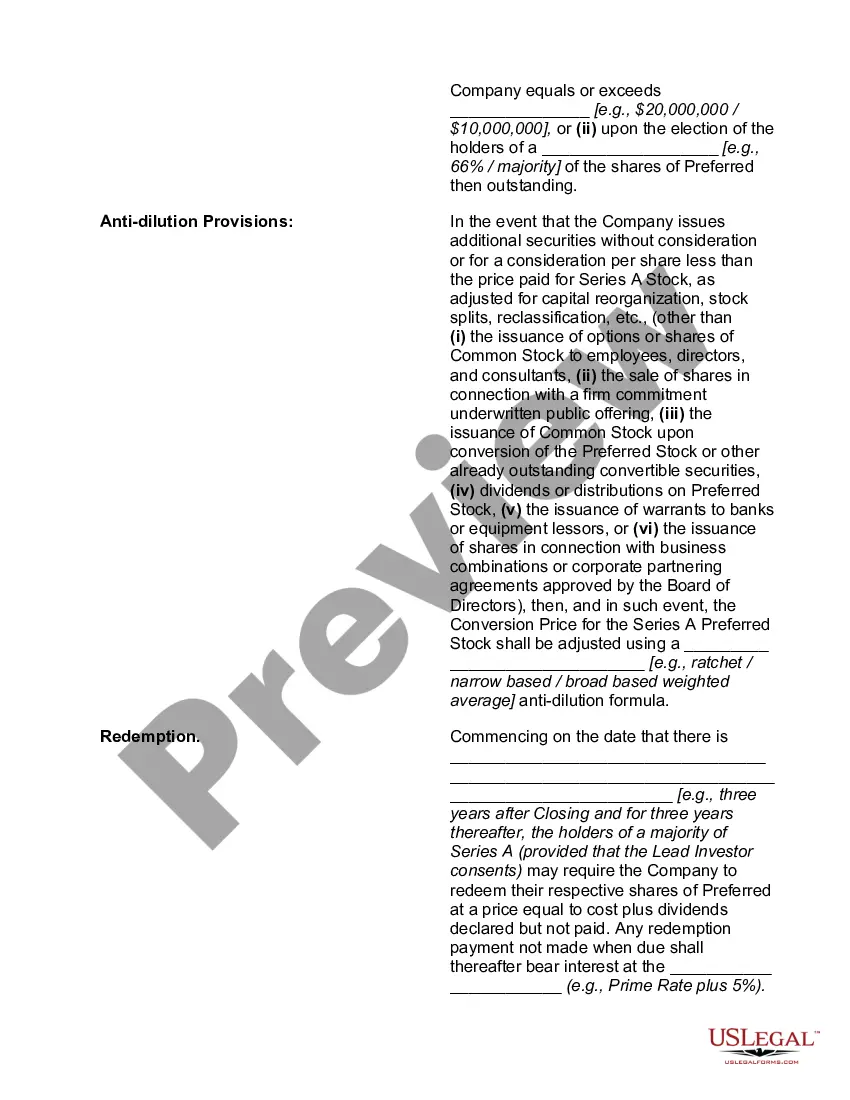
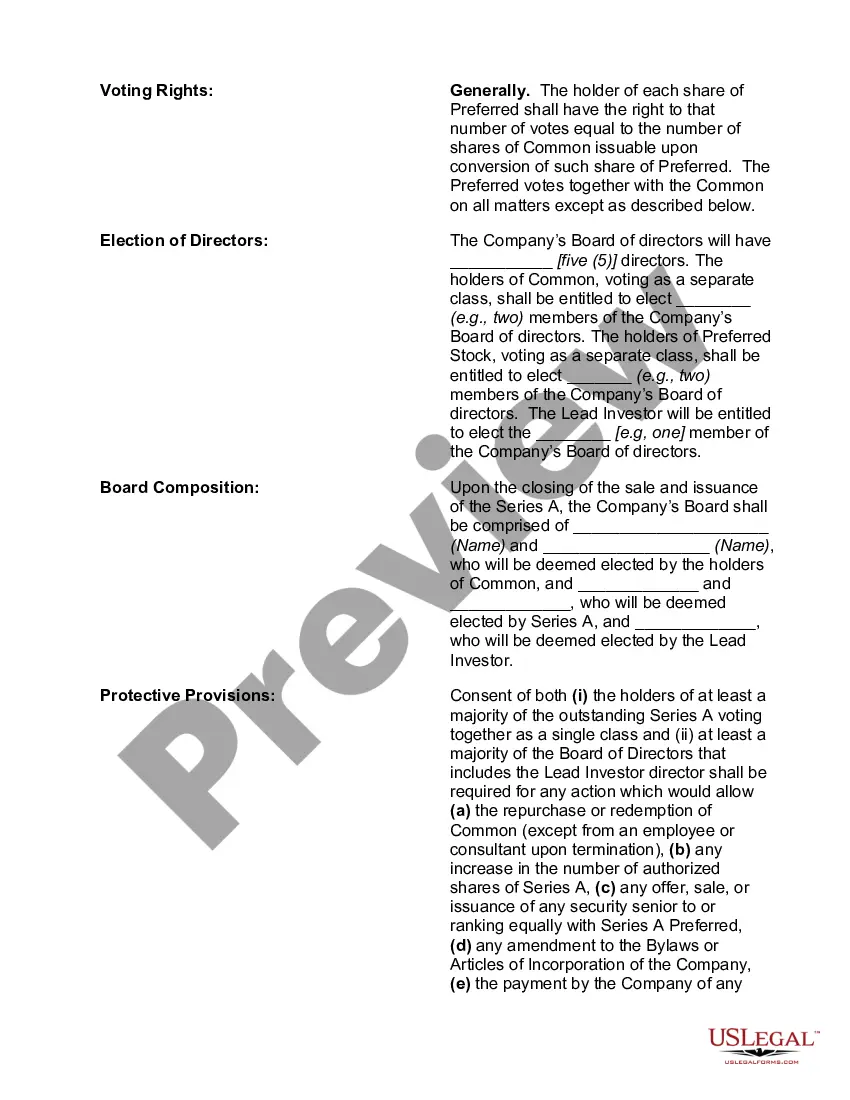
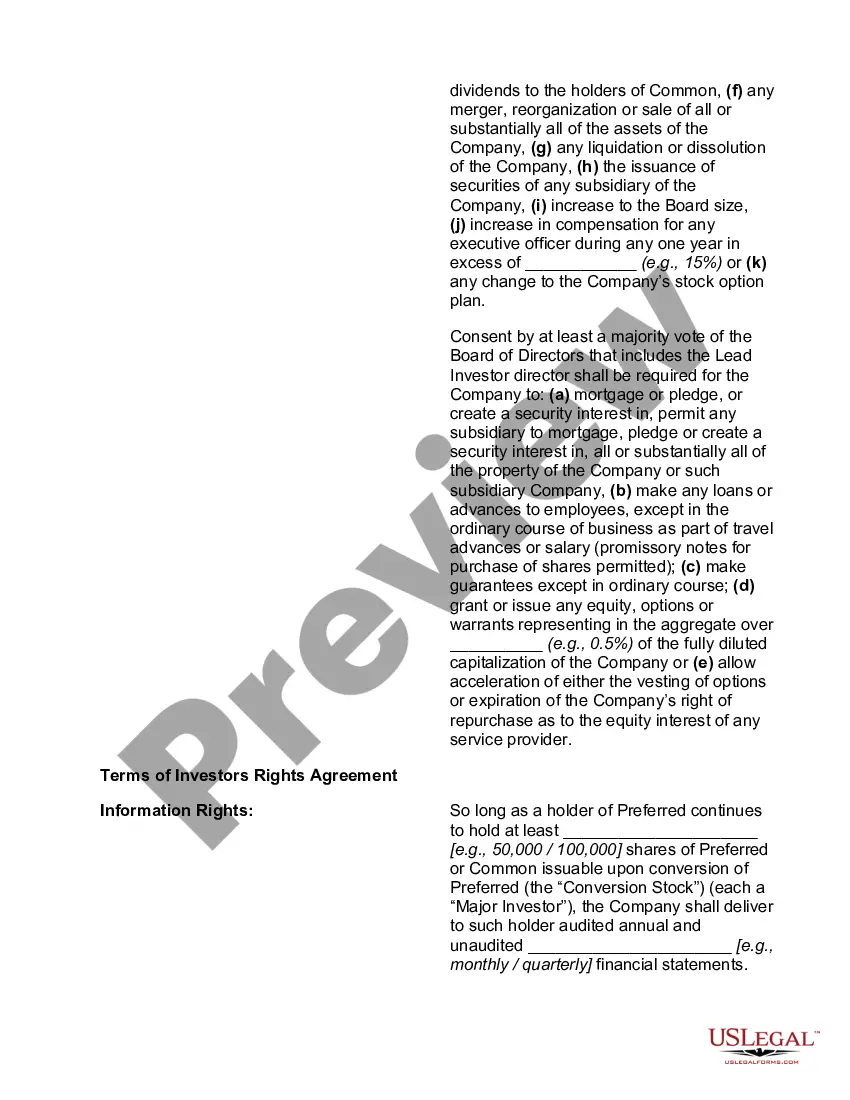
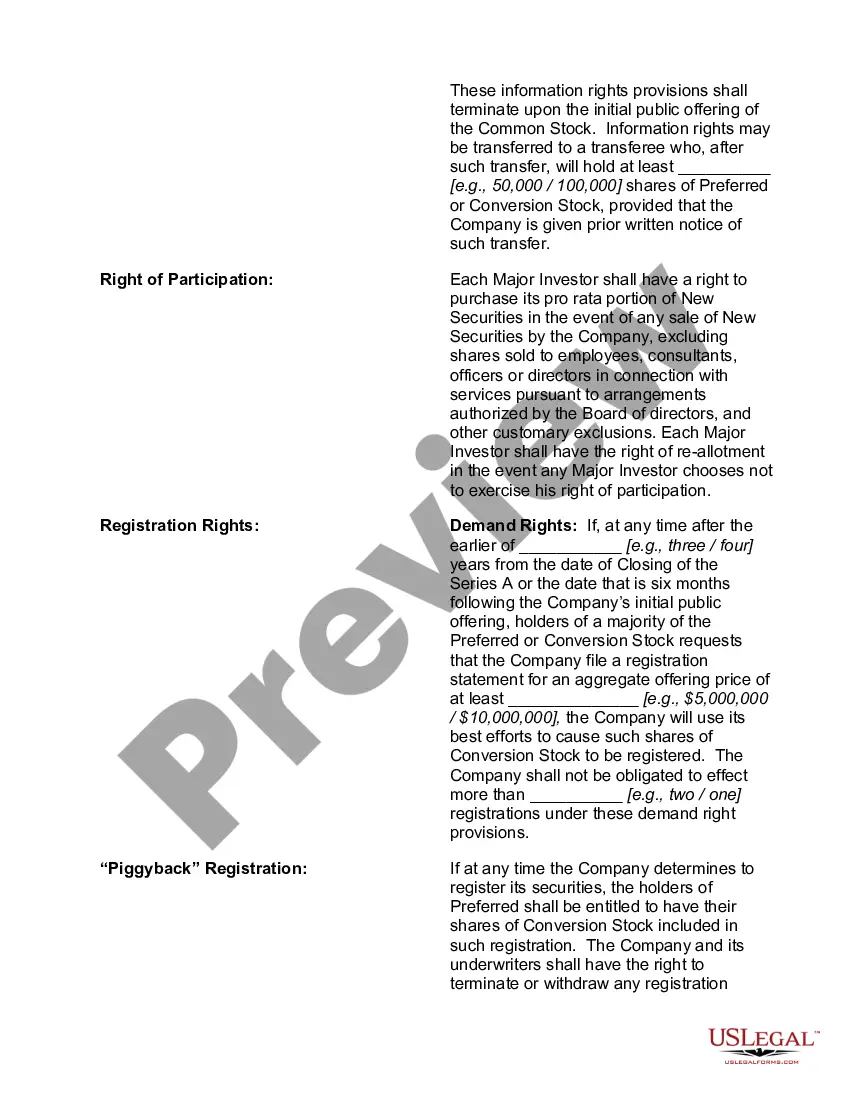
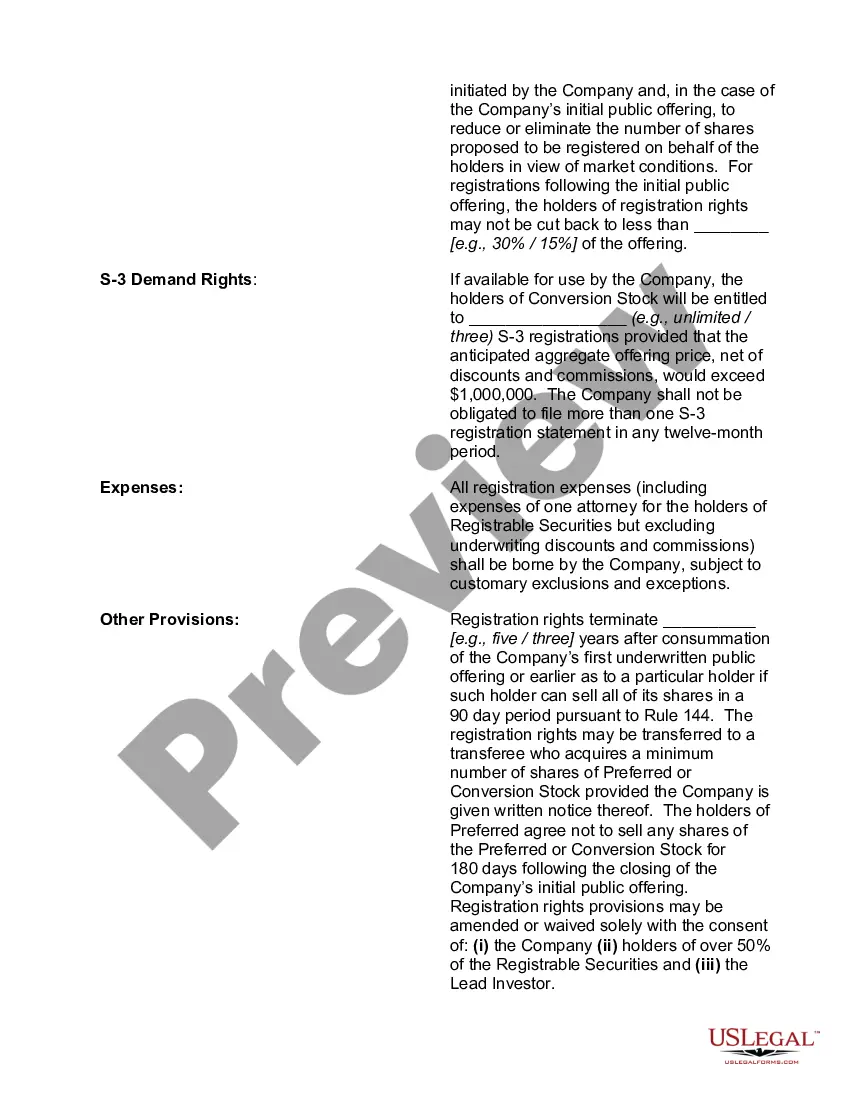
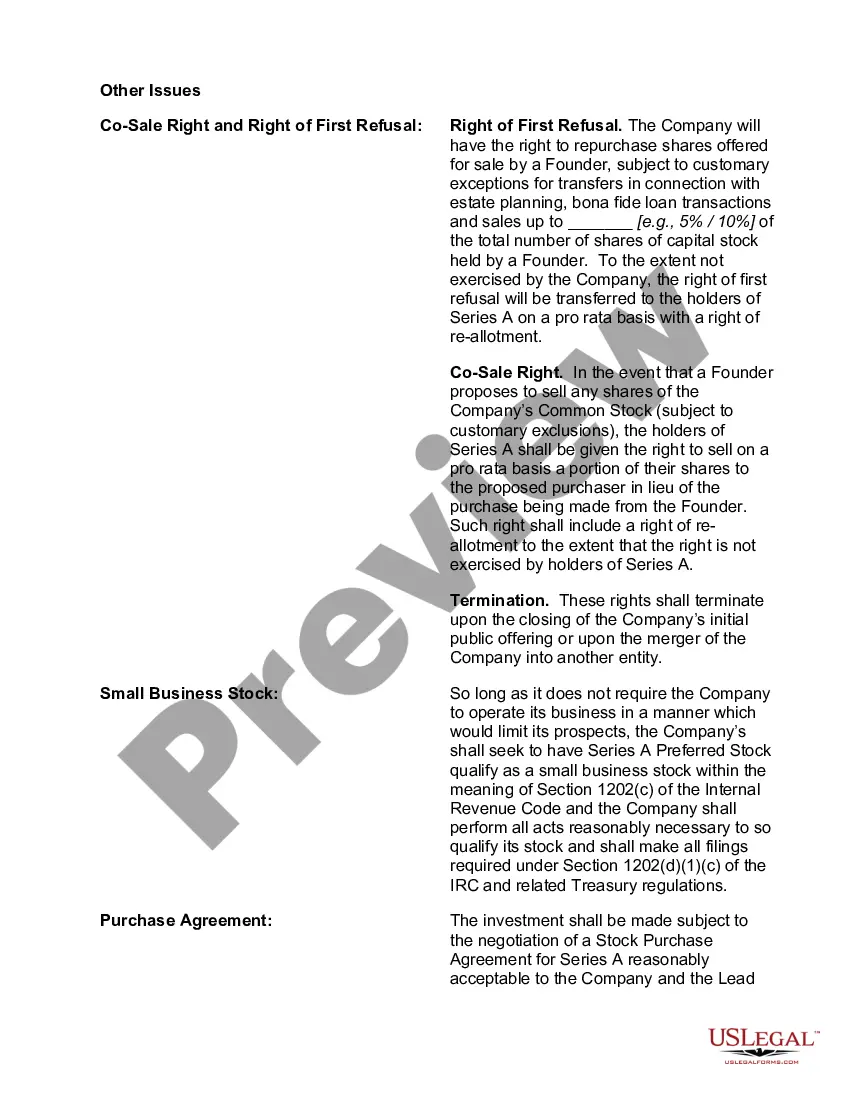
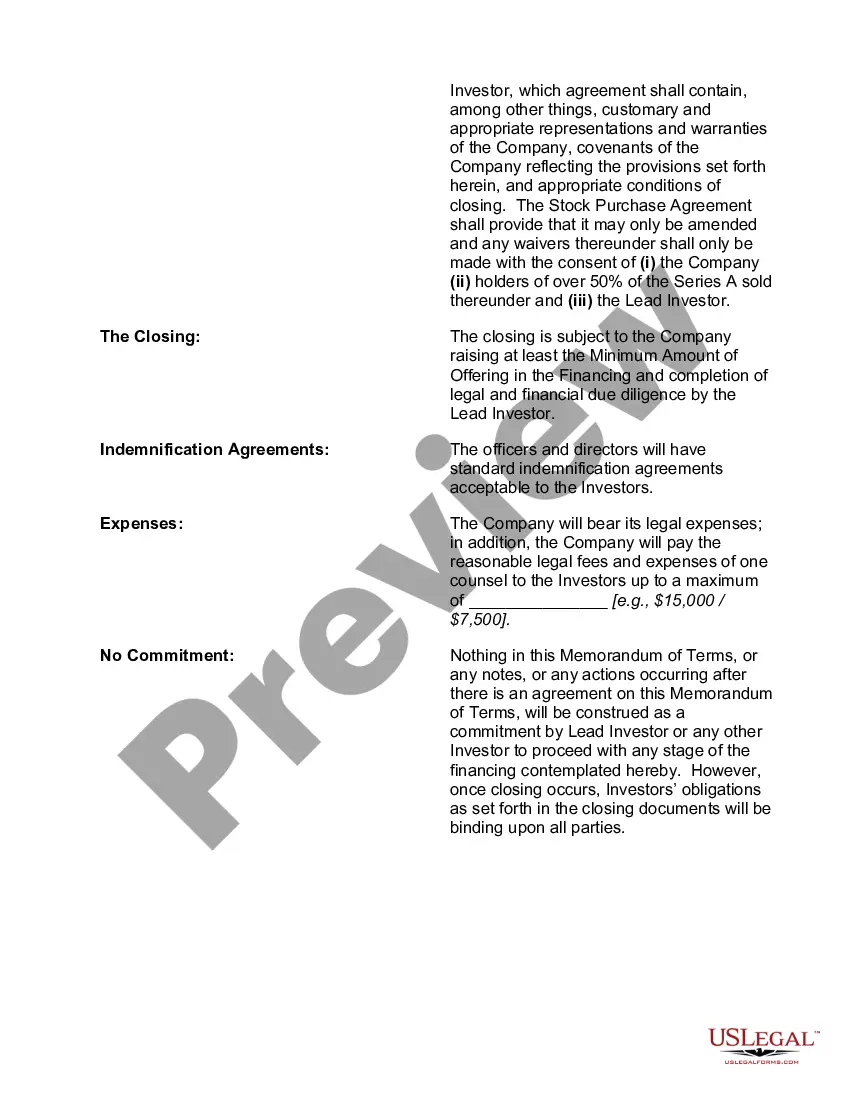
Get your form ready online
Our built-in tools help you complete, sign, share, and store your documents in one place.
Make edits, fill in missing information, and update formatting in US Legal Forms—just like you would in MS Word.
Download a copy, print it, send it by email, or mail it via USPS—whatever works best for your next step.
Sign and collect signatures with our SignNow integration. Send to multiple recipients, set reminders, and more. Go Premium to unlock E-Sign.
If this form requires notarization, complete it online through a secure video call—no need to meet a notary in person or wait for an appointment.
We protect your documents and personal data by following strict security and privacy standards.

Make edits, fill in missing information, and update formatting in US Legal Forms—just like you would in MS Word.

Download a copy, print it, send it by email, or mail it via USPS—whatever works best for your next step.

Sign and collect signatures with our SignNow integration. Send to multiple recipients, set reminders, and more. Go Premium to unlock E-Sign.

If this form requires notarization, complete it online through a secure video call—no need to meet a notary in person or wait for an appointment.

We protect your documents and personal data by following strict security and privacy standards.
Looking for another form?




Form popularity
FAQ
A term sheet may be prepared by either party – the investor or the founder. Usually, if a venture capital firm is investing, the VC offers a term sheet.
Although the term sheet itself is not typically legally binding, some term sheets contain certain legally binding provisions (for example, confidentiality or exclusivity).
As mentioned earlier, a term sheet is a mostly non-binding document signed by the target company and the prospective buyer. However, it often also contains a few binding provisions, such as exclusivity, non-solicitation, and confidentiality clauses.
How to Prepare a Term Sheet Identify the Purpose of the Term Sheet Agreements. Briefly Summarize the Terms and Conditions. List the Offering Terms. Include Dividends, Liquidation Preference, and Provisions. Identify the Participation Rights. Create a Board of Directors. End with the Voting Agreement and Other Matters.
Viewed thus, the negotiation of a term sheet is a matter of adjustment of contractual rights and obligations on the various sides of a proposed investment transaction. The key players are obviously the investors, on the one hand, and the founder or the promoters, on the other.
6 Tips for Writing a Term Sheet List the terms. Summarize the terms. Explain the dividends. Include liquidation preference. Include voting agreement and closing items. Read, edit and prepare for signatures.
What is it? A term sheet is a summary document containing the key terms of a contract. It provides an overview of the most important commercial and other terms of a transaction or relationship. It can be called Key Terms or Heads of Terms, or sometimes a Letter of Intent.
Term sheets evidence serious intent, but generally are not legally binding.
Confidentiality agreements typically represent the first step in conversations with the other side. Once a confidentiality agreement is signed, the parties often turn to the negotiation of a term sheet or letter of intent, which outlines the terms and conditions of the arrangement.
“Term sheets”, “letters of intent”, “memoranda of understanding” and “agreements in principle” may constitute an enforceable agreement if the writing includes all the essential terms of an agreement. This is so even if “the parties intended to negotiate a 'fuller agreement'”.
