Divorce Alimony For Disabled Spouse In Clark
Description





Get your form ready online
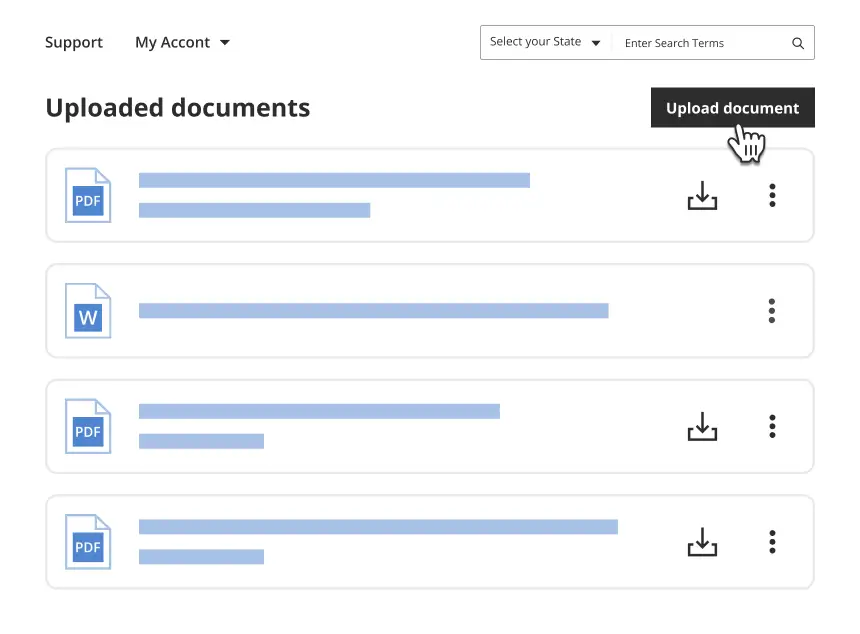
Our built-in tools help you complete, sign, share, and store your documents in one place.
Make edits, fill in missing information, and update formatting in US Legal Forms—just like you would in MS Word.
Download a copy, print it, send it by email, or mail it via USPS—whatever works best for your next step.
Sign and collect signatures with our SignNow integration. Send to multiple recipients, set reminders, and more. Go Premium to unlock E-Sign.
If this form requires notarization, complete it online through a secure video call—no need to meet a notary in person or wait for an appointment.
We protect your documents and personal data by following strict security and privacy standards.
Make edits, fill in missing information, and update formatting in US Legal Forms—just like you would in MS Word.
Download a copy, print it, send it by email, or mail it via USPS—whatever works best for your next step.
Sign and collect signatures with our SignNow integration. Send to multiple recipients, set reminders, and more. Go Premium to unlock E-Sign.

If this form requires notarization, complete it online through a secure video call—no need to meet a notary in person or wait for an appointment.
We protect your documents and personal data by following strict security and privacy standards.
Looking for another form?




Form popularity
FAQ
Alimony is usually around 40% of the paying party's income. This number is different in different states and different situations. The court also looks at how much the other party makes or could make and how much they need to maintain their standard of living.
The federal Consumer Credit Protection Act allows 50% of SSDI benefits to be garnished for the purposes of child support or alimony if you're supporting a spouse or child separate from the court order, and a maximum of 60% of your benefits otherwise. If you are 12 or more weeks in arrears, another 5% can be garnished.
In general, disability benefits are often considered separate property and not subject to division in a divorce. This is because disability benefits are intended to compensate an individual for their own disability and are typically not considered marital assets.
The person asking for alimony must show the court that he or she needs financial support, and that the other spouse has the ability to provide financial support.
Such accumulated sums would, however, be considered by courts in equitable division states when determining overall property distributions. When calculating alimony, SSDI payments are considered income, while SSI is not.
How to Prove You're Entitled to Reduced Alimony you've involuntarily lost a job or had a significant reduction in income. you have a new illness or disability that prevents you from working. your ex has remarried or is cohabiting with a new partner who's providing financial support or contributing to paying expenses.
The short answer to your question is no, your ex-wife will not be entitled to any portion of your disability. SCOTUS cases Howell and Mansell govern. Your disability cannot be divided (similar to how a military retirement can be divided) - not even by agreement, although you should never agree to do so.
In cases where one spouse is disabled or ill, the court may apply the disability exception, allowing for an extension of the support duration or an increase in the support amount. Additionally, the court may consider CPP disability benefits received by the disabled spouse when determining spousal support.
