Petition Notice Hearing With The President
Description
Get your form ready online
Our built-in tools help you complete, sign, share, and store your documents in one place.
Make edits, fill in missing information, and update formatting in US Legal Forms—just like you would in MS Word.
Download a copy, print it, send it by email, or mail it via USPS—whatever works best for your next step.
Sign and collect signatures with our SignNow integration. Send to multiple recipients, set reminders, and more. Go Premium to unlock E-Sign.
If this form requires notarization, complete it online through a secure video call—no need to meet a notary in person or wait for an appointment.
We protect your documents and personal data by following strict security and privacy standards.

Make edits, fill in missing information, and update formatting in US Legal Forms—just like you would in MS Word.

Download a copy, print it, send it by email, or mail it via USPS—whatever works best for your next step.

Sign and collect signatures with our SignNow integration. Send to multiple recipients, set reminders, and more. Go Premium to unlock E-Sign.

If this form requires notarization, complete it online through a secure video call—no need to meet a notary in person or wait for an appointment.

We protect your documents and personal data by following strict security and privacy standards.
Looking for another form?
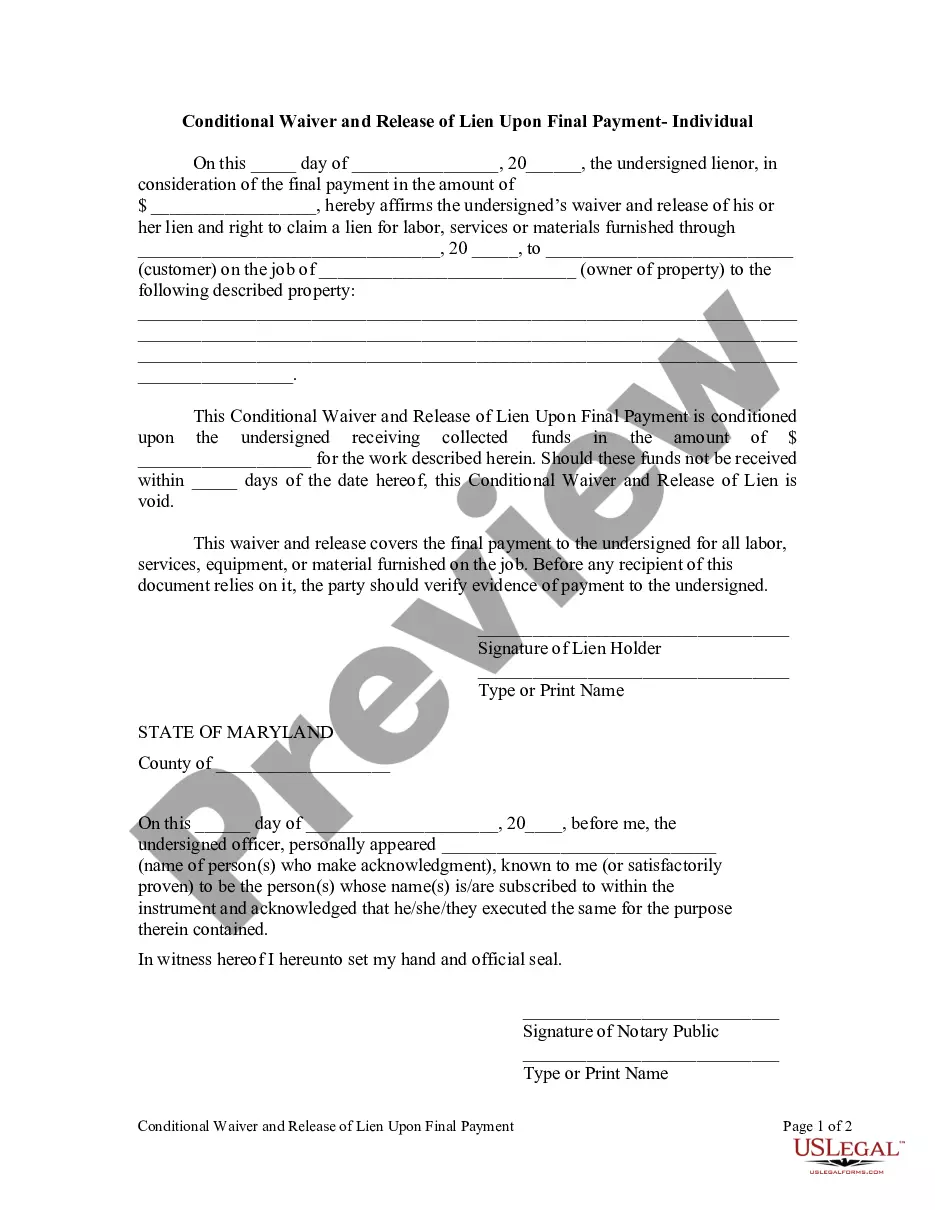
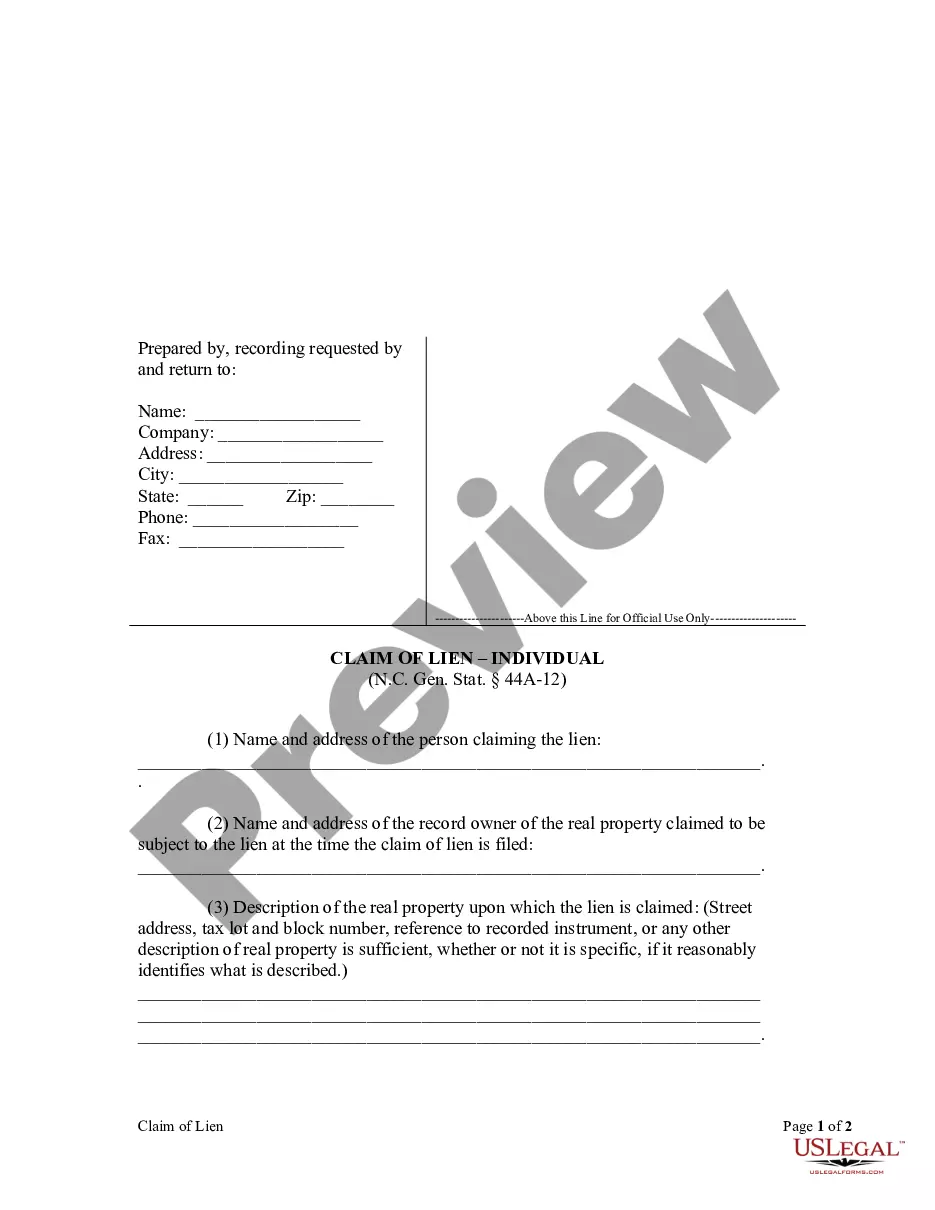
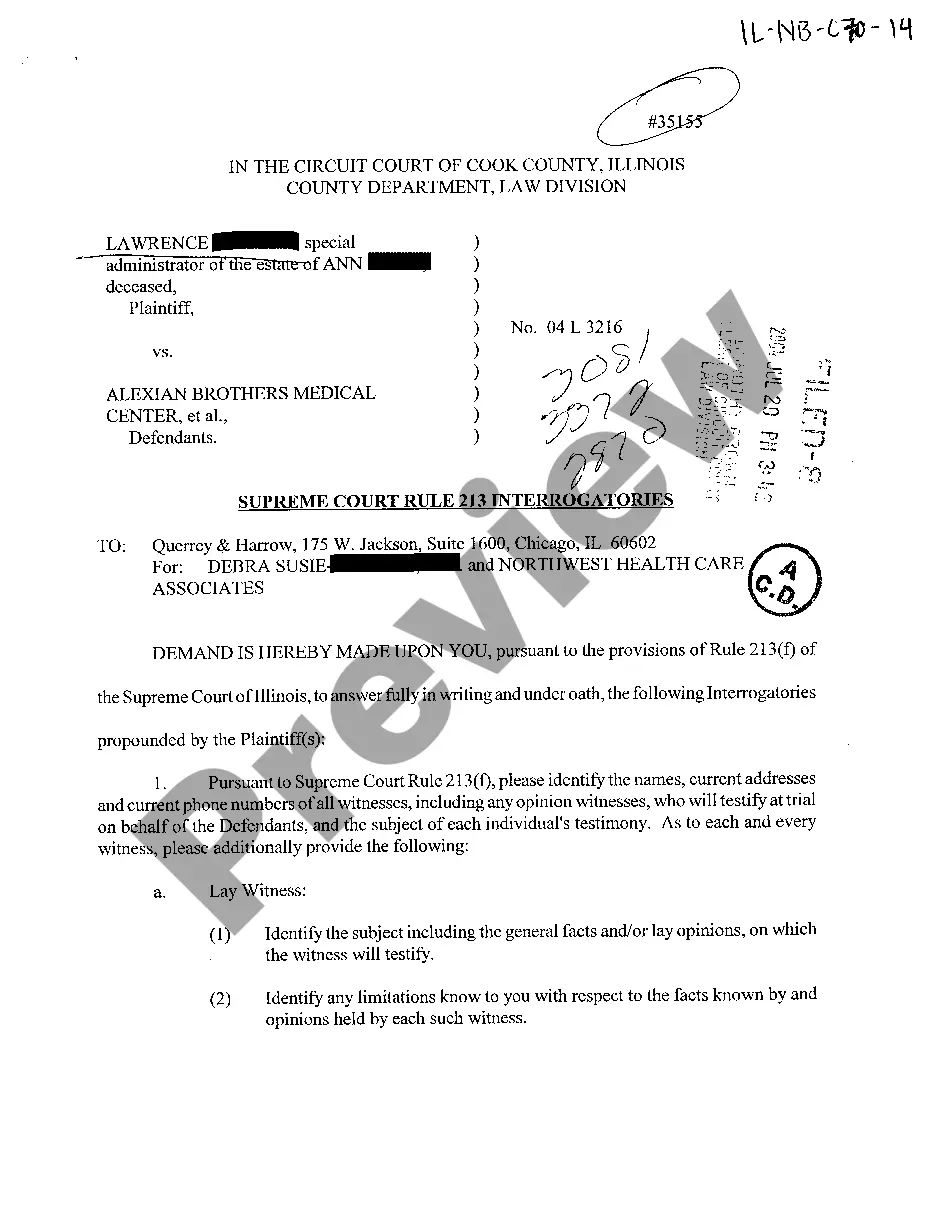
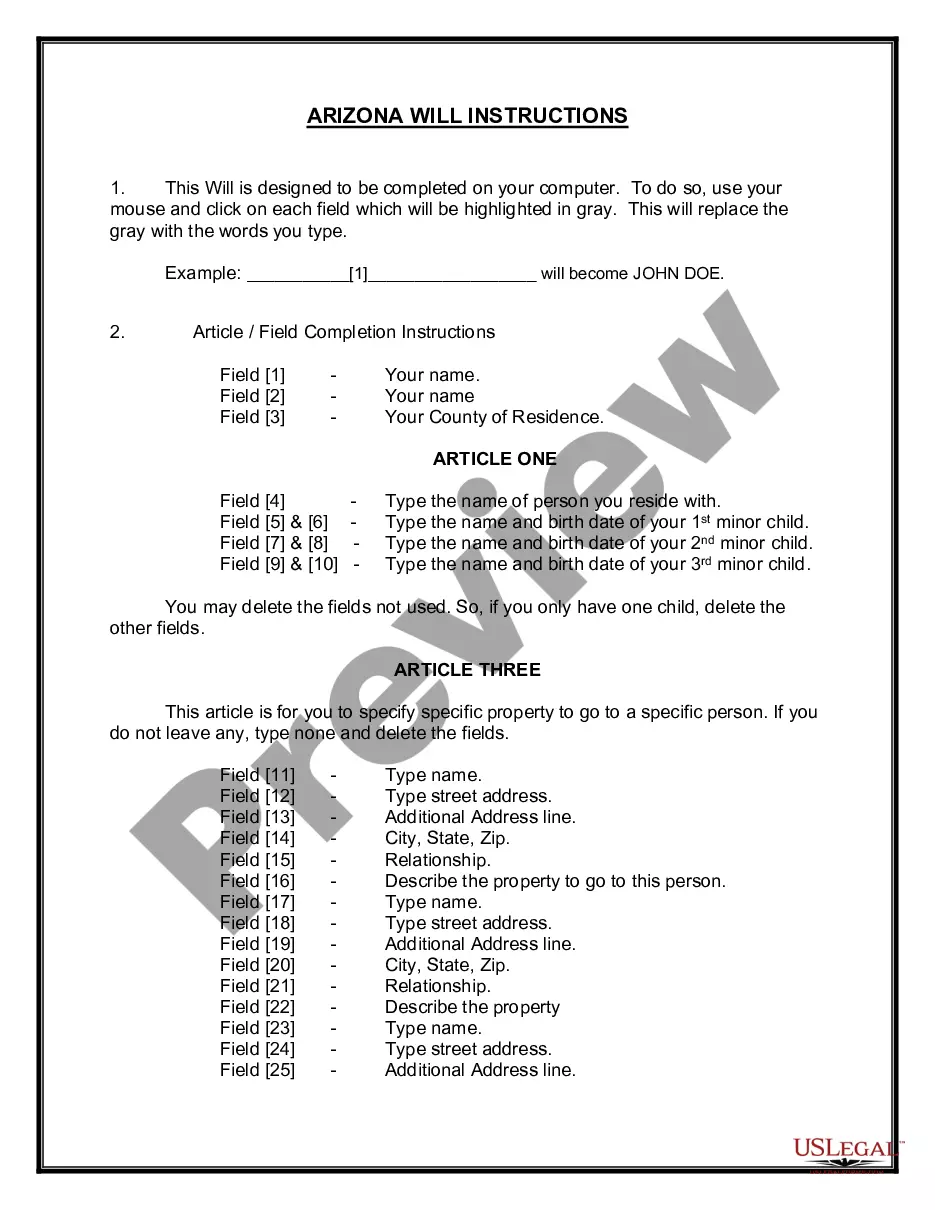



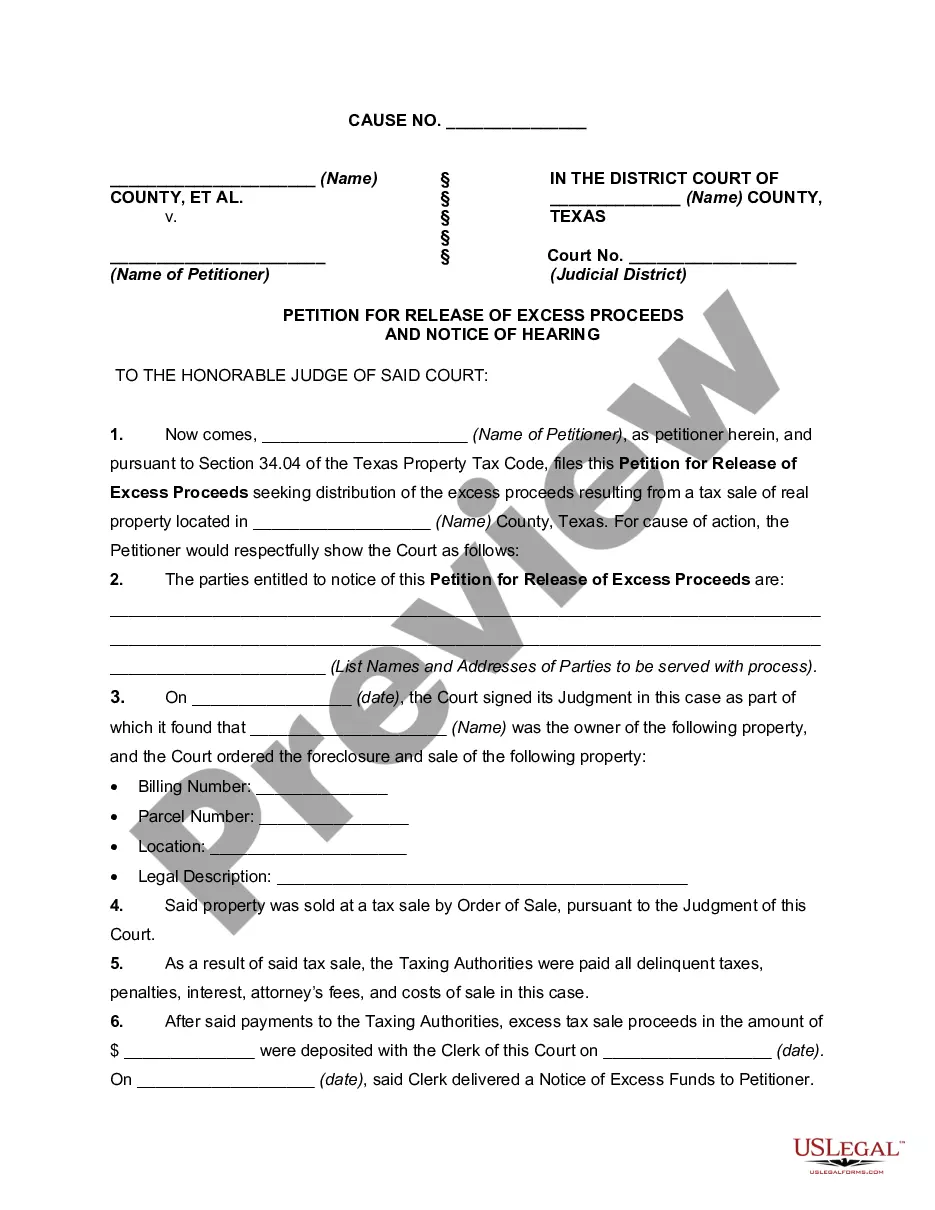
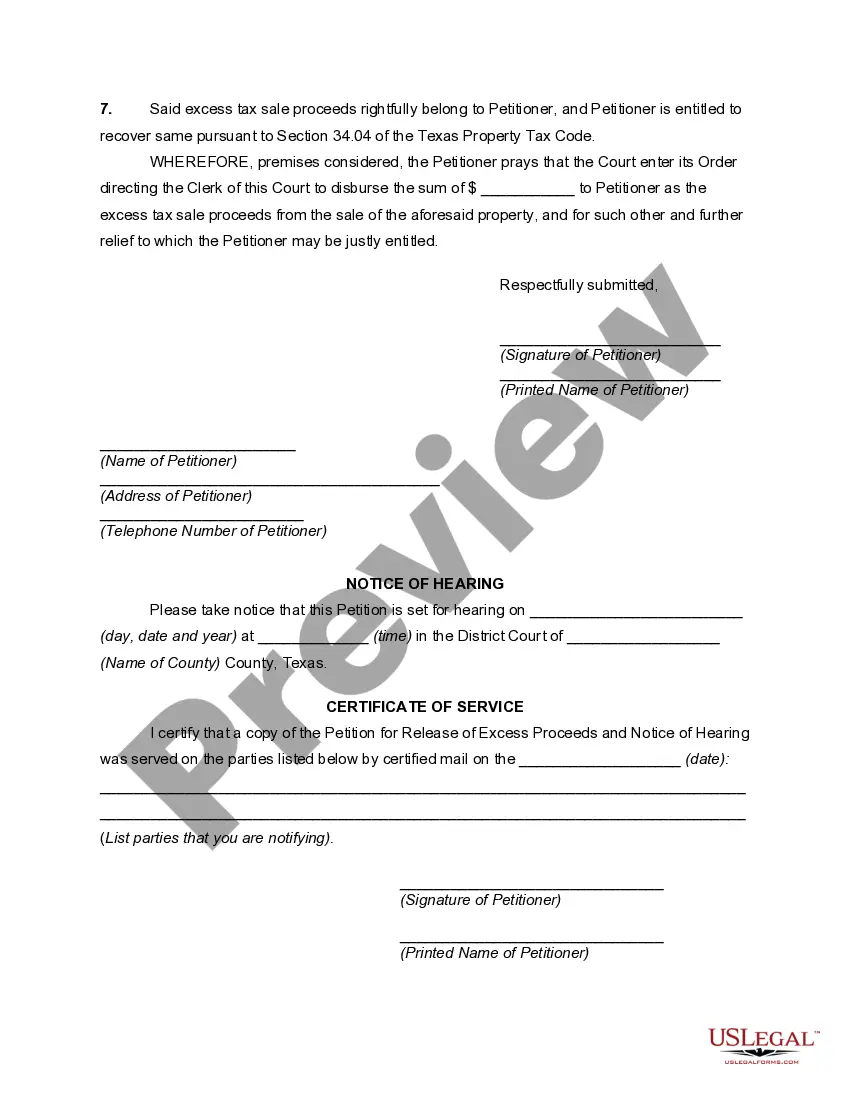
How to fill out Texas Petition For Release Of Excess Proceeds And Notice Of Hearing?
- Log in to your US Legal Forms account if you're a returning user. Ensure your subscription is active; if it has expired, renew it according to your plan.
- For new users, start by reviewing the available forms in the Preview mode to select the one relevant to your jurisdiction.
- If you can’t find the correct document, utilize the Search tab to explore other templates that might fit your needs.
- Once you find the appropriate form, click the Buy Now button and choose your preferred subscription plan, ensuring you create an account to access all resources.
- Complete your purchase using credit card details or PayPal. After payment, you can easily download the form to your device.
- Access your downloaded forms anytime by navigating to the My Forms section in your profile.
US Legal Forms not only provides a massive selection of over 85,000 fillable legal forms but also offers access to premium experts for guidance in completing your documents precisely.
Start simplifying your legal processes today with US Legal Forms. For more information, visit their website and discover how easy it is to access legal documentation.
Form popularity
FAQ
The government is required to acknowledge petitions, including those submitted for a petition notice hearing with the president. While there is no legal obligation for the government to act on every petition received, they must review and provide a response. This process allows citizens to express their concerns and requests to the leadership. If you're looking to effectively file your petition, consider using the services of USLegalForms. They can guide you through creating the necessary documentation to increase your chances of a successful notice hearing.
To initiate a petition notice hearing with the president, you must first gather support for your cause. This often starts with drafting a clear and concise petition that outlines your concerns and desired outcomes. Once you have your petition, you can submit it to your congressional representative, who can advocate on your behalf. Remember, the more signatures and public support you have, the stronger your petition will be, increasing the likelihood of a hearing.
The court relies on evidence, legal precedents, and the statements of involved parties to support its decisions. In the context of a petition notice hearing with the president, the backing often comes from the petitioners, witnesses, and legal experts presenting their views. This collaborative approach helps the court reach fair and informed verdicts.
To write a petition for court, you should clearly outline your request and the legal grounds for it. Include necessary details such as the parties involved and the desired outcome, ensuring it's concise and focused. Consider using the resources available on the uslegalforms platform to guide you in drafting an effective petition notice hearing with the president.
A petition hearing is a judicial event where parties present petitions for the court's consideration. In the case of a petition notice hearing with the president, the court evaluates the formal requests related to significant legal matters. This process is vital for ensuring that the interests and voices of petitioners are acknowledged and evaluated.
In a petition, the petitioner presents their case and legal arguments to the court. During a petition notice hearing with the president, the relevant authorities may consider the petitioner's reasons, witness statements, and supporting documents. Ultimately, the court will decide whether to grant or deny the petition based on its merits.
A petition is a formal request for court action, while a trial is a judicial examination of evidence to resolve disputes. The petition notice hearing with the president involves a review of the petition's merits, whereas a trial focuses on determining the outcome based on evidence and legal arguments. Understanding this distinction is crucial for navigating the legal process.
The main purpose of a petition is to formally request a decision or action from the court. Through the petition notice hearing with the president, petitioners seek change or resolution regarding specific issues. This legal tool empowers individuals to bring their concerns to the forefront of judicial consideration.
A petition hearing is a legal proceeding where the court listens to requests made in a petition. In this context, a petition notice hearing with the president allows individuals or groups to present their case regarding certain legal actions. This process ensures that the concerns of the petitioners are formally addressed by the appropriate legal authority.
To request a meeting with the IRS, you should call the IRS office directly or visit their website to find specific procedures. In your request, explain the issues that require a face-to-face discussion, particularly if they relate to your petition notice hearing with the president. Proper preparation can lead to a more productive meeting.