Texas Estate Individual For The Arts
Description

Get your form ready online
Our built-in tools help you complete, sign, share, and store your documents in one place.
Make edits, fill in missing information, and update formatting in US Legal Forms—just like you would in MS Word.
Download a copy, print it, send it by email, or mail it via USPS—whatever works best for your next step.
Sign and collect signatures with our SignNow integration. Send to multiple recipients, set reminders, and more. Go Premium to unlock E-Sign.
If this form requires notarization, complete it online through a secure video call—no need to meet a notary in person or wait for an appointment.
We protect your documents and personal data by following strict security and privacy standards.

Make edits, fill in missing information, and update formatting in US Legal Forms—just like you would in MS Word.

Download a copy, print it, send it by email, or mail it via USPS—whatever works best for your next step.

Sign and collect signatures with our SignNow integration. Send to multiple recipients, set reminders, and more. Go Premium to unlock E-Sign.

If this form requires notarization, complete it online through a secure video call—no need to meet a notary in person or wait for an appointment.

We protect your documents and personal data by following strict security and privacy standards.
Looking for another form?

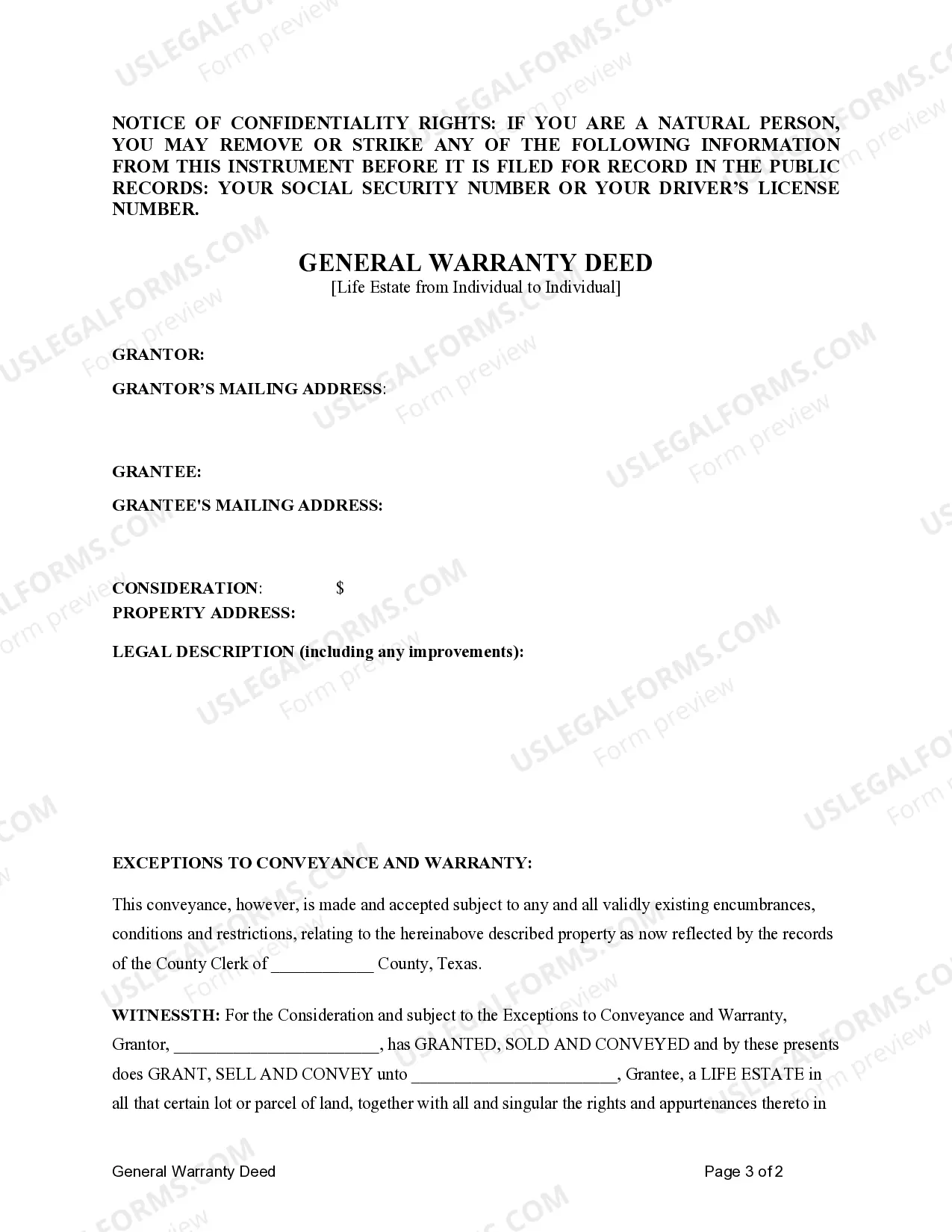
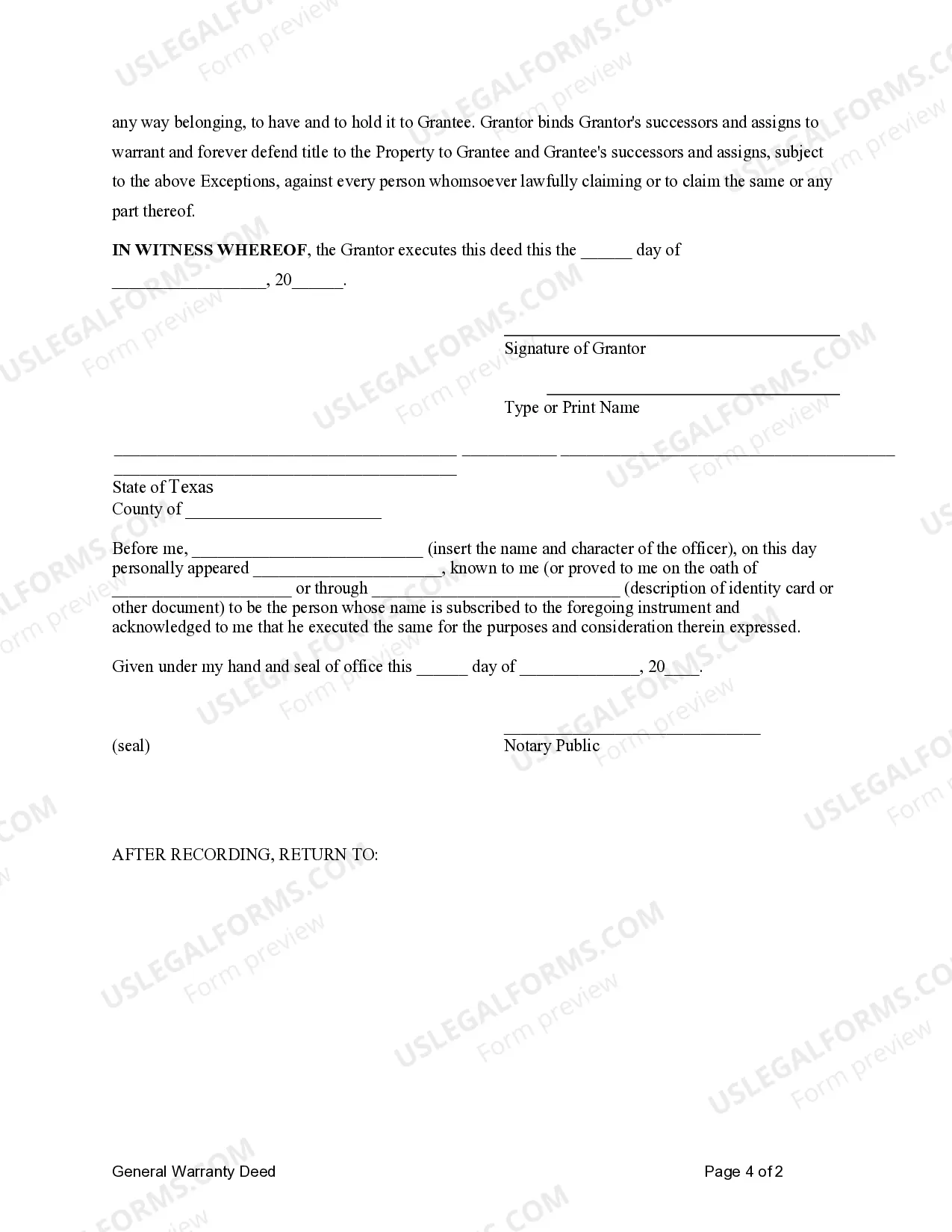
How to fill out Texas General Warrant Deed - Life Estate From Individual To Individual?
- Log in to your account if you're a returning user, ensuring your subscription is currently active.
- For first-time users, preview the form descriptions to choose the correct template that aligns with your specific needs and local jurisdiction.
- Use the Search function to find alternative templates if none match your requirements.
- Select the desired document and click on the Buy Now button to pick your preferred subscription plan.
- Complete your purchase by entering your payment details via credit card or PayPal.
- Download your completed form and save it for easy access in your My Forms section.
US Legal Forms provides a rich collection of over 85,000 customizable legal forms, giving you the flexibility to create precise documents tailored to your needs. Additionally, their access to premium experts ensures you can receive assistance to complete your forms correctly.
Don’t miss out on the convenience of having essential legal documents at your fingertips. Start using US Legal Forms today, and simplify your estate planning process!
Form popularity
FAQ
Yes, in Texas, it is possible to settle an estate without probate under certain conditions, especially if the estate's value is below a certain threshold. Small estates may qualify for expedited procedures that simplify the settlement process. A Texas estate individual for the arts can utilize US Legal Forms to find the necessary resources and forms to facilitate this approach.
In many cases, Texas banks can release funds without probate for accounts held in the name of a deceased individual. This typically applies to accounts that have designated beneficiaries. However, a Texas estate individual for the arts should ensure that all accounts are properly documented to avoid legal issues.
Legal heirs in Texas generally include a deceased person's children, spouse, and sometimes parents, depending on the circumstances. If no direct heirs exist, the estate may pass to more distant relatives under intestacy laws. Knowing the legal heirs is vital for a Texas estate individual for the arts to correctly execute estate distribution.
In Texas, certain assets are exempt from probate, including life insurance payouts, retirement accounts, and jointly owned properties. These are often designated to specific beneficiaries, bypassing the probate process entirely. Consequently, a Texas estate individual for the arts can effectively manage these exempt assets to streamline the estate settlement process.
Failing to probate an estate in Texas can lead to various complications, including challenges in accessing the deceased’s assets. A Texas estate individual for the arts may find it difficult to transfer property ownership or settle debts without probate. Additionally, heirs may face increased risks of disputes, which can delay estate resolution.
In Texas, when a well-drafted will has been probated, the executor appointed in the will takes responsibility for selling the deceased person's house. This executor acts as a Texas estate individual for the arts, ensuring that all estate assets are handled according to the will. They must follow the legal guidelines to prevent disputes among heirs.
Section 256.156 of the Texas Estates Code addresses the distribution process for estate assets. It outlines how a Texas estate individual for the arts must manage and distribute property after someone has passed away. Understanding this section ensures proper compliance with state laws, which is crucial for effective estate management.
Yes, you can file probate in Texas without a lawyer, especially for a Texas estate individual for the arts. However, navigating the legal requirements can be complex, so you should be thorough in your understanding of the process. Utilizing platforms like USLegalForms can provide you with the necessary forms and guidance to help streamline your probate filing.
To file for the role of executor for a Texas estate individual for the arts, you must start by submitting an application to the probate court in the county where the deceased lived. This application should include the will and relevant documents to prove your identity and relationship to the deceased. Once filed, the court will review your application and may set a hearing to finalize your appointment.
In Texas, certain situations disqualify an individual from serving as an executor for a Texas estate individual for the arts. These include being convicted of a felony, being declared legally incapacitated, or failing to comply with a court order. If you have concerns regarding an executor's eligibility, it is essential to consult with legal counsel.