Texas Estate Individual With Us Citizenship
Description


Get your form ready online
Our built-in tools help you complete, sign, share, and store your documents in one place.
Make edits, fill in missing information, and update formatting in US Legal Forms—just like you would in MS Word.
Download a copy, print it, send it by email, or mail it via USPS—whatever works best for your next step.
Sign and collect signatures with our SignNow integration. Send to multiple recipients, set reminders, and more. Go Premium to unlock E-Sign.
If this form requires notarization, complete it online through a secure video call—no need to meet a notary in person or wait for an appointment.
We protect your documents and personal data by following strict security and privacy standards.

Make edits, fill in missing information, and update formatting in US Legal Forms—just like you would in MS Word.

Download a copy, print it, send it by email, or mail it via USPS—whatever works best for your next step.

Sign and collect signatures with our SignNow integration. Send to multiple recipients, set reminders, and more. Go Premium to unlock E-Sign.

If this form requires notarization, complete it online through a secure video call—no need to meet a notary in person or wait for an appointment.

We protect your documents and personal data by following strict security and privacy standards.
Looking for another form?
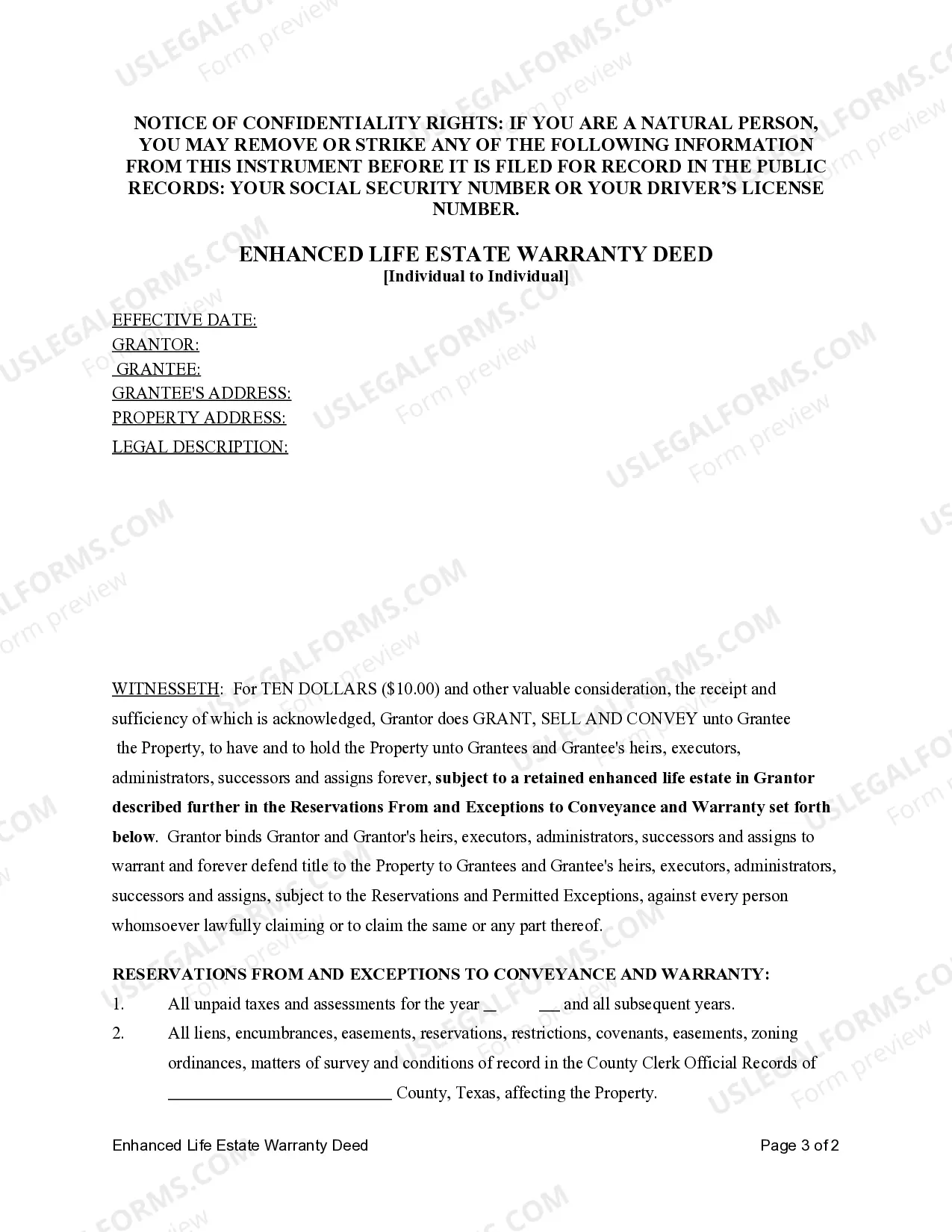
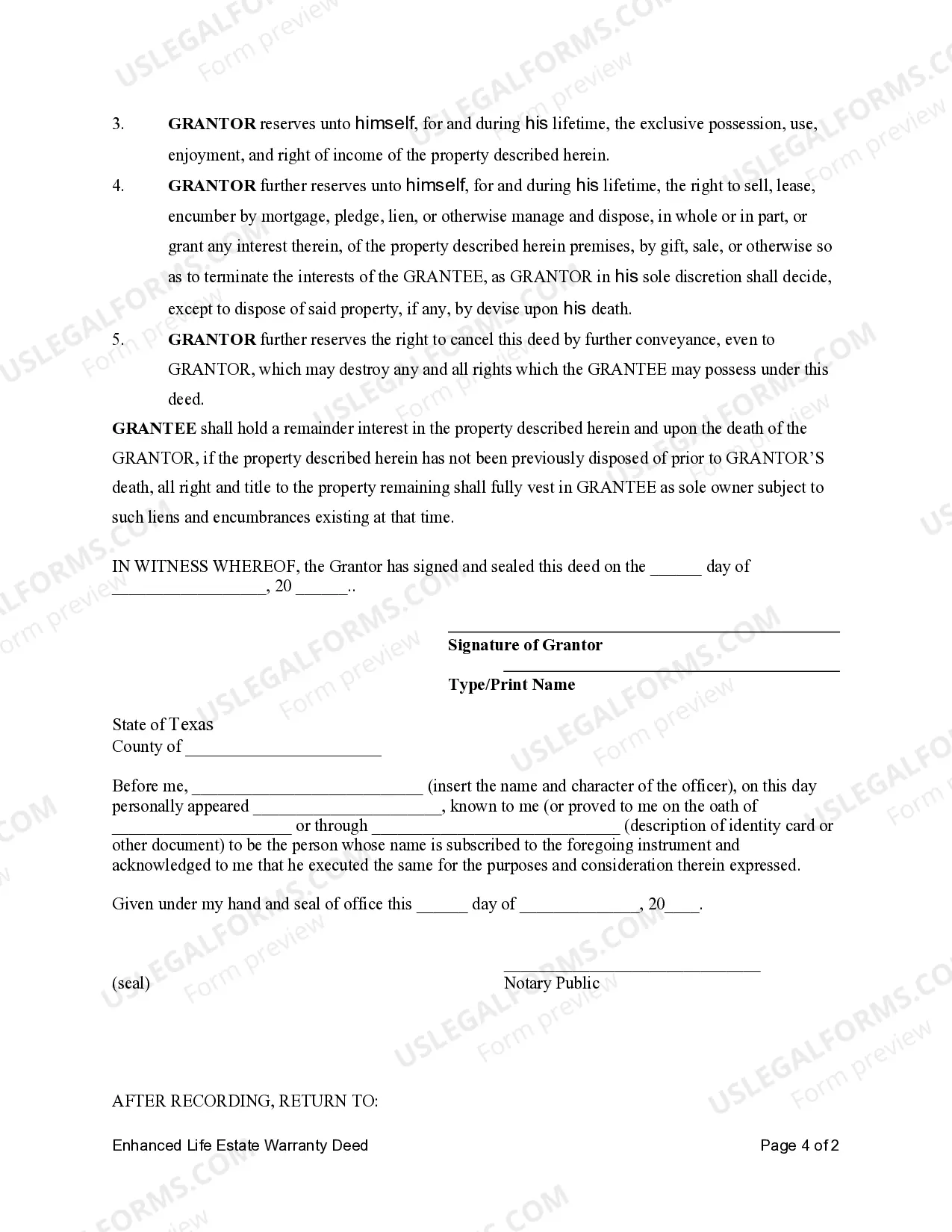
How to fill out Texas Lady Bird Or Enhanced Life Estate Warranty Deed - Individual To Individual?
- Log into your US Legal Forms account if you are a returning user. Ensure your subscription is current; if not, renew it as required.
- Preview your selected form. Confirm that it fits your estate planning needs and aligns with Texas jurisdiction regulations.
- Search for alternative templates if necessary. Use the search feature to find the correct document that suits your requirements.
- Purchase the chosen form by clicking the 'Buy Now' button. Select a subscription plan and create an account for full access.
- Complete your purchase by entering your payment details either via credit card or PayPal.
- Download your form to your device. Access it anytime through the 'My Forms' section in your profile for easy completion.
US Legal Forms empowers you to execute legal documents efficiently, utilizing an extensive library that is user-friendly and comprehensive.
Begin your estate planning today with us. Visit US Legal Forms to unlock your personalized legal documents.
Form popularity
FAQ
Yes, a non-U.S. citizen can be a beneficiary of an Individual Retirement Account (IRA), but there are specific regulations to understand. The rules governing distributions and taxation can differ significantly for non-citizens when compared to U.S. citizens. Given these complexities, it’s wise to seek advice from a tax professional or estate planner particularly familiar with the Texas estate individual with U.S. citizenship guidelines. U.S. Legal Forms offers practical solutions for setting up your IRA correctly.
Listing a non-U.S. citizen as a beneficiary in your Texas estate plan is indeed permissible and can facilitate the transfer of your assets. This option works well for individuals with international ties, ensuring that loved ones overseas receive their intended inheritance. Nevertheless, consider potential tax obligations that might affect the beneficiary's inheritance. U.S. Legal Forms provides necessary resources for clear beneficiary designation.
U.S. citizen can serve as a personal representative in a Texas estate, provided they meet certain eligibility criteria. The chosen individual should have the capacity to perform this role responsibly and understand the estate's specifics. It’s advisable to consult with a Texas estate attorney to ensure compliance with local laws governing personal representatives. Using U.S. Legal Forms can help streamline the process.
Yes, a non-U.S. citizen can be named as a beneficiary in a Texas estate plan. This inclusion is often beneficial for individuals wishing to leave assets to family members or loved ones abroad. However, tax implications may arise, making it essential to consult with an attorney specializing in Texas estate individual with U.S. citizenship. Tools like U.S. Legal Forms can guide you in creating a solid estate plan.
In most cases, a non-U.S. citizen cannot serve as an executor of a Texas estate individual with US citizenship. Texas law generally requires the executor to be either a U.S. citizen or a legal resident. However, there are exceptions depending on the specific circumstances of the estate. To ensure proper execution of the estate, consider consulting resources or platforms like US Legal Forms, which can guide you through the requirements and help you find the right solutions.
Yes, US citizens, including Texas estate individuals with US citizenship, must report foreign inheritances exceeding $100,000 to the IRS. Transparency regarding foreign assets helps avoid legal complications and ensures compliance with tax regulations. If you are unsure about the reporting process, consider consulting USLegalForms for assistance and sound advice on managing foreign inheritances.
U.S. citizen can create an estate plan in the US, which is important for those wishing to protect their interests in America. For a Texas estate individual with US citizenship, collaborating with a noncitizen can enhance your estate planning efforts. Clear legal strategies will help address any unique challenges your situation presents. USLegalForms offers tools to create a tailored estate plan effectively.
Yes, a non-US citizen can be a beneficiary of a will, allowing you to include individuals from other countries in your estate plan. This inclusion is especially relevant for a Texas estate individual with US citizenship, as it broadens your options for legacy planning. Ensure you have a well-structured will to clarify your wishes and avoid complications. Utilizing services like USLegalForms will help you craft an effective document.
U.S. citizen can inherit any amount from a U.S. citizen without federal tax concerns, which is beneficial for the estate planning of a Texas estate individual with US citizenship. However, state laws may vary, and legal guidance is essential to ensure compliance with relevant regulations. If you're navigating this situation, platforms like USLegalForms can provide valuable support.
As a Texas estate individual with US citizenship, you can generally inherit an unlimited amount without owing federal taxes. However, the estate itself may be subject to taxes if its value exceeds the federal threshold, which is currently over $12 million. Knowing these thresholds helps you plan effectively and may prevent unexpected tax implications. It's wise to consult resources like USLegalForms to understand your options.