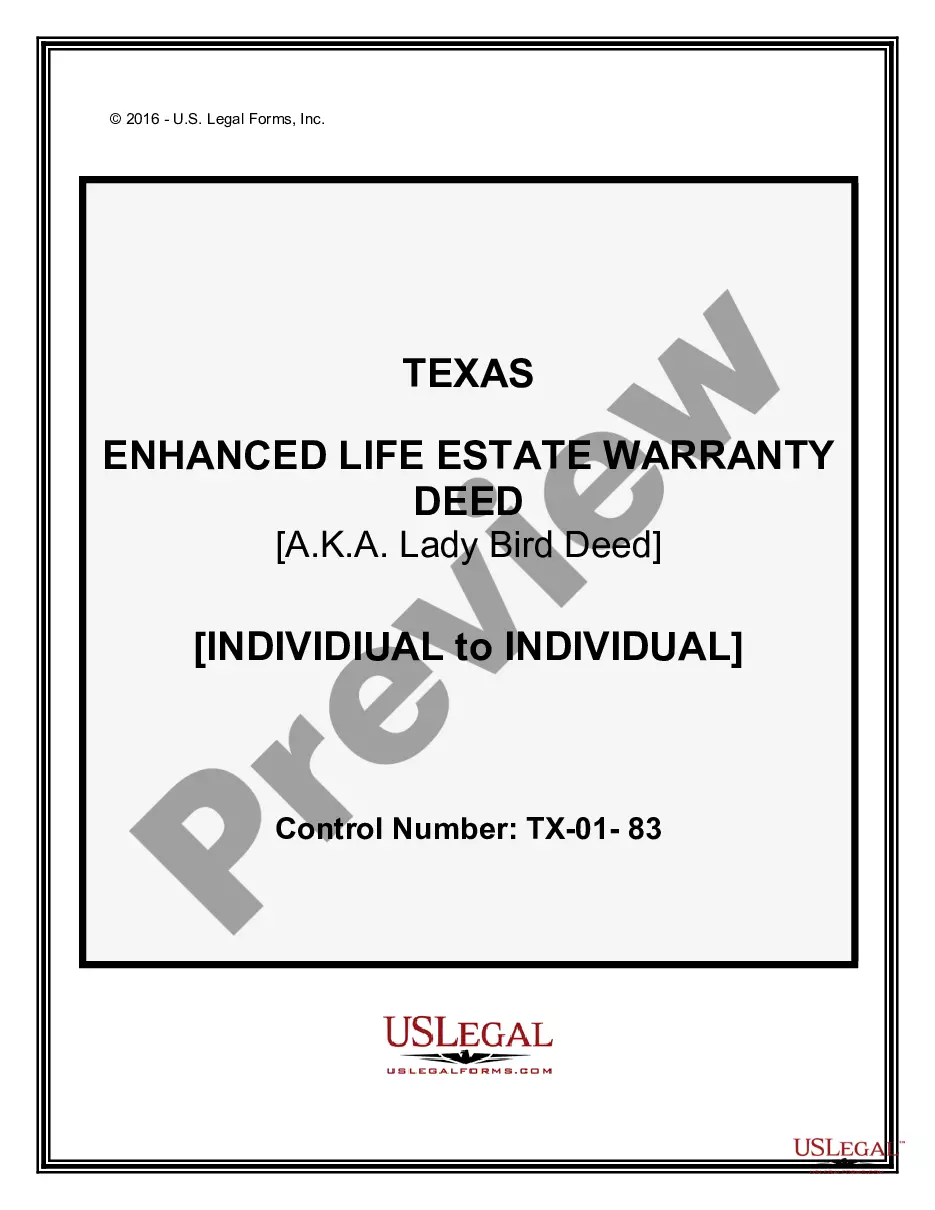
Enhanced Life Deed Texas With A Family Tree
Description


Get your form ready online
Our built-in tools help you complete, sign, share, and store your documents in one place.
Make edits, fill in missing information, and update formatting in US Legal Forms—just like you would in MS Word.
Download a copy, print it, send it by email, or mail it via USPS—whatever works best for your next step.
Sign and collect signatures with our SignNow integration. Send to multiple recipients, set reminders, and more. Go Premium to unlock E-Sign.
If this form requires notarization, complete it online through a secure video call—no need to meet a notary in person or wait for an appointment.
We protect your documents and personal data by following strict security and privacy standards.

Make edits, fill in missing information, and update formatting in US Legal Forms—just like you would in MS Word.

Download a copy, print it, send it by email, or mail it via USPS—whatever works best for your next step.

Sign and collect signatures with our SignNow integration. Send to multiple recipients, set reminders, and more. Go Premium to unlock E-Sign.

If this form requires notarization, complete it online through a secure video call—no need to meet a notary in person or wait for an appointment.

We protect your documents and personal data by following strict security and privacy standards.
Looking for another form?
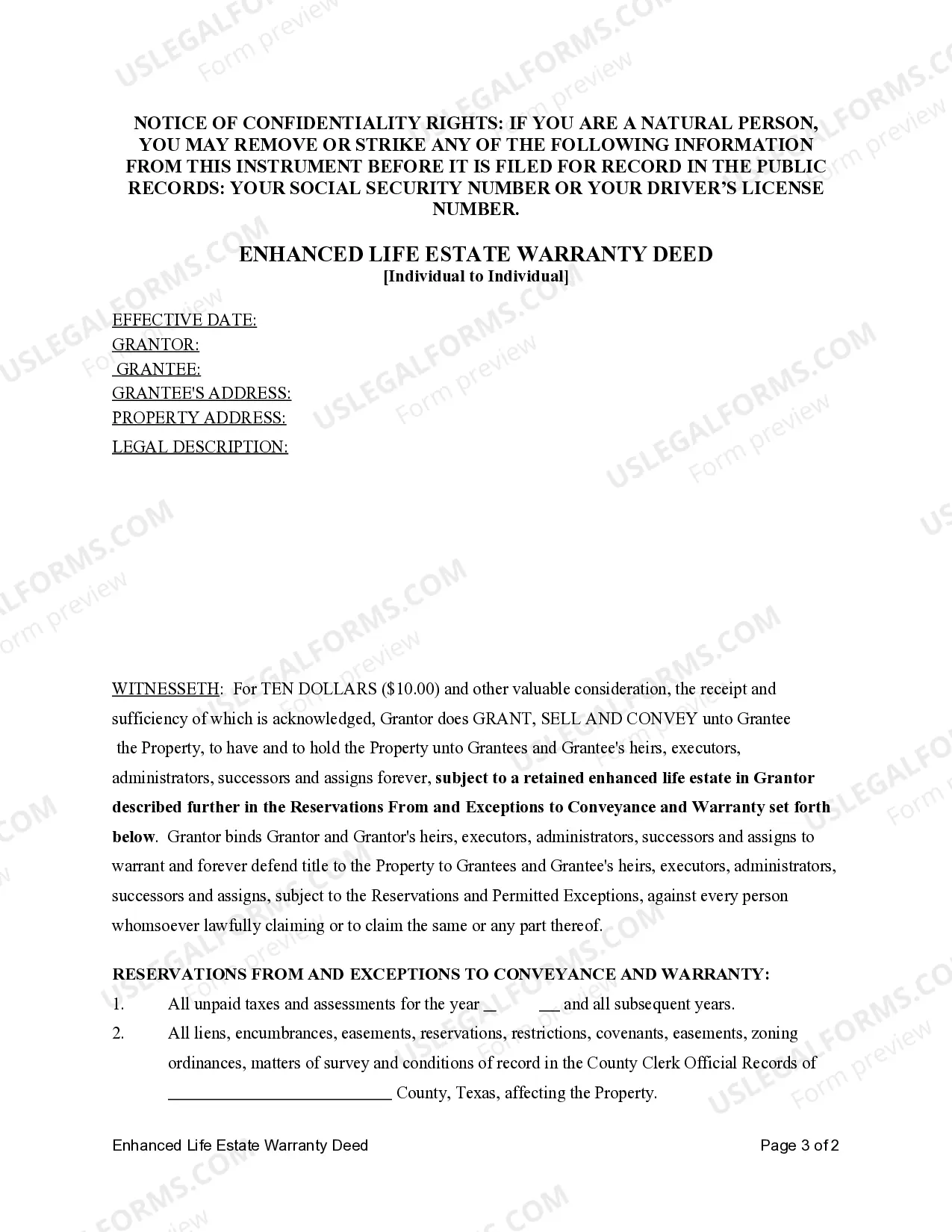
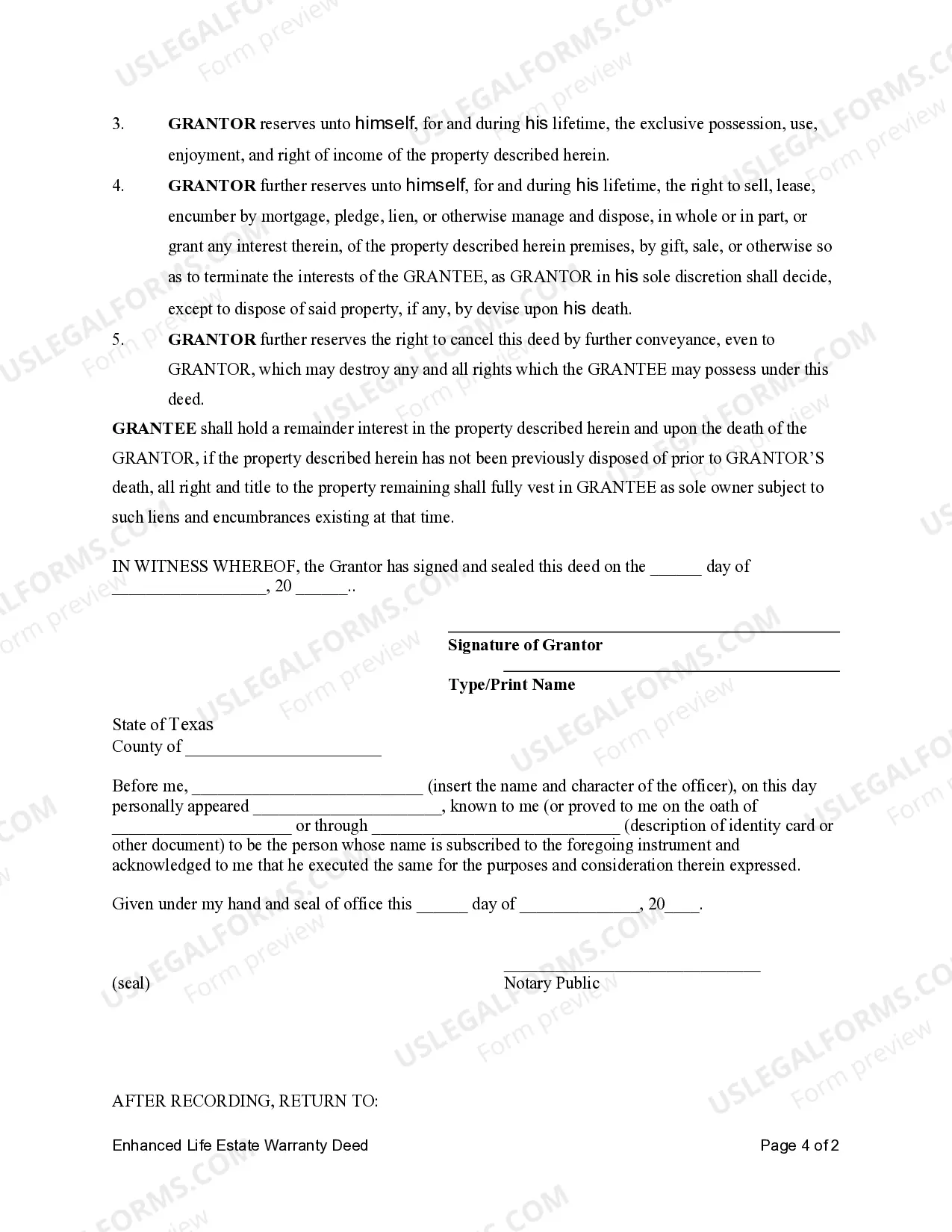
How to fill out Texas Lady Bird Or Enhanced Life Estate Warranty Deed - Individual To Individual?
- If you're a returning user, log in to your US Legal Forms account and select the enhanced life deed template for Texas.
- Review the template details and ensure it meets your local legal requirements and personal needs.
- If necessary, utilize the Search feature to find alternative templates that may better suit your situation.
- Click on the Buy Now button to select your preferred subscription plan, creating an account if you're a new user.
- Complete your purchase by providing your payment details to finalize your subscription.
- Access and download your chosen form, saving it to your device for completion and referencing it later in the My Forms section.
Using US Legal Forms empowers you to navigate the legal documentation process effectively. With a robust collection of over 85,000 forms, you have more options than other providers, ensuring you find the right documentation for your needs.
In conclusion, crafting an Enhanced Life Deed is streamlined with US Legal Forms. Leverage their extensive library today to protect your family’s future. Start your journey by exploring their resources now!
Form popularity
FAQ
An example of an enhanced life estate deed is when a parent transfers their home to their child but retains the right to live there for the rest of their life. This method allows the parent to avoid probate, while the child automatically becomes the owner upon the parent's passing. The concept aligns well with the enhanced life deed Texas with a family tree, highlighting the benefits of maintaining family ownership and nurturing generational wealth. For your needs, consider using US Legal Forms to easily create this important document.
To transfer a house deed to a family member in Texas, you can use an enhanced life deed. This document allows you to retain the right to live in your home while designating your family member as the future owner. You must complete the deed, sign it in the presence of a notary, and file it with the county clerk. Using the enhanced life deed Texas with a family tree ensures a smooth transfer while protecting your family's interests.
While it's not legally required to have a lawyer to transfer a deed in Texas, having legal assistance can simplify the process and ensure all paperwork is correctly prepared. This is particularly beneficial when navigating complex situations, such as using an enhanced life deed in Texas with a family tree. Platforms like USLegalForms can provide templates and guidance to help you with the transfer without needing extensive legal help.
A house can remain in a deceased person's name until the estate is settled or until the property is transferred to the heirs, which can be done through the probate process. If the deceased had an enhanced life deed in Texas with a family tree, the transfer may occur immediately upon death without probate. It's important to initiate the transfer process promptly to avoid complications with property taxes and maintenance.
To transfer ownership of property after death in Texas, you first need to determine if the property was part of an estate that requires probate. If the deceased had an enhanced life deed in Texas with a family tree, the heirs can often avoid probate and directly receive ownership. If probate is necessary, you should consult with a legal professional or use resources like USLegalForms for guidance on drafting required documents.
A life estate gives one person the right to use and enjoy a property during their lifetime, while an enhanced life estate in Texas includes the added benefit of transferring property to heirs without the need for probate. This means that upon the life tenant's death, the property automatically passes to the designated family members. Understanding the differences between these two types of deeds can help you make informed choices when estate planning.
To transfer a deed to a family member after death in Texas, you typically need to file the deceased person's will with the probate court. This process allows the court to validate the will and appoint an executor. Once probate is complete, the executor can transfer the property according to the provisions in the will. Additionally, if the deceased had an enhanced life deed in Texas with a family tree, the property may bypass probate, allowing for a smoother transfer.
Despite the advantages, a life estate does carry potential downsides. For example, the property may not be easily sold without involving the remainder beneficiaries, which can complicate financial decisions. Additionally, if you need to make significant repairs or alterations, obtaining consent from others may introduce delays and difficulties, ultimately affecting your enjoyment of the property.
Individuals often create life estates to ensure their property remains within the family while enjoying the right to live in it for the remainder of their life. It allows for clear planning and peace of mind, knowing that loved ones will inherit the property seamlessly. This planning approach can also help avoid costly probate fees, making it a financially sound decision.
An enhanced life estate deed in Texas allows property owners to retain the right to use their property during their lifetime, but it also enables them to designate beneficiaries who automatically receive the property upon their passing. This arrangement simplifies the transfer process and often bypasses the probate system. By using this deed, you ensure a smoother transition of property to your family, maintaining a family tree without cumbersome legal hurdles.