Pennsylvania Rules For Car Seats
Description

Get your form ready online
Our built-in tools help you complete, sign, share, and store your documents in one place.
Make edits, fill in missing information, and update formatting in US Legal Forms—just like you would in MS Word.
Download a copy, print it, send it by email, or mail it via USPS—whatever works best for your next step.
Sign and collect signatures with our SignNow integration. Send to multiple recipients, set reminders, and more. Go Premium to unlock E-Sign.
If this form requires notarization, complete it online through a secure video call—no need to meet a notary in person or wait for an appointment.
We protect your documents and personal data by following strict security and privacy standards.

Make edits, fill in missing information, and update formatting in US Legal Forms—just like you would in MS Word.

Download a copy, print it, send it by email, or mail it via USPS—whatever works best for your next step.

Sign and collect signatures with our SignNow integration. Send to multiple recipients, set reminders, and more. Go Premium to unlock E-Sign.

If this form requires notarization, complete it online through a secure video call—no need to meet a notary in person or wait for an appointment.

We protect your documents and personal data by following strict security and privacy standards.
Looking for another form?
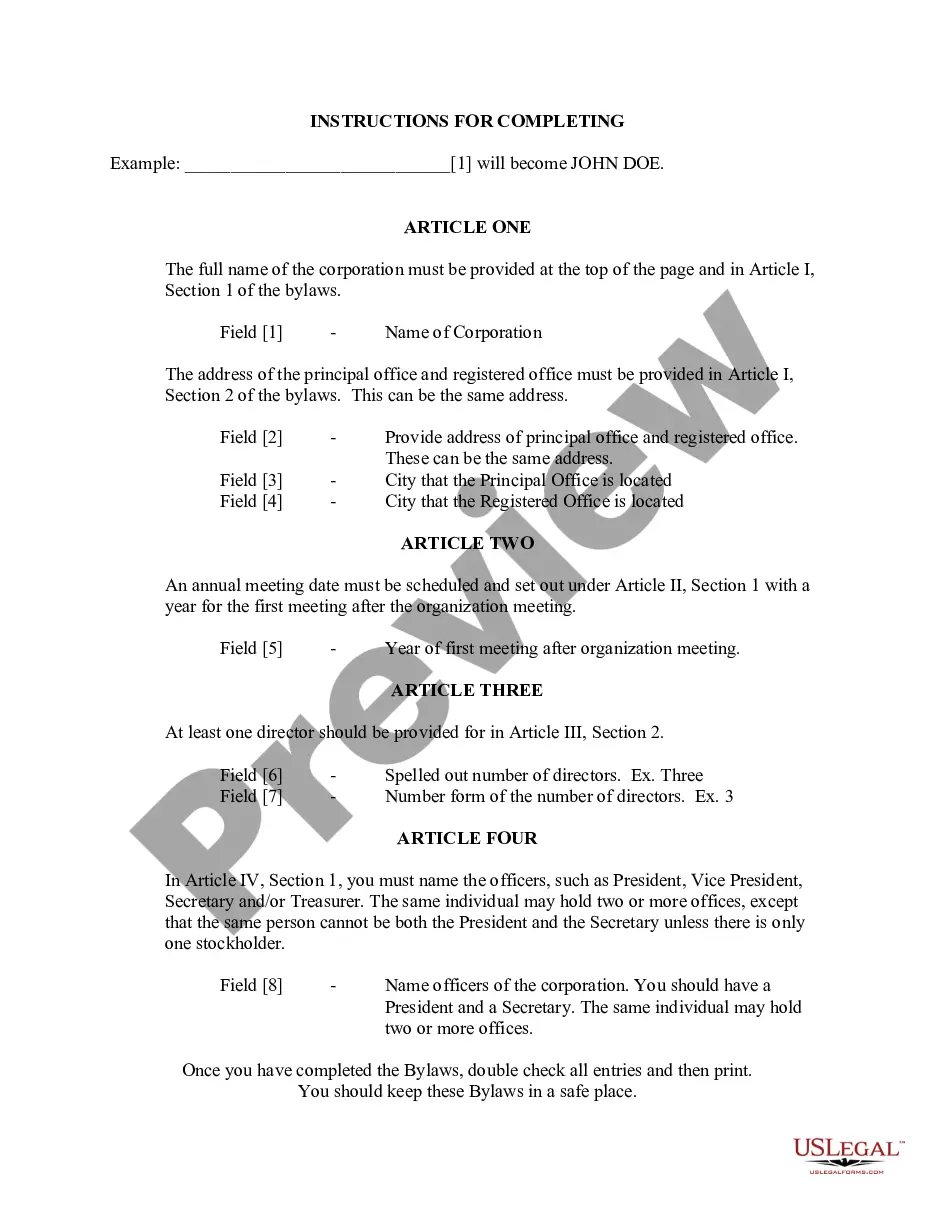
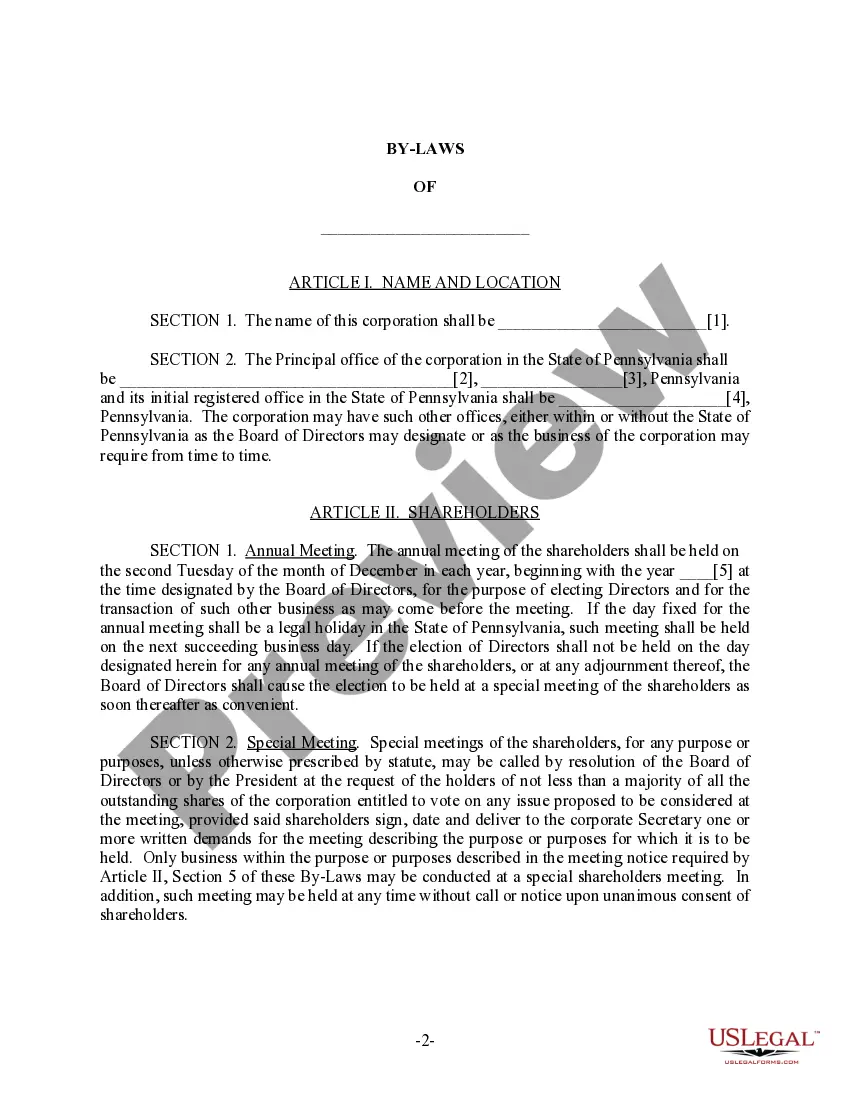
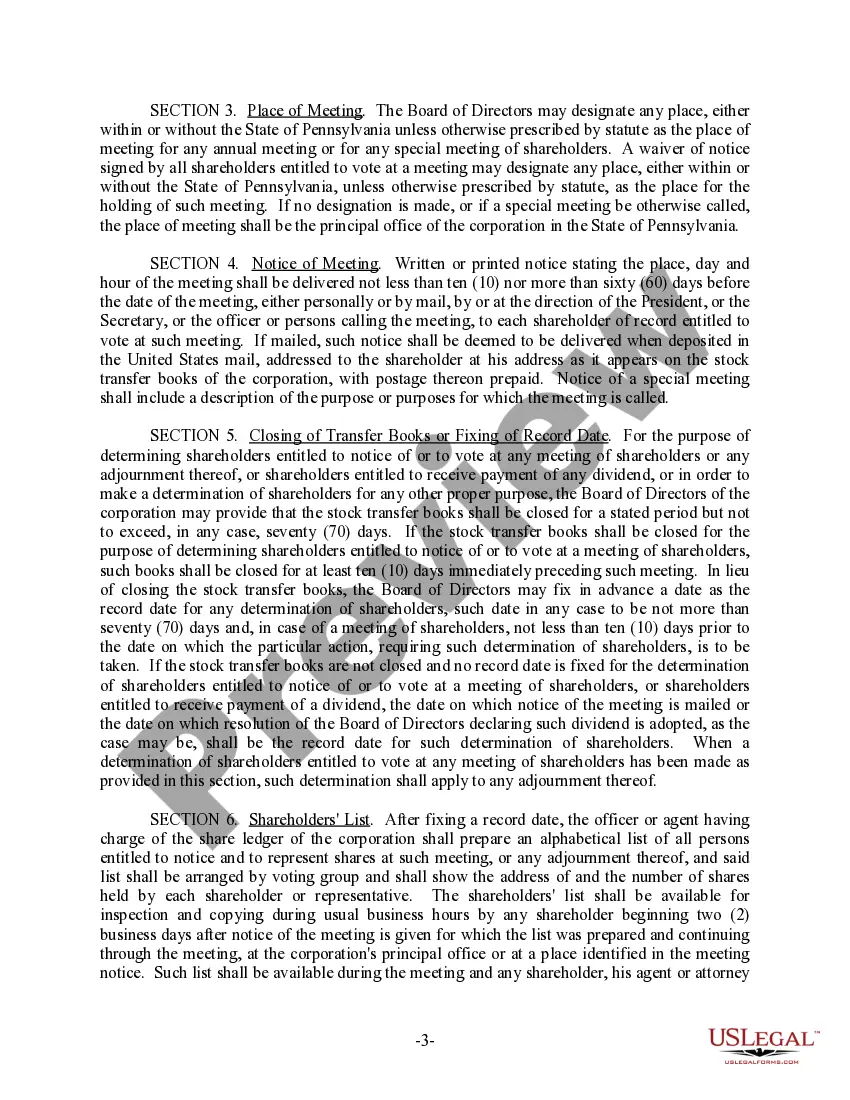
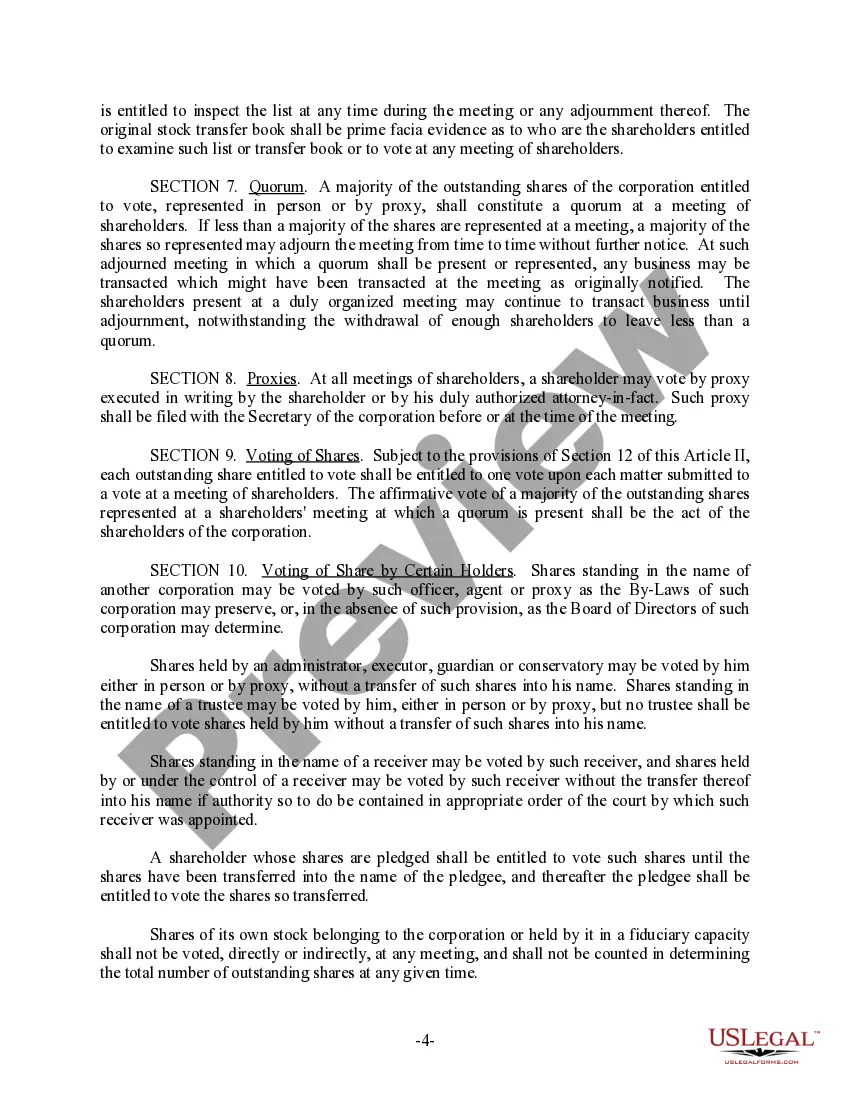
How to fill out Pennsylvania Bylaws For Corporation?
Legal documentation handling can be daunting, even for the most informed professionals.
When you are searching for Pennsylvania Regulations For Child Safety Seats and lack the time to devote to finding the appropriate and current version, the process can be challenging.
US Legal Forms caters to any requirements you may have, from personal to business documents, all in one location.
Leverage advanced tools to fill out and manage your Pennsylvania Regulations For Child Safety Seats.
Below are the steps to follow after downloading the form you require: Verify that this is the correct form by previewing it and reviewing its description. Confirm that the template is accepted in your state or county. Click Buy Now when you are ready. Select a subscription plan. Choose the format you need, and Download, fill out, sign, print, and send your document. Take advantage of the US Legal Forms online library, backed by 25 years of experience and reliability. Transform your everyday document management into a seamless and user-friendly experience today.
- Access a valuable resource library of articles, guides, and materials relevant to your situation and requirements.
- Save time and effort searching for the documents you need, and utilize US Legal Forms’ sophisticated search and Review tool to find Pennsylvania Regulations For Child Safety Seats and obtain it.
- If you possess a membership, Log In to your US Legal Forms account, seek the form, and obtain it.
- Check the My documents tab to view the documents you have previously saved and to organize your folders as you wish.
- If you are new to US Legal Forms, create an account to gain unlimited access to all platform benefits.
- A robust online form repository can be a transformative resource for anyone aiming to navigate these matters effectively.
- US Legal Forms stands as a frontrunner in online legal documents, offering over 85,000 state-specific legal forms available to you at any time.
- With US Legal Forms, you can access legal and business forms tailored to your state or county.
Form popularity
FAQ
Yes, there are some exceptions to Pennsylvania's car seat law. For instance, a child with a medical condition may be exempt from certain requirements, provided they have appropriate documentation. Understanding these exceptions within the context of the Pennsylvania rules for car seats can help you make informed decisions about your child's safety.
While it is not legally required to register car seats in Pennsylvania, it is highly recommended. Registering allows you to receive important safety updates or recalls from the manufacturer. By staying informed about your car seat, you adhere to the Pennsylvania rules for car seats and ensure your child remains safe.
A child can transition out of a 5-point harness when they reach the maximum weight or height limits set by the car seat manufacturer, typically between 40 and 65 pounds. It is crucial to ensure that your child is developmentally ready to use a seat belt instead of a harness. Familiarizing yourself with the Pennsylvania rules for car seats will help you make the best decision for your child's safety.
Yes, it is illegal not to use a car seat for children under the age of four in Pennsylvania. Failing to follow these regulations can result in fines and other penalties. By adhering to the Pennsylvania rules for car seats, you prioritize your child's safety and avoid legal issues.
In Pennsylvania, a child should use a booster seat until they are at least four years old and weigh a minimum of 40 pounds. The law is designed to protect children as they grow, ensuring they are safely secured in a vehicle. Understanding the Pennsylvania rules for car seats helps parents make informed choices for their child's safety.
A child can transition out of a booster seat in Pennsylvania when they reach a height of 57 inches or weigh 80 pounds, whichever comes first. It is important to ensure that your child can properly fit in the vehicle's seat belt without the booster. Adhering to the Pennsylvania rules for car seats ensures your child's safety and compliance with the law.
In Pennsylvania, the law requires children under the age of four to be secured in a child safety seat. Additionally, kids aged four to eight must use a booster seat until they reach a height of 57 inches or weigh 80 pounds. Following the Pennsylvania rules for car seats helps keep your child safe while traveling.
The height and weight requirements for a booster seat in Pennsylvania stipulate that children should be at least 4 years old, weigh between 40 and 80 pounds, and be under 8 years old. Additionally, children should use a booster seat until the seat belt fits them properly, which typically occurs when they reach 4 feet 9 inches in height. Understanding and following the Pennsylvania rules for car seats is essential for ensuring your child's safety. UsLegalForms provides valuable information to help parents navigate these regulations.
In Pennsylvania, a booster seat is required for children who are at least 4 years old and weigh between 40 and 80 pounds. The booster seat helps position the vehicle's seat belt properly across the child's body. Adhering to the Pennsylvania rules for car seats is crucial for your child's safety. You can find more detailed guidelines and resources on platforms like UsLegalForms to ensure compliance.
In Pennsylvania, a child can stop using a car seat once they reach the age of 8 or when they weigh 80 pounds, whichever comes first. However, it is important to note that even after these requirements are met, children should still use a booster seat until they are tall enough for the seat belt to fit properly. Following the Pennsylvania rules for car seats helps ensure your child's safety on the road. To stay informed about the latest regulations, consider using resources like UsLegalForms.