Transfer On Death Deed Virginia With Mortgage
Description
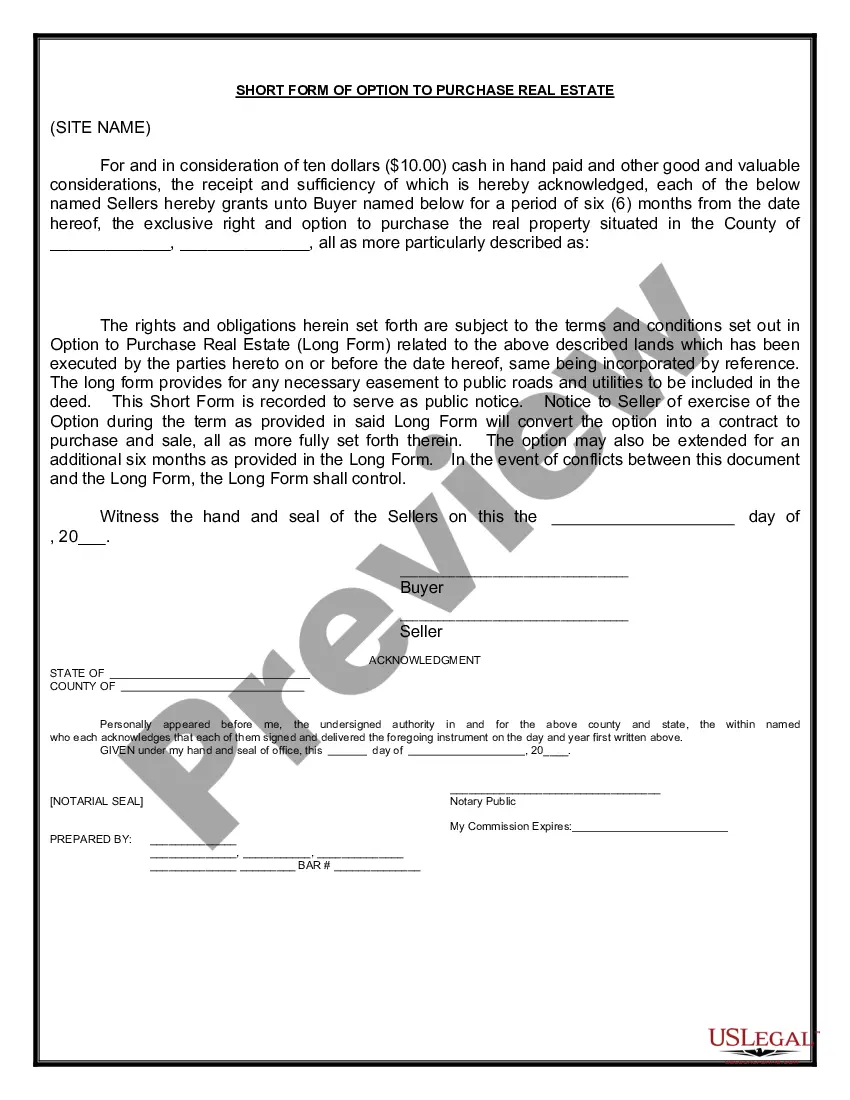
Get your form ready online
Our built-in tools help you complete, sign, share, and store your documents in one place.
Make edits, fill in missing information, and update formatting in US Legal Forms—just like you would in MS Word.
Download a copy, print it, send it by email, or mail it via USPS—whatever works best for your next step.
Sign and collect signatures with our SignNow integration. Send to multiple recipients, set reminders, and more. Go Premium to unlock E-Sign.
If this form requires notarization, complete it online through a secure video call—no need to meet a notary in person or wait for an appointment.
We protect your documents and personal data by following strict security and privacy standards.

Make edits, fill in missing information, and update formatting in US Legal Forms—just like you would in MS Word.

Download a copy, print it, send it by email, or mail it via USPS—whatever works best for your next step.

Sign and collect signatures with our SignNow integration. Send to multiple recipients, set reminders, and more. Go Premium to unlock E-Sign.

If this form requires notarization, complete it online through a secure video call—no need to meet a notary in person or wait for an appointment.

We protect your documents and personal data by following strict security and privacy standards.
Looking for another form?
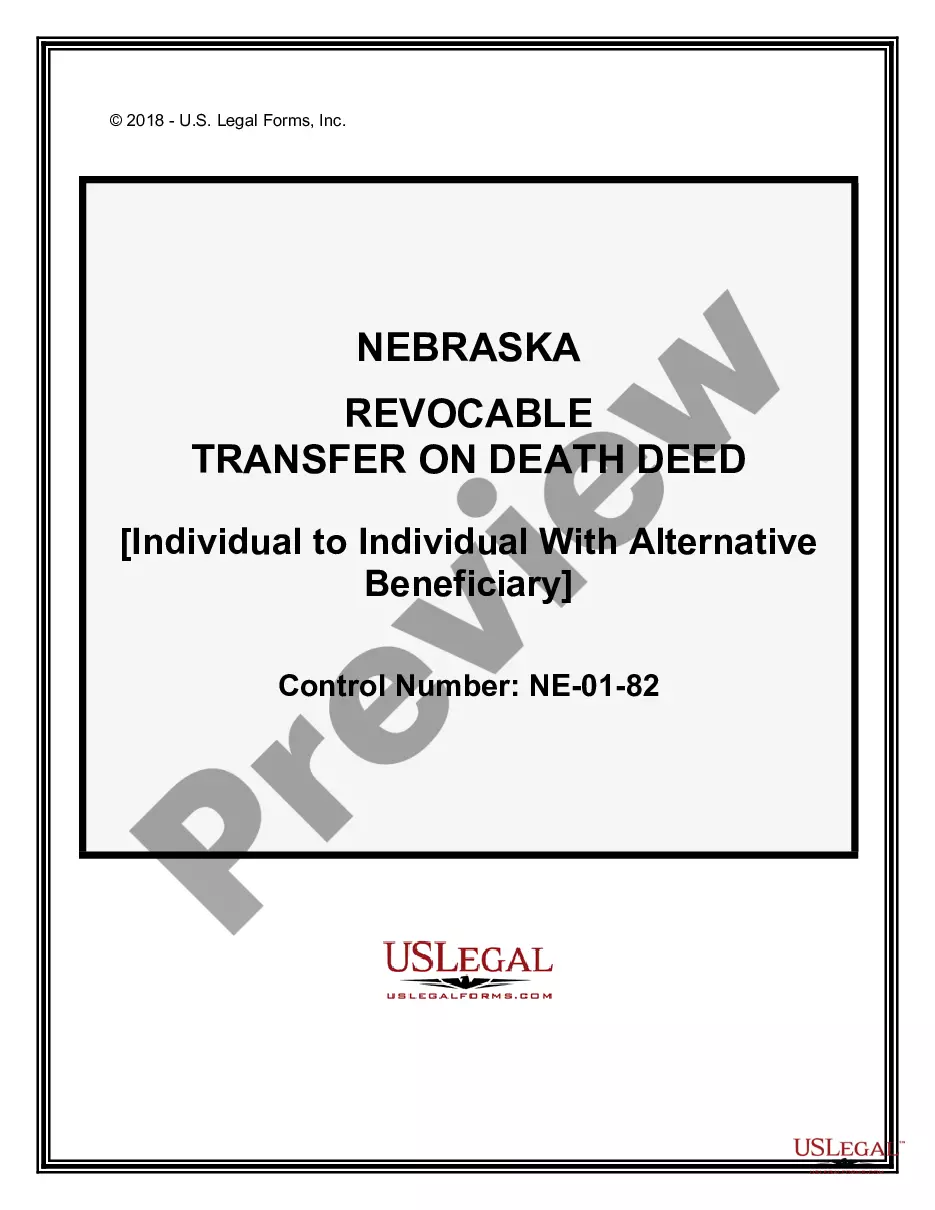
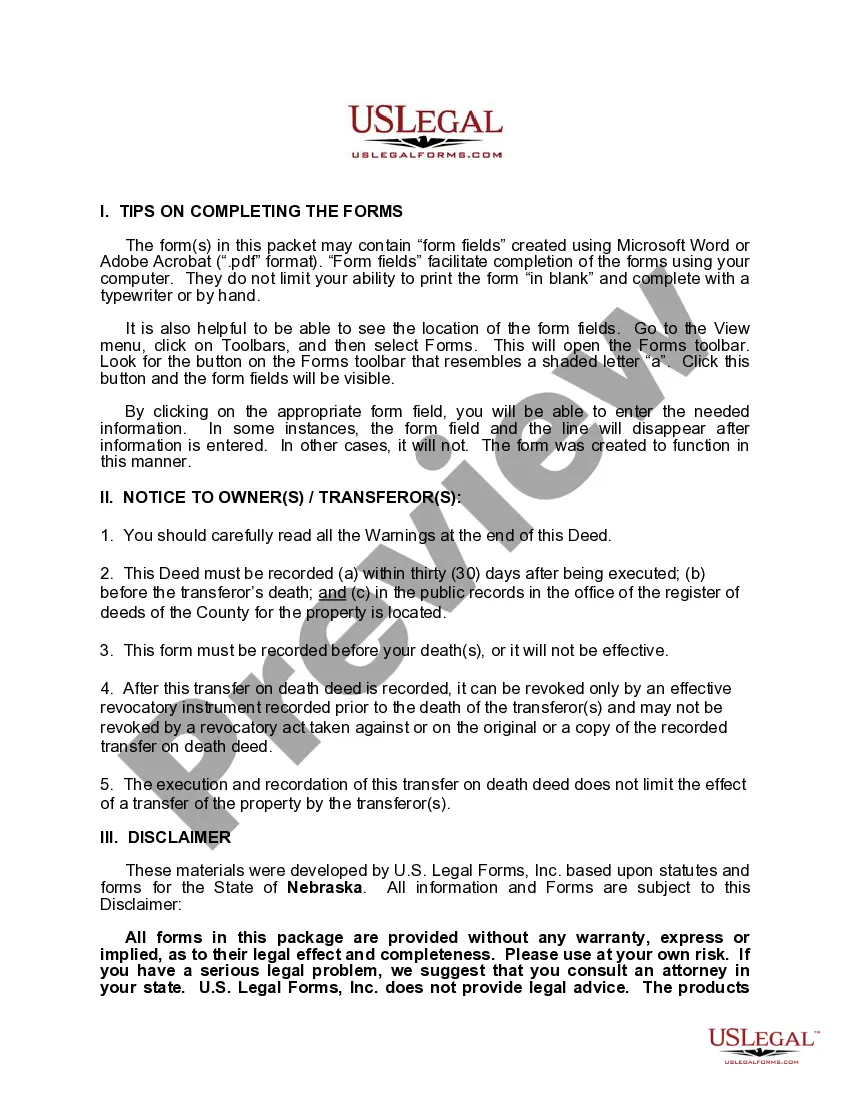
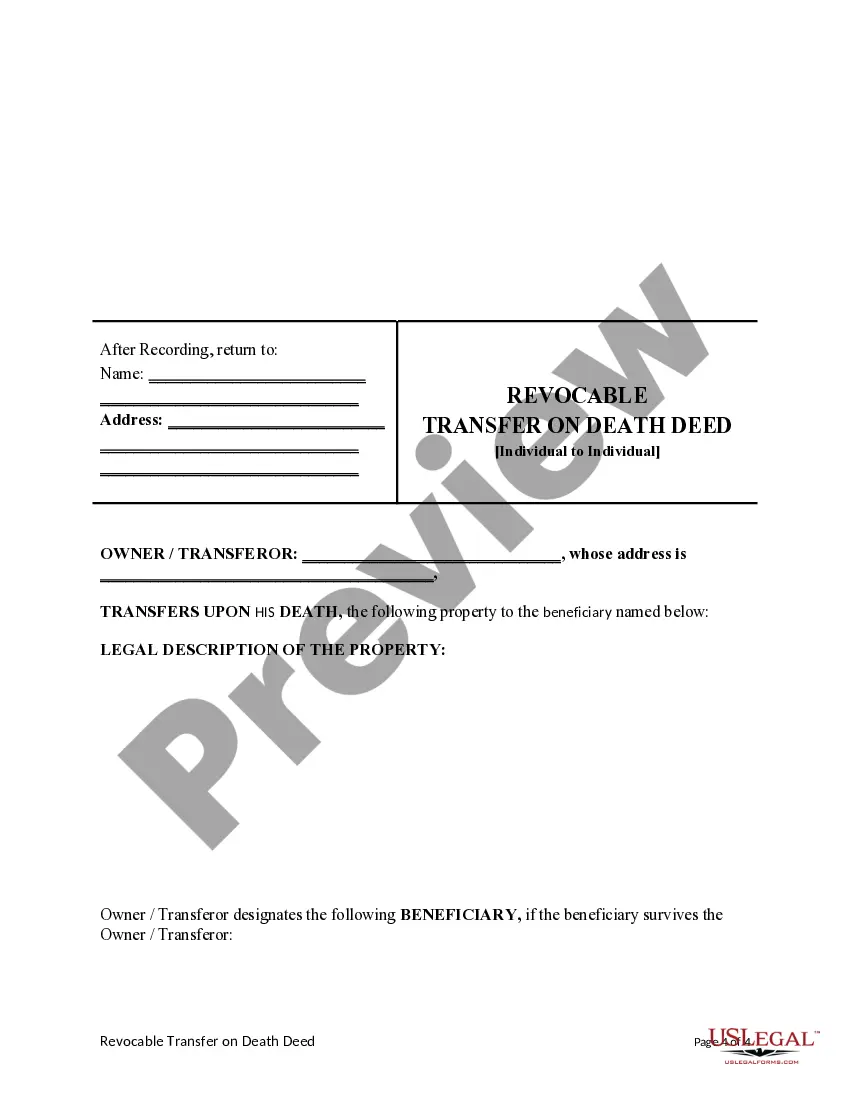
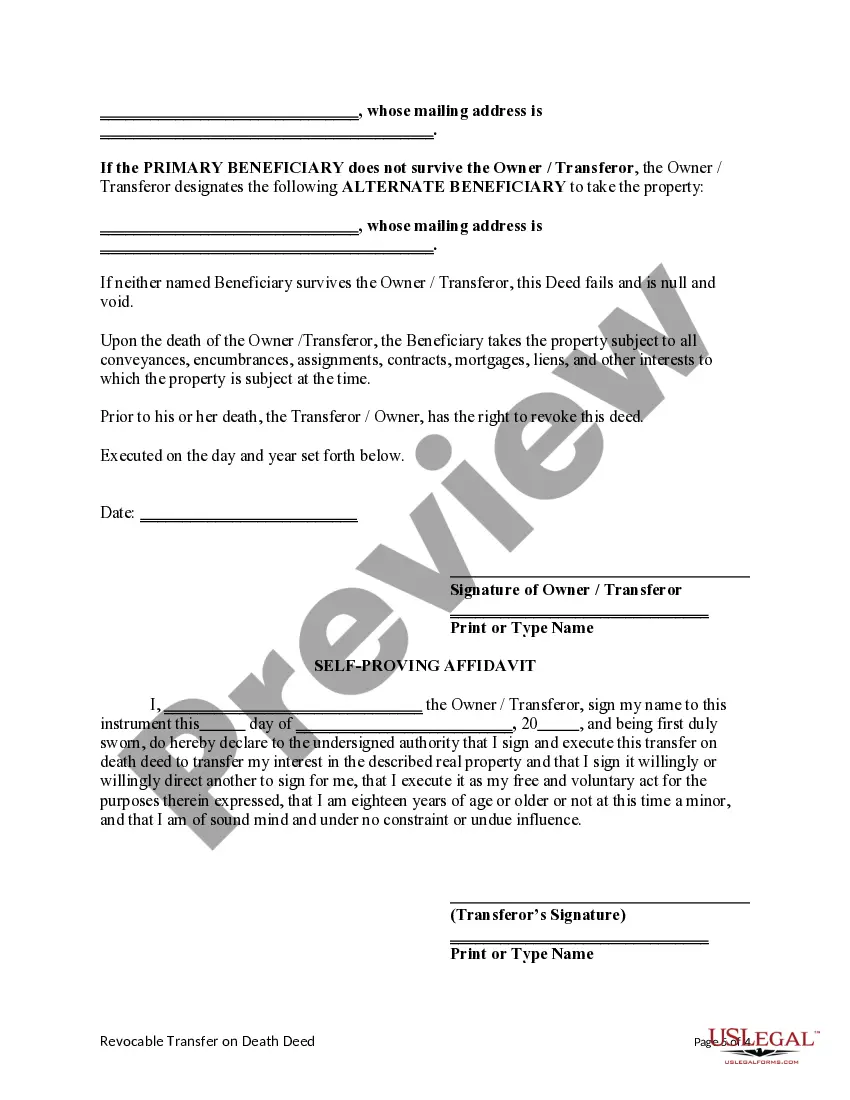
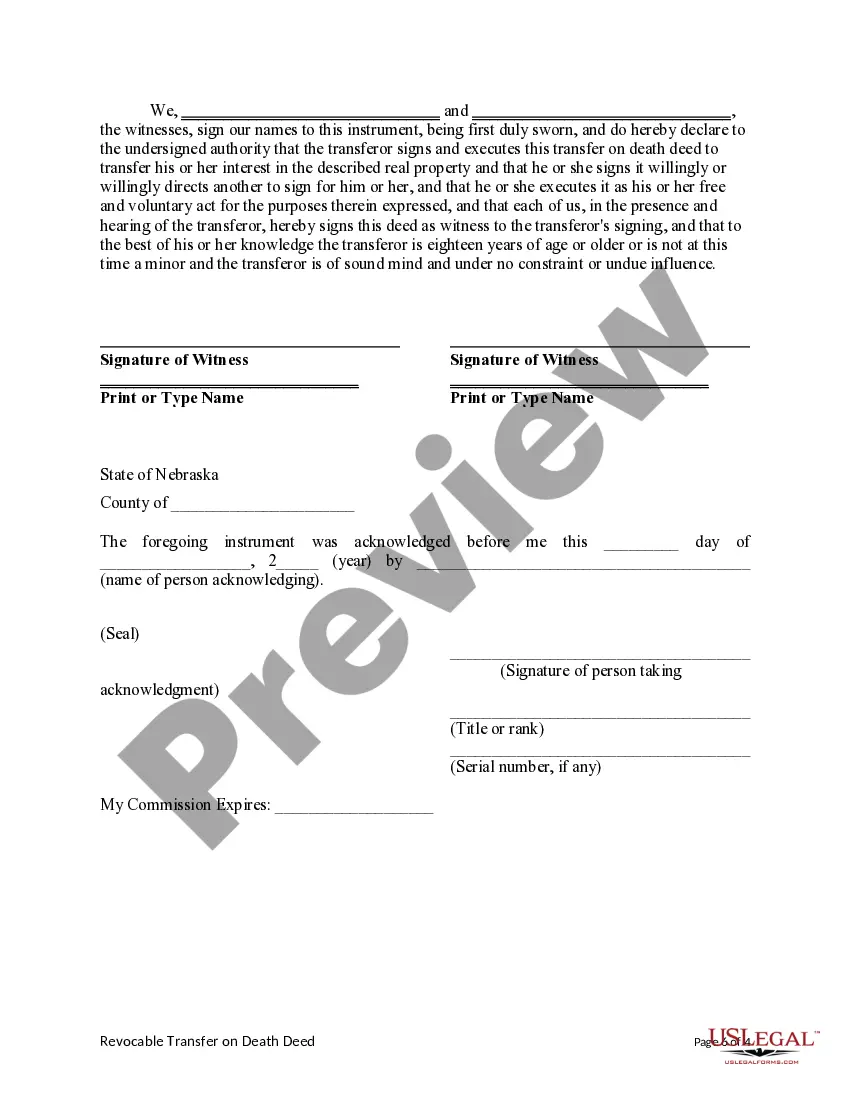
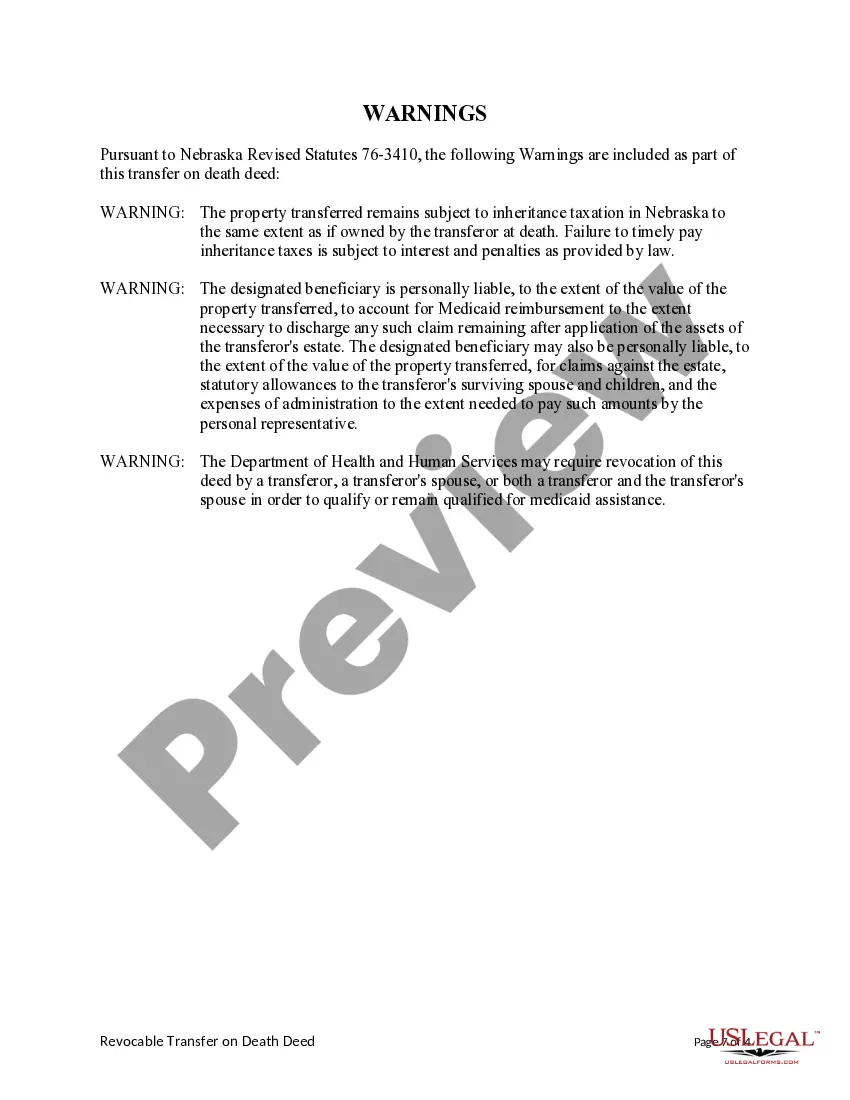
How to fill out Nebraska Transfer On Death Deed Or TOD - Beneficiary Deed - Individual To Individual With Provision For Alternate Beneficiary?
- Begin by logging into your US Legal Forms account if you're a returning user. Ensure your subscription is active to access the forms.
- If you're new to the service, start by browsing the extensive library. Check the preview for the transfer on death deed template to confirm its relevance to your needs.
- If you do not find the necessary form, utilize the search feature to locate other suitable templates that align with Virginia’s legal standards.
- Once you identify the correct document, select the 'Buy Now' option and choose an appropriate subscription plan.
- Complete your purchase by entering your payment information through credit card or PayPal.
- Finally, download the completed form to your device and access it at any time via the 'My Forms' section in your profile.
Using US Legal Forms not only simplifies the document acquisition process but also assures you of the precision and legality of your forms. With access to over 85,000 editable legal templates, you can feel confident in your legal representations.
Ready to streamline your legal documentation process? Sign up for US Legal Forms today and unlock instant access to a vast library of resources!
Form popularity
FAQ
To execute a transfer on death deed in Virginia, first obtain the necessary forms, which outline the details of your property and beneficiaries. You need to complete the deed, ensuring it specifies 'transfer on death' to avoid any issues during property transfer. It's important to sign the deed in the presence of a notary and then record it with your local circuit court. For those dealing with a mortgage, understanding how a transfer on death deed Virginia with mortgage functions is essential to secure your property intentions effectively.
Some view a transfer on death deed in Virginia with a mortgage as potentially problematic due to the lack of flexibility it may offer once established. While it simplifies property transfer, it does not allow for adjustments to beneficiaries or property management if personal circumstances change. It may also overlook specific needs regarding debt obligations or Medicaid eligibility. Engaging with a legal professional can provide clarity on whether this option aligns with your estate planning goals.
A potential problem with transfer on death accounts is that they may not provide the same level of control as other estate planning tools. With a transfer on death deed in Virginia and a mortgage, property ownership transfers automatically upon death, which may complicate matters if you need to make changes during your lifetime. Regularly reviewing your estate planning documents is essential to ensure they reflect your current wishes. Consider using platforms like US Legal Forms for access to reliable documents and legal insights.
Choosing between a transfer on death deed and a beneficiary designation after death largely depends on your specific financial situation. A transfer on death deed in Virginia with a mortgage allows for ease of transfer without going through probate, which is a significant advantage. On the other hand, naming a beneficiary for financial accounts directly offers flexibility if the asset's ownership needs to be managed. Ultimately, consider consulting with a legal expert for tailored advice based on your needs.
A transfer on death deed in Virginia with a mortgage typically does not avoid inheritance tax, as tax implications can vary based on state laws and individual circumstances. While the property passes directly to the designated beneficiary, any applicable taxes must still be considered. Moreover, it’s advisable to plan for potential inheritance taxes to ensure your beneficiaries are not caught off guard. Working with a knowledgeable tax professional can provide insights into potential tax liabilities.
One disadvantage of a transfer on death deed in Virginia with a mortgage is that it does not shield the property from creditors. If there are outstanding debts associated with the property, those debts may still need to be addressed after your passing. Additionally, the process for executing a transfer on death deed can sometimes be complex, particularly if the property has a mortgage. It is crucial to consult with a legal expert to ensure you fully understand the implications.
To transfer a deed after death in Virginia, you typically need to record a new deed that names the beneficiary who will inherit the property. If a transfer on death deed Virginia with mortgage was utilized, the beneficiary can proceed with a simpler transfer process. It's best to seek guidance from legal services to ensure all paperwork is completed accurately and filed promptly.
The statute governing transfer on death deeds in Virginia is found in the Virginia Code § 64.2-620 through § 64.2-625. This section outlines the creation, validity, and limitations associated with such deeds. Understanding this statute can help ensure compliance when preparing a transfer on death deed Virginia with mortgage.
Transferring ownership of a house with a mortgage after death involves filing a new deed, which reflects the new ownership. If there was a transfer on death deed in Virginia with mortgage, this step becomes easier, as the property transfers automatically to the named beneficiary. Be mindful of the mortgage obligations, as they still need to be addressed by the new owner.
For a transfer on death deed in Virginia with mortgage, you need to ensure it is properly signed and notarized. The deed must clearly identify the property and the designated beneficiary. Additionally, it should be filed with the local land records office, adhering to state regulations to ensure it is effective upon the property owner's death.