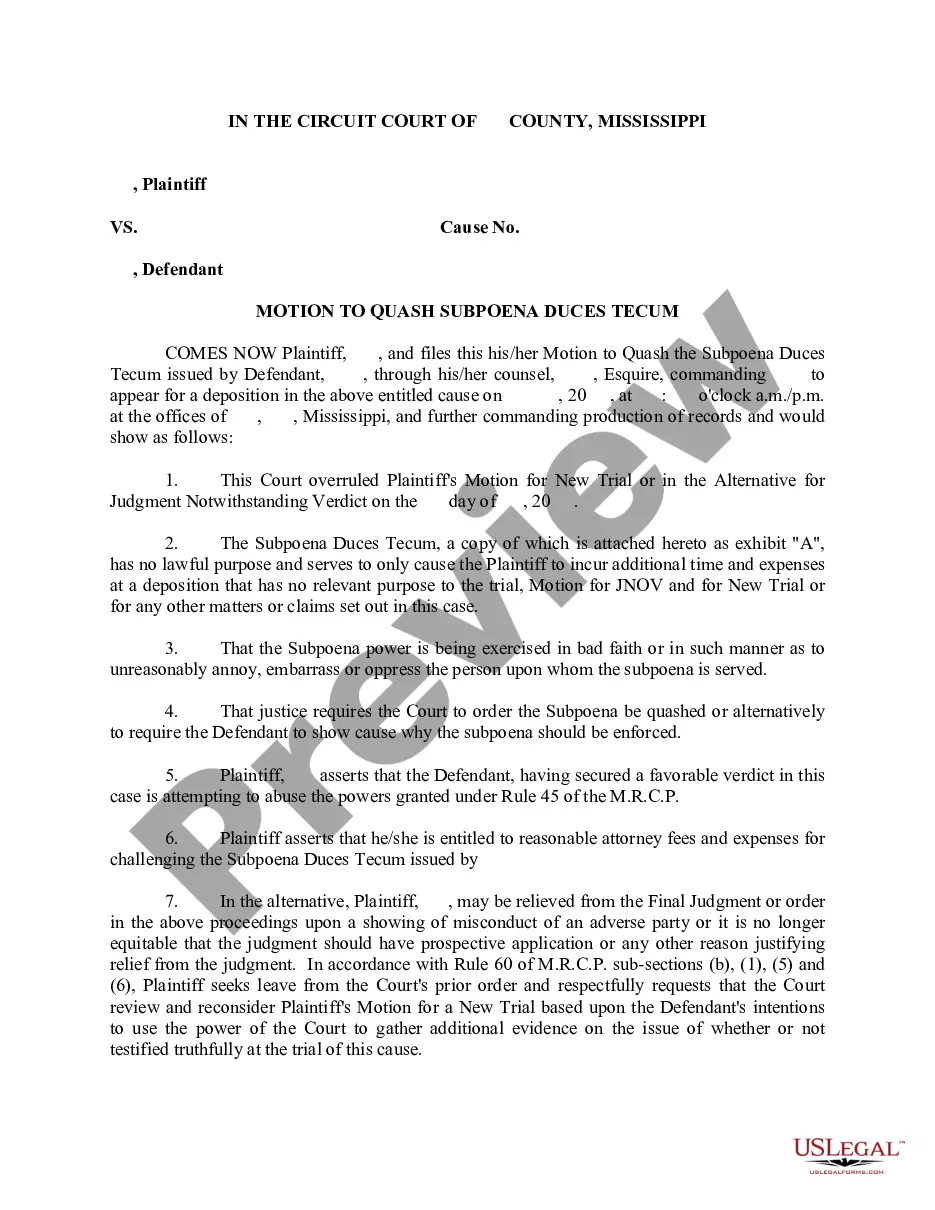
Motion To Quash Subpoena For Cell Phone Records
Description
Get your form ready online
Our built-in tools help you complete, sign, share, and store your documents in one place.
Make edits, fill in missing information, and update formatting in US Legal Forms—just like you would in MS Word.
Download a copy, print it, send it by email, or mail it via USPS—whatever works best for your next step.
Sign and collect signatures with our SignNow integration. Send to multiple recipients, set reminders, and more. Go Premium to unlock E-Sign.
If this form requires notarization, complete it online through a secure video call—no need to meet a notary in person or wait for an appointment.
We protect your documents and personal data by following strict security and privacy standards.

Make edits, fill in missing information, and update formatting in US Legal Forms—just like you would in MS Word.

Download a copy, print it, send it by email, or mail it via USPS—whatever works best for your next step.

Sign and collect signatures with our SignNow integration. Send to multiple recipients, set reminders, and more. Go Premium to unlock E-Sign.

If this form requires notarization, complete it online through a secure video call—no need to meet a notary in person or wait for an appointment.

We protect your documents and personal data by following strict security and privacy standards.
Looking for another form?
Form popularity
FAQ
In Illinois, a motion to quash subpoena aims to challenge the validity of a subpoena that requests your information. This legal act protects a person's right to privacy, especially regarding sensitive data like cell phone records. If you receive a subpoena that concerns your records, a motion to quash subpoena for cell phone records is an essential tool for defending your privacy.
A motion to quash in Florida is a legal request that seeks to nullify a subpoena or prevent specific evidence from being used in court. This action protects individuals from invasive inquiries, particularly regarding sensitive information. If you find yourself facing a subpoena for cell phone records, filing a motion to quash can secure your privacy.
Your phone history is personal and typically not available to outsiders without your consent. In certain legal situations, an attorney or law enforcement might request this information. If you oppose such access, using a motion to quash subpoena for cell phone records is a valuable option for maintaining your privacy.
Typically, cell phone records can be accessed by law enforcement, attorneys, or court officials through a legal process. Additionally, your service provider may view the records but has strict guidelines on sharing that information. If there’s an attempt to access records incorrectly, you can file a motion to quash subpoena for cell phone records to protect your rights.
Access to your phone records is restricted to certain individuals and entities, primarily for legal and emergency purposes. For instance, telecom companies may disclose them only to authorized personnel. To contest an unauthorized request, you might need to file a motion to quash subpoena for cell phone records.
Your phone records are considered private information and are not readily available to the public. However, specific conditions, such as legal actions or investigations, might allow others to request access. If someone has attempted to obtain your records unlawfully, a motion to quash subpoena for cell phone records can help safeguard your information.
In general, call records are protected, and not just anyone can access them. Only authorized individuals, such as law enforcement or legal entities, may obtain your call records under specific circumstances. If you feel your records are at risk, consider filing a motion to quash subpoena for cell phone records to protect your privacy.