Declaratory Judgment Court For Damages
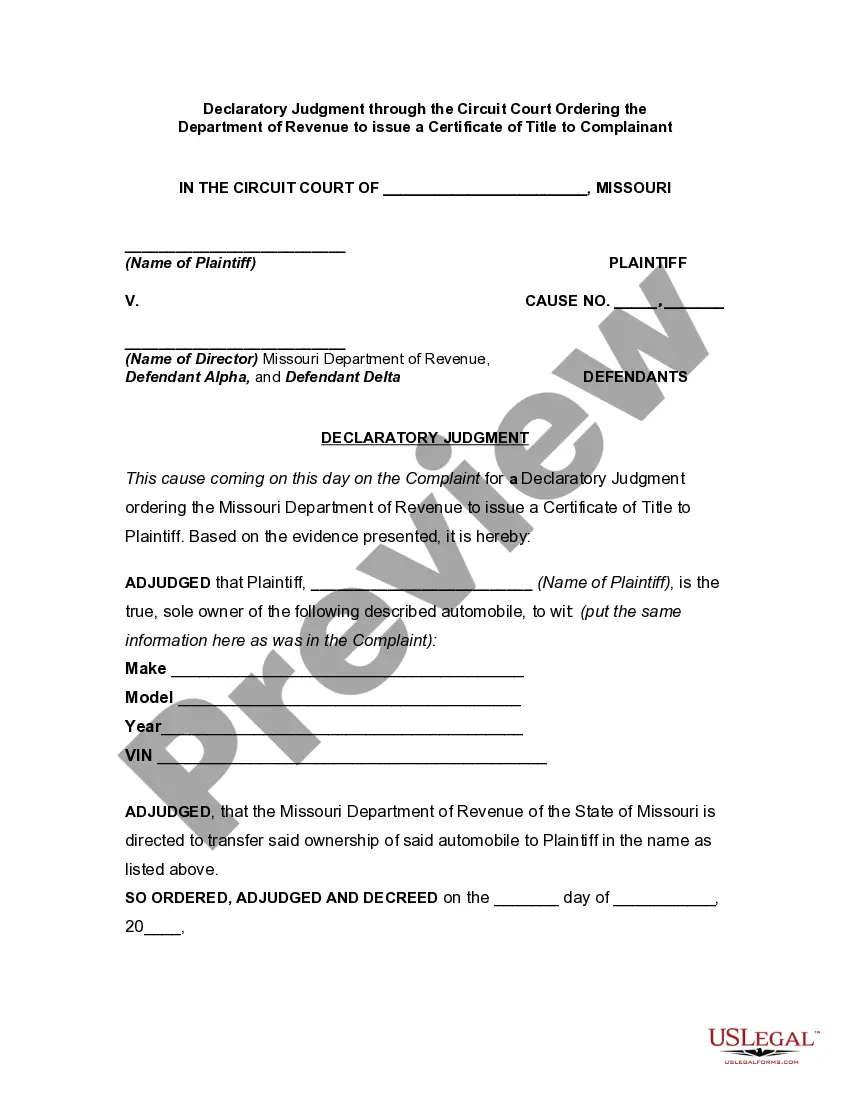
Description
Get your form ready online
Our built-in tools help you complete, sign, share, and store your documents in one place.
Make edits, fill in missing information, and update formatting in US Legal Forms—just like you would in MS Word.
Download a copy, print it, send it by email, or mail it via USPS—whatever works best for your next step.
Sign and collect signatures with our SignNow integration. Send to multiple recipients, set reminders, and more. Go Premium to unlock E-Sign.
If this form requires notarization, complete it online through a secure video call—no need to meet a notary in person or wait for an appointment.
We protect your documents and personal data by following strict security and privacy standards.

Make edits, fill in missing information, and update formatting in US Legal Forms—just like you would in MS Word.

Download a copy, print it, send it by email, or mail it via USPS—whatever works best for your next step.

Sign and collect signatures with our SignNow integration. Send to multiple recipients, set reminders, and more. Go Premium to unlock E-Sign.

If this form requires notarization, complete it online through a secure video call—no need to meet a notary in person or wait for an appointment.

We protect your documents and personal data by following strict security and privacy standards.
Looking for another form?
How to fill out Missouri Declaratory Judgment Through The Circuit Court Ordering The Department Of Revenue To Issue A Certificate Of Title To Complainant?
The Affirmative Declaration Court For Compensation you observe on this page is a versatile legal template created by expert attorneys in alignment with national and local statutes.
For over 25 years, US Legal Forms has supplied individuals, entities, and legal practitioners with more than 85,000 authenticated, state-specific documents for any business and personal circumstance.
Select the format you desire for your Affirmative Declaration Court For Compensation (PDF, Word, RTF) and download the document to your device.
- Search for the document you require and examine it.
- Browse through the sample you requested and preview it or check the form description to ensure it meets your needs. If it doesn’t, use the search bar to find the correct one. Click Buy Now once you have discovered the template you want.
- Register and Log In.
- Choose the pricing option that fits you and create an account. Make a quick payment using PayPal or a credit card. If you already have an account, Log In and verify your subscription to continue.
- Obtain the editable template.
Form popularity
FAQ
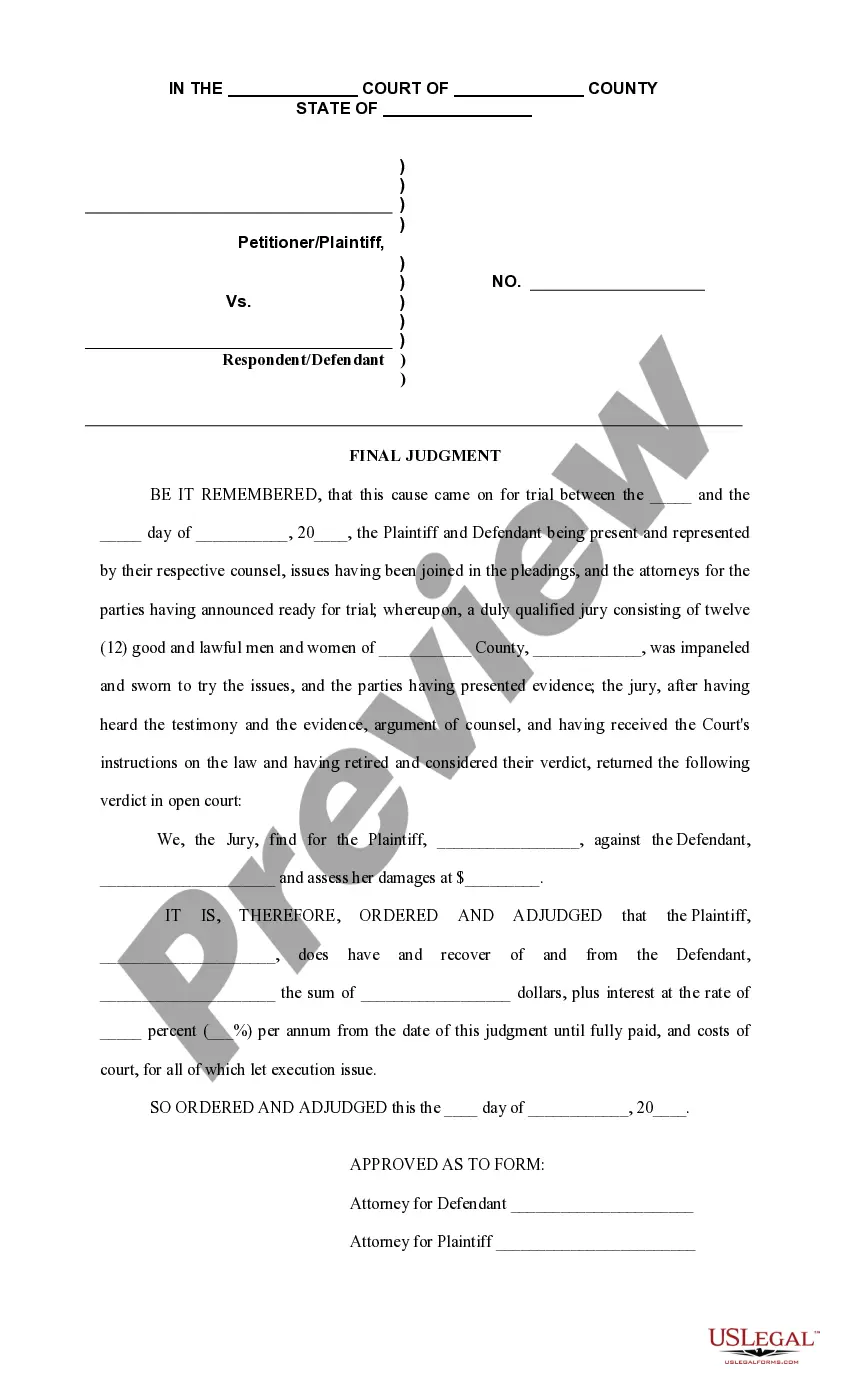
To seek a declaratory judgment, you must demonstrate that a real controversy exists regarding the interpretation of a legal relationship or agreement. The declaratory judgment court for damages often requires that those involved have a substantial interest in the outcome. Additionally, the issues must be ripe for judicial review, meaning that they cannot be hypothetical or speculative.
Ing to Section 34, of the Special Relief Act, 1963, any Person entitled to any legal character, or to any right as to any property, may institute a suit against any person denying, or interested to deny, his title to such character or right, and the court may in its discretion make therein a declaration that he ...
The declaratory judgment clearly states that the right of the plaintiff in an already complicated transaction. Under this, the court declares some existing rights in favor of the plaintiff and it exists only if the plaintiff is denied of his particular rights which he is basically entitled to.
It is a binding declaration under which the court declares some existing rights in favour of the plaintiff and declaratory decree exists only when the plaintiff is denied of his right which the plaintiff is entitled to.
The declaratory judgment plaintiffhas the burden of proving an actual controversy exists. 12 However, it is the declaratory judgment defendant who has the burden of proving patent infringement exists. That is, the burden of proving patent infringement is on the patentee, regardless of who brings the lawsuit.
For example, a policyholder believes that their denied claim is unjust. As a result, they inform the insurer that they are considering a lawsuit to recover losses. The insurer seeks a declaratory judgment to clarify its rights and obligations with hopes of preventing the lawsuit.