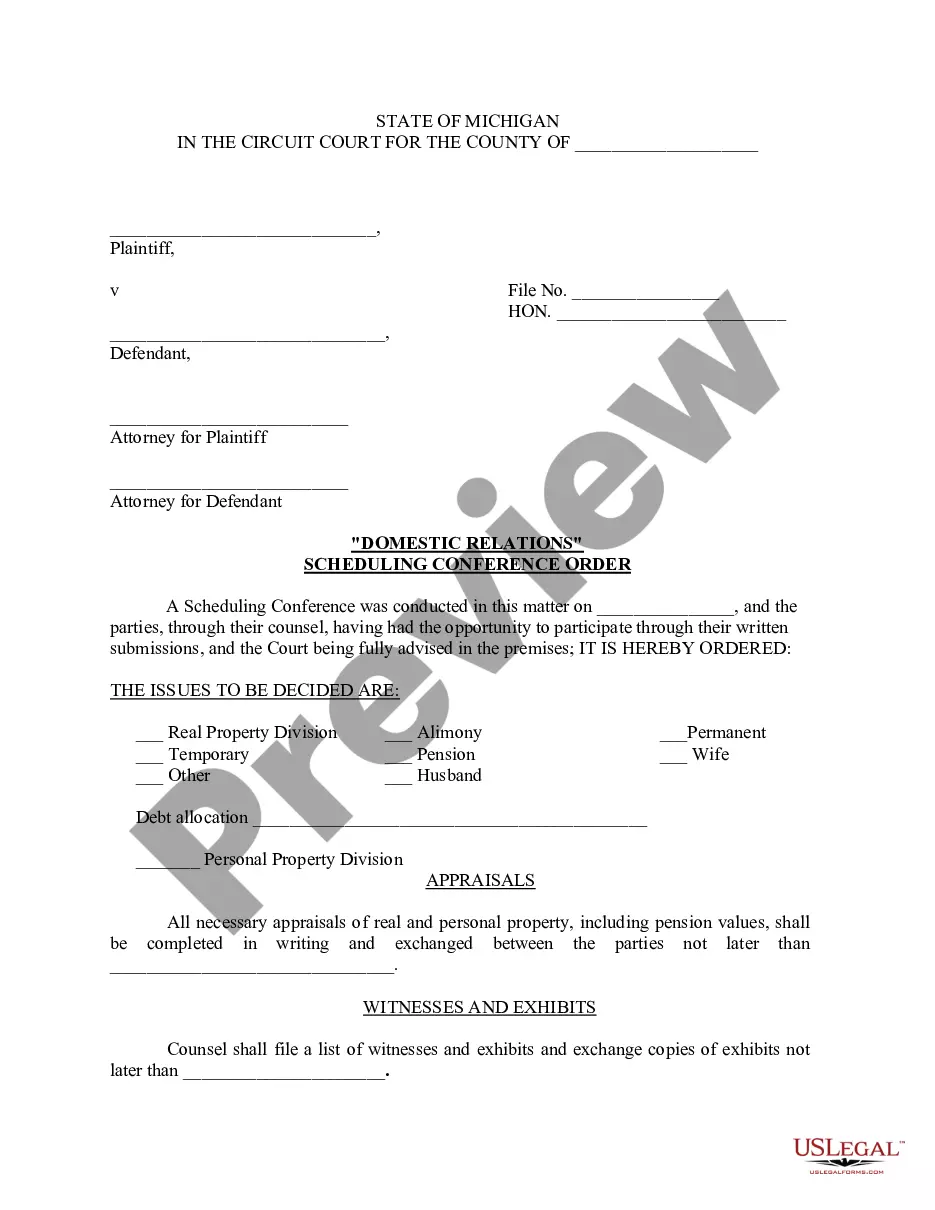
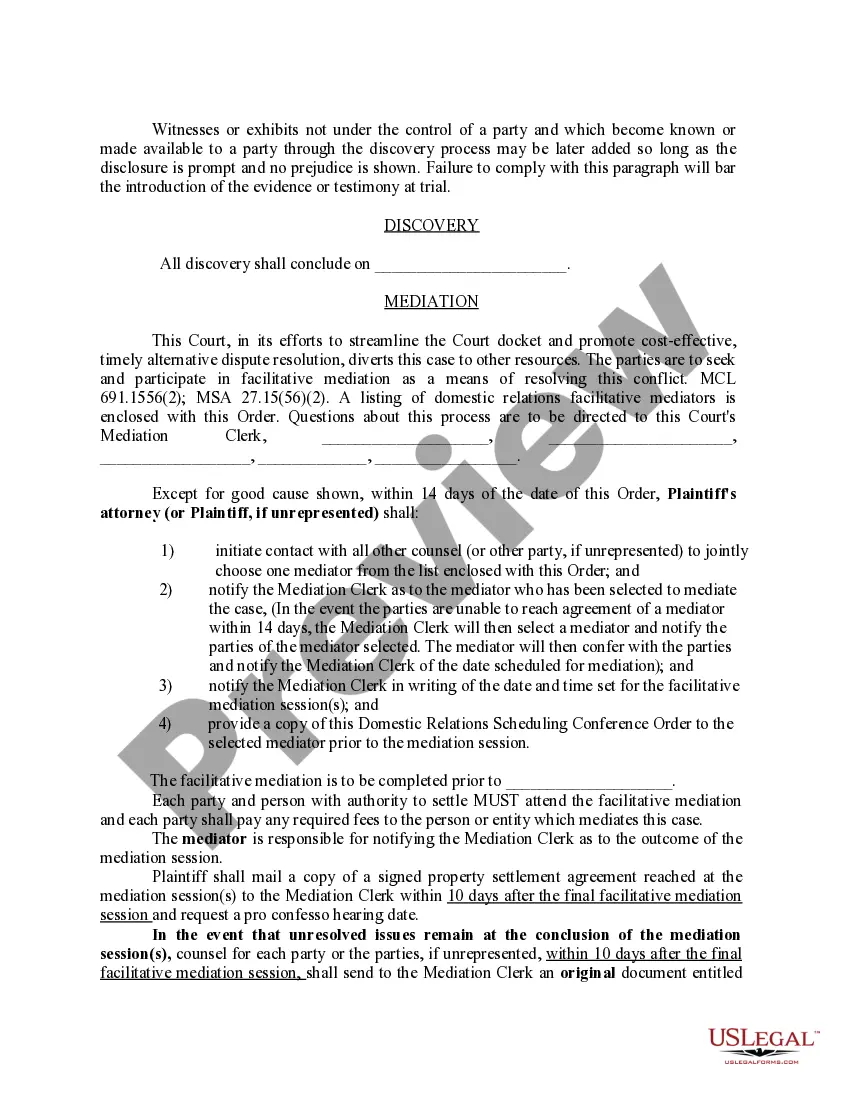
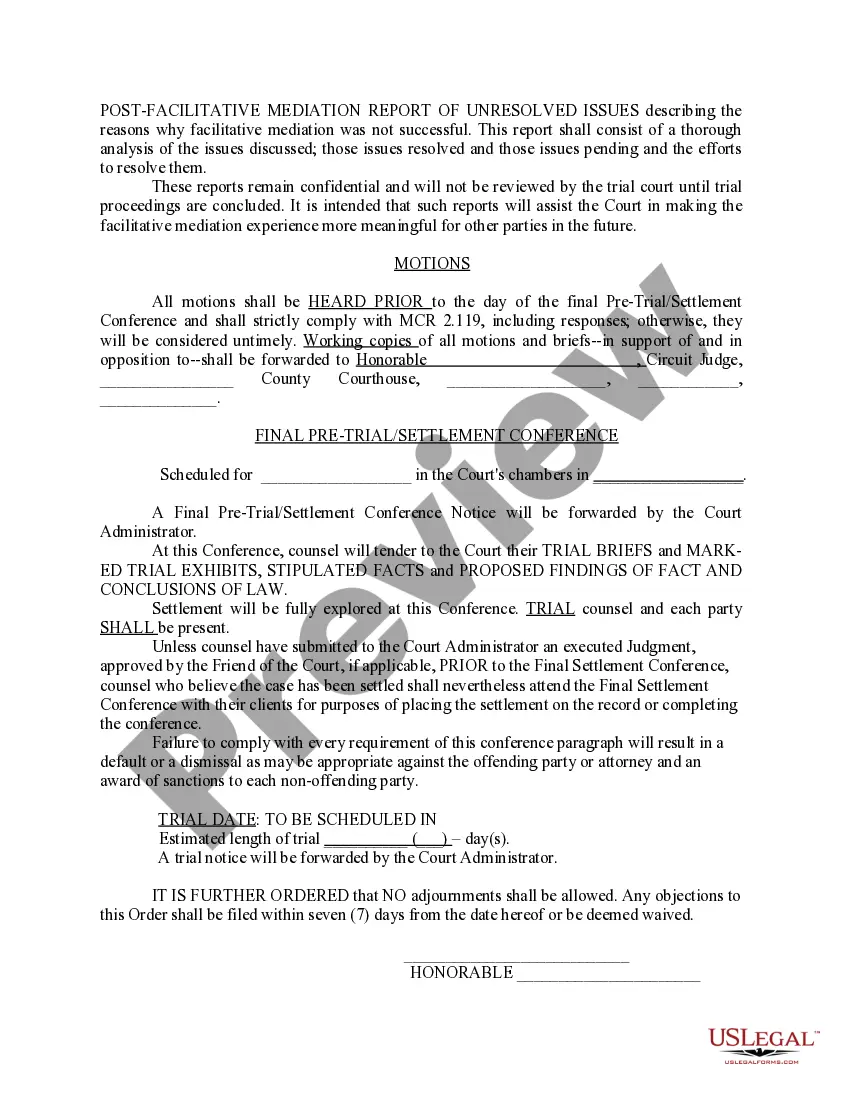
Domestic Scheduling Order Formula
Description

Get your form ready online
Our built-in tools help you complete, sign, share, and store your documents in one place.
Make edits, fill in missing information, and update formatting in US Legal Forms—just like you would in MS Word.
Download a copy, print it, send it by email, or mail it via USPS—whatever works best for your next step.
Sign and collect signatures with our SignNow integration. Send to multiple recipients, set reminders, and more. Go Premium to unlock E-Sign.
If this form requires notarization, complete it online through a secure video call—no need to meet a notary in person or wait for an appointment.
We protect your documents and personal data by following strict security and privacy standards.

Make edits, fill in missing information, and update formatting in US Legal Forms—just like you would in MS Word.

Download a copy, print it, send it by email, or mail it via USPS—whatever works best for your next step.

Sign and collect signatures with our SignNow integration. Send to multiple recipients, set reminders, and more. Go Premium to unlock E-Sign.

If this form requires notarization, complete it online through a secure video call—no need to meet a notary in person or wait for an appointment.

We protect your documents and personal data by following strict security and privacy standards.
Looking for another form?




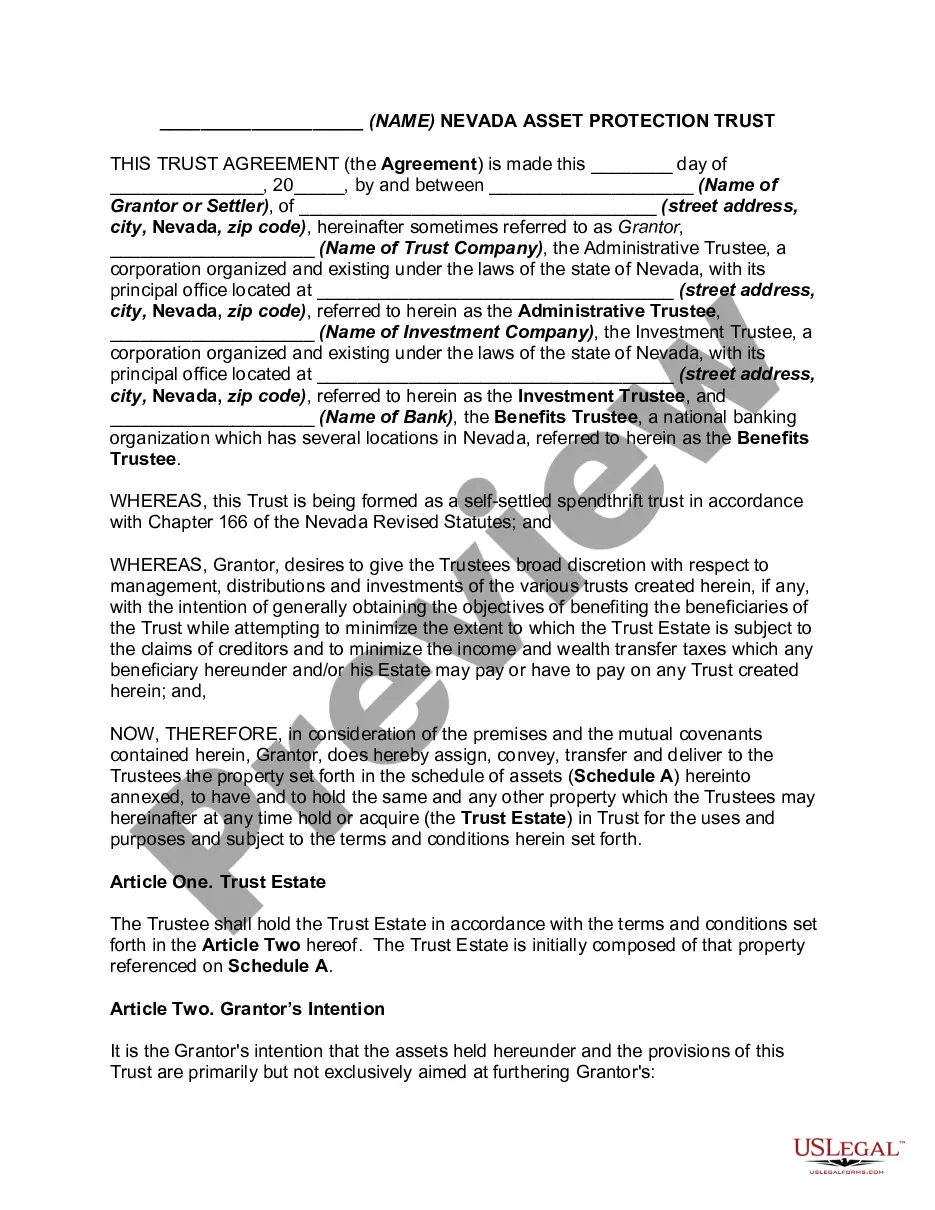
How to fill out Michigan Domestic Relations - Scheduling Conference Order?
Whether for business purposes or for personal matters, everyone has to manage legal situations sooner or later in their life. Completing legal papers requires careful attention, beginning from choosing the proper form template. For instance, when you choose a wrong version of a Domestic Scheduling Order Formula, it will be declined once you submit it. It is therefore important to have a trustworthy source of legal documents like US Legal Forms.
If you need to obtain a Domestic Scheduling Order Formula template, follow these simple steps:
- Find the sample you need by utilizing the search field or catalog navigation.
- Examine the form’s description to make sure it matches your case, state, and region.
- Click on the form’s preview to see it.
- If it is the incorrect form, get back to the search function to locate the Domestic Scheduling Order Formula sample you need.
- Download the file if it meets your requirements.
- If you have a US Legal Forms account, just click Log in to gain access to previously saved files in My Forms.
- If you don’t have an account yet, you can download the form by clicking Buy now.
- Choose the proper pricing option.
- Complete the account registration form.
- Select your payment method: you can use a credit card or PayPal account.
- Choose the document format you want and download the Domestic Scheduling Order Formula.
- After it is saved, you are able to complete the form with the help of editing software or print it and complete it manually.
With a vast US Legal Forms catalog at hand, you don’t need to spend time looking for the right sample across the internet. Use the library’s straightforward navigation to get the correct template for any occasion.
Form popularity
FAQ
Upon a defendant's request, the government must furnish the defendant with a copy of the defendant's prior criminal record that is within the government's possession, custody, or control if the attorney for the government knows?or through due diligence could know?that the record exists.
Rule 17 of the Federal Rules of Criminal Procedure deals with subpoenas. Subdivision (f)(2) as proposed by the Supreme Court provides: The witness whose deposition is to be taken may be required by subpoena to attend at any place designated by the trial court. B. Committee Action.
The scheduling order will usually set a deadline when discovery must be completed, and can prohibit discovery outside the timeframe set forth in the scheduling order.
If the last day falls on a weekend or court holiday, the last day to file rolls to the next court date. If you miss this deadline, you accept the responses as given.
WHAT IS THE SCHEDULING CONFERENCE? The Scheduling Conference may be the first of a number of court dates which you will have before the trial date on your domestic case. It is the court's way to begin tracking your case, and to schedule the steps in your case's development.