Louisiana Slavery
Description

Get your form ready online
Our built-in tools help you complete, sign, share, and store your documents in one place.
Make edits, fill in missing information, and update formatting in US Legal Forms—just like you would in MS Word.
Download a copy, print it, send it by email, or mail it via USPS—whatever works best for your next step.
Sign and collect signatures with our SignNow integration. Send to multiple recipients, set reminders, and more. Go Premium to unlock E-Sign.
If this form requires notarization, complete it online through a secure video call—no need to meet a notary in person or wait for an appointment.
We protect your documents and personal data by following strict security and privacy standards.

Make edits, fill in missing information, and update formatting in US Legal Forms—just like you would in MS Word.

Download a copy, print it, send it by email, or mail it via USPS—whatever works best for your next step.

Sign and collect signatures with our SignNow integration. Send to multiple recipients, set reminders, and more. Go Premium to unlock E-Sign.

If this form requires notarization, complete it online through a secure video call—no need to meet a notary in person or wait for an appointment.

We protect your documents and personal data by following strict security and privacy standards.
Looking for another form?


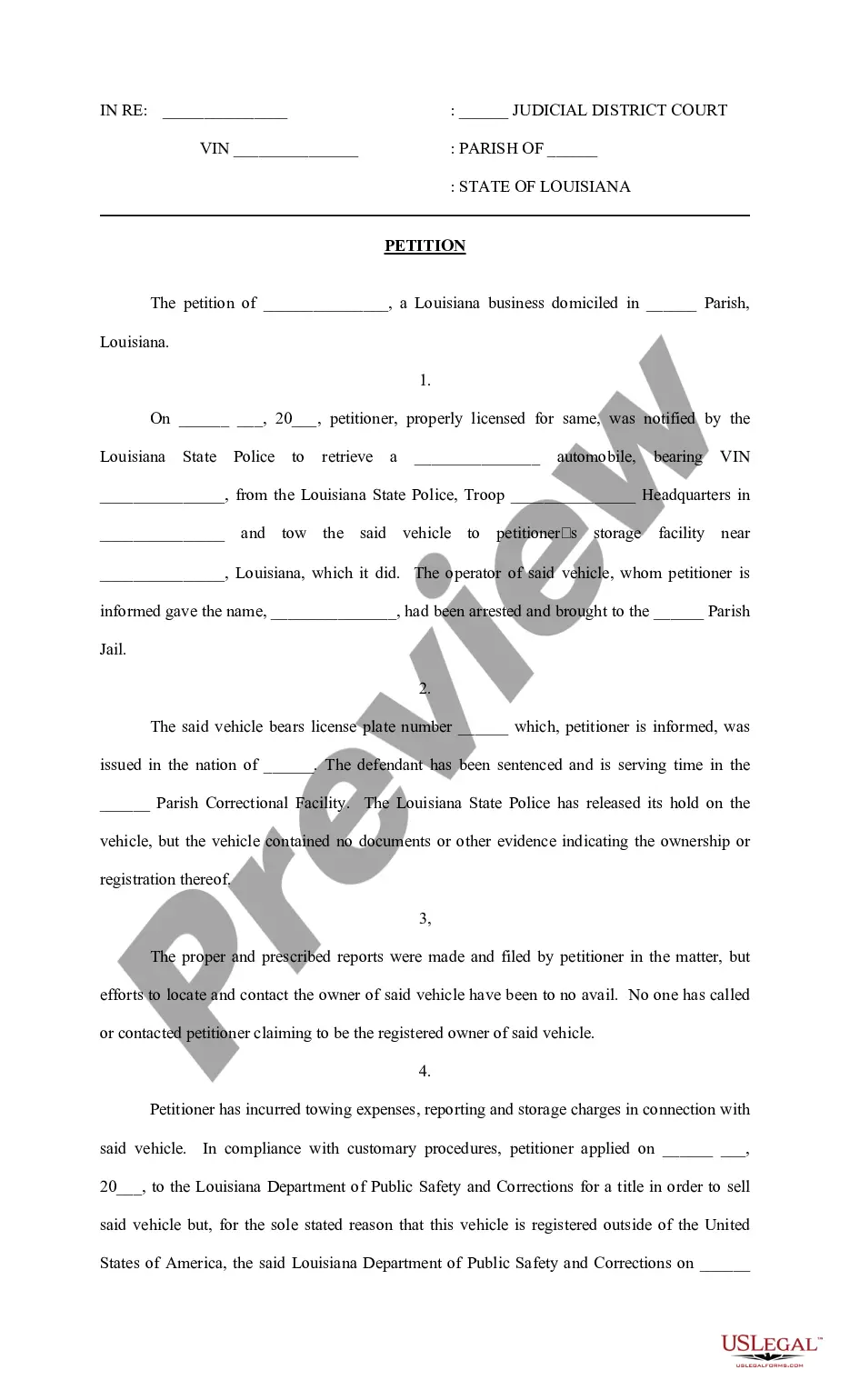
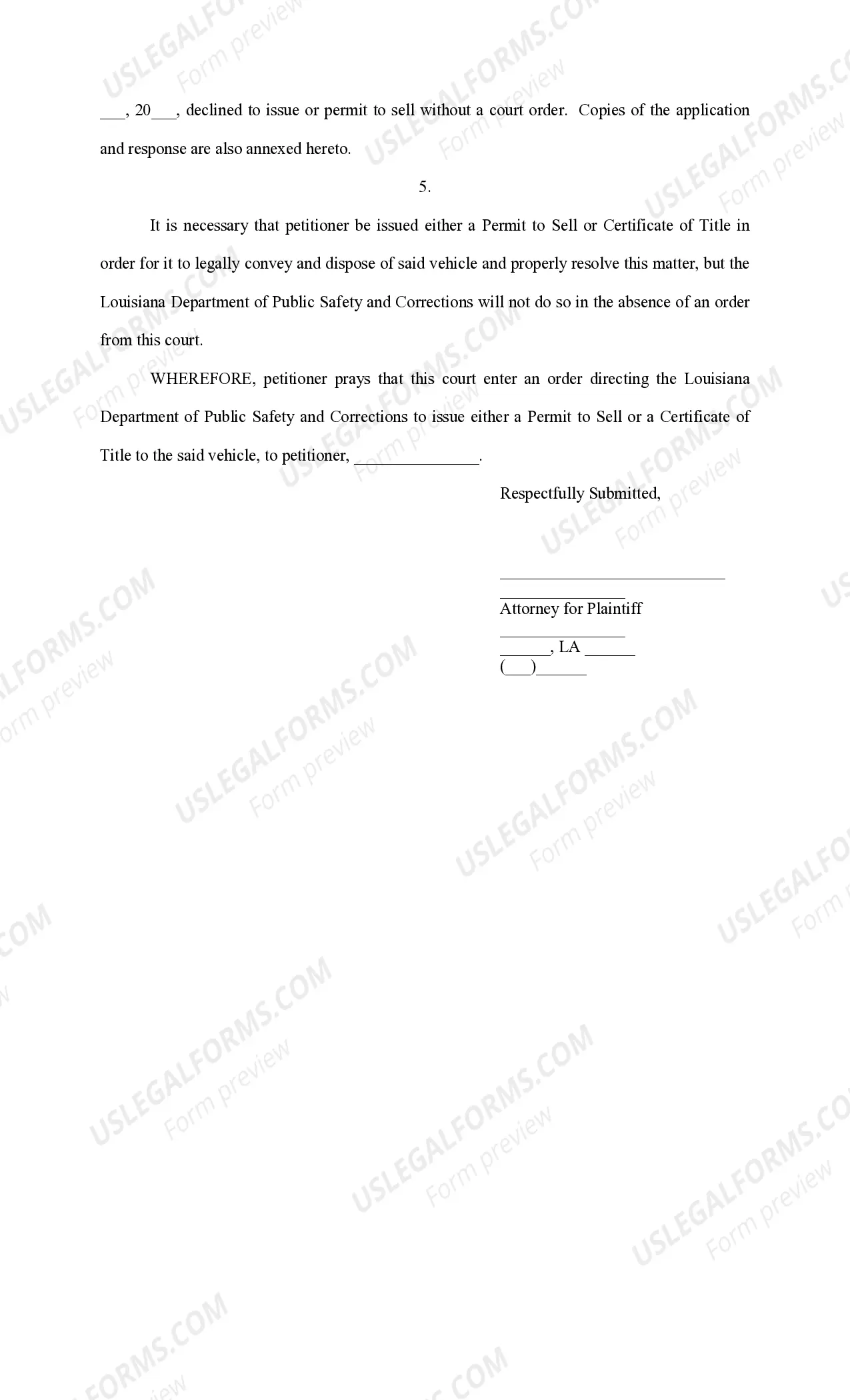
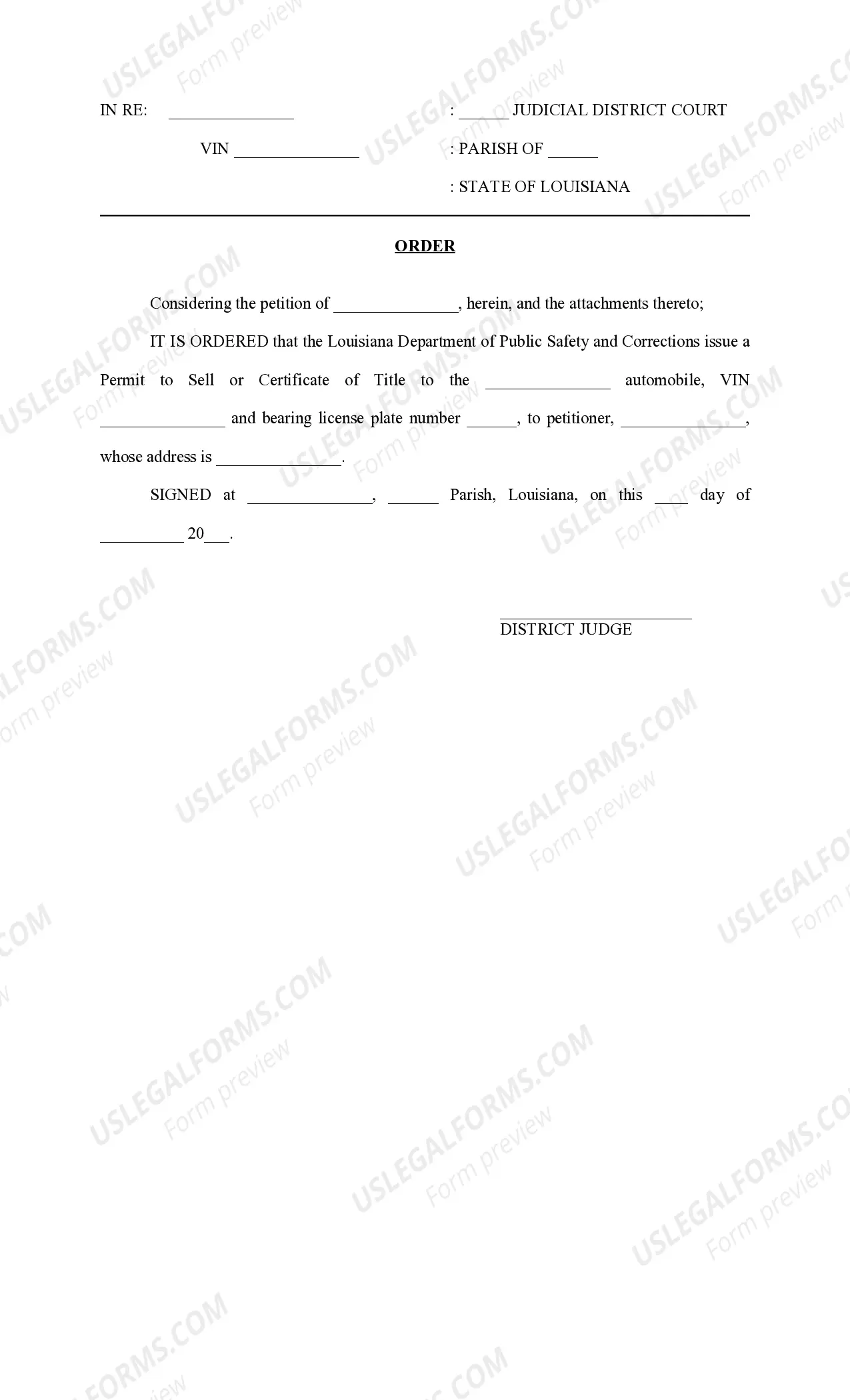
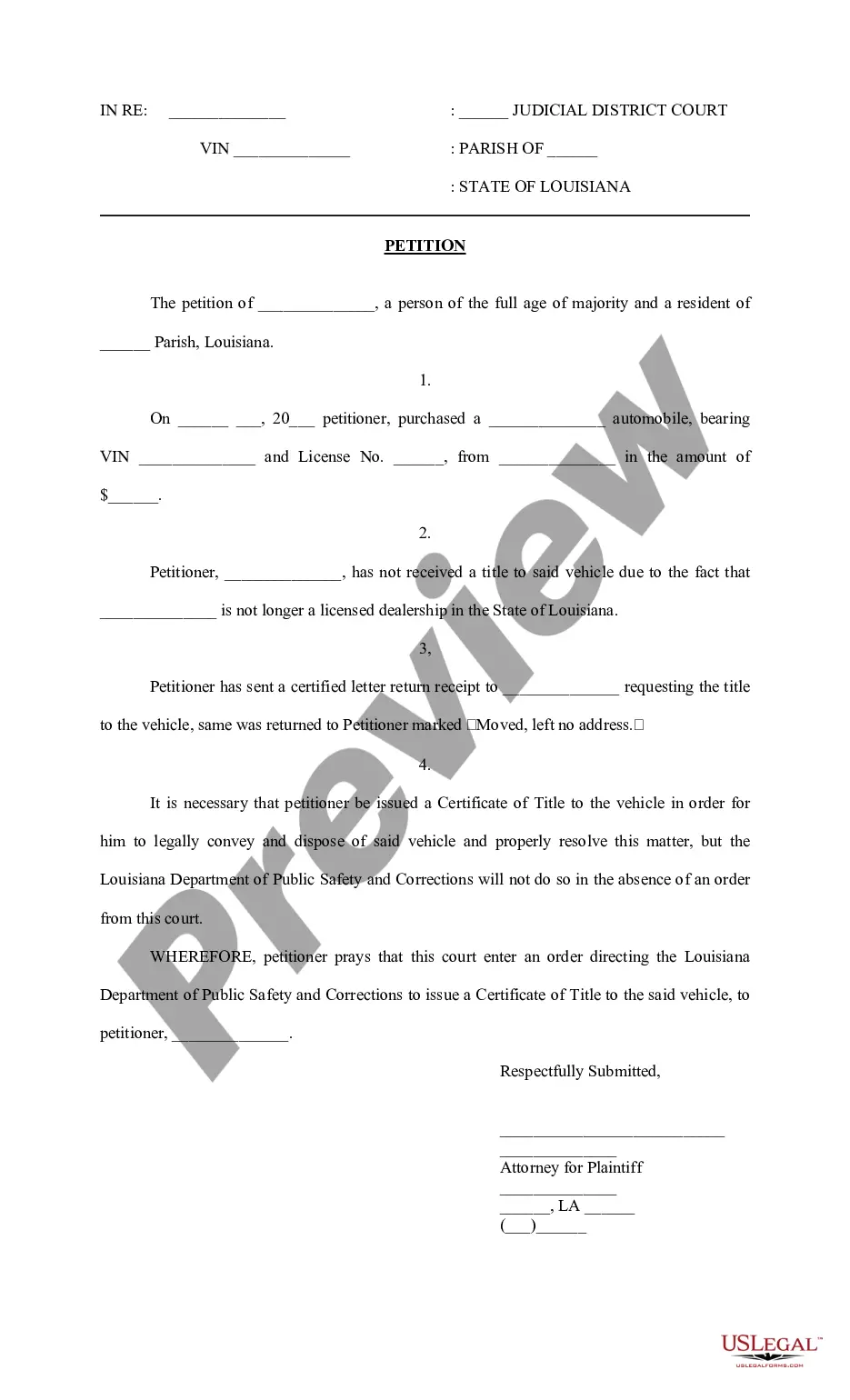
How to fill out Louisiana Petition For Issuance Of Permit To Sell Or Certificate Of Title Of Vehicle?
- Log in to your US Legal Forms account if you already have one, and ensure your subscription is active before downloading your desired form.
- If you're new, begin by checking the preview and description of the form to confirm it fits your requirements and complies with local laws.
- In case you need a different template, utilize the search function to locate the right document that matches your needs.
- Purchase your selected form by clicking the 'Buy Now' button, while selecting your preferred subscription plan. Account registration might be required.
- Proceed with your payment using credit card or PayPal to finalize your subscription.
- Download the completed form to your device, and you can always revisit it in the 'My Forms' section of your profile.
In summary, US Legal Forms simplifies the process of obtaining legal documents, particularly for sensitive topics such as Louisiana slavery.
Take the first step towards handling your legal needs today—visit US Legal Forms to get started!
Form popularity
FAQ
Discovering if you are a descendant of slaves often involves researching family history and genealogy. Begin by collecting information from family members and records that may reflect your lineage related to Louisiana slavery. Utilizing online ancestry platforms or local archives can provide valuable resources for your search. Additionally, organizations that focus on African American genealogy can offer assistance and guidance in your journey.
To end slavery, individuals can educate themselves and others about the realities of Louisiana slavery and its legacy. Supporting organizations that advocate for justice and equality is crucial, as they work tirelessly to combat human trafficking and modern slavery. Engaging in community initiatives can also create awareness and promote change. Finally, you can contact local lawmakers to support legislation aimed at abolishing any form of slavery.
Most slaves in Louisiana originated from West and Central Africa, regions where the slave trade was prevalent. Many were forcibly transported to the Americas through the Atlantic route, ending up in slave markets in New Orleans and other areas. Their diverse backgrounds contributed to the unique cultural fabric of Louisiana, despite their grim experiences under Louisiana slavery. Learning about these origins enriches our understanding of the state's heritage and history.
The primary reason for slavery in Louisiana stemmed from the demand for labor-intensive crops, especially in the sugar and cotton industries. Planters needed a workforce to cultivate their lands, leading to the widespread practice of Louisiana slavery. This economic model fueled the plantation economy, creating wealth for some while inflicting immense suffering on many. Recognizing this impact is vital for comprehending Louisiana's historical landscape.
Black people arrived in Louisiana mainly through the brutal transatlantic slave trade, which transported millions across the ocean. Once enslaved, they were brought to the region's ports, such as New Orleans, where they were sold to plantation owners. This migration played a significant role in establishing the institution of Louisiana slavery. The stories of these individuals are essential for understanding the state's complicated history.
African Americans initially came to Louisiana as a result of the transatlantic slave trade, which forced many into a life of Louisiana slavery. They were brought to work on plantations, where the demand for labor was high due to the cultivation of crops like sugarcane and cotton. Additionally, the vibrant culture of Louisiana attracted many, even as they faced hardships. Today, understanding this history is crucial to acknowledging the roots of Louisiana's rich cultural identity.
The black ancestry in Louisiana is rich and complex, shaped by centuries of history, including the legacy of Louisiana slavery. Many African Americans in the state trace their roots to a blend of African, French, Spanish, and Indigenous cultures, contributing to a vibrant heritage. Understanding this background is essential for appreciating the cultural fabric of Louisiana today. Resources like US Legal Forms can offer support for those seeking to explore and document their ancestry legally.
Taking action against Louisiana slavery begins with awareness and education. You can report suspected cases to local authorities or organizations dedicated to combating human trafficking. Additionally, joining community initiatives that focus on advocacy can empower you to raise awareness. Platforms like US Legal Forms can assist you in understanding your rights and the legal avenues available to combat slavery.
The Mississippi River Delta region of Louisiana had the most slaves, especially in the parishes along the riverbank. This area was a hub for sugarcane and cotton plantations, which relied heavily on enslaved labor for production. The concentration of plantations in this region drastically shaped the landscape and social dynamics of Louisiana. Recognizing this historical context helps us understand the deep-rooted issues related to Louisiana slavery that continue to resonate today.
Yes, the French in Louisiana did have slaves, primarily during the colonial period. They imported enslaved Africans to work on plantations and in homes, contributing to the economy of the territory. The French Code Noir, enacted in the 18th century, regulated the behavior of enslaved people and outlined the rights of slave owners in Louisiana. This history is crucial to comprehend the complexities of Louisiana slavery and its lasting effects on the state's heritage.