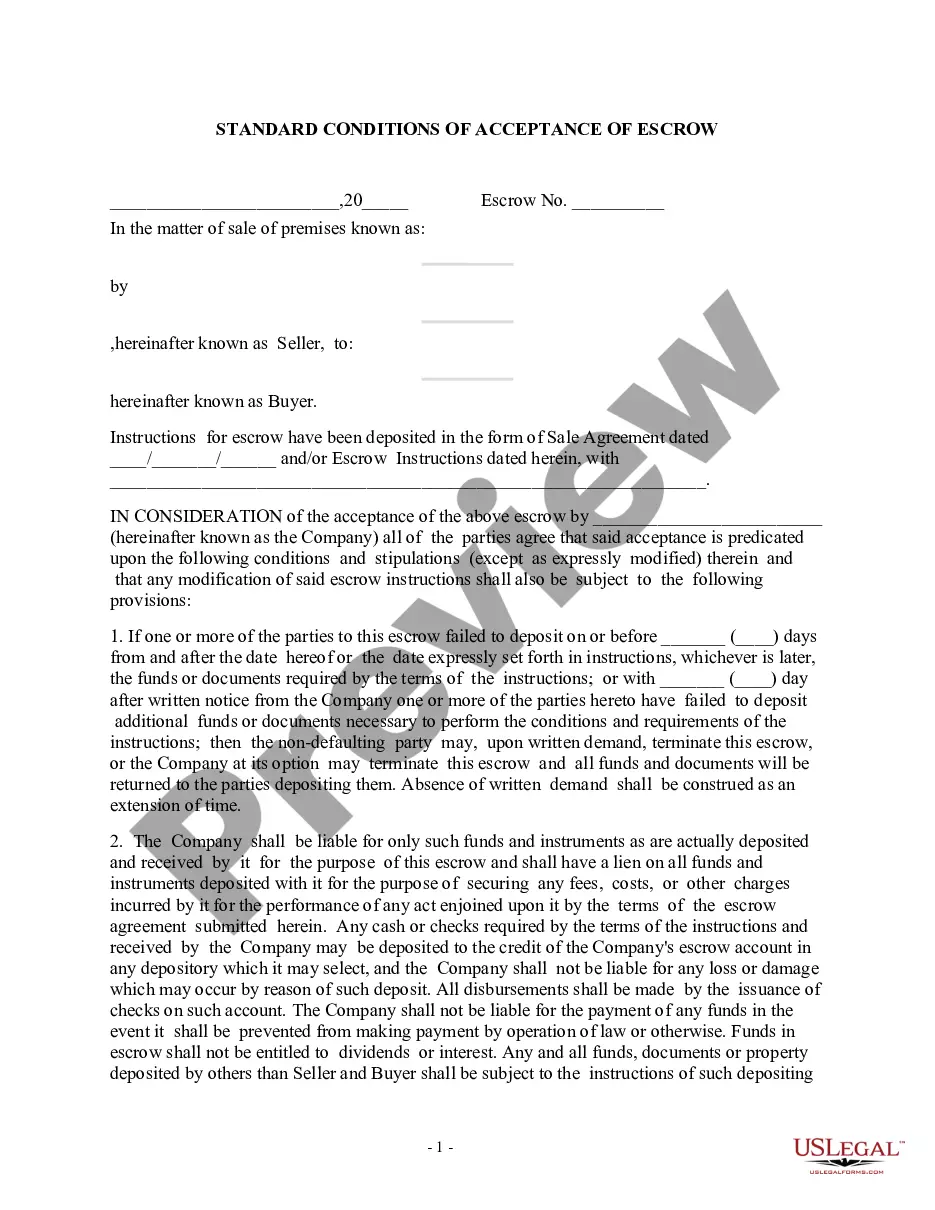
Closing Statement Real Estate Example

Description
Get your form ready online
Our built-in tools help you complete, sign, share, and store your documents in one place.
Make edits, fill in missing information, and update formatting in US Legal Forms—just like you would in MS Word.
Download a copy, print it, send it by email, or mail it via USPS—whatever works best for your next step.
Sign and collect signatures with our SignNow integration. Send to multiple recipients, set reminders, and more. Go Premium to unlock E-Sign.
If this form requires notarization, complete it online through a secure video call—no need to meet a notary in person or wait for an appointment.
We protect your documents and personal data by following strict security and privacy standards.

Make edits, fill in missing information, and update formatting in US Legal Forms—just like you would in MS Word.

Download a copy, print it, send it by email, or mail it via USPS—whatever works best for your next step.

Sign and collect signatures with our SignNow integration. Send to multiple recipients, set reminders, and more. Go Premium to unlock E-Sign.

If this form requires notarization, complete it online through a secure video call—no need to meet a notary in person or wait for an appointment.

We protect your documents and personal data by following strict security and privacy standards.
Looking for another form?
How to fill out Florida Closing Statement?
Finding a reliable source for accessing the latest and pertinent legal samples is half the challenge of navigating bureaucracy.
Identifying the proper legal documents requires accuracy and carefulness, which is why it is essential to obtain examples of Closing Statement Real Estate Example solely from trustworthy sources, such as US Legal Forms. An incorrect template can squander your time and delay your current situation.
Eliminate the hassle associated with your legal documentation. Explore the extensive US Legal Forms library where you can discover legal samples, verify their relevance to your situation, and download them instantly.
- Utilize the library navigation or search box to find your template.
- Review the form’s description to verify if it meets the criteria of your state and locality.
- Check the form preview, if available, to confirm that the template is what you need.
- Return to the search to locate the appropriate document if the Closing Statement Real Estate Example doesn't satisfy your criteria.
- Once you are certain of the form's relevance, download it.
- If you are a registered user, click Log in to verify and gain access to your chosen templates in My documents.
- If you do not have an account yet, click Buy now to obtain the form.
- Select the pricing plan that fits your requirements.
- Proceed to the registration to finalize your order.
- Complete your transaction by choosing a payment method (credit card or PayPal).
- Select the document format for downloading Closing Statement Real Estate Example.
- After acquiring the form on your device, you can edit it using the editor or print it and fill it out manually.
Form popularity
FAQ
The closing statement is the attorney's final statement to the jury before deliberation begins. The attorney reiterates the important arguments, summarizes what the evidence has and has not shown, and requests jury to consider the evidence and apply the law in his or her client's favor.
Debit and credits in real estate come up during closing in a real estate transaction. A debit is money you owe, while credit is money owed to you. Debits and credits are described in a closing statement in their sections respectfully.
Once every transaction has been recorded, the closing balance is calculated by working out the difference between your company's credits and debits. Whatever the difference is, whether it's a positive or a negative amount, that's your business' closing balance.
A debit is money you owe, and a credit is money coming to you. The debit section highlights items that are part of the total dollar amount owed at closing. This includes the amount due for closing and title costs, which are generally split between the buyer and the seller- who pays how much is generally negotiable.
A mortgage closing statement lists all of the costs and fees associated with the loan, as well as the total amount and payment schedule. A closing statement or credit agreement is provided with any type of loan, often with the application itself.
