Florida Personal Representative Conflict Of Interest
Description
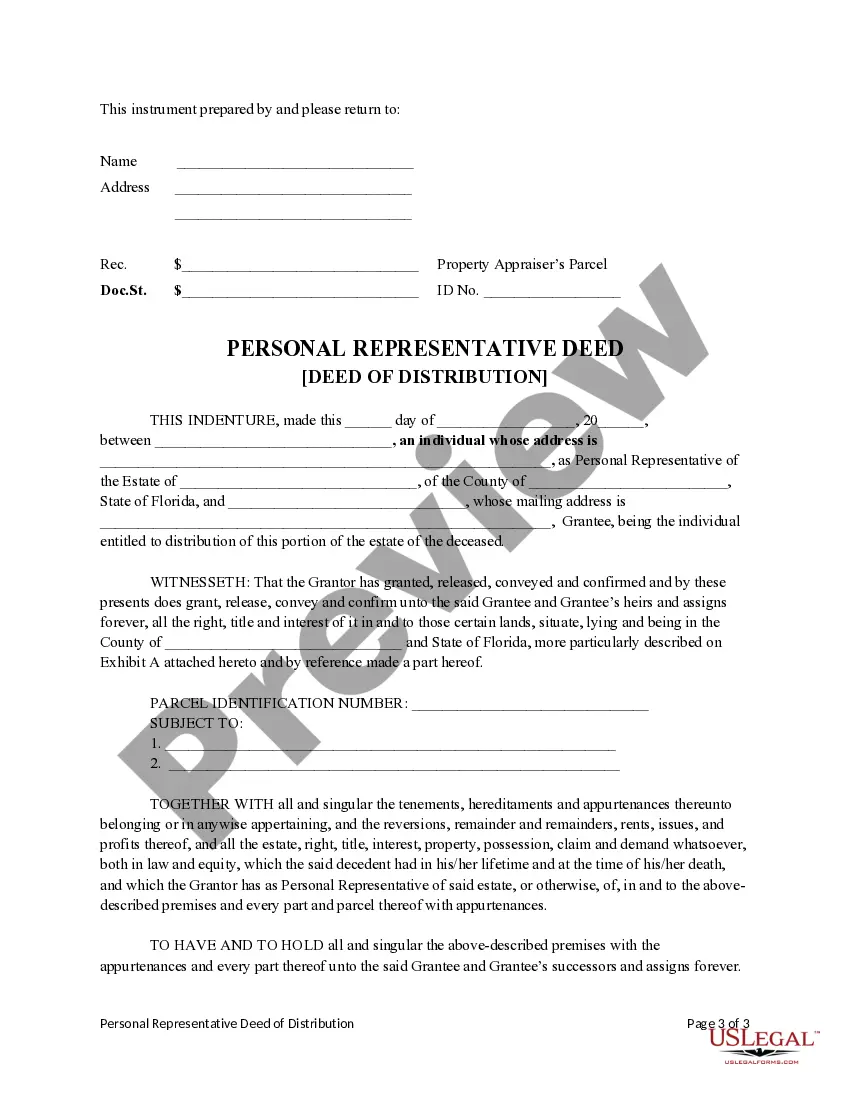
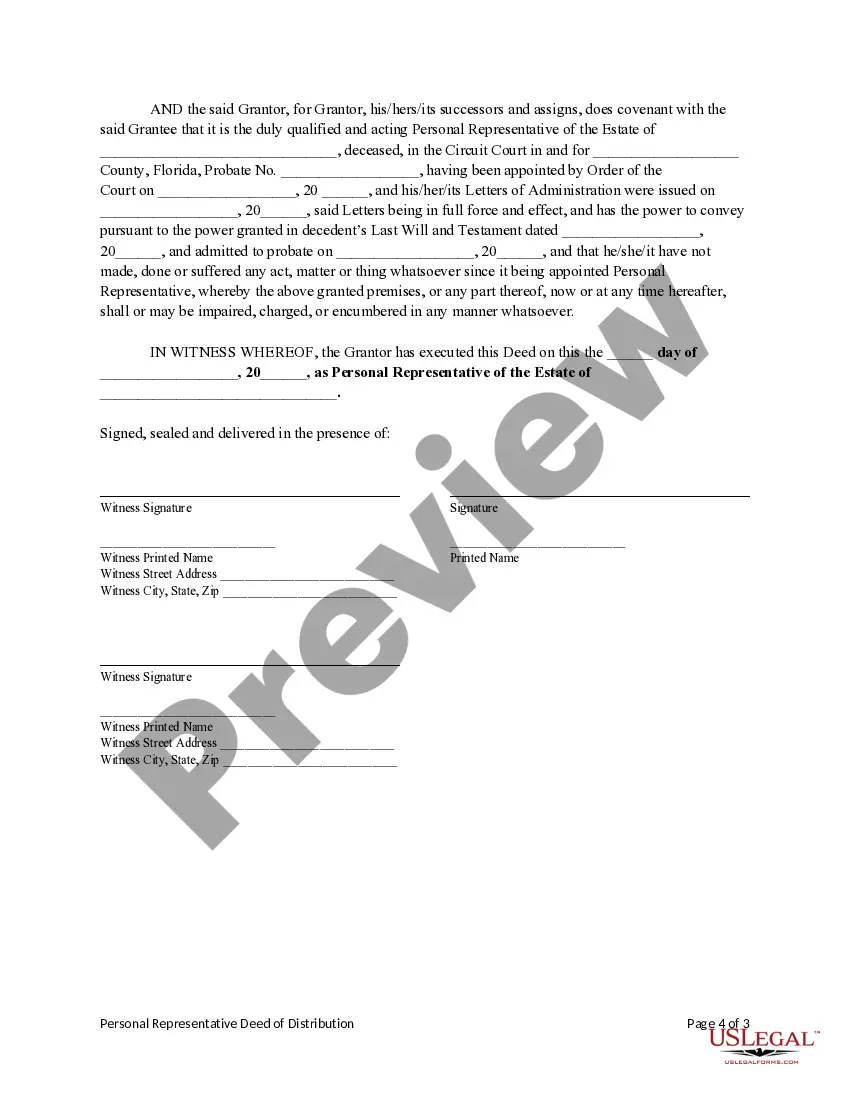

Get your form ready online
Our built-in tools help you complete, sign, share, and store your documents in one place.
Make edits, fill in missing information, and update formatting in US Legal Forms—just like you would in MS Word.
Download a copy, print it, send it by email, or mail it via USPS—whatever works best for your next step.
Sign and collect signatures with our SignNow integration. Send to multiple recipients, set reminders, and more. Go Premium to unlock E-Sign.
If this form requires notarization, complete it online through a secure video call—no need to meet a notary in person or wait for an appointment.
We protect your documents and personal data by following strict security and privacy standards.
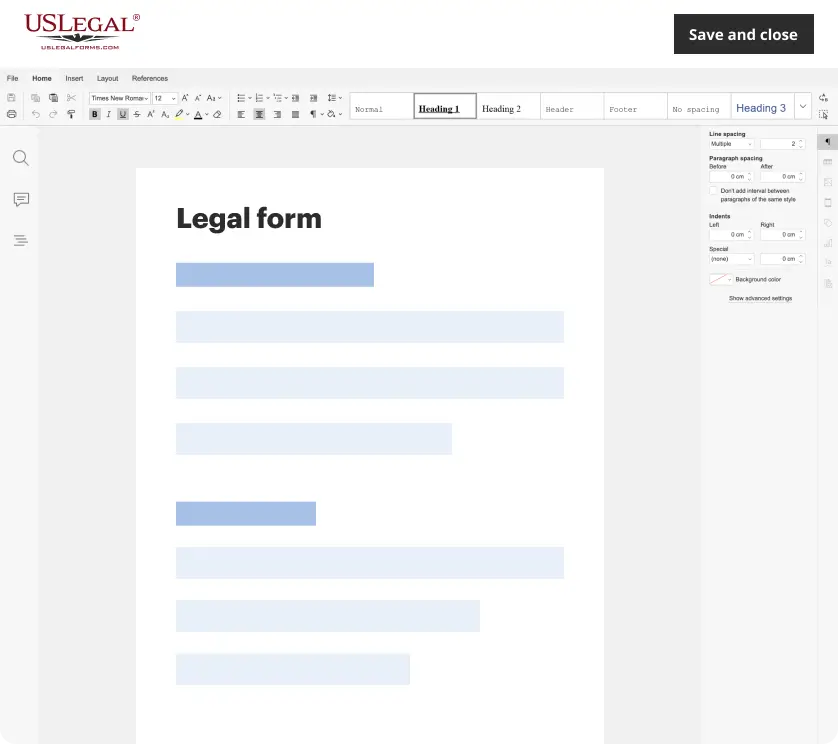
Make edits, fill in missing information, and update formatting in US Legal Forms—just like you would in MS Word.
Download a copy, print it, send it by email, or mail it via USPS—whatever works best for your next step.
Sign and collect signatures with our SignNow integration. Send to multiple recipients, set reminders, and more. Go Premium to unlock E-Sign.

If this form requires notarization, complete it online through a secure video call—no need to meet a notary in person or wait for an appointment.
We protect your documents and personal data by following strict security and privacy standards.
Looking for another form?

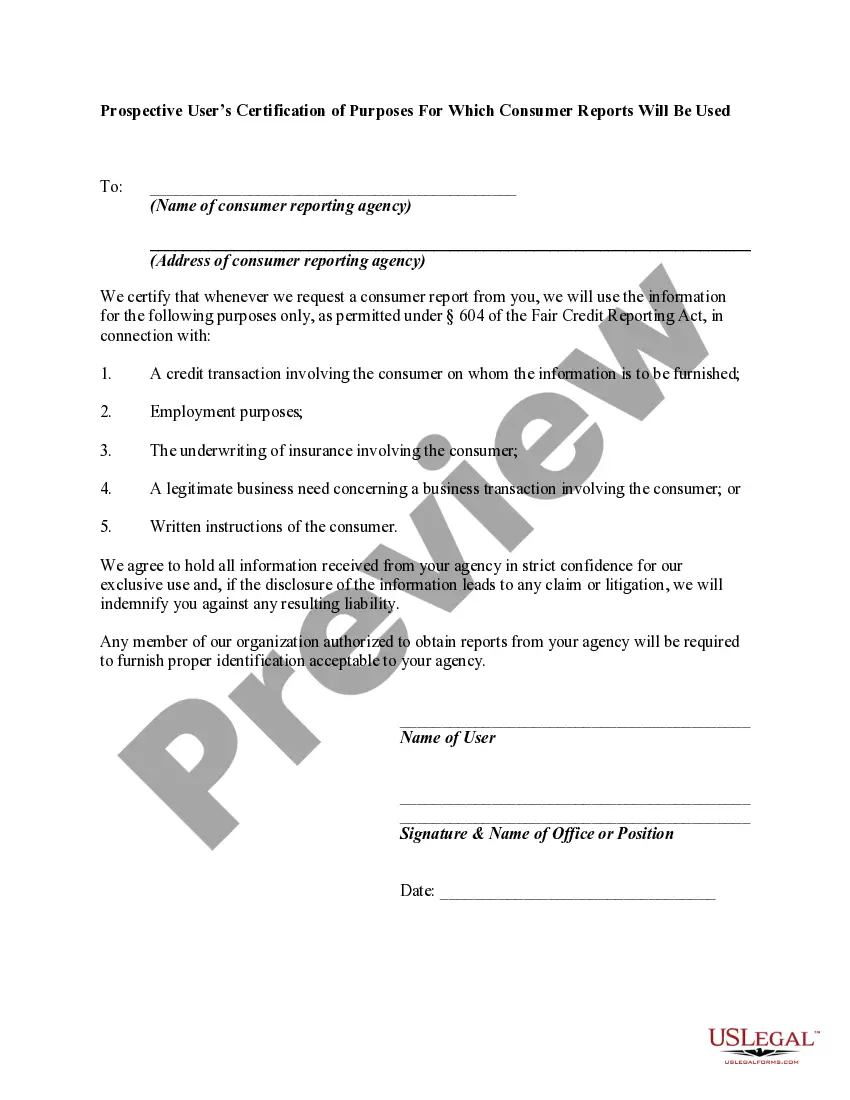


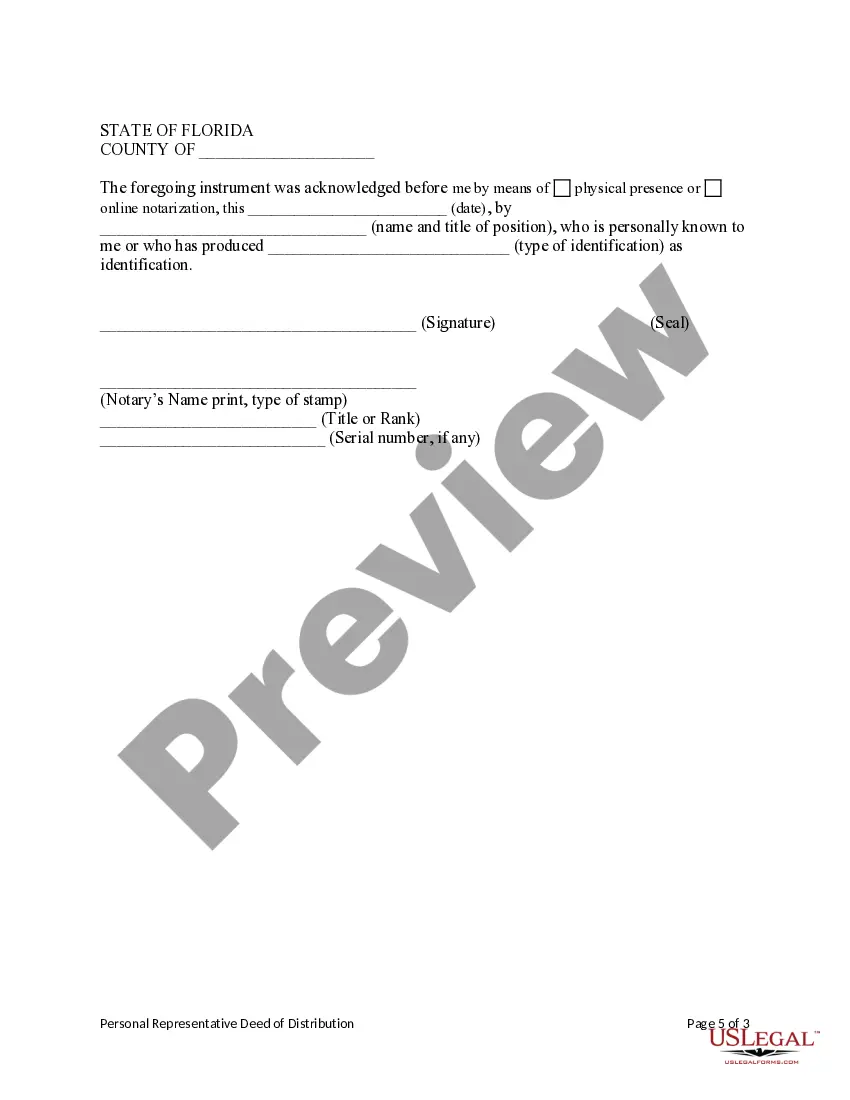
How to fill out Florida Personal Representative's Deed Of Distribution?
Managing legal documents and processes can be a lengthy addition to your overall day.
Florida Personal Representative Conflict Of Interest and similar forms often require you to search for them and comprehend how to fill them out accurately.
Therefore, whether you are managing financial, legal, or personal issues, having a thorough and accessible online repository of forms available will be very beneficial.
US Legal Forms is the leading online source of legal templates, featuring over 85,000 state-specific documents and a variety of tools to help you complete your paperwork effortlessly.
Is this your first time using US Legal Forms? Register and create an account in a few moments and you’ll gain access to the form library and Florida Personal Representative Conflict Of Interest. Then, follow the steps outlined below to complete your form: Ensure you have located the correct form using the Preview feature and reviewing the form details. Click Buy Now when ready, and choose the monthly subscription plan that suits you best. Click Download, then fill out, eSign, and print the form. US Legal Forms has twenty-five years of expertise assisting clients manage their legal documents. Find the form you need today and streamline any procedure effortlessly.
- Explore the collection of relevant documents available with just a single click.
- US Legal Forms provides you with state- and county-specific forms accessible at any moment for download.
- Safeguard your document management practices with exceptional support that enables you to create any form within minutes without incurring additional or hidden fees.
- Simply Log In to your account, locate Florida Personal Representative Conflict Of Interest, and download it immediately from the My documents section.
- You can also retrieve previously downloaded forms.
Form popularity
FAQ
A conflict of interest with an attorney occurs when the attorney’s representation of one client adversely affects another client, or when the attorney has a vested interest in the outcome of a case. For Florida personal representatives, this could mean that the attorney represents multiple beneficiaries or has personal connections to the estate. It's crucial for personal representatives to identify and address these conflicts to ensure fair legal representation and compliance with ethical standards.
Grounds for conflict of interest include situations where the executor has a personal stake in the estate, such as debts owed or shared ownership of assets. Additionally, if the personal representative has ties to beneficiaries that could influence their decisions, this may also lead to a conflict. Understanding these grounds helps ensure that Florida personal representatives manage their responsibilities without bias, ultimately serving the best interests of all parties involved.
The conflict of interest as an executor refers to any situation where the executor’s personal interests could compromise their ability to act fairly and impartially for the estate. This might involve scenarios where the executor benefits from decisions made during the estate's administration. It is vital for Florida personal representatives to understand and disclose any potential conflicts to maintain transparency and uphold their fiduciary duties.
Common examples of conflicts of interest include situations where an executor has financial ties to a beneficiary or when they own property that is part of the estate. Additionally, if the personal representative has a close relationship with one of the heirs, their impartiality may be questioned. Recognizing these scenarios is essential for avoiding disputes and ensuring a smooth probate process in Florida, particularly regarding Florida personal representative conflict of interest.
A conflict of interest for an executor arises when personal interests interfere with the duty to act in the best interests of the estate. For example, if the executor stands to gain financially from decisions made during the probate process, this creates a conflict. In Florida, personal representatives must remain impartial, ensuring that all beneficiaries receive fair treatment. Addressing potential conflicts is crucial to maintaining trust and integrity in the estate administration.
Florida Probate Rule 5.120(a) authorizes appointment of an administrator ad litem to represent the estate in a particular probate proceeding whenever the personal representative ?is or may be interested adversely to the estate? or ?the necessity arises otherwise.? An administrator ad litem may be appointed where the ...
Once the personal representative is granted the authority by letters of administration, he or she can be sued in that capacity.
A creditor's statement of claim shall be verified and filed with the clerk and shall state: (1) the basis for the claim; (2) the amount claimed; (3) the name and address of the creditor; (4) the security for the claim, if any; and (5) whether the claim is currently due or involves an uncertainty and, if not due, then ...
A personal representative is compensated: At the rate of 3 percent for the first $1 million in estate assets. At the rate of 2.5 percent for all above $1 million and not exceeding $5 million in estate assets.
If the estate value is $1 million or less, your fee is 3% of the estate assets. If the estate value is between $1 million and $5 million, your fee is 2.5% of the estate assets. If the estate value is between $5 million and $10 million, your fee is 2% of the estate assets.