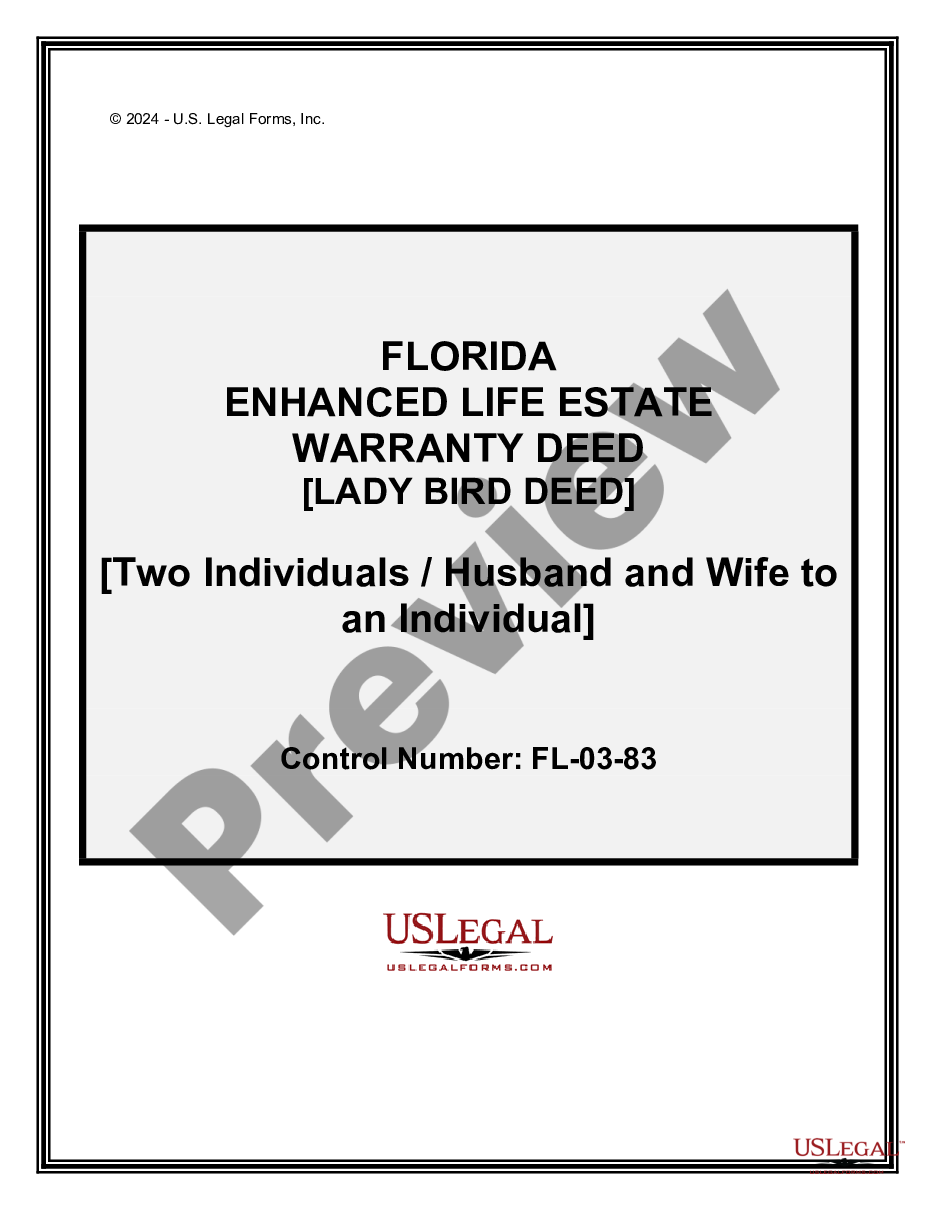
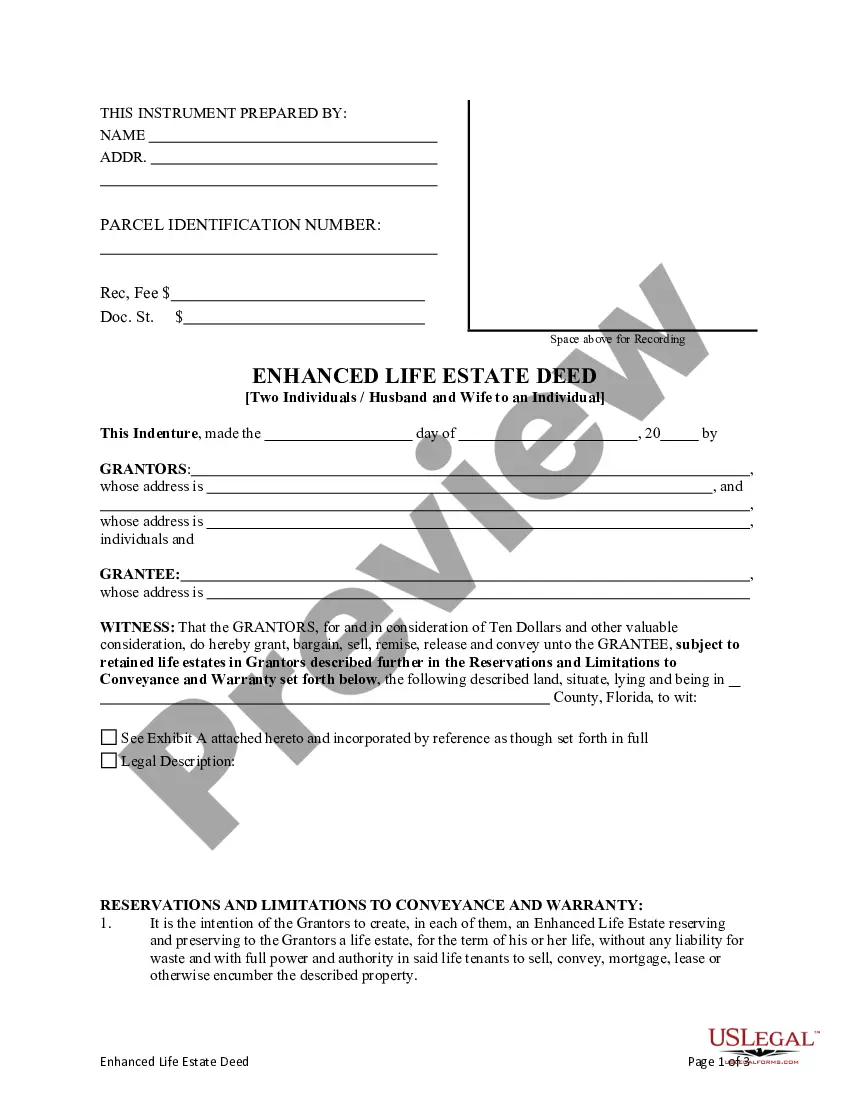
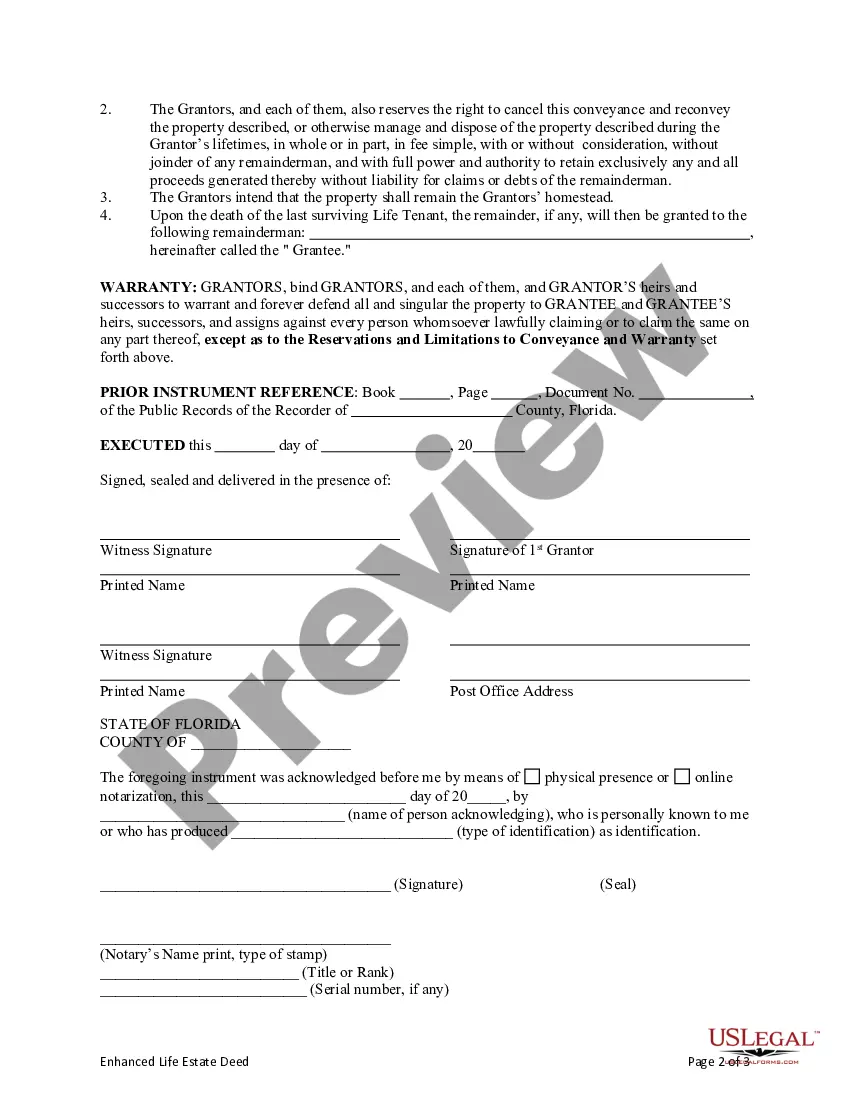
Life Estate Grant With Reversion
Description

Get your form ready online
Our built-in tools help you complete, sign, share, and store your documents in one place.
Make edits, fill in missing information, and update formatting in US Legal Forms—just like you would in MS Word.
Download a copy, print it, send it by email, or mail it via USPS—whatever works best for your next step.
Sign and collect signatures with our SignNow integration. Send to multiple recipients, set reminders, and more. Go Premium to unlock E-Sign.
If this form requires notarization, complete it online through a secure video call—no need to meet a notary in person or wait for an appointment.
We protect your documents and personal data by following strict security and privacy standards.

Make edits, fill in missing information, and update formatting in US Legal Forms—just like you would in MS Word.

Download a copy, print it, send it by email, or mail it via USPS—whatever works best for your next step.

Sign and collect signatures with our SignNow integration. Send to multiple recipients, set reminders, and more. Go Premium to unlock E-Sign.

If this form requires notarization, complete it online through a secure video call—no need to meet a notary in person or wait for an appointment.

We protect your documents and personal data by following strict security and privacy standards.
Looking for another form?


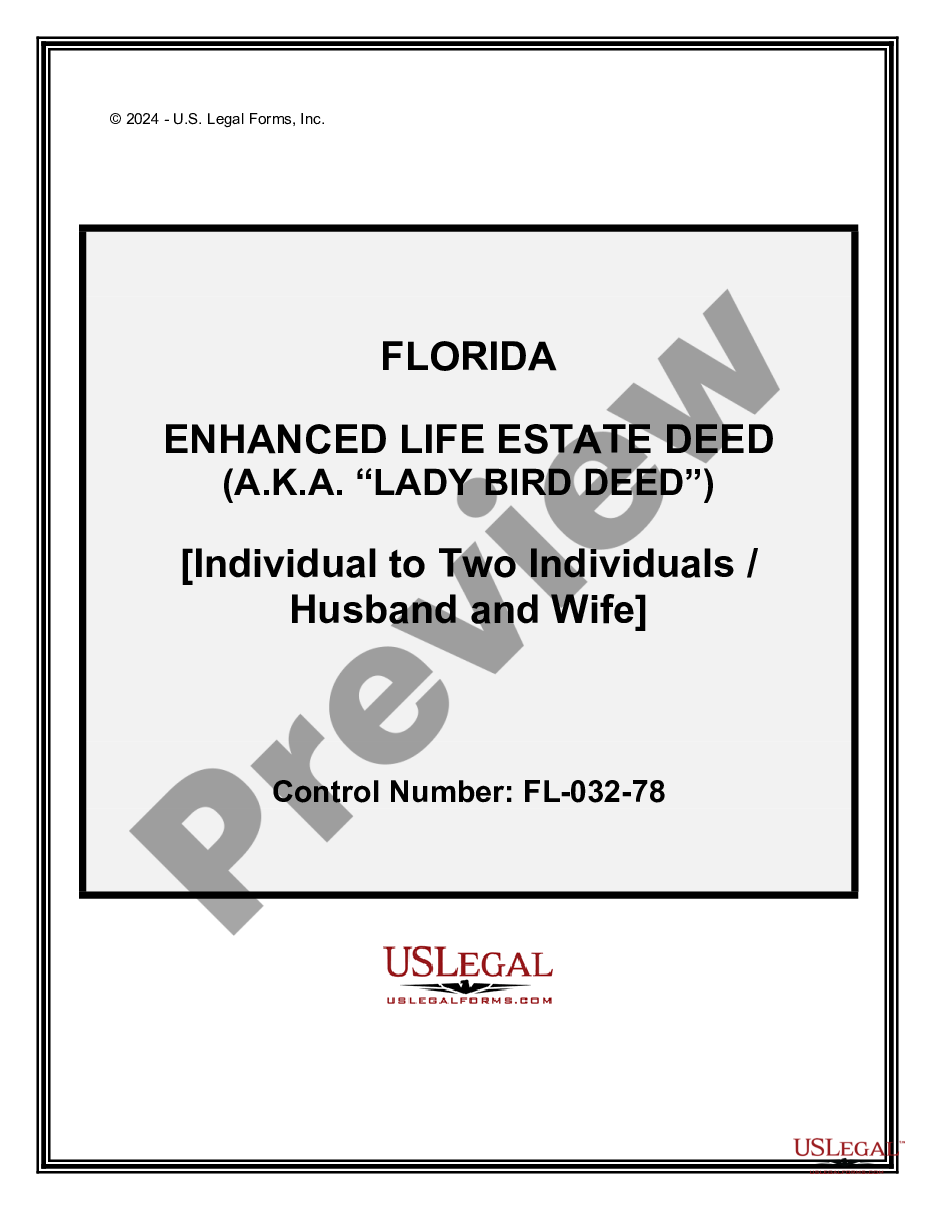
How to fill out Florida Enhanced Life Estate Or Lady Bird Deed - Two Individual / Husband And Wife To Individual?
Managing legal documents can be daunting, even for the most seasoned experts.
If you're in search of a Life Estate Grant With Reversion and lack the time to find the suitable and updated version, the procedures can become nerve-wracking.
Leverage cutting-edge tools to complete and manage your Life Estate Grant With Reversion.
Access a repository of articles, guides, and resources pertinent to your situation and requirements.
Take advantage of the US Legal Forms online library, backed by 25 years of experience and reliability. Transform your daily document management into a simple and straightforward process today.
- Conserve time and effort searching for the documents you need, and take advantage of US Legal Forms’ advanced search and Review tool to locate and download Life Estate Grant With Reversion.
- If you possess a subscription, Log In to your US Legal Forms account, search for the form, and download it.
- Check the My documents tab to view the documents you have previously saved and manage your folders as desired.
- If it’s your first experience with US Legal Forms, create an account and gain unlimited access to all the library’s benefits.
- After obtaining the form you require, ensure it is the correct document by previewing and reviewing its description.
- Confirm that the template is valid in your state or county.
- Click Buy Now when you are ready.
- Choose a subscription plan.
- Select the file format you need, and Download, complete, sign, print, and send your documents.
- Utilize a comprehensive online form library which could transform the way you handle these matters.
- US Legal Forms is a leading provider of online legal documents, boasting over 85,000 state-specific legal forms available to you at all times.
- Acquire state- or county-specific legal and business forms. US Legal Forms meets all your needs, from personal to business documents, in one centralized location.
Form popularity
FAQ
In General. A "reversion" is a future estate created by operation of law and which is to take effect in possession in favor of a lessor, transferor, grantor, or his heirs, distributees, devisees, or legatees, after a precedent particular estate which has been granted, demised, or devised, has terminated.
For example, Tisha's grandmother wrote her will and stated that her twin sister could live in her home until she died. Then, the home would go to Tisha. This is an estate in reversion - the twin sister will enjoy possession of the estate until she passes away, then possession will revert to Tisha.
Reversion and remainder are both types of future interests for a property. Reversion is when the original grantor of the original conveyance retains the right to future possession of the property. Remainder is when that future interest is transferred to someone other than the original grantor.
The ordinary conventional life estate with remainder or reversion, for example, does not continue for an indefinite period but terminates when the person on whose life the estate is based, or the life tenant, becomes deceased.
A reversion is that portion of a fee estate that continues in the grantor after the grantor has conveyed a life estate. For example, when A conveys a life estate to B, the portion of the fee estate remaining in A is a reversion. When B's life estate ends, the right to ownership and possession will revert to A.