Quitclaim.dead
Description
Get your form ready online
Our built-in tools help you complete, sign, share, and store your documents in one place.
Make edits, fill in missing information, and update formatting in US Legal Forms—just like you would in MS Word.
Download a copy, print it, send it by email, or mail it via USPS—whatever works best for your next step.
Sign and collect signatures with our SignNow integration. Send to multiple recipients, set reminders, and more. Go Premium to unlock E-Sign.
If this form requires notarization, complete it online through a secure video call—no need to meet a notary in person or wait for an appointment.
We protect your documents and personal data by following strict security and privacy standards.

Make edits, fill in missing information, and update formatting in US Legal Forms—just like you would in MS Word.

Download a copy, print it, send it by email, or mail it via USPS—whatever works best for your next step.

Sign and collect signatures with our SignNow integration. Send to multiple recipients, set reminders, and more. Go Premium to unlock E-Sign.

If this form requires notarization, complete it online through a secure video call—no need to meet a notary in person or wait for an appointment.

We protect your documents and personal data by following strict security and privacy standards.
Looking for another form?
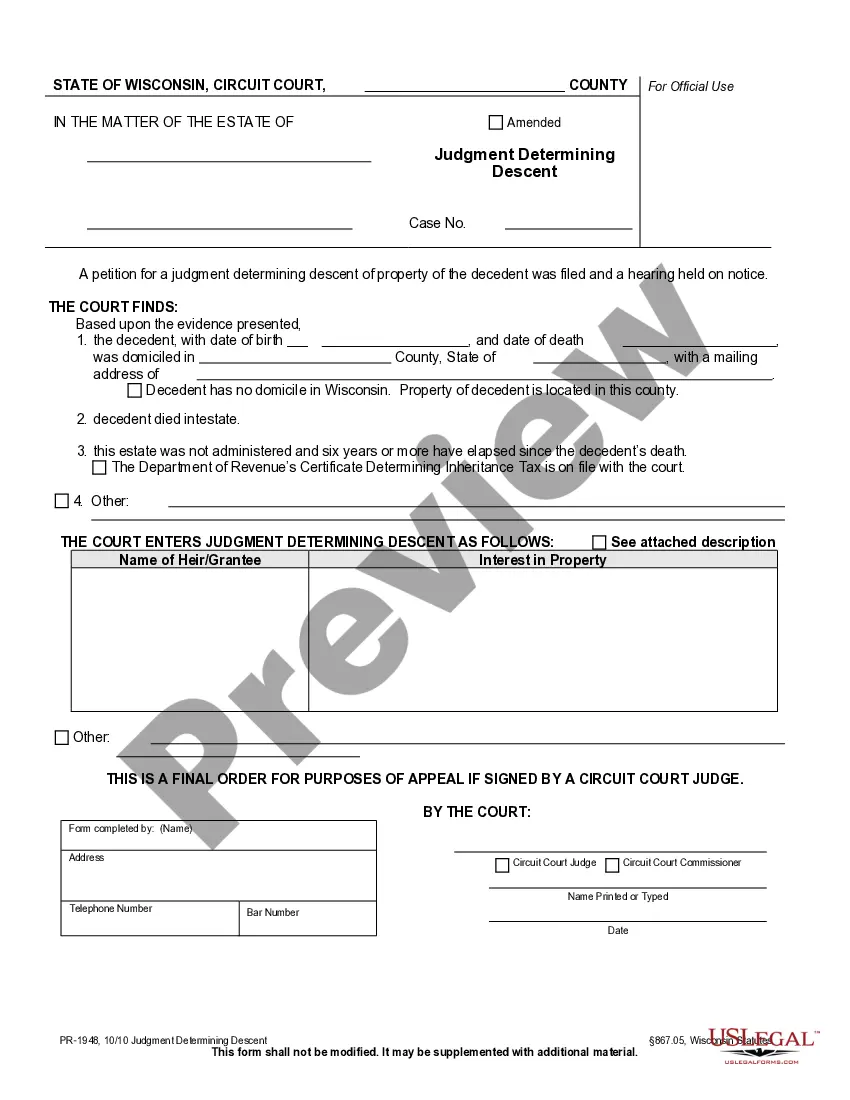
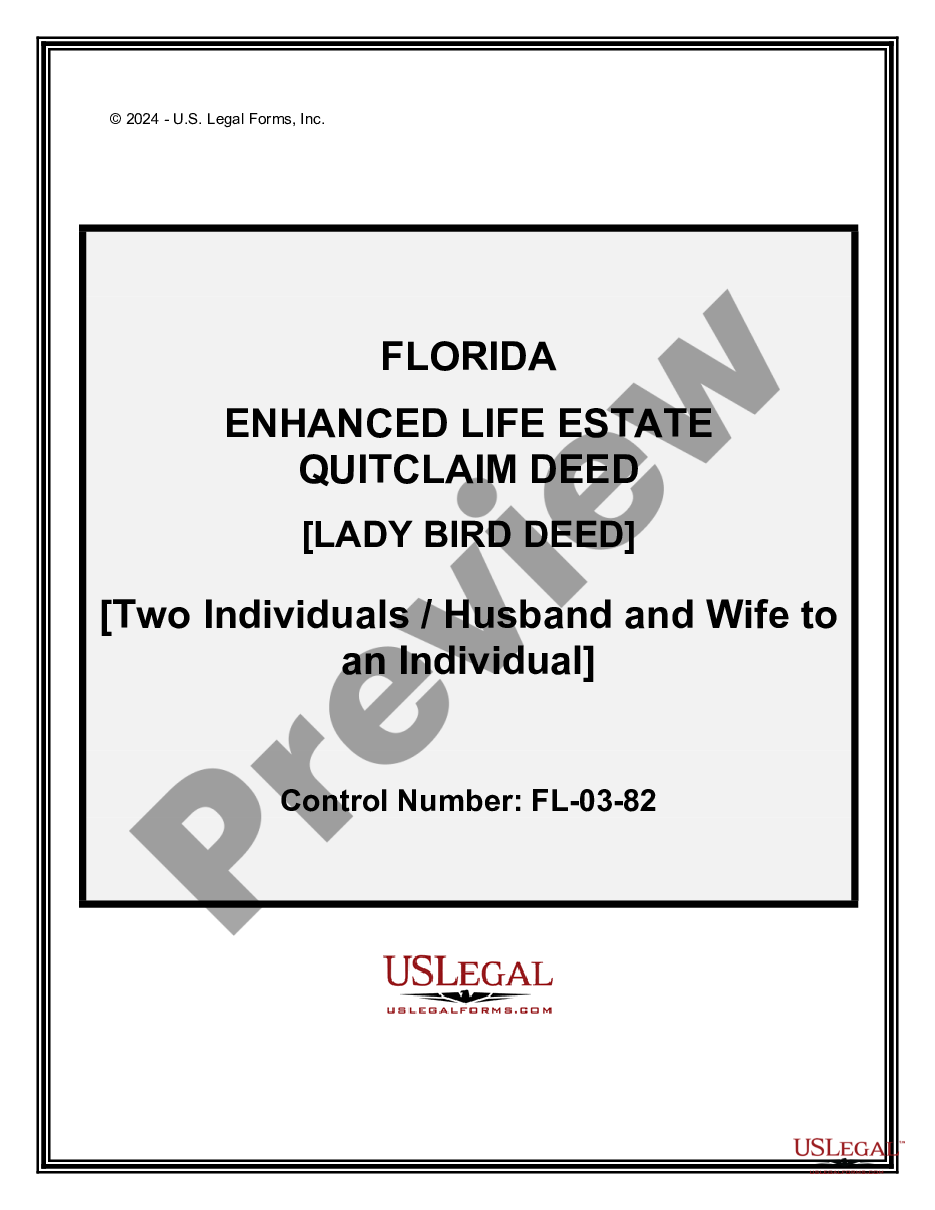
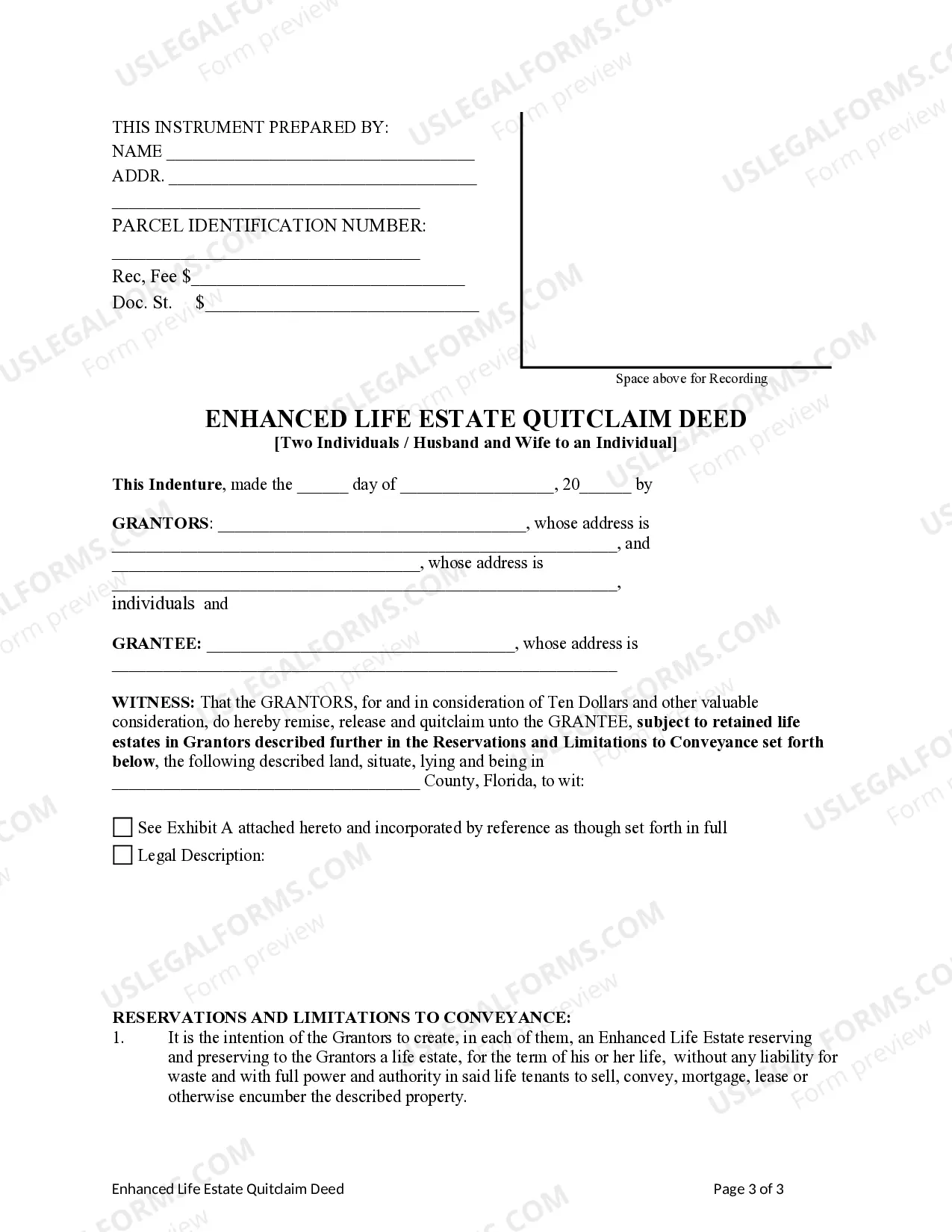
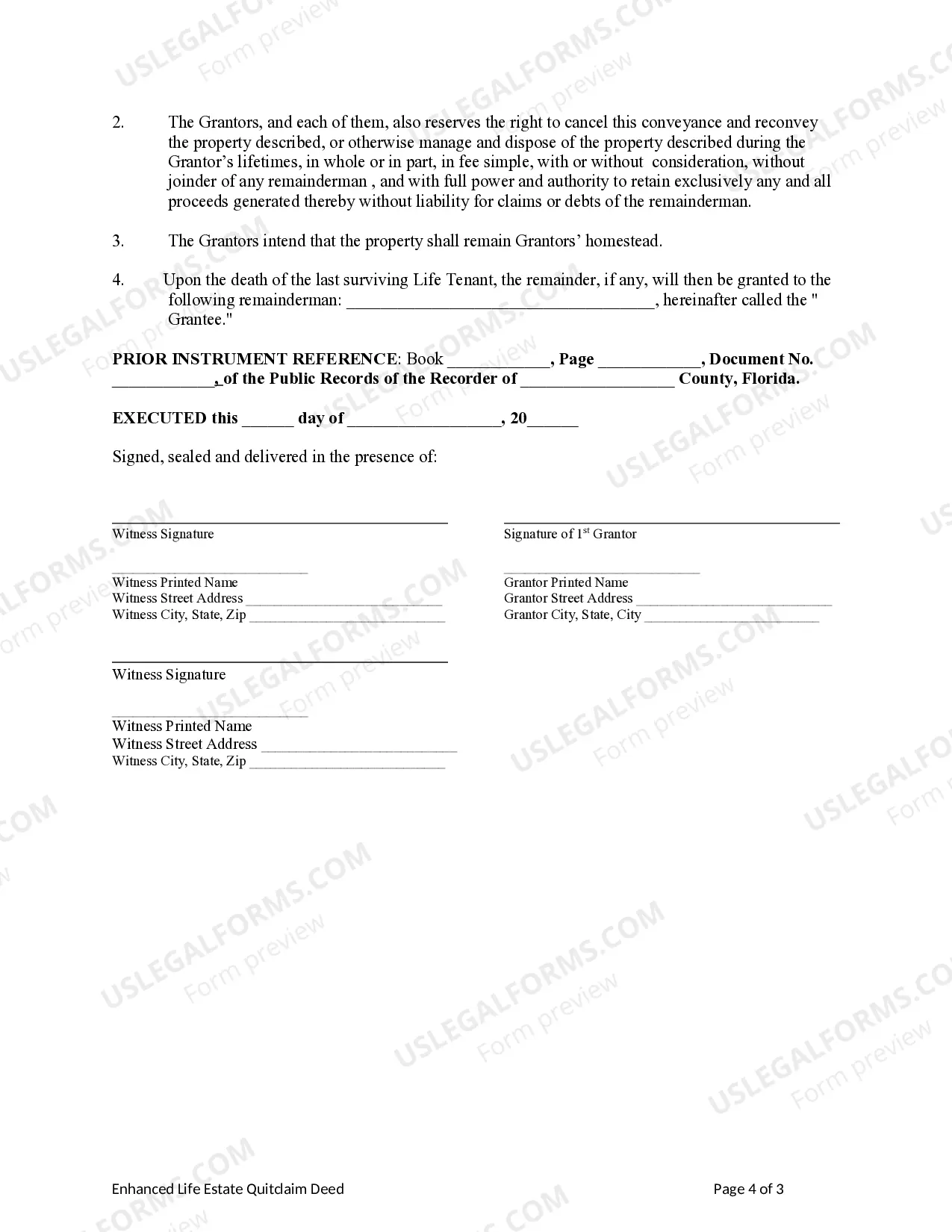
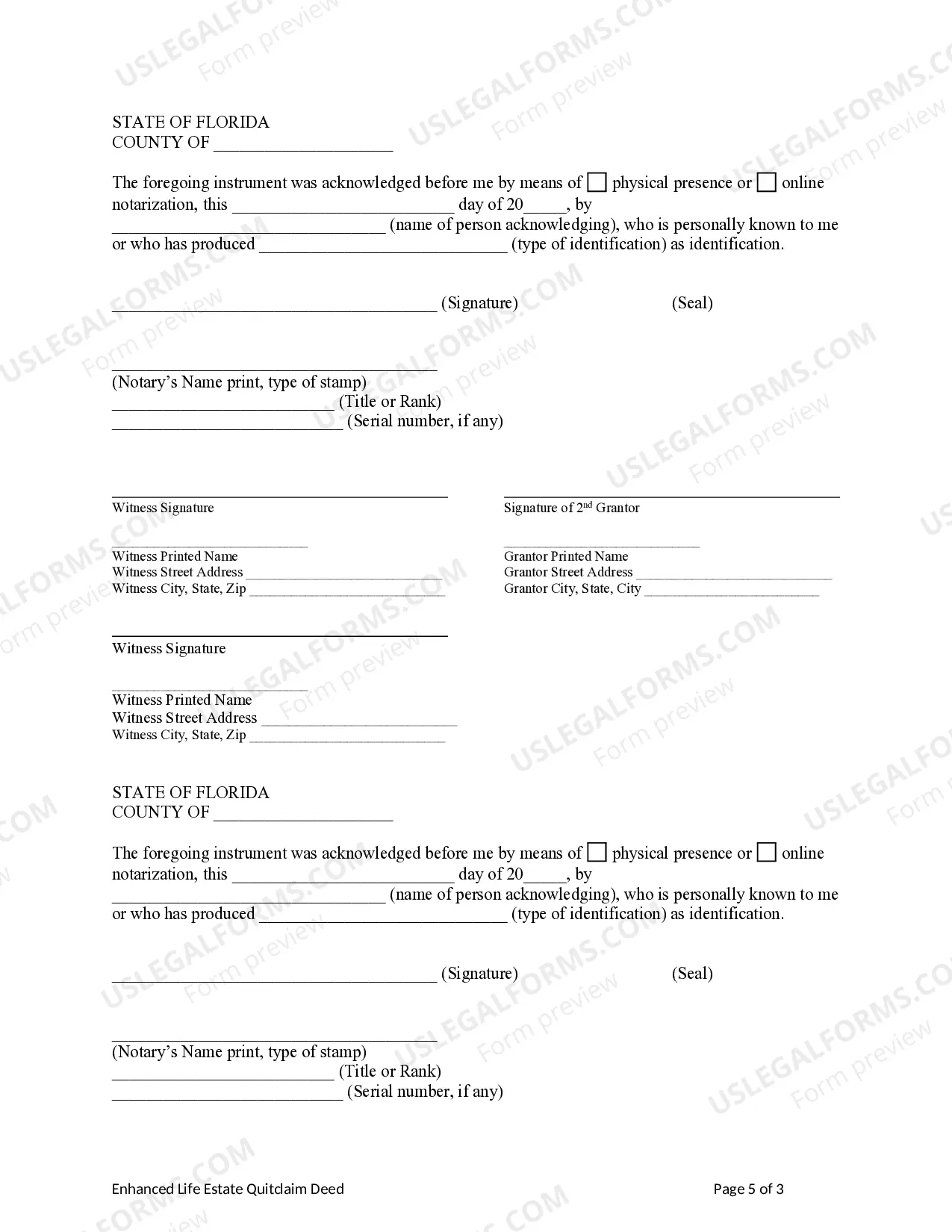
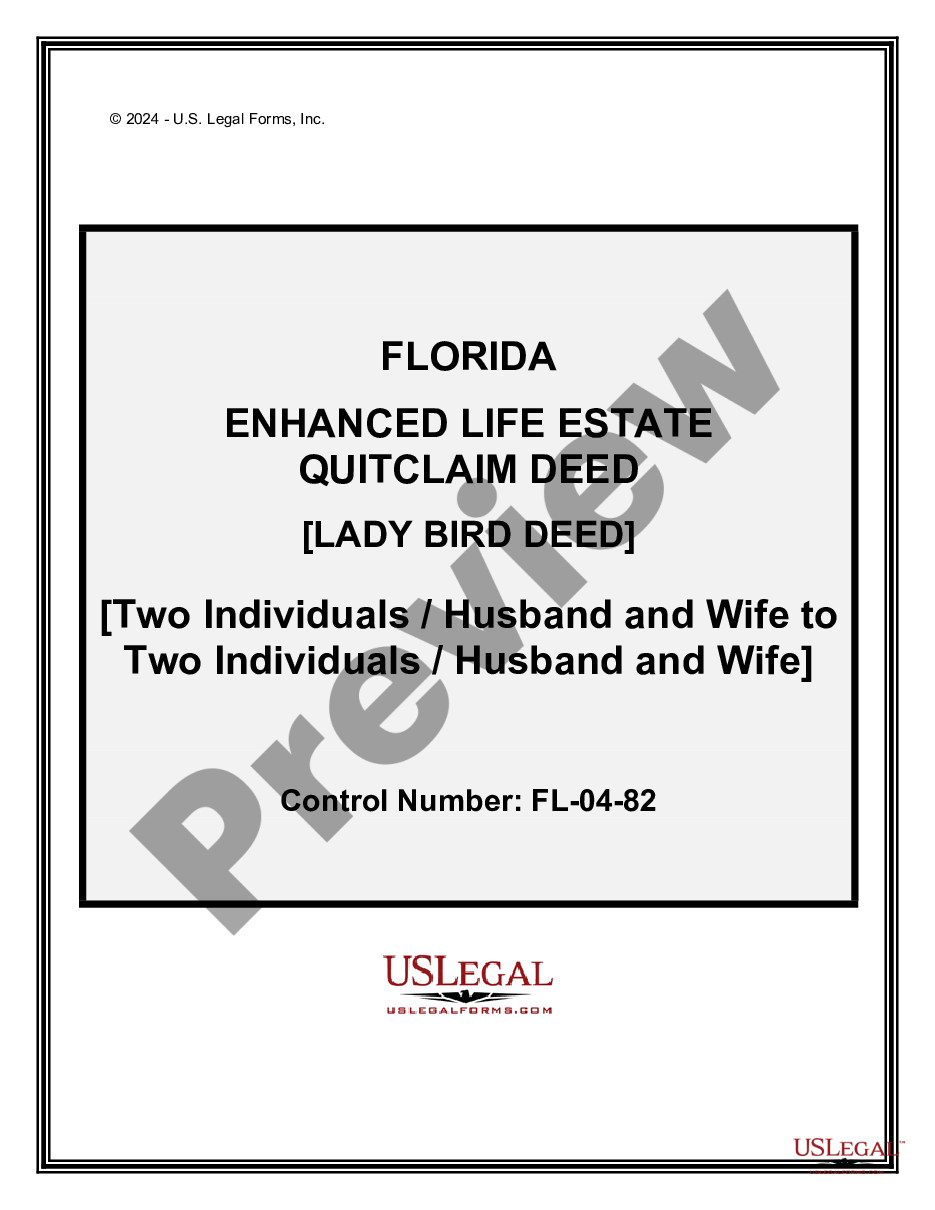
How to fill out Florida Enhanced Life Estate Or Lady Bird Deed - Quitclaim - Two Individual Or Husband And Wife To Individual?
- If you're a returning user, log in to access your account and download the required form template directly. Ensure your subscription remains active or renew it as necessary.
- For first-time users, start by reviewing the Preview mode and detailed description of the quitclaim form to verify it aligns with your specific needs and local jurisdiction.
- If adjustments are required, utilize the Search tab to locate a more suitable template before proceeding.
- Once you've found the right document, click the Buy Now button and select your desired subscription plan. You'll need to create an account for full library access.
- Complete your purchase by entering your payment details via credit card or PayPal.
- Finally, download the form to your device for completion, and find it anytime in the My documents section of your profile.
Utilizing US Legal Forms not only saves you time but also ensures that your legal documents are accurate and compliant. With over 85,000 editable forms and access to premium experts, you'll be in good hands.
Start simplifying your legal processes today by exploring US Legal Forms for your quitclaim deed needs!
Form popularity
FAQ
The best way to complete a quitclaim deed is to follow a clear process and use reliable templates. First, you should gather necessary information about the property and the parties involved. Then, you can visit uslegalforms for trustworthy resources tailored to your needs. Exploring options through Quitclaim.dead ensures you have the information and tools to create a valid deed.
Yes, you can prepare a quit claim deed yourself. However, it's important to understand the legal requirements in your state to ensure the document is valid. A platform like uslegalforms can provide templates and guidance to make the process straightforward. Utilizing resources from Quitclaim.dead can also make this task easier and more efficient.
In Minnesota, a quitclaim deed allows one party to transfer their interest in a property without warranting the title's quality. This means the grantee takes the property 'as is' and assumes any existing claims. It's common for such deeds to be used in family matters or divorce situations. If you're considering a quitclaim deed in MN, the uslegalforms platform can guide you through the required steps.
The primary reason people use a quitclaim deed is to quickly transfer property without going through a lengthy legal process. This is particularly helpful in familial situations, like conveying a family home to another relative. Quitclaims also serve to clear up title issues or to add someone to a property's title. By utilizing quitclaim.dead, individuals can address their property needs with ease.
Filling in a quit claim deed involves providing complete information about both the granter and the grantee. Next, clearly describe the property to avoid any confusion. After drafting the document, ensure it is signed in front of a notary to validate the transaction. The uslegalforms platform can assist by offering templates and guidance to help you complete the document accurately.
Quitclaims are often considered less secure than other types of property transfers because they do not assure clear title. This means that the grantee could inherit any debts associated with the property. Additionally, since there is no title guarantee, buyers may hesitate to accept a quitclaim deed if they seek assurance of property ownership. Understanding these risks is vital when dealing with quitclaim.dead.
To fill out a quit claim deed correctly, first, gather the necessary information about the property. Include the granter and grantee details, the property description, and the date of transfer. Use clear language to ensure the intent is understood. You can leverage the uslegalforms platform for step-by-step templates that make the process smoother.
Transferring property to family members in New York can be done using a quit claim deed. Start by filling out the quit claim form, which you can find on USLegalForms to ensure accuracy. You'll need to include both the grantor and grantee's names, as well as a detailed property description. After signing and notarizing the document, record it with the county clerk to complete the transfer under the Quitclaim.dead framework.
You can obtain a copy of your quit claim deed by visiting your county clerk's office where the original was filed. Some counties also offer online portals where you can request copies electronically. If you need assistance with navigating these resources, USLegalForms can provide guidance and support throughout the process. Remember, having a copy is essential for future transactions or verification under Quitclaim.dead.
To create a quit claim deed in New York, you will need the names of the parties involved, the property's legal description, and the notary's information. Additionally, securing a template from USLegalForms can simplify the process immensely. Make sure to comply with local regulations, as each county may have unique filing requirements. Once everything is prepared, your quit claim deed can be recorded following the Quitclaim.dead protocol.