Detainer Com Unlawful Withdrawal Meaning
Description


Get your form ready online
Our built-in tools help you complete, sign, share, and store your documents in one place.
Make edits, fill in missing information, and update formatting in US Legal Forms—just like you would in MS Word.
Download a copy, print it, send it by email, or mail it via USPS—whatever works best for your next step.
Sign and collect signatures with our SignNow integration. Send to multiple recipients, set reminders, and more. Go Premium to unlock E-Sign.
If this form requires notarization, complete it online through a secure video call—no need to meet a notary in person or wait for an appointment.
We protect your documents and personal data by following strict security and privacy standards.

Make edits, fill in missing information, and update formatting in US Legal Forms—just like you would in MS Word.

Download a copy, print it, send it by email, or mail it via USPS—whatever works best for your next step.

Sign and collect signatures with our SignNow integration. Send to multiple recipients, set reminders, and more. Go Premium to unlock E-Sign.

If this form requires notarization, complete it online through a secure video call—no need to meet a notary in person or wait for an appointment.

We protect your documents and personal data by following strict security and privacy standards.
Looking for another form?
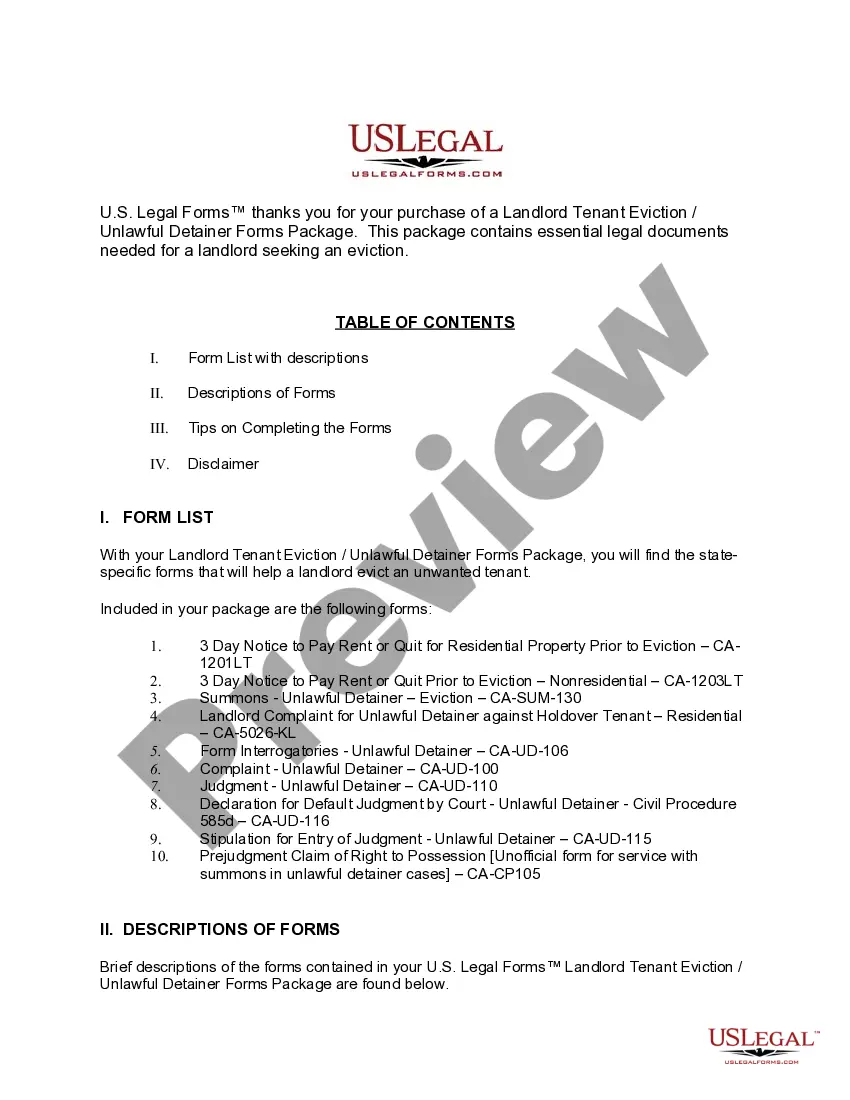
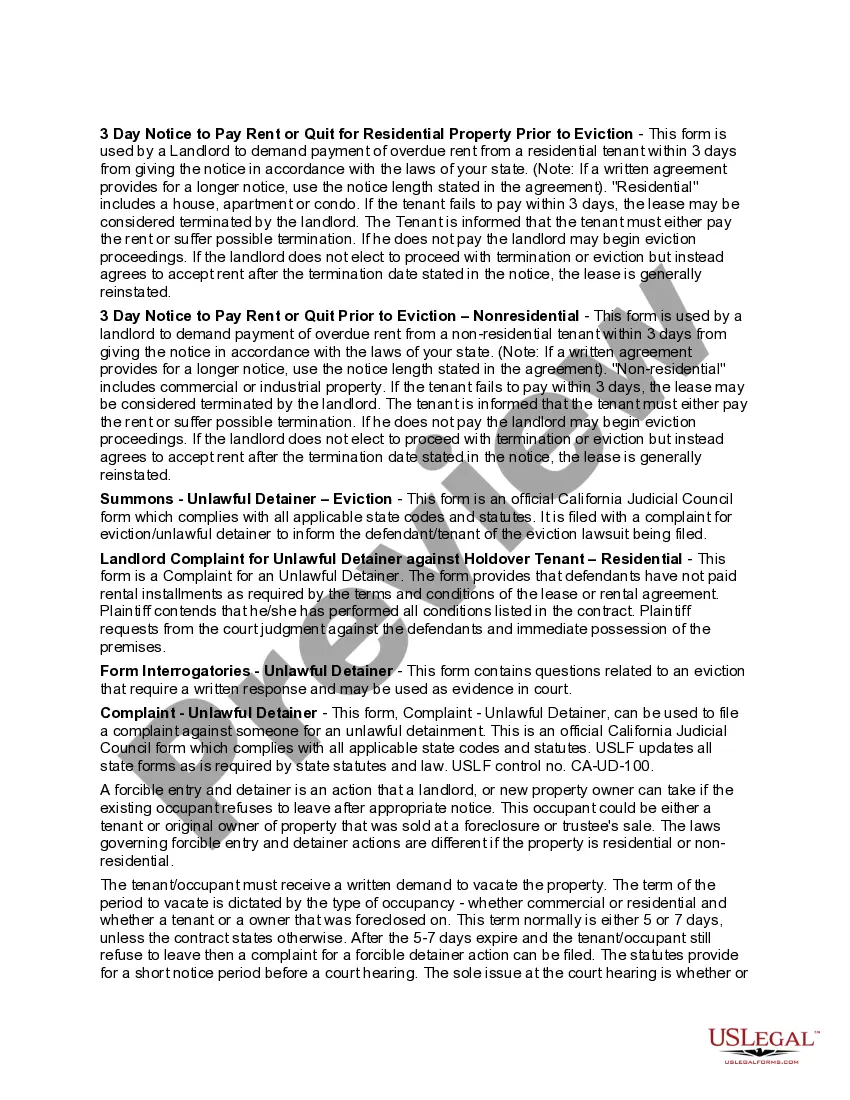
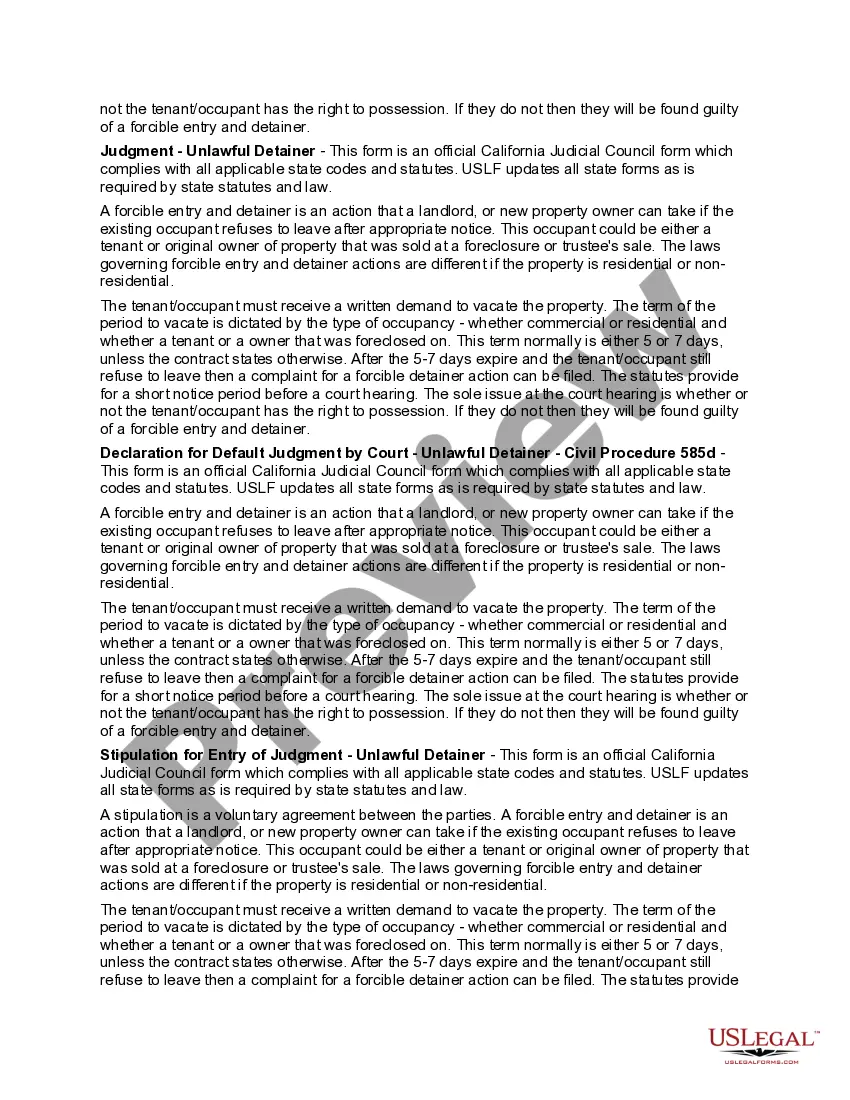
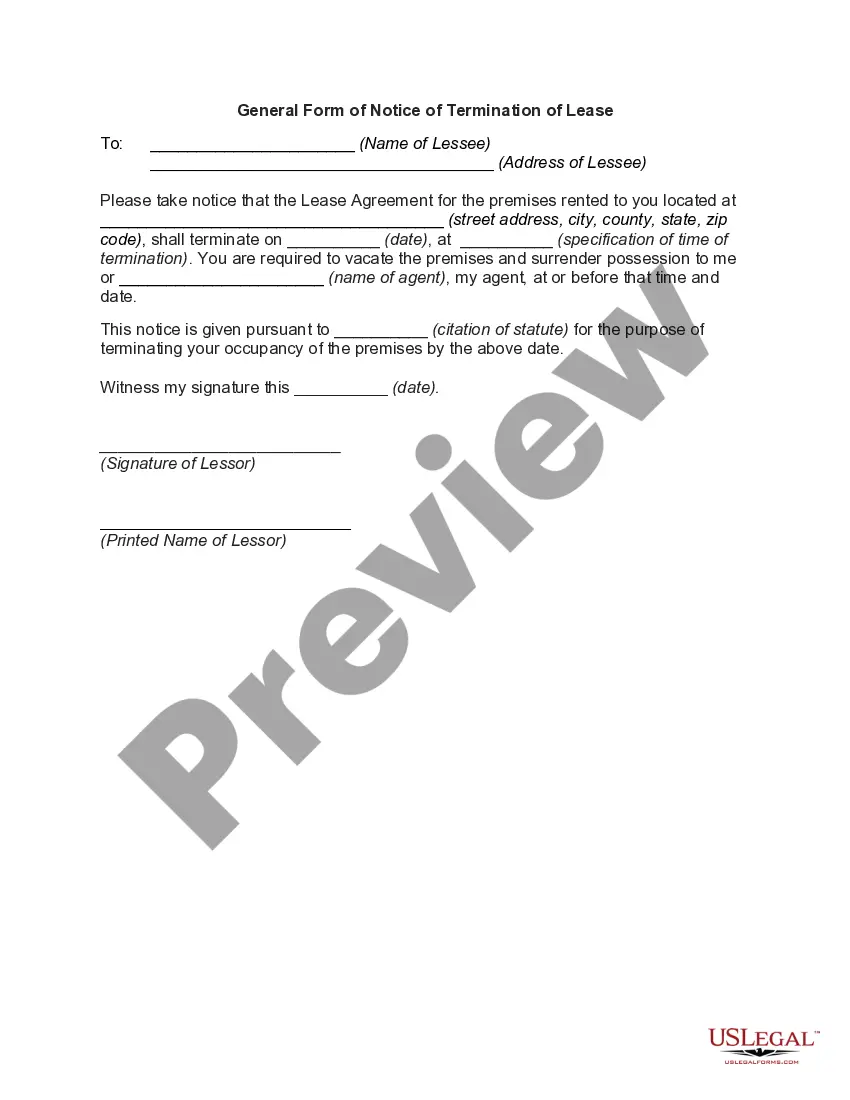
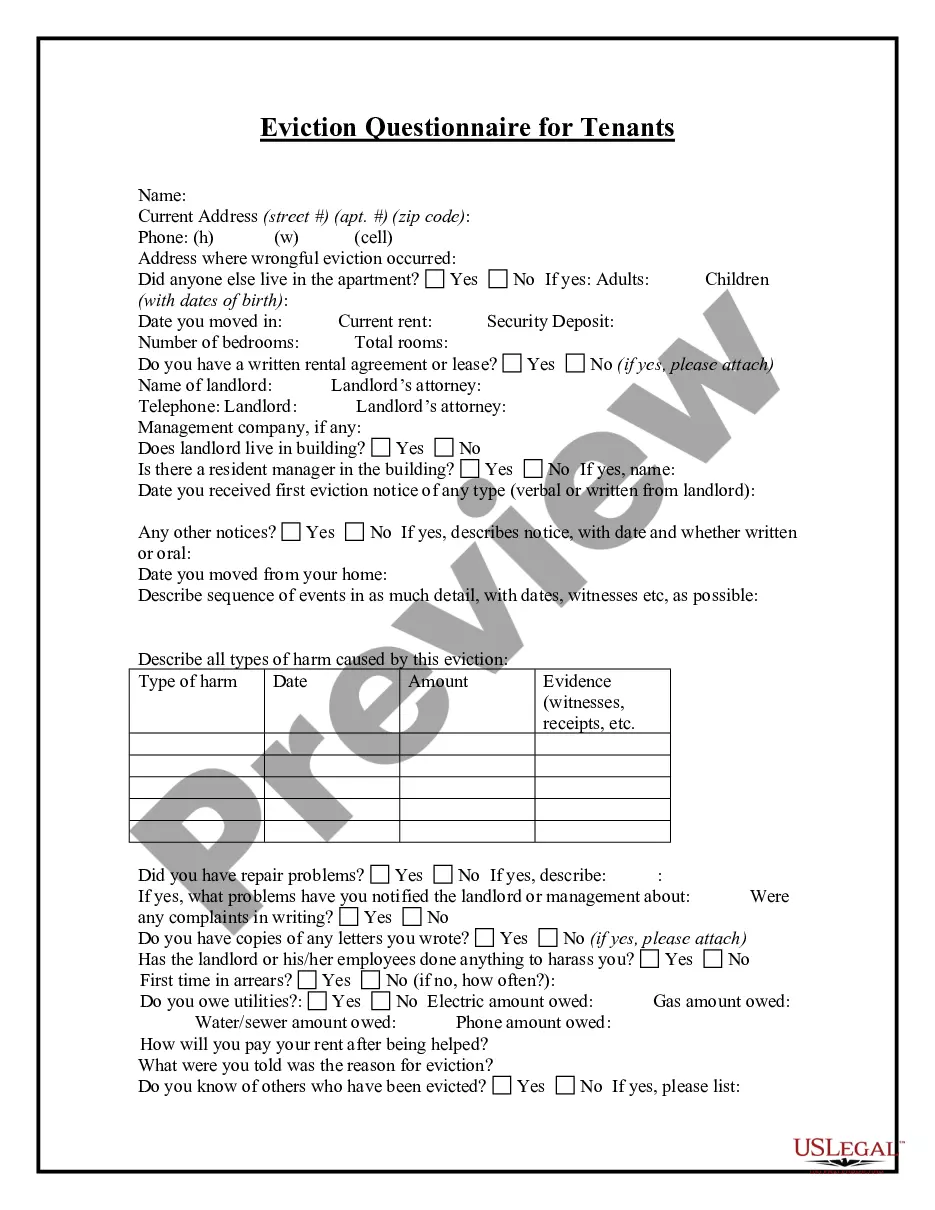
How to fill out California Landlord Tenant Eviction / Unlawful Detainer Forms Package?
It’s clear that you cannot become a legal specialist instantly, nor can you swiftly acquire the skills to prepare Detainer Com Unlawful Withdrawal Meaning without having a specialized education.
Drafting legal documents is a lengthy endeavor that necessitates specific education and expertise.
Therefore, why not entrust the preparation of the Detainer Com Unlawful Withdrawal Meaning to the experts.
Preview it (if this option is available) and read the accompanying description to determine if Detainer Com Unlawful Withdrawal Meaning is what you seek.
If you need a different form, begin your search anew. Set up a free account and choose a subscription plan to buy the form. Select Buy now. Once the payment is completed, you can obtain the Detainer Com Unlawful Withdrawal Meaning, fill it out, print it, and deliver it or send it by mail to the appropriate individuals or organizations.
- With US Legal Forms, one of the most extensive legal template repositories, you can discover everything from court forms to templates for internal communication.
- We recognize how vital compliance and observation of federal and state laws and regulations are.
- That’s why, on our site, all templates are location specific and current.
- Here’s how you can commence using our platform and obtain the form you need in just a few minutes.
- Locate the document you require by utilizing the search bar at the top of the page.
Form popularity
FAQ
After the tenant files the ?Answer,? either the landlord or the tenant can request a court date. After the request, the court will set a court date and send a notice to the parties. Please see our referral list for legal assistance or representation on your eviction matter.
To respond to the eviction case, you start with filling out an Answer or other response forms. Then, you file them with the court. This gives you the chance to tell the judge if there are any legal reasons your landlord can't evict you and tell your side of the story at a court trial.
File the Request for Dismissal with the court Bring the originals and copies of the Request for Dismissal to the clerk at the courthouse where the case was originally filed. They will file the forms and return the copy to you. Keep the copy for your records.
Once you have come up with a mutual agreement, your landlord can allow you to apply for an eviction record expungement. You should document all the mediation proceedings, such as payment receipts, your mutual agreement and the landlord's consent. You will need these documents to support your expungement application.
If the tenant does nothing, the landlord can go to court and obtain a Default Judgment against him. After a default judgment, the tenant no longer has the ability to fight the landlord's allegations or assert legal rights. The landlord can also start the process that ends in the sheriff's locking out the tenant.