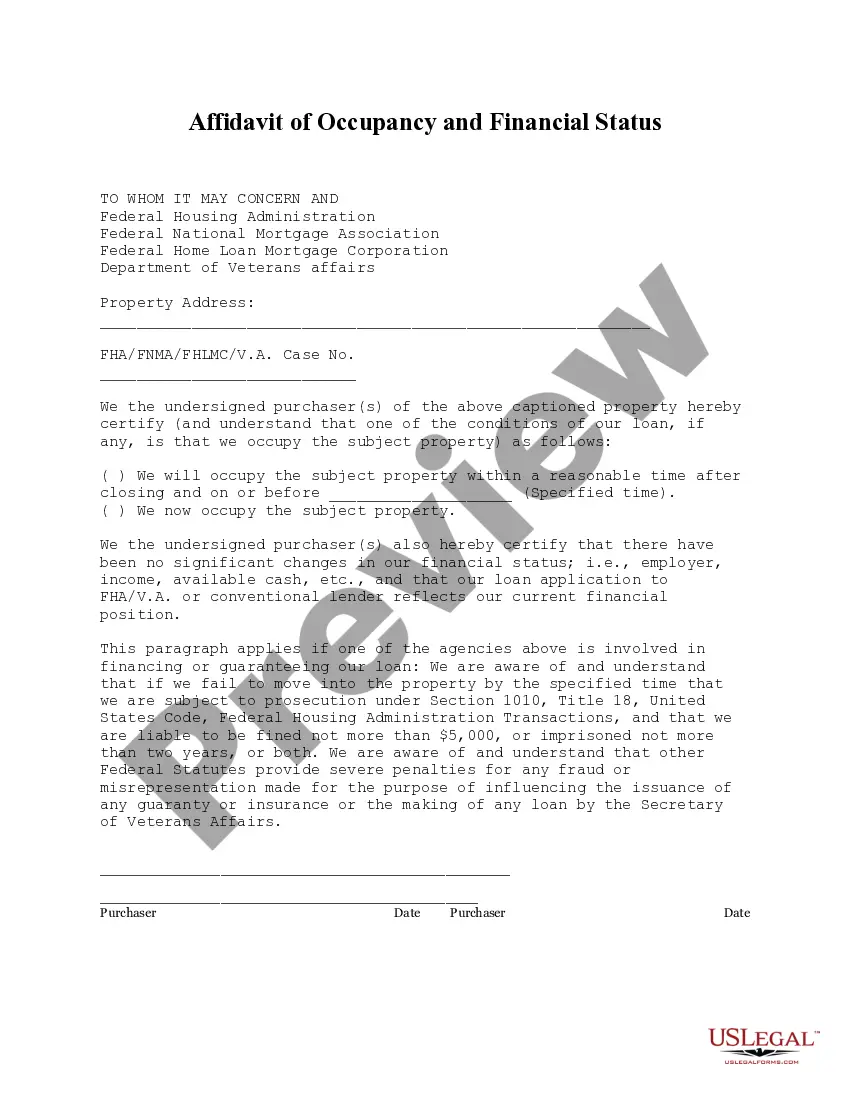
Certificate Of Occupancy For Residential Property
Description

Get your form ready online
Our built-in tools help you complete, sign, share, and store your documents in one place.
Make edits, fill in missing information, and update formatting in US Legal Forms—just like you would in MS Word.
Download a copy, print it, send it by email, or mail it via USPS—whatever works best for your next step.
Sign and collect signatures with our SignNow integration. Send to multiple recipients, set reminders, and more. Go Premium to unlock E-Sign.
If this form requires notarization, complete it online through a secure video call—no need to meet a notary in person or wait for an appointment.
We protect your documents and personal data by following strict security and privacy standards.

Make edits, fill in missing information, and update formatting in US Legal Forms—just like you would in MS Word.

Download a copy, print it, send it by email, or mail it via USPS—whatever works best for your next step.

Sign and collect signatures with our SignNow integration. Send to multiple recipients, set reminders, and more. Go Premium to unlock E-Sign.

If this form requires notarization, complete it online through a secure video call—no need to meet a notary in person or wait for an appointment.

We protect your documents and personal data by following strict security and privacy standards.
Looking for another form?

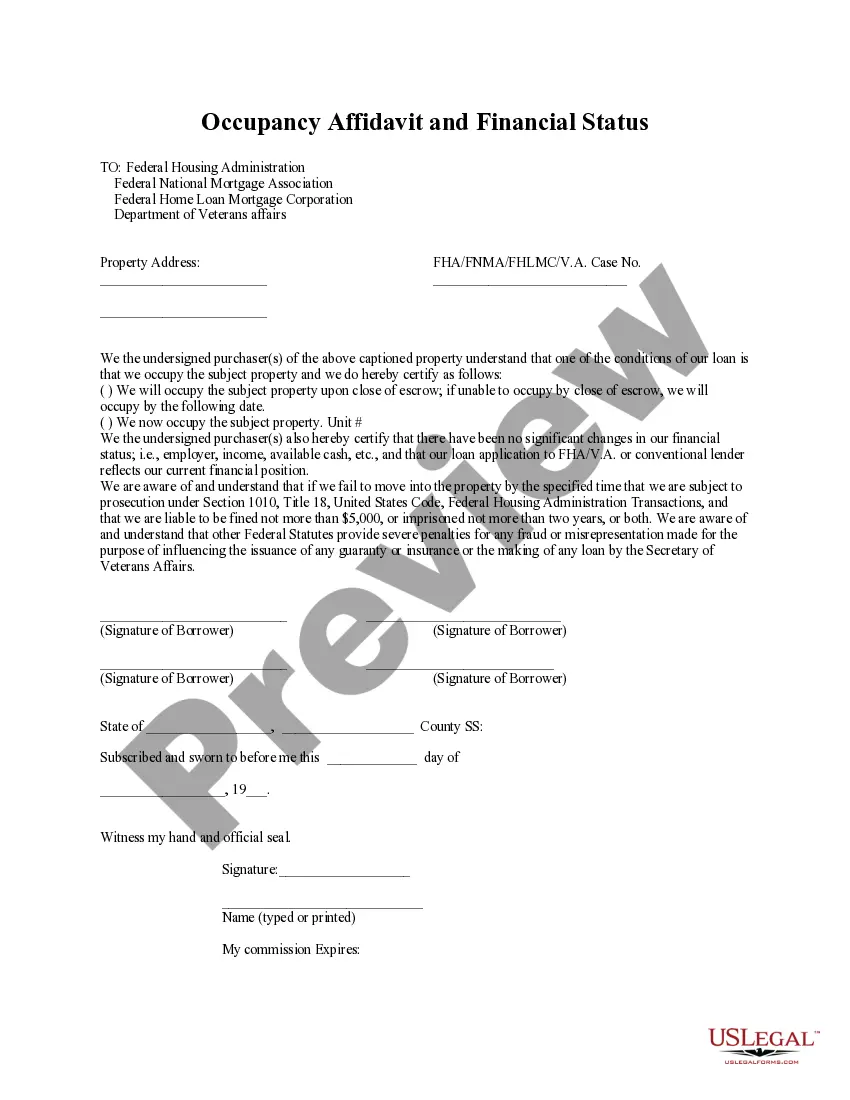
How to fill out California Affidavit Of Occupancy And Financial Status?
- Log in to your existing US Legal Forms account. Ensure your subscription is active; if not, renew it as needed.
- Verify the description and preview of the form. Confirm that it meets your requirements and aligns with local jurisdiction stipulations.
- If needed, utilize the Search feature to find alternative templates until the correct one is identified.
- Select your document and click on the Buy Now button. Pick a subscription plan that suits your needs and create an account for full access.
- Complete your purchase by entering your payment information through credit card or PayPal.
- Download your certificate of occupancy form and save it on your device. You can also access it later in the My Forms section of your profile.
Once you have completed these steps, you will have your necessary document at hand, allowing you to comply with housing regulations effortlessly.
US Legal Forms empowers individuals and attorneys to acquire legal documents efficiently. Start your journey today and ensure your property meets all requirements!
Form popularity
FAQ
Obtaining an occupancy permit can vary in difficulty depending on local regulations and the condition of your property. Generally, if your home meets all the relevant building codes and passes inspections, the process should be straightforward. You may benefit from using platforms like US Legal Forms to ensure all paperwork is accurate and complete, streamlining the application process. Taking proactive steps can make securing your certificate of occupancy a more manageable task.
Moving in without an occupancy permit can lead to serious consequences, including fines and eviction orders. Your local authorities may impose penalties for non-compliance with housing regulations. Moreover, living in a property that lacks this certificate can jeopardize your safety, as it indicates that the home may not meet necessary standards. It is best to follow the proper procedures to obtain a certificate of occupancy for residential property before settling in.
Renting your house without a certificate of occupancy for residential property is generally not allowed. Most jurisdictions require this certificate to ensure that the home is safe and suitable for tenants. If you skip this step, you risk fines and legal complications later. Always obtain this certification before renting your property to protect your investment and tenants alike.
In Washington, D.C., the Department of Consumer and Regulatory Affairs (DCRA) is responsible for issuing a certificate of occupancy for residential property. Once your building or renovation meets all safety and regulatory requirements, the DCRA will conduct an inspection. After a successful inspection, they will provide the necessary documentation for occupancy. You can rely on the DCRA to guide you through the process smoothly.
Yes, Wisconsin requires a certificate of occupancy for residential property before anyone can occupy a newly constructed or significantly renovated dwelling. This certificate ensures that the property complies with local building codes and safety standards. If you're moving to Wisconsin, check with your local building authority to understand the specific requirements. Ensuring you have this certificate protects you and maintains neighborhood standards.
To establish occupancy, you must obtain a certificate of occupancy for residential property from your local building department. This process typically involves showing that the home meets all safety, health, and zoning regulations. After inspection, the authorities will issue this certificate, confirming that the dwelling is ready for residents. It's an essential step to ensure you and your family can safely enjoy your new home.
While it may be possible to move into a house without a certificate of occupancy for residential property, it is strongly discouraged. Doing so can expose you to legal risks and create unsafe living conditions. Local authorities may intervene, resulting in fines or forced eviction. It’s best to work with uslegalforms to ensure you have all necessary paperwork in place before taking any steps to move in.
In California, the penalty for not having a certificate of occupancy for residential property can vary widely. Fines may range from a couple of hundred to several thousand dollars depending on the circumstances. You might also face legal action for failing to comply with local building codes. To avoid penalties, consider using uslegalforms for guidance in obtaining the necessary documentation.
Moving in without a certificate of occupancy for residential property can lead to serious consequences. You may face fines, legal action, and even be required to vacate the premises. Additionally, your home insurance may be void due to non-compliance with local laws. Protect yourself by ensuring all necessary permits, including this crucial certificate, are obtained before moving in.
Yes, a certificate of occupancy for residential property is typically required in California. This document ensures that a building meets all safety and zoning regulations before it can be occupied. It's important to secure this certification to guarantee compliance with state and local laws. Without it, you may face unexpected legal challenges.