California Tenancy By The Entirety
Description

Get your form ready online
Our built-in tools help you complete, sign, share, and store your documents in one place.
Make edits, fill in missing information, and update formatting in US Legal Forms—just like you would in MS Word.
Download a copy, print it, send it by email, or mail it via USPS—whatever works best for your next step.
Sign and collect signatures with our SignNow integration. Send to multiple recipients, set reminders, and more. Go Premium to unlock E-Sign.
If this form requires notarization, complete it online through a secure video call—no need to meet a notary in person or wait for an appointment.
We protect your documents and personal data by following strict security and privacy standards.

Make edits, fill in missing information, and update formatting in US Legal Forms—just like you would in MS Word.

Download a copy, print it, send it by email, or mail it via USPS—whatever works best for your next step.

Sign and collect signatures with our SignNow integration. Send to multiple recipients, set reminders, and more. Go Premium to unlock E-Sign.

If this form requires notarization, complete it online through a secure video call—no need to meet a notary in person or wait for an appointment.

We protect your documents and personal data by following strict security and privacy standards.
Looking for another form?
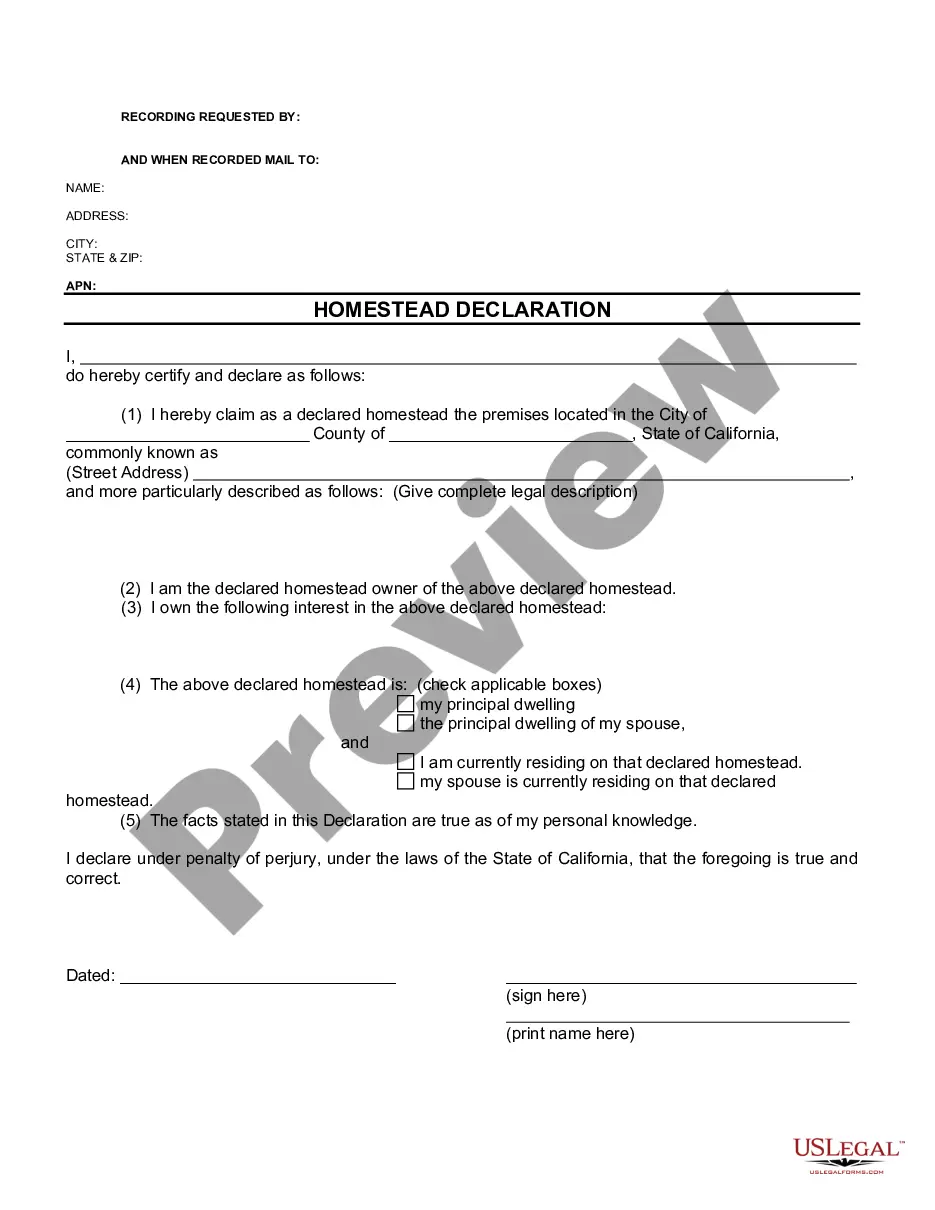

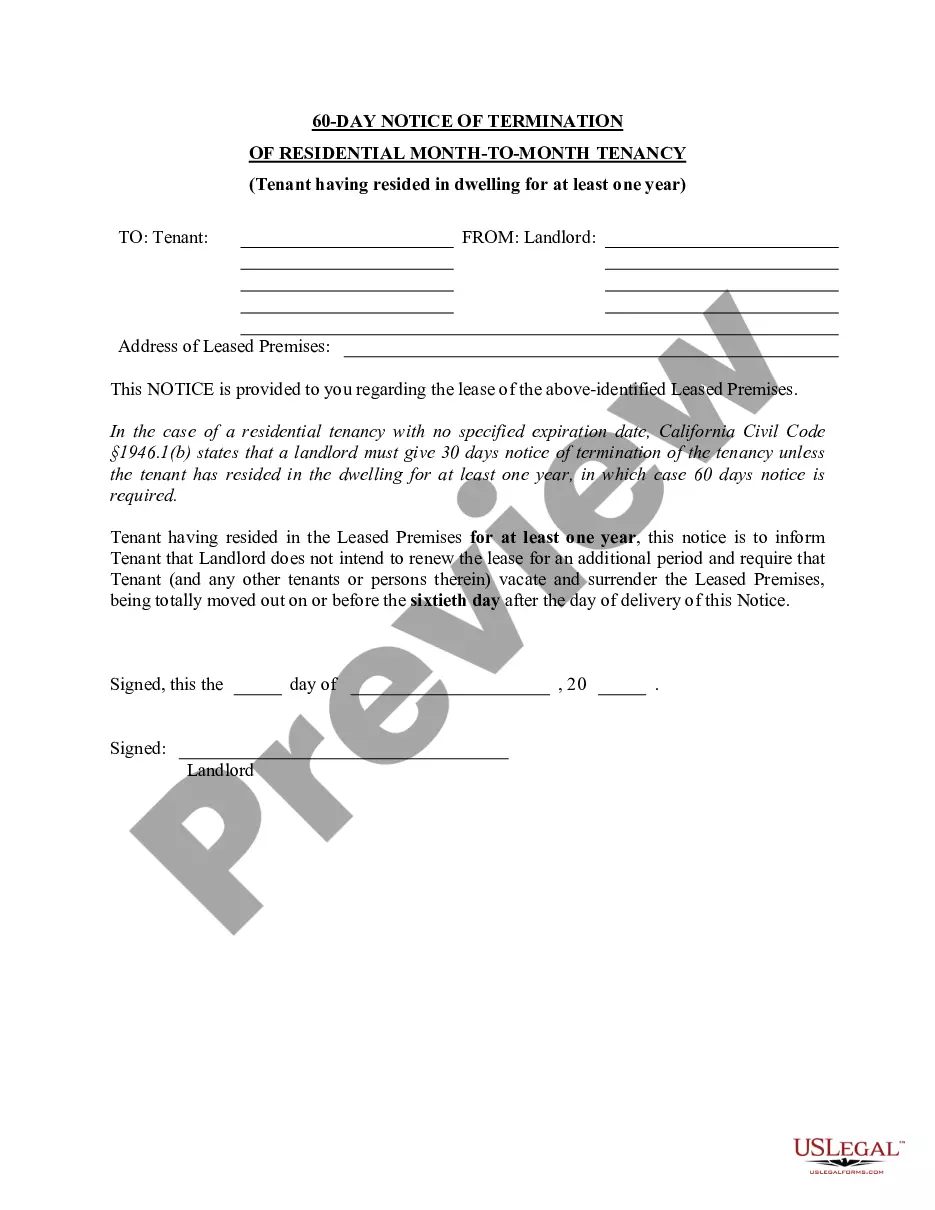
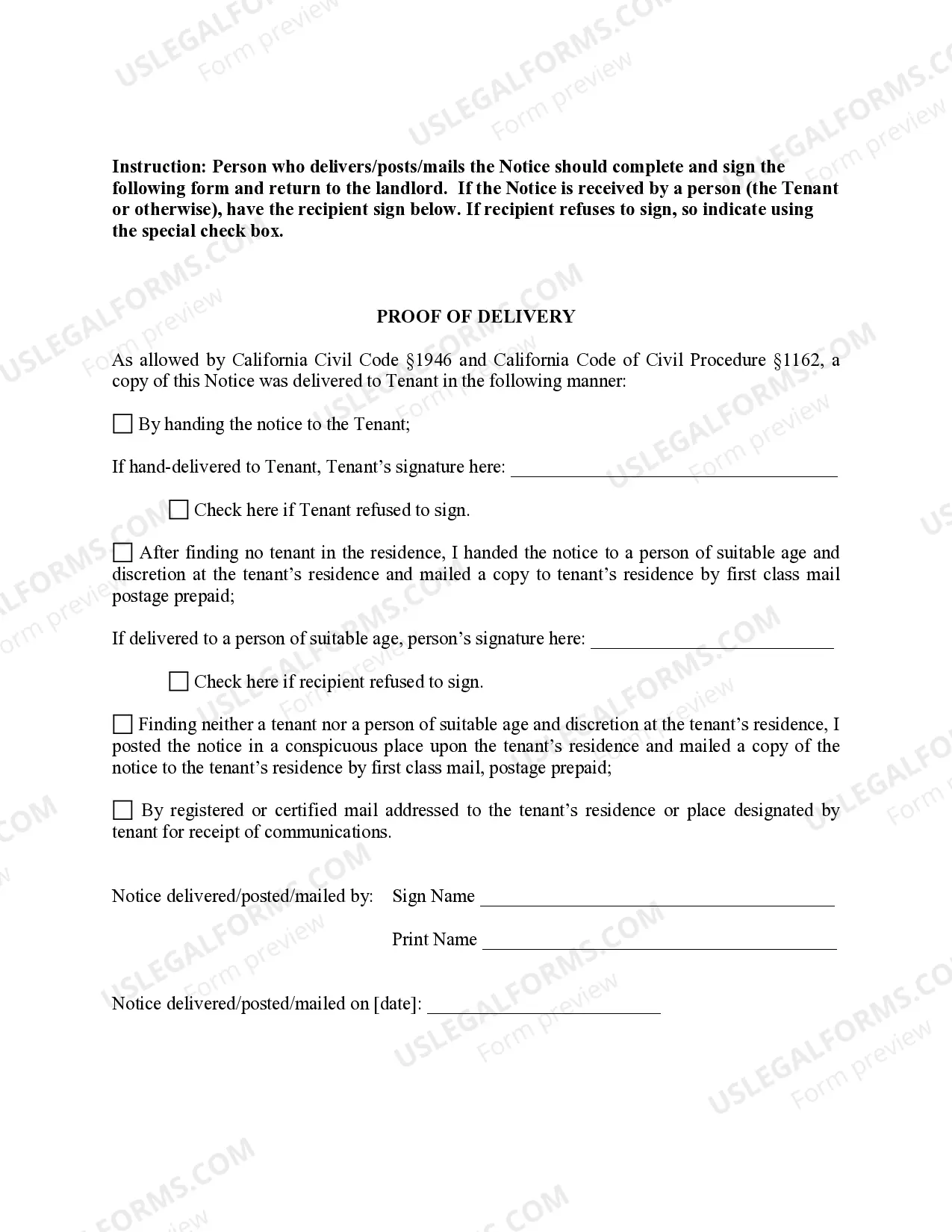
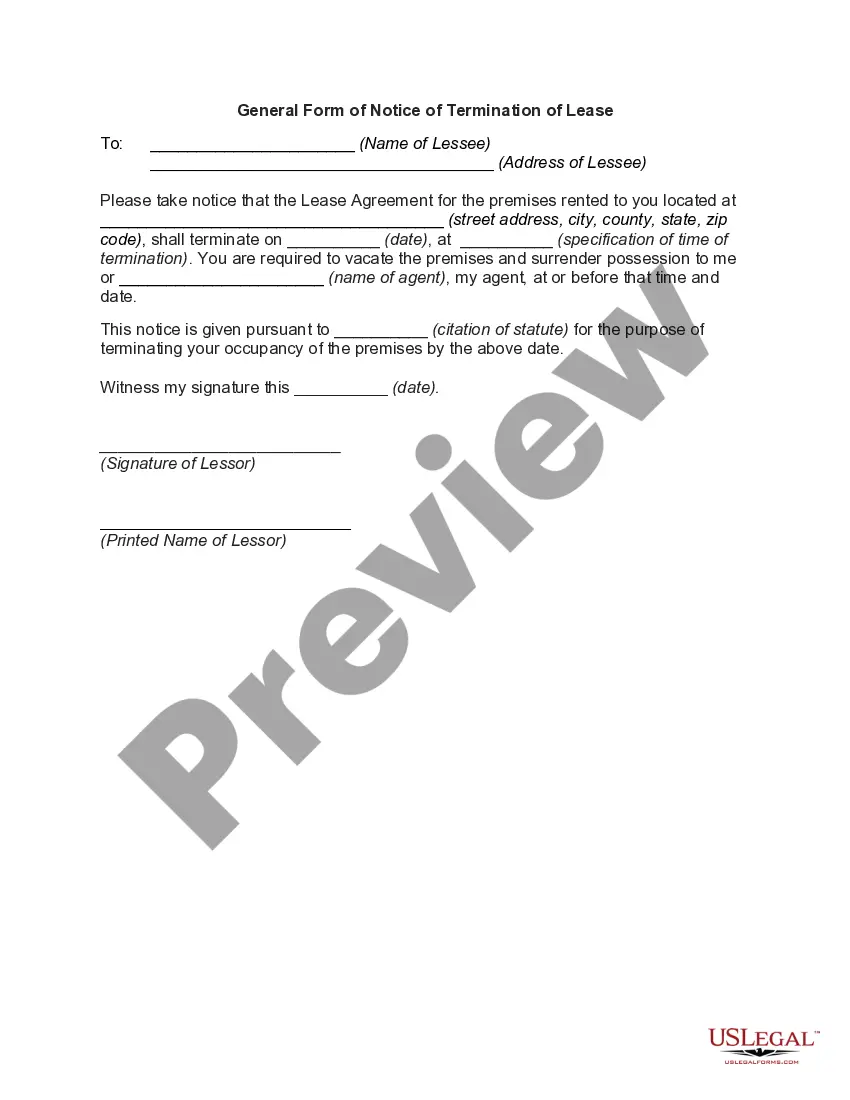
How to fill out California 60 Day Notice Of Termination - Residential Month-to-Month Tenancy?
Whether for commercial reasons or personal matters, everyone must navigate legal circumstances at some point in life.
Filling out legal documents requires meticulous care, beginning with selecting the correct form template.
With an extensive catalog at US Legal Forms, you no longer have to waste time searching for the right template online. Utilize the library's intuitive navigation to identify the correct template for any scenario.
- Obtain the necessary template by using the search box or catalog browsing.
- Review the form's description to confirm it aligns with your case, state, and locality.
- Click on the form's preview to view it.
- If it's the wrong form, return to the search tool to find the California Tenancy By The Entirety example you require.
- Download the template if it complies with your needs.
- If you possess a US Legal Forms account, simply click Log in to access previously saved templates in My documents.
- If you lack an account, you can download the form by clicking Buy now.
- Choose the suitable price option.
- Complete the profile registration form.
- Select your payment method: use a credit card or PayPal account.
- Choose the file format you prefer and download the California Tenancy By The Entirety.
- Once downloaded, you can fill out the form using editing software or print it and complete it by hand.
Form popularity
FAQ
The most recognized form for a married couple is to own their home as Tenants by the Entirety. A tenancy by the entirety is ownership in real estate under the fictional assumption that a husband and wife are considered one person for legal purposes. This method of ownership conveys the property to them as one person.
Tenancy in common is a form of property co-ownership in which a property is not shared equally and is most commonly seen when co-owners are unrelated. By contrast, a joint tenancy agreement gives equal shares to two parties and is most commonly seen as community property among married couples and domestic partners.
Even though California law does not recognize a ?tenancy by the entirety? form of ownership of real property, Section 850 of the California Family Code may permit ownership of property that is similar to ?tenancy by the entirety.? Section 850 provides that property may be transmuted through a ?transmutation agreement.? ...
Joint tenancy is a special type of co-ownership recognized in California. It is commonly associated with married couples, ensuring that when one of them dies, their entire interest in the property passes to the other spouse. This is called the right of survivorship, and it is the defining trait of a joint tenancy.
Disadvantages of joint tenants with right of survivorship JTWROS accounts involving real estate may require all owners to consent to selling the property. Frozen bank accounts. In some cases, the probate court can freeze bank accounts until the estate is settled.