Transfer On Death Deed Virginia With Mortgage
Description

Get your form ready online
Our built-in tools help you complete, sign, share, and store your documents in one place.
Make edits, fill in missing information, and update formatting in US Legal Forms—just like you would in MS Word.
Download a copy, print it, send it by email, or mail it via USPS—whatever works best for your next step.
Sign and collect signatures with our SignNow integration. Send to multiple recipients, set reminders, and more. Go Premium to unlock E-Sign.
If this form requires notarization, complete it online through a secure video call—no need to meet a notary in person or wait for an appointment.
We protect your documents and personal data by following strict security and privacy standards.

Make edits, fill in missing information, and update formatting in US Legal Forms—just like you would in MS Word.

Download a copy, print it, send it by email, or mail it via USPS—whatever works best for your next step.

Sign and collect signatures with our SignNow integration. Send to multiple recipients, set reminders, and more. Go Premium to unlock E-Sign.

If this form requires notarization, complete it online through a secure video call—no need to meet a notary in person or wait for an appointment.

We protect your documents and personal data by following strict security and privacy standards.
Looking for another form?

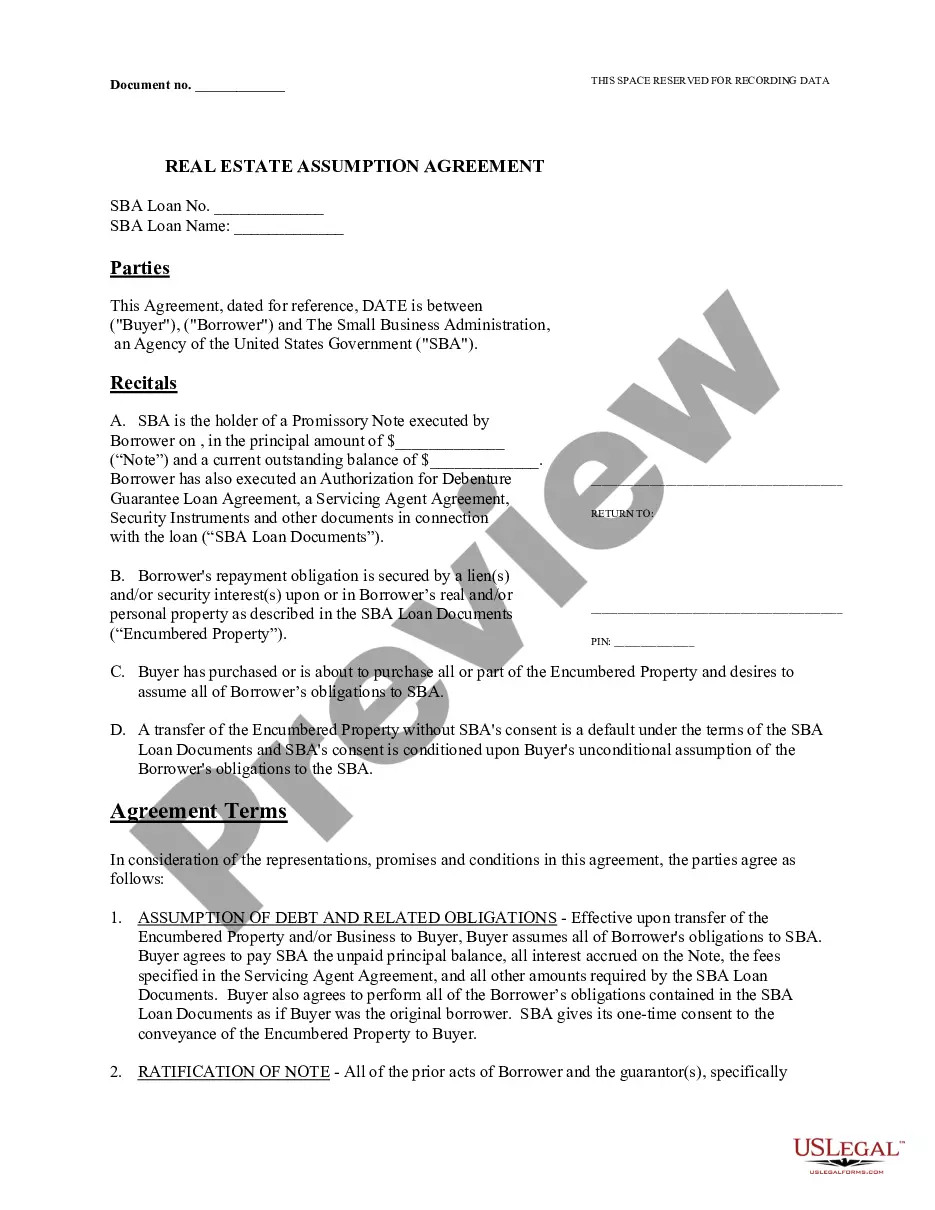
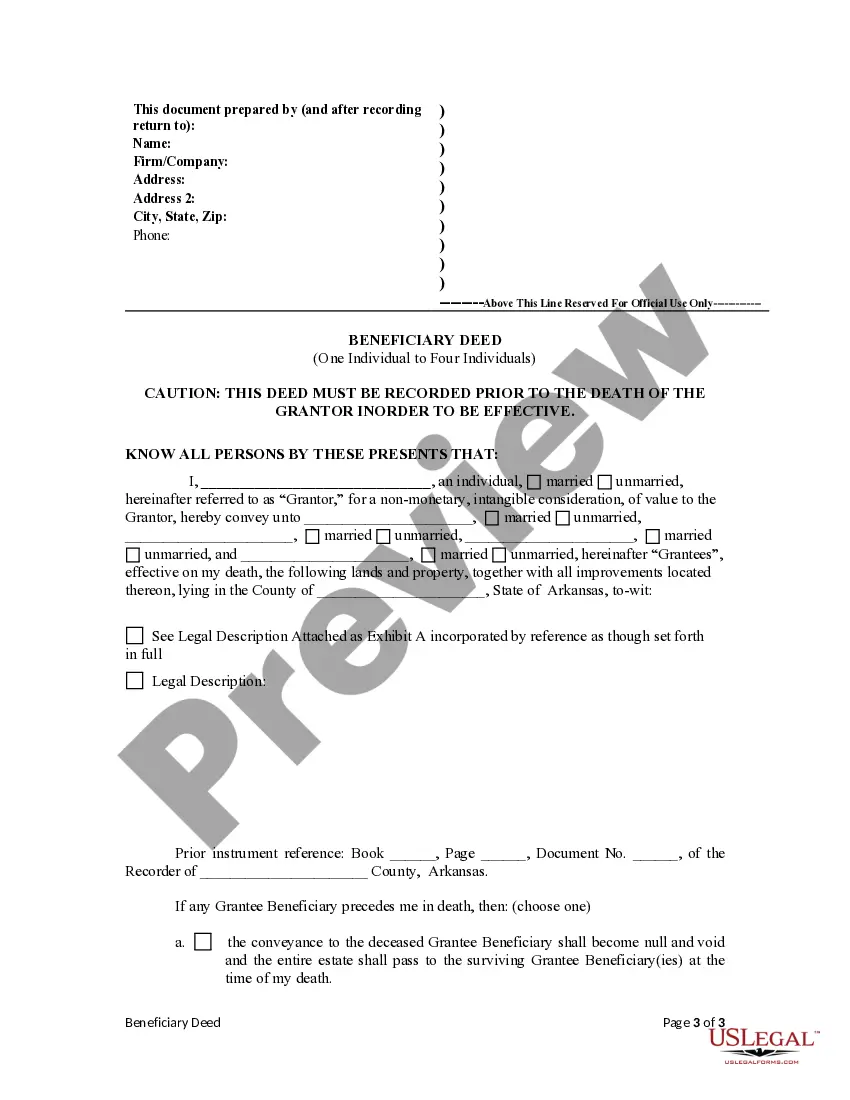
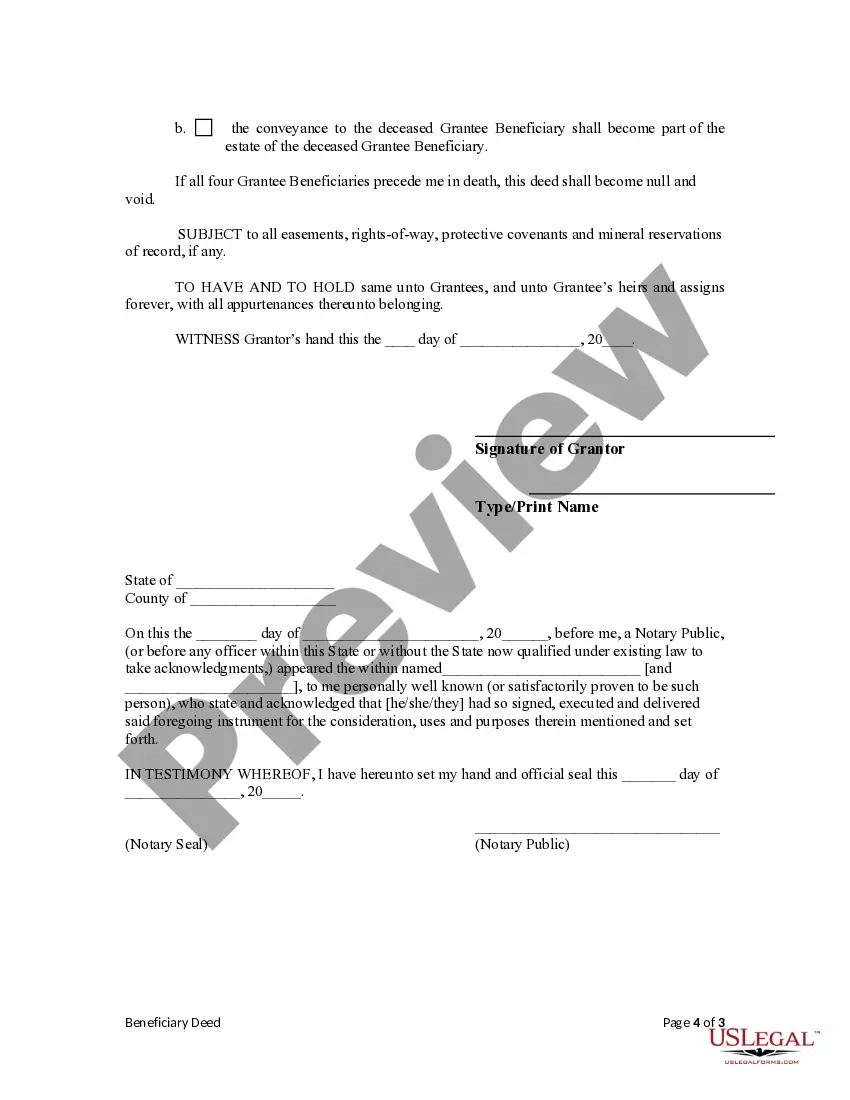
How to fill out Arkansas Transfer On Death Deed Or TOD - Beneficiary Deed For One Individual To Four Individuals?
- If you are a returning user, log in to your account at US Legal Forms and locate the necessary deed template. Ensure your subscription is active; if it has expired, renew it based on your payment plan.
- For first-time users, start by checking the Preview mode and detailed description of the deed forms. Ensure that the selected deed aligns with Virginia's requirements.
- If you cannot find a suitable deed, use the Search tab to explore other templates available in the library until you find the right one.
- Once you have identified the correct deed, click on the Buy Now button and choose your desired subscription plan. A user account registration is required to access the forms.
- Complete your purchase by entering your payment details—credit card or PayPal—and confirm your subscription.
- Download the deed form to your device. You can access it later from the My Forms section in your profile.
In conclusion, using US Legal Forms gives you access to a diverse collection of over 85,000 legal documents tailored to meet your needs. You can also receive professional assistance to ensure your documents are accurate and legally binding.
Start your legal journey today by visiting US Legal Forms and unlocking the document solutions you need!
Form popularity
FAQ
The primary issue with transfer on death accounts is their limited scope; they do not apply to all asset types. Furthermore, if the account holder has outstanding debts, creditors might still affect the property even after the transfer. It is advisable to understand all implications and consider consulting US Legal Forms for a comprehensive approach to forming your estate plans.
Choosing between a transfer on death deed and naming a beneficiary can depend on your unique situation. A transfer on death deed effectively transfers property outside of probate, but a beneficiary designation can cover various assets beyond real estate. Evaluating your entire estate plan can help determine which option aligns better with your goals.
The disadvantages of a transfer on death deed in Virginia with mortgage include potential complications during the owner's lifetime, especially regarding creditor claims. Moreover, if not correctly drafted, it might lead to legal disputes among heirs. It is crucial to consider your specific circumstances and seek professional advice when necessary.
While a transfer on death deed can simplify property transfer, it may pose risks, especially if the property owner has debts or complications arise. For instance, creditors could still claim the property after death. Additionally, not all assets can be incorporated into this deed, which might limit its effectiveness.
A transfer on death deed in Virginia with mortgage can help bypass probate, but it does not shield the property from inheritance taxes. It is essential to consider your estate's overall tax implications, especially if other assets may trigger tax obligations. Consulting a tax professional can provide a clearer picture of how inheritance tax applies in your situation.
When one person dies, the mortgage does not simply vanish. The remaining owners or heirs must address the mortgage obligations. If a Transfer on Death Deed was executed, the new owner may assume responsibility for the mortgage. If no such deed exists, the estate typically must handle the mortgage during the probate process.
Transferring ownership of a house with a mortgage after death can be complicated. If a Transfer on Death Deed exists, the process is more straightforward, as the beneficiary can inherit the property without probate. However, the mortgage remains, which may require the heir to assume it or refinance. It's advisable to consult a legal professional for tailored guidance.
To change the deed on a house in Virginia after someone dies, the property needs to go through a legal process. If a Transfer on Death Deed was in place, the new owner can present it to the court. Otherwise, you may need to go through probate. Ensuring that the proper documentation is in place is essential for a smooth transition.
To execute a Transfer on Death Deed in Virginia, you need to complete the deed form and sign it in front of a notary. It must be recorded in the local land records office where the property is located. This deed allows for a seamless transfer upon death, avoiding probate. Using a platform like USLegalForms can help you access the required templates and ensure everything is completed correctly.
While a Transfer on Death Deed in Virginia simplifies the transfer of property, there are some disadvantages to consider. For instance, it does not protect the property from creditors, and the deed may not supersede other estate planning measures. Additionally, if the named beneficiary has financial issues, it could affect the property. Thus, it’s important to weigh all options carefully.