Residential Rental Property And Gst
Description


Get your form ready online
Our built-in tools help you complete, sign, share, and store your documents in one place.
Make edits, fill in missing information, and update formatting in US Legal Forms—just like you would in MS Word.
Download a copy, print it, send it by email, or mail it via USPS—whatever works best for your next step.
Sign and collect signatures with our SignNow integration. Send to multiple recipients, set reminders, and more. Go Premium to unlock E-Sign.
If this form requires notarization, complete it online through a secure video call—no need to meet a notary in person or wait for an appointment.
We protect your documents and personal data by following strict security and privacy standards.

Make edits, fill in missing information, and update formatting in US Legal Forms—just like you would in MS Word.

Download a copy, print it, send it by email, or mail it via USPS—whatever works best for your next step.

Sign and collect signatures with our SignNow integration. Send to multiple recipients, set reminders, and more. Go Premium to unlock E-Sign.

If this form requires notarization, complete it online through a secure video call—no need to meet a notary in person or wait for an appointment.

We protect your documents and personal data by following strict security and privacy standards.
Looking for another form?
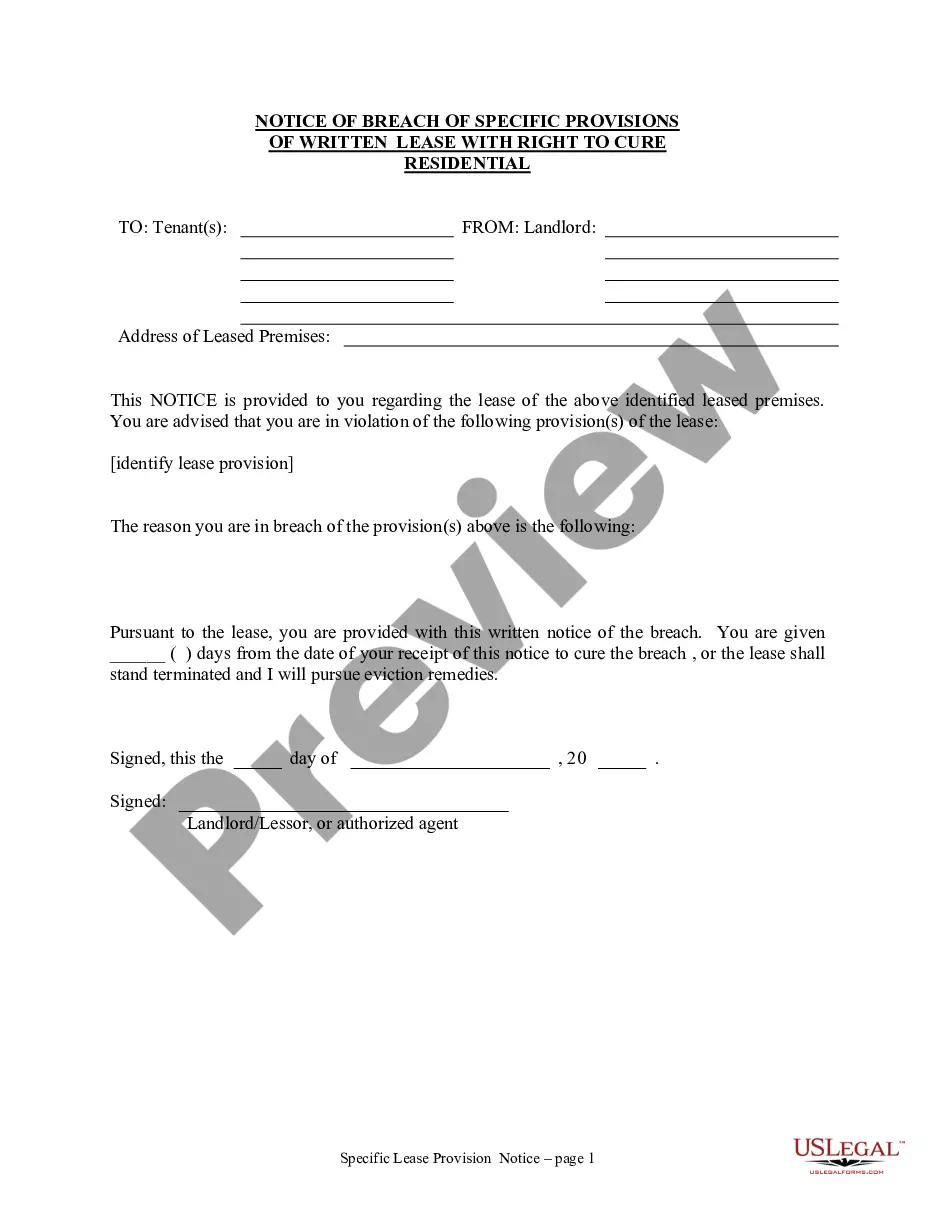
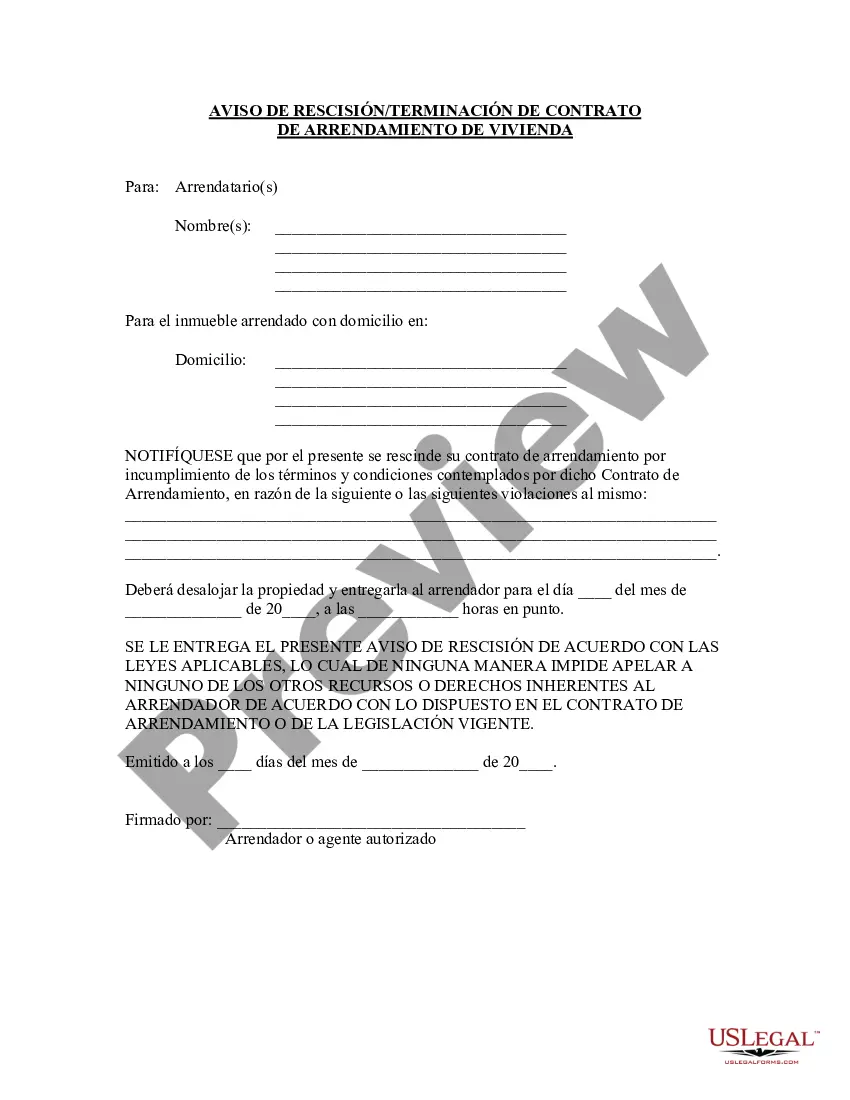
How to fill out Alabama Notice Of Breach Of Written Lease For Violating Specific Provisions Of Lease With Right To Cure For Residential Property From Landlord To Tenant?
- Log in to your US Legal Forms account if you’ve previously subscribed. Ensure your subscription is current; if not, renew it through your payment plan.
- Review the form description and preview mode to verify the document meets your local jurisdiction's requirements.
- If necessary, utilize the Search tab to find additional templates that suit your needs.
- Purchase the desired document by clicking the Buy Now button and select your preferred subscription plan. Create an account for library access.
- Proceed with the payment by entering your credit card information or using PayPal.
- Download the form to save it on your device. Access it anytime through the My Forms menu in your profile.
In conclusion, using US Legal Forms allows quick access to essential legal documents like those for residential rental property and GST. With a robust collection of over 85,000 editable forms, users can ensure they fill out all necessary paperwork accurately.
Start your journey with US Legal Forms today and streamline your legal document experience!
Form popularity
FAQ
Avoiding GST on a residential rental property generally involves ensuring that your rental income qualifies as exempt. Residential properties that are used solely for residential purposes typically do not incur GST. By structuring your rentals appropriately, you can minimize GST exposure effectively. Utilizing platforms like USLegalForms can help navigate the complexity of residential rental property and GST regulations, ensuring you make informed decisions.
The tax rate for rental income from a residential rental property is typically treated as ordinary income. This means that it is added to your total income and taxed at your personal income tax rate. However, understanding how residential rental property and GST impact your overall tax situation can help you optimize your tax outcomes. Consulting with a tax professional can provide clarity on how GST may apply to your rental income.
Failing to report rental income in Canada can lead to significant penalties, including interest on unpaid taxes and potential fines. The Canada Revenue Agency takes unreported income seriously, and they may conduct audits to check compliance. Being diligent about reporting any rental income from residential rental property helps you avoid these issues. Utilizing services such as USLegalForms can assist in maintaining accurate records and understanding your responsibilities.
For non-residents earning rental income from a residential rental property in Canada, the tax rate is typically 25% of the gross rental income. It's vital to understand this tax obligation upfront, as withholding may be necessary depending on your situation. Non-residents can also opt to file a tax return to potentially reduce their tax burden by claiming eligible expenses. Engaging with platforms like USLegalForms can simplify this process.
Yes, claiming rental income is essential for anyone earning income from residential rental property in Canada. Whether you manage long-term rentals or short-term stays, all income must be reported on your tax returns. Not only does this ensure compliance, but it also allows you to deduct related expenses—such as property management fees and maintenance costs. Understanding the implications of GST on rental income can help you maximize your benefits.
Even if you reside in your home, any rental income generated from renting out part of your residential rental property in Canada must still be claimed. The Canada Revenue Agency requires you to report all rental income, even if you're also living in the property. It is essential to keep accurate records of your rental income and associated expenses, since the GST may apply to the rental portion. This helps you stay compliant and avoid penalties.
Registering your residential rental property as a business may provide advantages related to liability protection and tax benefits. This step clarifies your status regarding residential rental property and GST, making it easier to navigate legal and financial obligations. Additionally, it can enhance your standing with lenders and potential tenants. It's always wise to consult with a legal professional to understand the implications and determine the best course of action.
Yes, having a dedicated business account for your residential rental property can streamline your finances and simplify tracking income and expenses. This separation helps clarify how residential rental property and GST affect your financial situation. Furthermore, it paves the way for efficient bookkeeping and may assist during tax season. Using a business account allows you to maintain organized records, making it easier to manage your property.
Establishing an LLC for each residential rental property can provide legal protection and help separate your personal assets from business liabilities. This approach often simplifies your life regarding managing taxes related to residential rental property and GST. Furthermore, it can enhance your credibility and simplify owning multiple properties. However, evaluate your situation, as forming multiple LLCs may also introduce additional administrative tasks.
The 50% rule is a guideline that suggests investors should expect to spend about 50% of their rental income on operating expenses, excluding mortgage payments. This principle can help you assess the financial performance of your residential rental property and GST obligations. Although this is a rough estimate, it serves as a foundation for planning your budget effectively. Always analyze your actual expenses for precise financial management.