Lease Landlord Form For Tenants
Description


Get your form ready online
Our built-in tools help you complete, sign, share, and store your documents in one place.
Make edits, fill in missing information, and update formatting in US Legal Forms—just like you would in MS Word.
Download a copy, print it, send it by email, or mail it via USPS—whatever works best for your next step.
Sign and collect signatures with our SignNow integration. Send to multiple recipients, set reminders, and more. Go Premium to unlock E-Sign.
If this form requires notarization, complete it online through a secure video call—no need to meet a notary in person or wait for an appointment.
We protect your documents and personal data by following strict security and privacy standards.

Make edits, fill in missing information, and update formatting in US Legal Forms—just like you would in MS Word.

Download a copy, print it, send it by email, or mail it via USPS—whatever works best for your next step.

Sign and collect signatures with our SignNow integration. Send to multiple recipients, set reminders, and more. Go Premium to unlock E-Sign.

If this form requires notarization, complete it online through a secure video call—no need to meet a notary in person or wait for an appointment.

We protect your documents and personal data by following strict security and privacy standards.
Looking for another form?
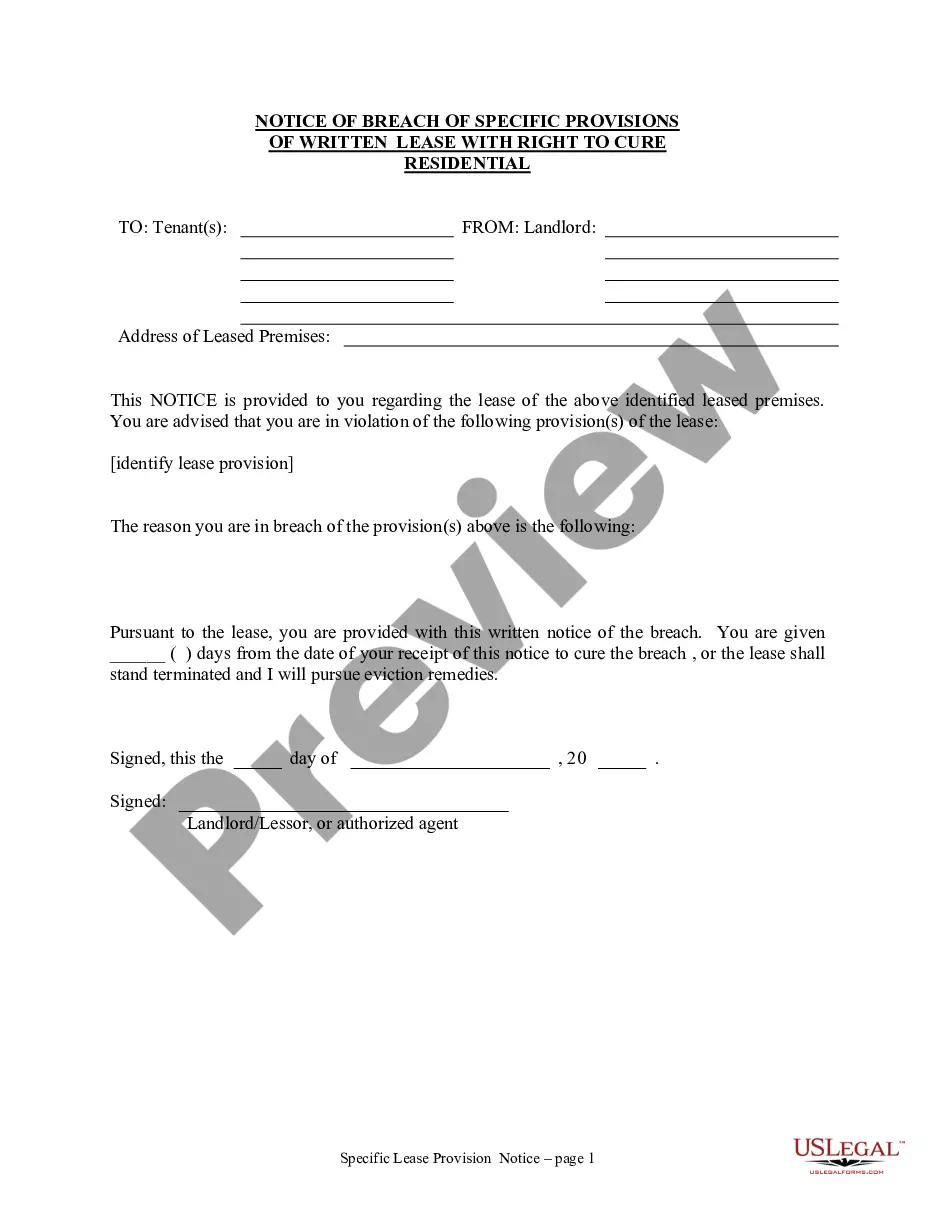
How to fill out Alabama Notice Of Breach Of Written Lease For Violating Specific Provisions Of Lease With Right To Cure For Residential Property From Landlord To Tenant?
- Log into your existing US Legal Forms account. If you don’t have one, create an account first.
- Search for 'Lease landlord form for tenants' in the search bar and review the available options.
- Check the preview and descriptions to find the correct form that matches your local jurisdiction's requirements.
- If necessary, refine your search until you find the appropriate form.
- Select the form and click the 'Buy Now' button to choose your subscription plan.
- Complete your purchase by entering your payment details through credit card or PayPal.
- Download the form to your device and access it anytime in the 'My Forms' section of your profile.
Using US Legal Forms enables you to efficiently access a vast collection of over 85,000 legal forms. This unique service not only provides a wide variety of templates but also connects you with experts for guidance during form completion, ensuring accuracy and legal soundness.
Simplify your legal document needs today! Start leveraging US Legal Forms for all your rental agreements and other legal documents.
Form popularity
FAQ
Yes, you can write your own lease agreement, but it’s essential to include all legal requirements specific to your state. By using a lease landlord form for tenants, you can ensure that your agreement covers all necessary aspects, including rental terms and conditions. While creating a lease from scratch is possible, using a standardized form can help avoid common pitfalls and ensure clarity for both parties involved. Legal frameworks can vary, so consider consulting with a legal professional if you're unsure.
Landlords verify tenants through several methods, including background checks and income verification. They often request references and previous rental history, utilizing documents such as a lease landlord form for tenants. This form helps consolidate necessary information, making the verification process more efficient and reliable. Overall, landlords aim to ensure that tenants can meet their rental obligations.
Yes, a landlord can refuse to provide rental verification, but such refusals should be for valid reasons. If a landlord has concerns about the tenant’s history, they might hold back their verification. However, using the lease landlord form for tenants can clarify the required information, making it easier for landlords to share necessary details with potential landlords or property managers. Open communication often fosters trust in the rental process.
The landlord verification form is typically filled out by the landlord or property manager. They provide essential information about the rental property and the tenant's payment history. By using the lease landlord form for tenants, landlords can streamline this process, ensuring accuracy and completeness of the details. It's a vital document for prospective tenants who need reassurance about their rental history.
In South Carolina, landlords must provide at least 30 days' notice before ending a month-to-month lease. For fixed-term leases, the terms are typically defined within the lease itself. Always check your lease landlord form for tenants for specific notice requirements.
To fill a lease agreement, accurately enter property details, tenant information, and rental terms. Ensure both landlord and tenant sign where required, and keep copies. Utilizing a lease landlord form for tenants can simplify this process and promote clarity in your agreement.
Landlords can refuse a tenant based on insufficient income, negative rental history, or poor credit. Discrimination based on race, gender, or other protected categories is illegal. Having a comprehensive lease landlord form for tenants helps streamline the application process and protects both parties.
The Residential Landlord and Tenant Act in South Carolina is legislation that governs rental agreements and the relationship between landlords and tenants. It outlines rights, responsibilities, and procedures for eviction. Familiarizing yourself with this Act can enhance your experience when using a lease landlord form for tenants.
The purpose of the Residential Landlord and Tenant Act in South Carolina is to protect the rights of both landlords and tenants. This Act establishes clear guidelines on rental agreements, lease landlord forms for tenants, and conflict resolution. Understanding this Act helps you navigate your rental situation effectively.
In South Carolina, there are no statewide rent control laws, so landlords can raise rent as much as they want, provided they follow the terms outlined in the lease landlord form for tenants. Typically, landlords must give a written notice before increasing rent. Always read your lease carefully to understand any stipulations.