Connecticut Divorce
Divorce documents help individuals navigate the legal process of ending marriages. Attorney-drafted templates are quick and straightforward to complete.

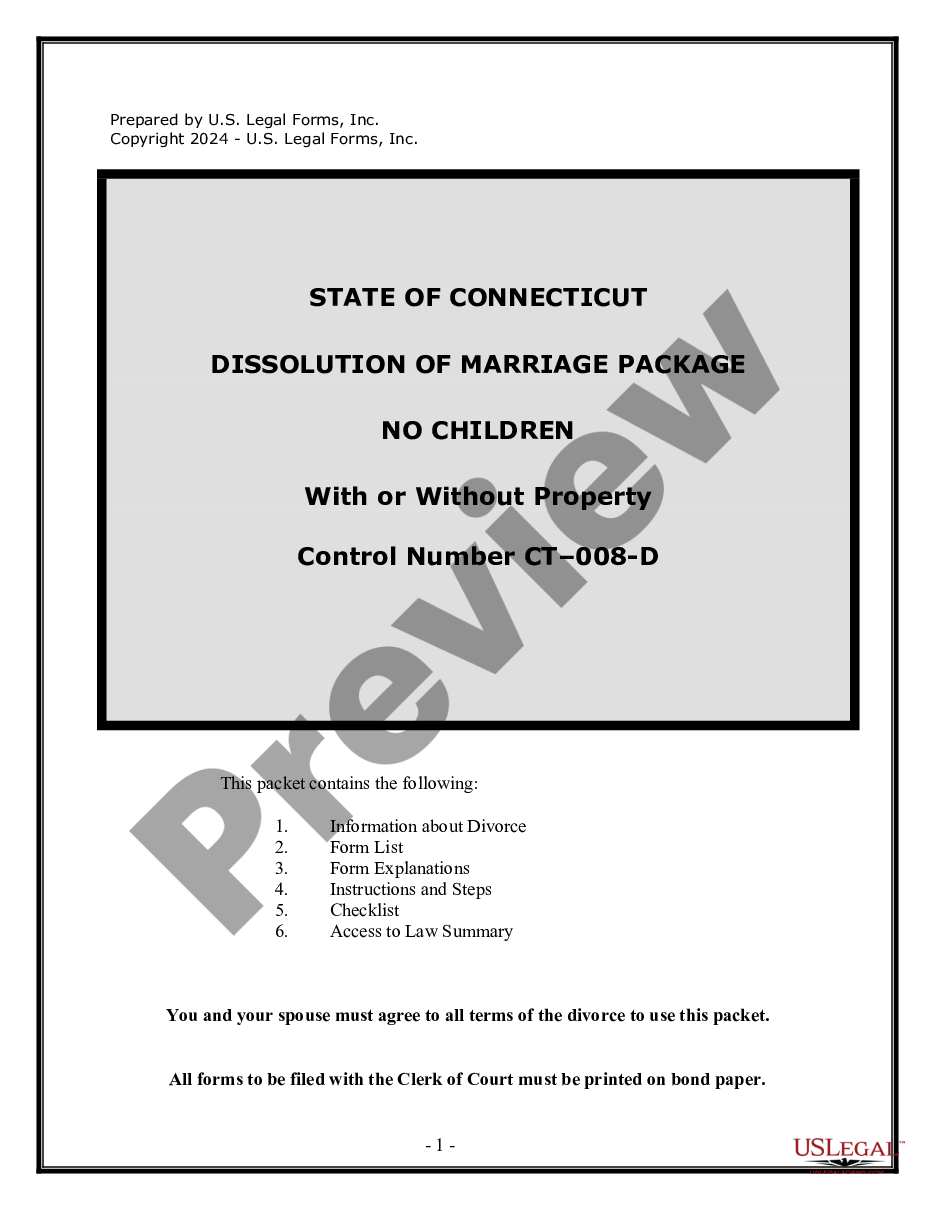
Uncontested Divorce Package - No Children
PopularAll court forms for a no-fault agreed divorce with no minor children - petition, waiver, final decree, and hearing documents.
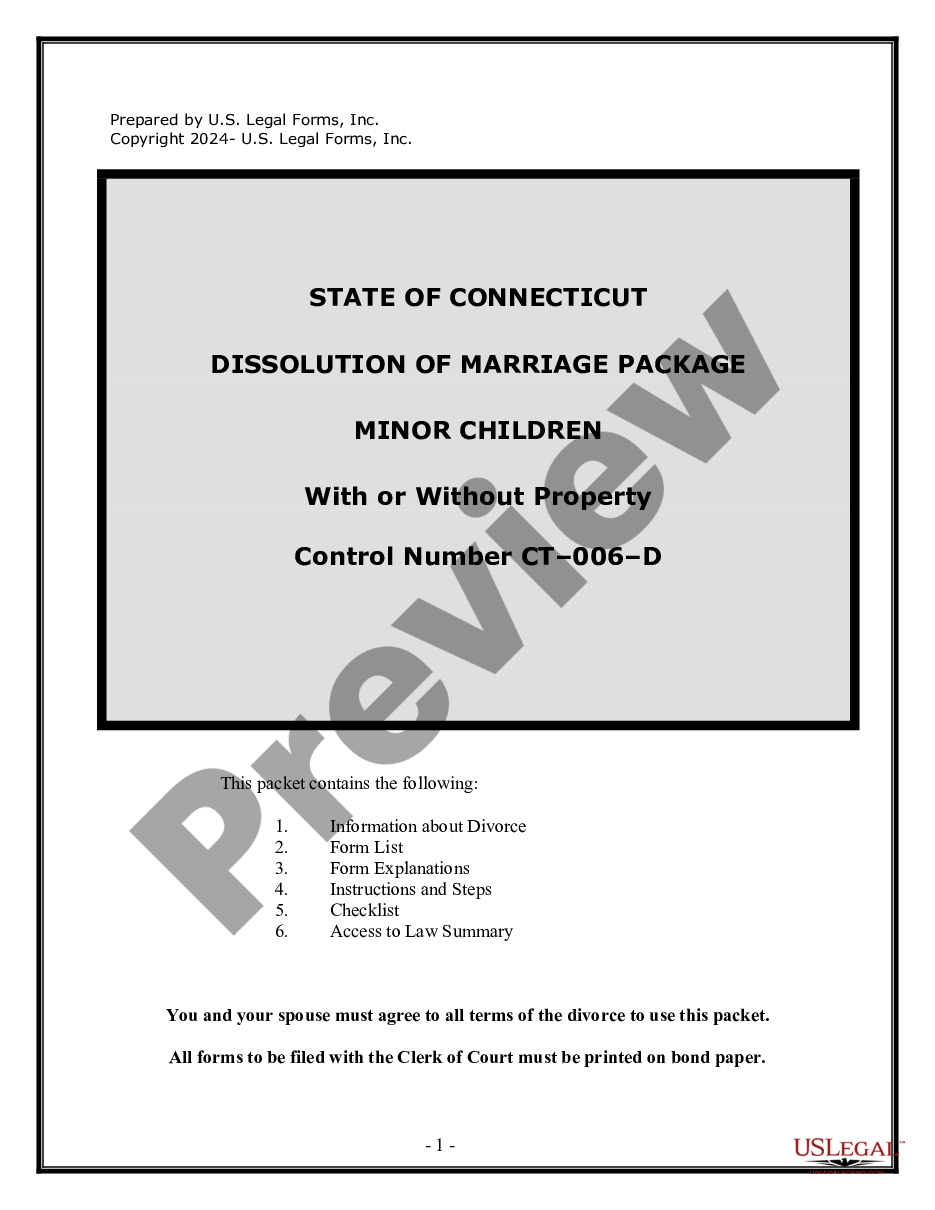
Uncontested Divorce Package - Minor Children
PopularComplete agreed divorce filing package for couples with children under 18 — all required court documents included.
Similar documents: key differences
- Divorce vs. Legal Separation — Divorce ends the marriage, while legal separation allows couples to live apart without terminating the marriage.
- Uncontested Divorce vs. Contested Divorce — Uncontested means both parties agree on all terms, while contested involves disagreements requiring court intervention.
- Petition vs. Complaint — A petition is a request to the court, while a complaint outlines the reasons for the petition.
- Divorce Agreement vs. Marital Settlement Agreement — Both detail terms, but a divorce agreement is finalized by the court and dissolves the marriage.
- Joint Petition for Divorce vs. Individual Petition — A joint petition is filed by both spouses together, while an individual petition is filed by one spouse.
Search for more forms
Types of Divorce forms
Separation Agreement
Establish clear terms for separating partners, detailing property division and support obligations.
Dissolution Agreement
Use this agreement to settle claims related to marriage dissolution or legal separation, including property and alimony arrangements.
Advisement of Rights
Understand your rights regarding income withholding for support obligations and what you can do if discrepancies arise.
Affidavit Concerning Children
Provide crucial information about children's residences and custody for legal proceedings.
Affidavit Concerning Military Service
Provides necessary information on a defendant's military status to protect their rights during legal proceedings.
Certification of Notice — Public Assistance
Use this form if your family case involves public assistance, ensuring all parties are notified properly.
Dissolution Answer
Respond to a divorce or civil union dissolution complaint by filing a formal answer with the court, outlining your agreement or disagreements.
Divorce Complaint — Dissolution of Marriage
Use this form to initiate a divorce and outline terms for custody, support, and asset division.
Motion: Contempt for Unpaid Alimony (Order to Show Cause)
Use this form to seek enforcement of alimony payments through a contempt proceeding when the other party fails to comply with a court order.
Summons — Family Actions
Use this when you receive a summons for family-related legal actions, like divorce or legal separation, to respond and participate in court proceedings.
Certification of Waiver of Service of Process
Waive your right to formal service of process in divorce, legal separation, or annulment cases to expedite court proceedings.
Notice of Automatic Court Orders
Essential for notifying parties of automatic court orders in divorce or legal separation actions.
Dissolution of Civil Union Judgment
Use this document to finalize the end of a civil union, ensuring legal recognition of the dissolution.
Divorce Judgment
Use this form to finalize your divorce, whether or not you have children. It outlines the court's decisions on custody, support, and asset division.
Petition to Modify
Request to end child support due to visitation interference and child's adulthood status.
Notice of Demand for Husband to Support Wife and Children
Notify a spouse of their obligation to provide financial support for the family, prompting a response before legal action is taken.
Affidavit — Divorce
Use this document to request a court review of alimony after the remarriage of the other party, highlighting potential changes in financial circumstances.
Motion to Modify Decree — Restore Name
Easily request a court order to revert your name to your married name after a divorce, addressing difficulties you've faced with your maiden name.
Domestic Partnership Dissolution Agreement
Finalize the dissolution of a domestic partnership and settle property claims clearly and legally.
Separation Agreement (No Kids · No Joint Property · Immediate)
Use this agreement to formalize a marital separation without children or joint property, ensuring both parties understand their rights and obligations.
Separation Agreement (No Kids · Joint Property · Immediate)
A clear agreement for couples seeking separation without children, outlining property and debt division in Connecticut.
Separation Agreement (No Kids · Joint Property · Future Filing)
Use this agreement to outline the terms of separation and property division for married couples without children. It sets clear obligations for each party.
Separation Agreement (No Kids · No Joint Property · Future Filing)
Ideal for couples in Connecticut seeking a clear agreement for separation before divorce, without children or joint property.
Child Support Guideline Worksheet
Essential for calculating child support amounts in Connecticut, this worksheet helps parents determine their financial obligations.
Separation Agreement (Minor Kids · Joint Property · Immediate)
Effectively negotiate agreements on property and financial responsibilities during separation with minor children involved.
Separation Agreement (Minor Kids · No Joint Property · Future Filing)
Ideal for couples with minor children, this agreement outlines the terms of separation and property settlement prior to divorce proceedings.
Separation Agreement (Minor Kids · No Joint Property · Immediate)
Establish immediate separation terms for parties with minor children and no joint assets or debts.
Separation Agreement (Minor Kids · Joint Property · Future Filing)
Utilize this agreement to outline division of assets, debts, and child custody before divorce proceedings, ensuring a clear understanding between parties.
Parenting Education Program
Court-ordered participation in a parenting education program helps individuals meet court requirements while addressing parenting skills.
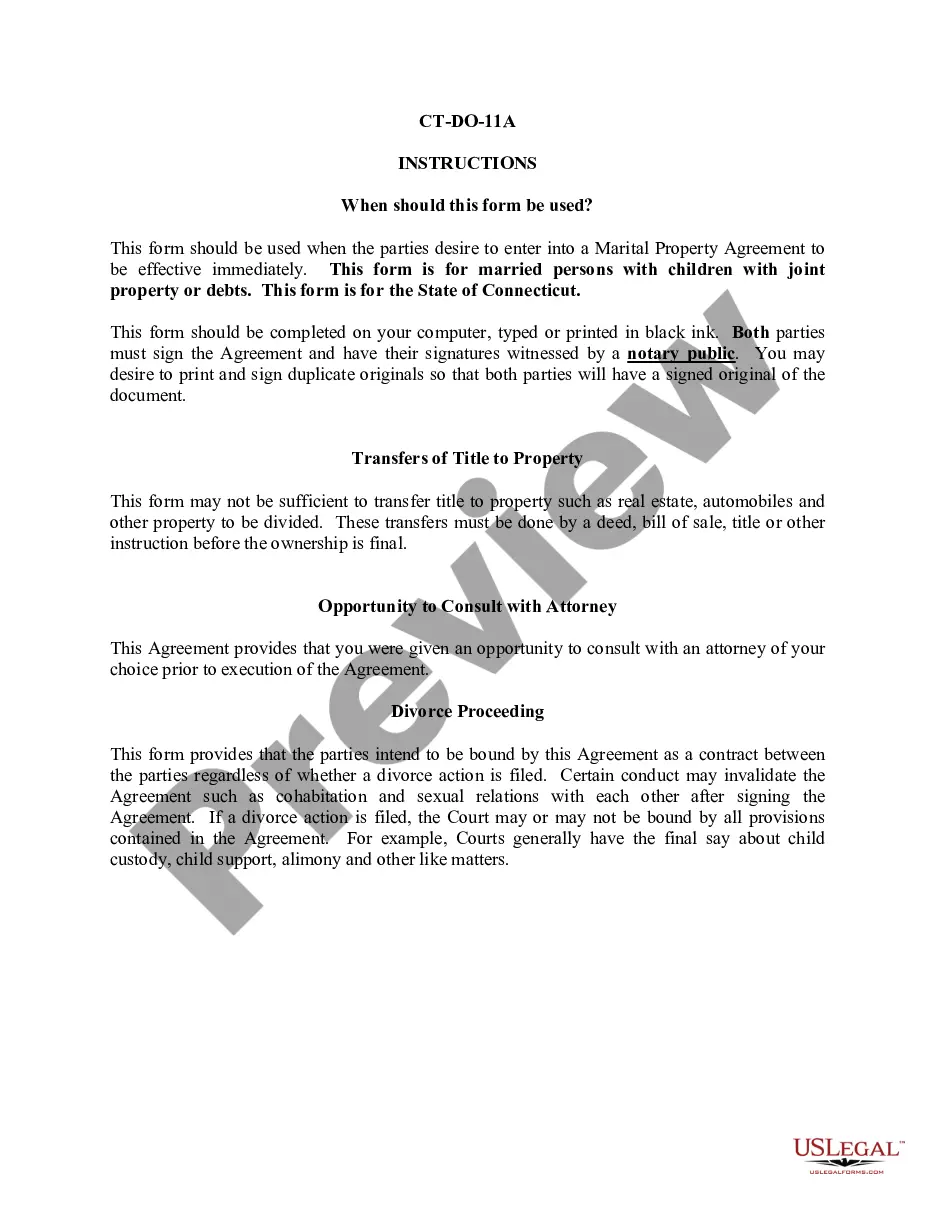
Separation Agreement (Adult Kids · Joint Property · Immediate)
Create a binding separation agreement for married couples with adult children and joint assets. This ensures clarity on property division and financial obligations.
Separation Agreement (Adult Kids · Joint Property · Future Filing)
Create a legal agreement to settle property and financial matters before or during divorce for married couples with adult children.
Divorce Worksheet and Law Summary for Contested
A must-have for those considering divorce, streamlining the initial consultation with an attorney and clarifying all key terms involved.
Discovery Interrogatories: Divorce (Either Party)
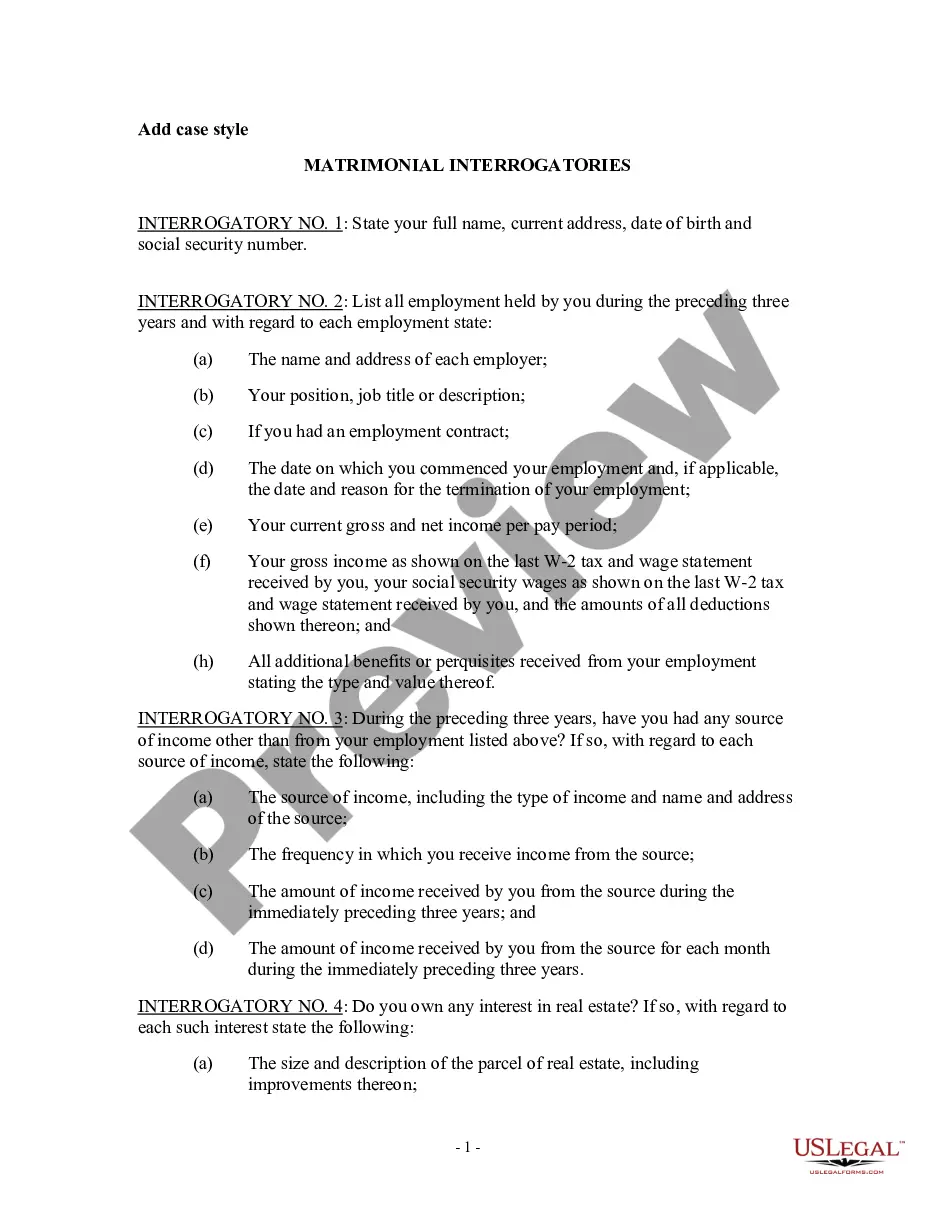
Gather crucial information during divorce proceedings, focusing on financial assets and obligations.
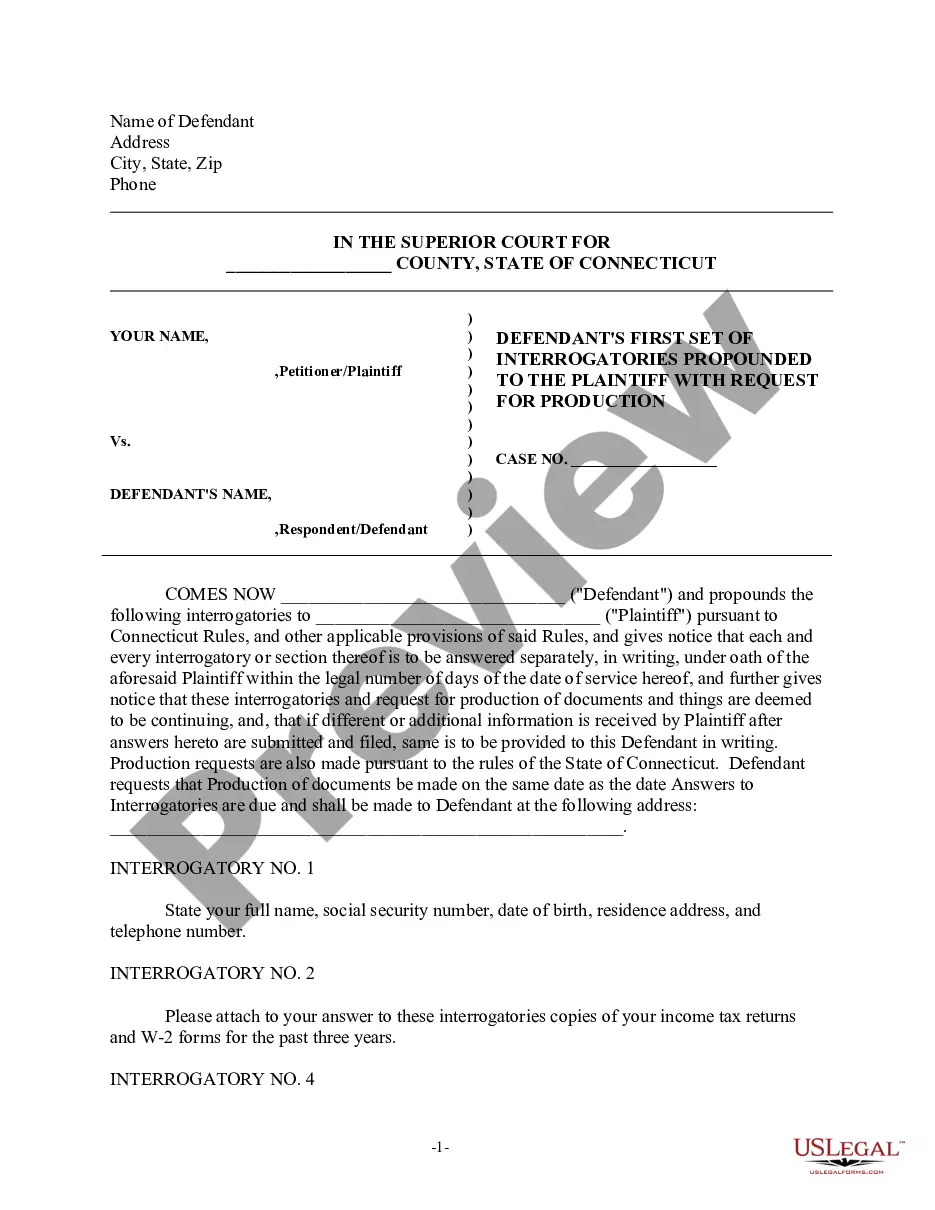
Discovery Interrogatories: Defendant → Plaintiff
Utilize this document to gather essential information from the plaintiff, including personal details and financial records, crucial for your defense strategy.
Discovery Interrogatories: Plaintiff → Defendant
Used to gather detailed information from the defendant, including documents relevant to a case, often seen in divorce or personal injury litigation.
Financial Affidavit
Use this form if your income and assets are below $75,000 to provide a financial overview in legal proceedings.
Financial Affidavit — Long Form
Use this detailed financial statement when your income or net assets exceed $75,000, ensuring accurate disclosure of your financial situation in legal matters.
Common Connecticut Divorce documents
- Divorce Petition — initiates the legal process for ending a marriage.
- Complaint for Divorce — outlines reasons for seeking the divorce.
- Marital Settlement Agreement — details the division of assets and liabilities.
- Divorce Decree — final court order that officially ends the marriage.
- Separation Agreement — outlines terms for living apart before divorce.
Complete Connecticut Divorce packages
Bundle every form you need for a complete situation — not just one document.

 10 forms
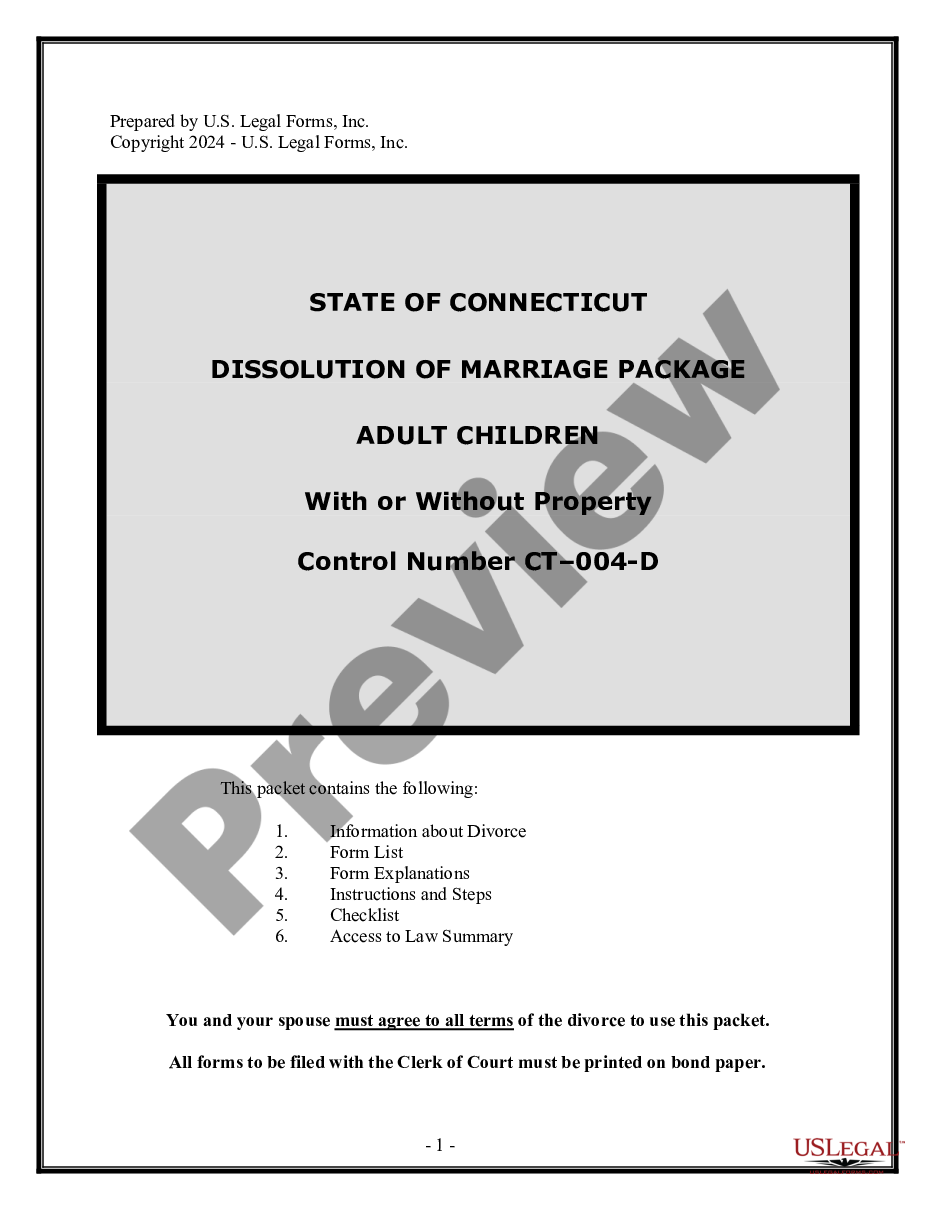
Connecticut No-Fault Uncontested Agreed Divorce Package for Dissolution of Marriage with Adult Children and with or without Property and Debts
Everything needed for an uncontested dissolution of marriage in one package, simplifying your divorce process.
- Connecticut Appearance Form(How-To Slidecast)
- Connecticut Notice of Automatic Court Orders
- Connecticut Divorce Complaint (Dissolution of Marriage)
- Connecticut Dissolution Agreement
- Connecticut Affidavit Concerning Military Service
- Connecticut Summons, Family Actions
- Connecticut Financial Affidavit
- Connecticut Financial Affidavit (Long Version)
- Connecticut Divorce Judgment - with or without children
- Connecticut Certification of Waiver of Service of Process - Divorce, Legal Separation, Annulment
5 forms
Connecticut Newly Divorced Individuals Package
Get everything you need to secure your legal affairs after divorce in one convenient package.
- Connecticut Name Change Notification Form
- Connecticut General Durable Power of Attorney for Property and Finances or Financial Effective upon Disability
- Connecticut Document Concerning Withholding or Withdrawal of Life Support Systems
- Connecticut Written Revocation of Will
- Personal Planning Information and Document Inventory Worksheets - A Legal Life Document
FAQs
Typically, you'll need a divorce petition, a marital settlement agreement, and a decree.
Yes, many individuals file pro se, but using templates can simplify the process.
The timeline varies based on the complexity of the case and court schedules.
If contested, the case may require mediation or court hearings to resolve disputes.
Yes, at least one spouse must reside in Connecticut for a certain period before filing.
Key legal points
- Divorce documents are necessary for legally terminating a marriage.
- Both parties often need to disclose financial information during the process.
- Custody arrangements for children should be addressed in the documents.
- A notarized signature may be required for certain forms.
- Timelines for filing can vary based on individual circumstances.
How to get started
Begin the process with these quick steps.
- Find a template or package that suits your needs.
- Review the description, preview, and any signing requirements.
- Obtain full access through a subscription.
- Complete the form using the online editor.
- Export the finished document: download, email, mail, or send for e-signature.
Practical tip
Consider drafting a Marital Settlement Agreement to clearly outline asset division and responsibilities.