Delaware Notice of Lease for Recording
What is this form?
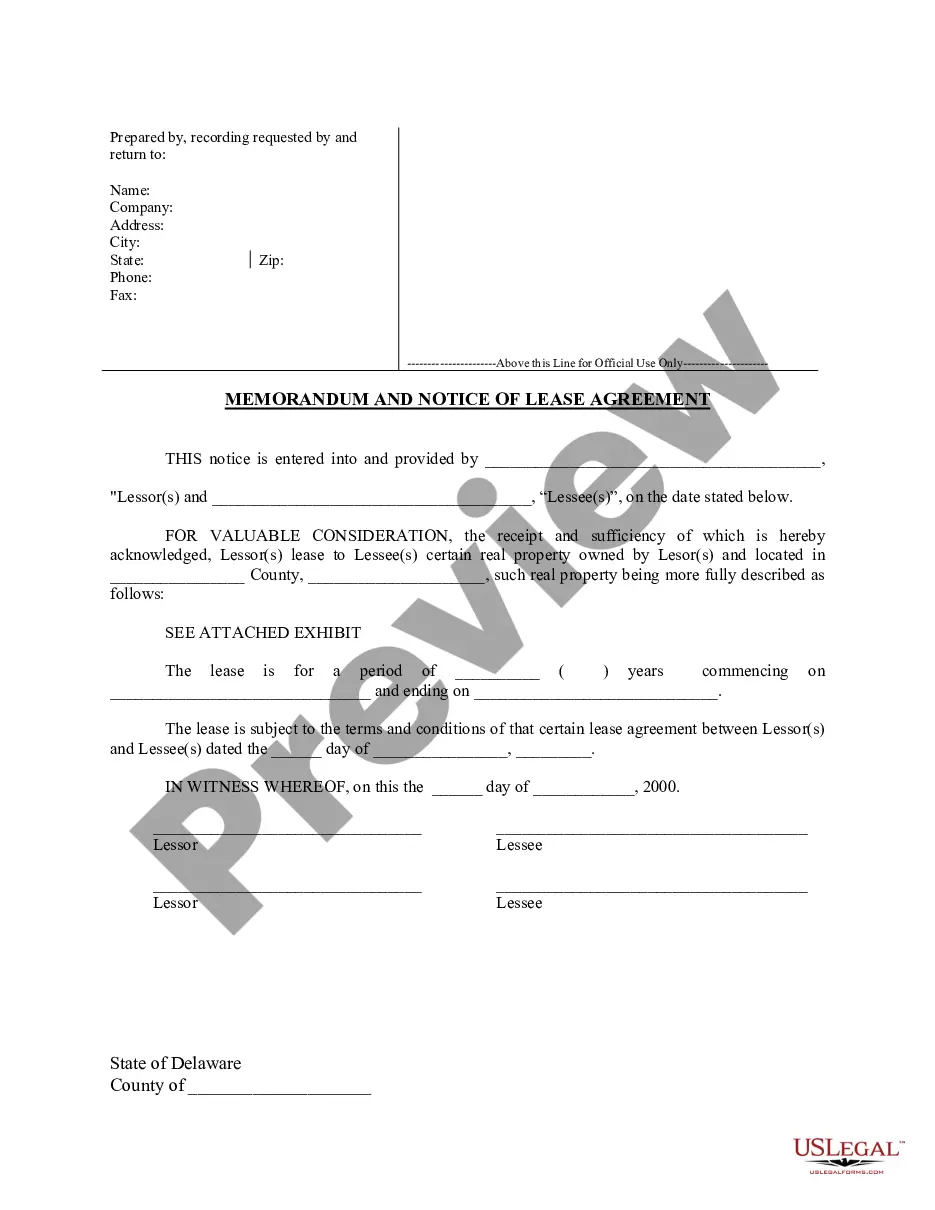
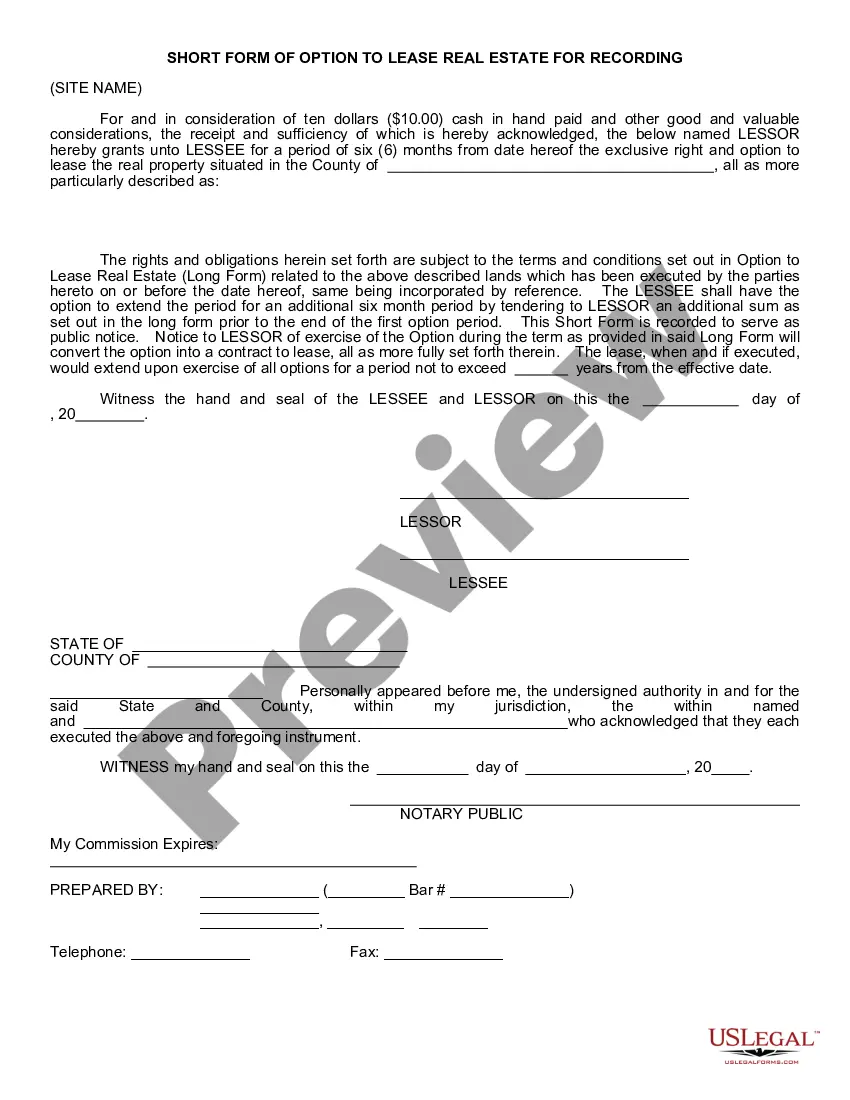
The Notice of Lease for Recording serves to inform the public that a lease exists on a specified piece of real estate. Unlike a full lease agreement, this memorandum provides essential details without requiring the entire document to be filed. It acts as a formal notification that helps protect the rights of the landlord and tenant regarding the leased property.
Key components of this form
- Prepared by and requested by details for proper documentation.
- Identification of the Lessor(s) and Lessee(s) involved in the lease.
- Detailed description of the real property being leased.
- Lease duration specifying the start and end dates.
- Reference to the original lease agreement date and terms.
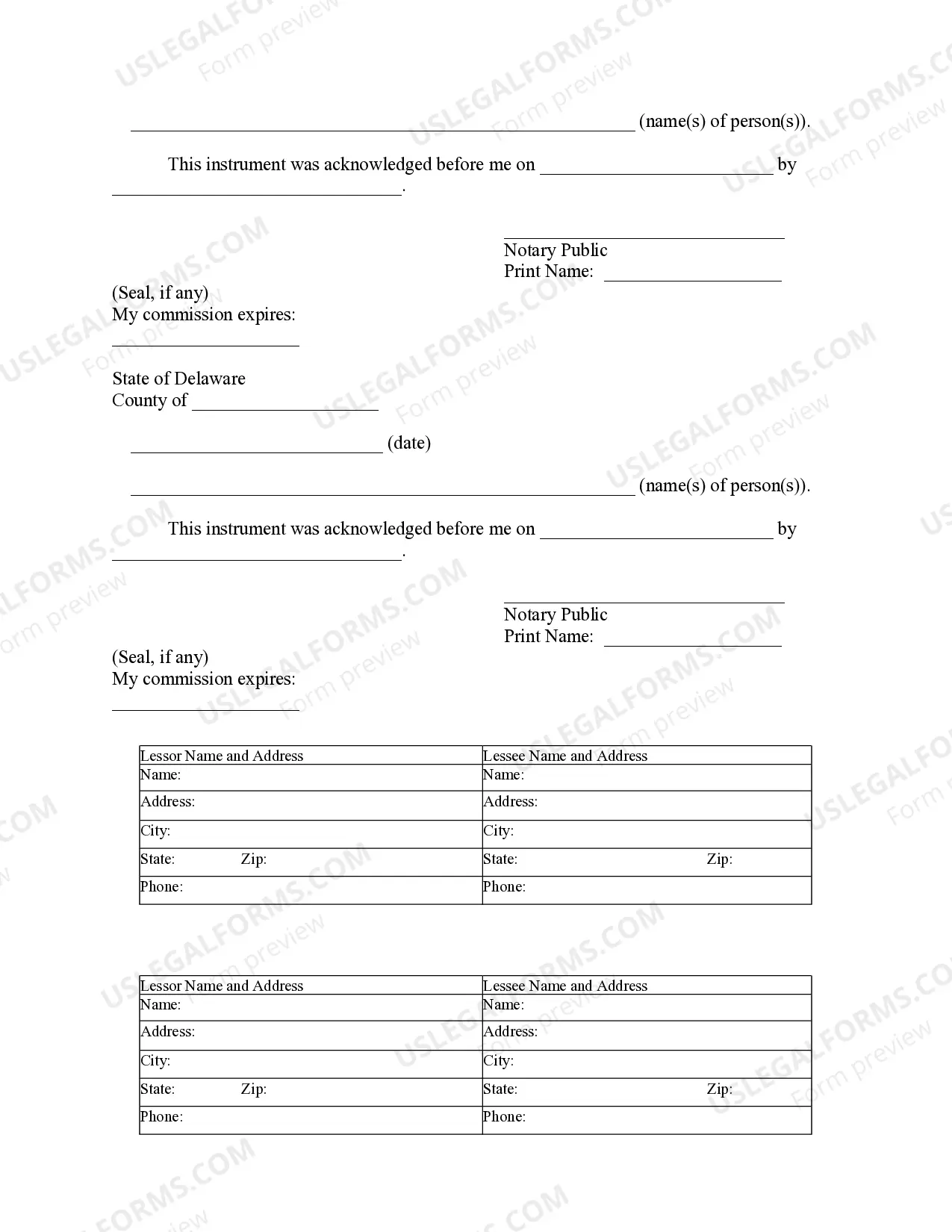
- Notary acknowledgment for validation of signatures.


Situations where this form applies
This form is useful when a landlord or property owner wants to record a lease agreement without disclosing the entire document. It is particularly beneficial for property transactions where the existence of a lease must be made known to third parties, such as lenders or potential buyers, without revealing confidential terms of the lease.
Who can use this document
- Landlords who want to protect their interest in a leased property.
- Property owners seeking to record lease agreements for real estate transactions.
- Tenants who wish to ensure that their lease rights are publicly documented.
Steps to complete this form
- Identify the parties by filling in the names of the Lessor(s) and Lessee(s).
- Specify the property by providing a complete address and description.
- Enter the lease duration, indicating the number of years and the start and end dates.
- Reference the original lease agreement by including the date of the lease document.
- Provide the names and signatures of the Lessor(s) and Lessee(s) along with notary details.
Does this form need to be notarized?
To make this form legally binding, it must be notarized. Our online notarization service, powered by Notarize, lets you verify and sign documents remotely through an encrypted video session.
Get your form ready online
Our built-in tools help you complete, sign, share, and store your documents in one place.
Make edits, fill in missing information, and update formatting in US Legal Forms—just like you would in MS Word.
Download a copy, print it, send it by email, or mail it via USPS—whatever works best for your next step.
Sign and collect signatures with our SignNow integration. Send to multiple recipients, set reminders, and more. Go Premium to unlock E-Sign.
If this form requires notarization, complete it online through a secure video call—no need to meet a notary in person or wait for an appointment.
We protect your documents and personal data by following strict security and privacy standards.

Make edits, fill in missing information, and update formatting in US Legal Forms—just like you would in MS Word.

Download a copy, print it, send it by email, or mail it via USPS—whatever works best for your next step.

Sign and collect signatures with our SignNow integration. Send to multiple recipients, set reminders, and more. Go Premium to unlock E-Sign.

If this form requires notarization, complete it online through a secure video call—no need to meet a notary in person or wait for an appointment.

We protect your documents and personal data by following strict security and privacy standards.
Typical mistakes to avoid
- Failing to provide accurate property descriptions.
- Omitting dates for the lease duration or original lease agreement.
- Not having the form properly notarized, leading to potential invalidation.
Why use this form online
- Convenient access to legal document templates from anywhere at any time.
- Editable formats allow customization to meet specific needs.
- Reliability from templates created by licensed attorneys.
Looking for another form?









Form popularity
FAQ
Section 5314 of the Delaware tenant code outlines the requirements for recording lease agreements in the state. This section provides guidelines on how landlords and tenants must notify each other about their intentions and the recording of leases. Understanding this section is crucial when preparing a Delaware Notice of Lease for Recording, as it helps ensure compliance with state laws. If you need assistance navigating these regulations, US Legal Forms offers detailed resources to guide you through the process.
A notice of recording is a formal document filed with the appropriate local government office, informing others about the existence of a lease agreement. This document serves to protect the rights of property owners and tenants by making the lease publicly known. When you file a Delaware Notice of Lease for Recording, you ensure that your lease is legally recognized, which can prevent potential disputes and claims from other parties. Using US Legal Forms can simplify the process of creating and filing this important document.
Yes, you can record a lease, and doing so is often a smart choice. A Delaware Notice of Lease for Recording notarizes and files your lease with the appropriate county office, offering protection against future claims from other parties. Recording your lease ensures that its terms are legally recognized and can help prevent disputes. This step provides both landlords and tenants with peace of mind by solidifying their legal rights.
Section 5514 of the Delaware landlord/tenant code outlines the requirements and procedures for the Delaware Notice of Lease for Recording. This section specifies that a lease should be in writing and signed by the parties involved. It ensures that both landlords and tenants understand their rights and obligations under the lease. Moreover, recording the lease protects both parties by providing public notice of the lease agreement.
In Delaware, landlords can increase rent based on the terms set in the lease agreement, as long as they provide proper notice and comply with local regulations. It's crucial to check your lease to see how often and by how much your landlord can raise the rent. Additionally, documenting any changes through a Delaware Notice of Lease for Recording ensures clarity and fairness in the rental agreement. If you feel uncertain about rent increases, consider using uslegalforms to help navigate these situations.
Section 5513 of the Delaware Landlord Tenant Code outlines the requirements for a Delaware Notice of Lease for Recording. This section mandates that landlords must ensure leases are properly documented and accessible to protect both tenant rights and landlord interests. By adhering to these regulations, landlords can prevent potential disputes over lease agreements. Understanding this section helps tenants know their rights regarding rental property and lease terms.
Recording a notice of lease provides multiple benefits, including legal protection and increased credibility. By filing a Delaware Notice of Lease for Recording, you create a public record of your lease, which can deter potential disputes with future property owners. This proactive step supports your rights as a tenant and ensures that your lease terms are acknowledged by all parties involved.
In Delaware, a landlord typically must provide at least a 60-day notice to a tenant before terminating a lease agreement or raising the rent. However, specific circumstances, such as non-payment of rent or lease violations, can alter this requirement. By understanding the legal expectations and using a Delaware Notice of Lease for Recording, tenants can protect their rights and avoid misunderstandings.
Recording a lease involves submitting your lease agreement to the appropriate governmental office, usually the county recorder, to publicly document it. By filing a Delaware Notice of Lease for Recording, you make the lease enforceable against third parties and provide legal recognition of your rights as a tenant. This process helps prevent disputes regarding property occupancy and ownership.
To obtain proof of your lease, you can request a copy from your landlord or property management. Ensure that your lease is signed by both parties, as this is essential for validation. Additionally, consider filing a Delaware Notice of Lease for Recording, which provides an official record of your lease agreement and can serve as proof in legal situations.