Delaware Request for List of Possible Lien Claimants - Corporate
What is this form?
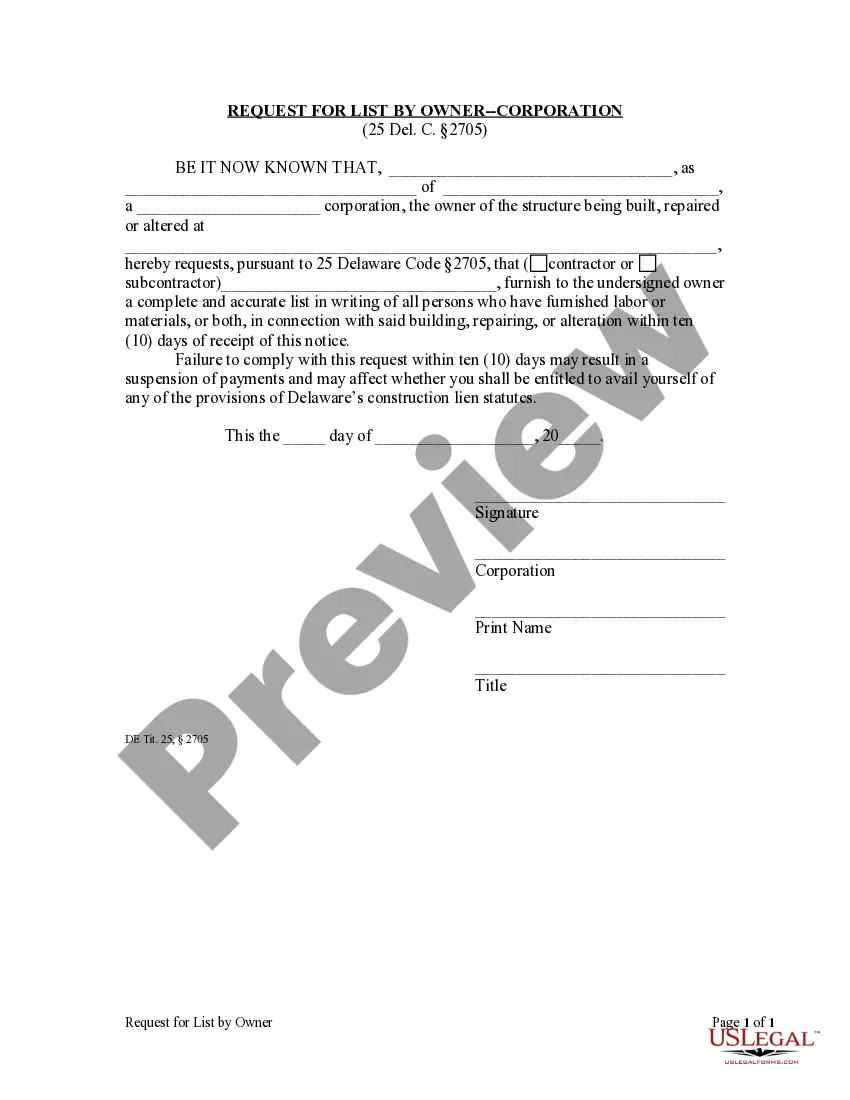
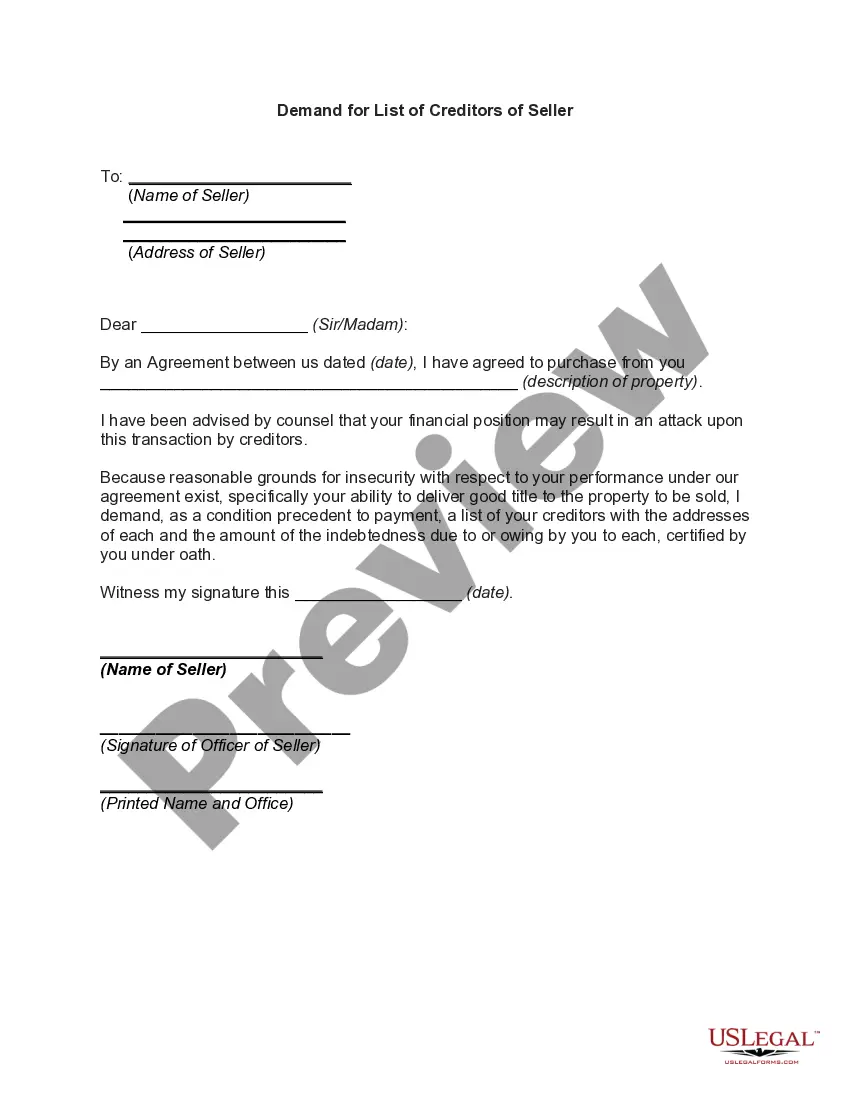
The Request for List of Possible Lien Claimants - Corporate is a legal document that allows a corporate owner to formally request a comprehensive list from a contractor or subcontractor. This list should include all individuals and entities that have provided labor or materials for a construction project. This form is essential for protecting the owner's rights under Delaware's construction lien statutes by ensuring transparency regarding potential lien claimants.
Key components of this form
- Corporate owner identification and details
- Name and address of the contractor or subcontractor
- Specific request for a list of lien claimants
- Deadline for response (ten days)
- Consequences of non-compliance
- Signature and title of the requester
Situations where this form applies
This form should be used when a corporate owner seeks to establish a clear record of all parties involved in providing labor or materials for their construction, repair, or alteration project. It is particularly important when the owner wants to ensure that all potential lien claimants are documented before finalizing payments to contractors or subcontractors.
Who can use this document
This form is intended for:
- Corporate owners of properties undergoing construction, repair, or alteration
- Contractors who need to maintain clear communications with the owner regarding lien claimants
- Subcontractors involved in the project who may be impacted by lien claims
Completing this form step by step
- Identify the corporate owner's name and corporation details.
- Enter the name and details of the contractor or subcontractor being addressed.
- Specify the property where the construction, repair, or alteration is taking place.
- Complete the date section, including the day and year.
- Sign the form and include your printed name and title.
Does this document require notarization?
This form usually doesn’t need to be notarized. However, local laws or specific transactions may require it. Our online notarization service, powered by Notarize, lets you complete it remotely through a secure video session, available 24/7.
Get your form ready online
Our built-in tools help you complete, sign, share, and store your documents in one place.
Make edits, fill in missing information, and update formatting in US Legal Forms—just like you would in MS Word.
Download a copy, print it, send it by email, or mail it via USPS—whatever works best for your next step.
Sign and collect signatures with our SignNow integration. Send to multiple recipients, set reminders, and more. Go Premium to unlock E-Sign.
If this form requires notarization, complete it online through a secure video call—no need to meet a notary in person or wait for an appointment.
We protect your documents and personal data by following strict security and privacy standards.

Make edits, fill in missing information, and update formatting in US Legal Forms—just like you would in MS Word.

Download a copy, print it, send it by email, or mail it via USPS—whatever works best for your next step.

Sign and collect signatures with our SignNow integration. Send to multiple recipients, set reminders, and more. Go Premium to unlock E-Sign.

If this form requires notarization, complete it online through a secure video call—no need to meet a notary in person or wait for an appointment.

We protect your documents and personal data by following strict security and privacy standards.
Common mistakes
- Failing to include all required identification information.
- Not specifying the property address accurately.
- Omitting the deadline for compliance in the request.
- Not signing or improperly signing the form.
Benefits of using this form online
- Convenient access for immediate download.
- Editable fields for easy customization relevant to your specific situation.
- Reliable templates drafted by licensed attorneys assure legal compliance.
Looking for another form?

Form popularity
FAQ
Section 170 outlines specific provisions regarding the authorization and issuance of stock to shareholders. This section is essential for ensuring that the rights of shareholders are protected and enables businesses to issue stock in compliance with corporate governance standards. For those dealing with a Delaware Request for List of Possible Lien Claimants - Corporate, this section underscores the importance of proper stock management to avoid future claims.
A general corporation in Delaware can have an unlimited number of shareholders and is subject to greater regulatory scrutiny. In contrast, a close corporation operates with a limited number of shareholders and often has more relaxed operational requirements. Understanding these distinctions is crucial when considering a Delaware Request for List of Possible Lien Claimants - Corporate, as they influence potential claims and shareholder rights.
Section 204 addresses the validity of corporate actions taken without proper formalities. This law enables corporations to ratify certain actions that may have been invalid due to procedural errors. For those interested in a Delaware Request for List of Possible Lien Claimants - Corporate, being aware of this section can facilitate smoother resolutions to potential disputes.
Delaware corporations are not required to issue stock certificates unless their corporate charter specifically mandates it. Many choose to forgo stock certificates to streamline administrative processes and reduce costs. However, knowing the regulations regarding the Delaware Request for List of Possible Lien Claimants - Corporate is vital, as stocks can represent claims stakeholders may hold.
Section 102 B 7 of the Delaware General Corporation Law provides corporations with the authority to eliminate or limit personal liability for directors in certain situations. This section allows companies to create more flexible governance structures, enabling directors to make decisions without the fear of personal repercussions. When considering a Delaware Request for List of Possible Lien Claimants - Corporate, it’s important to evaluate how this provision can impact potential liabilities.
The duration of UCC searches in Delaware typically varies based on the complexity of the search and the backlog at the office. Generally, you can expect results within a few business days when using the online portal. To expedite your search, consider utilizing the Delaware Request for List of Possible Lien Claimants - Corporate, as this tool can streamline the process. For comprehensive solutions, uslegalforms offers expedited services to assist you in obtaining timely information.
In Delaware, UCC filings must be submitted to the Division of Corporations, which operates under the Secretary of State. You can file your UCC-1 financing statement online through their official site. Using the Delaware Request for List of Possible Lien Claimants - Corporate can enhance your filing experience, ensuring you are aware of existing claims. If you prefer a guided approach, uslegalforms provides helpful options for filing UCC statements.
To conduct a lien search in Delaware, begin by visiting the Delaware Secretary of State's website. You can access their online portal to search for existing liens against a business or entity. Utilizing the Delaware Request for List of Possible Lien Claimants - Corporate will help you gather pertinent information efficiently, making your search process smoother. If you need assistance, uslegalforms offers resources to guide you in performing your search.
A Delaware B corporation is a type of business entity that balances purpose and profit while meeting higher standards of social and environmental performance. This status indicates commitment not just to shareholders, but also to stakeholders. If you're exploring the Delaware Request for List of Possible Lien Claimants - Corporate, considering the implications of B corporation status can benefit your corporate strategy.
Section 203 prevents certain business combinations between a corporation and an interested stockholder for a specified period. This regulation aims to protect against hostile takeovers and ensure fair treatment for all shareholders. If you're working with the Delaware Request for List of Possible Lien Claimants - Corporate, understanding this law helps mitigate acquisition risks.