Connecticut Revocation of Designation of Standby Guardian
What is this form?
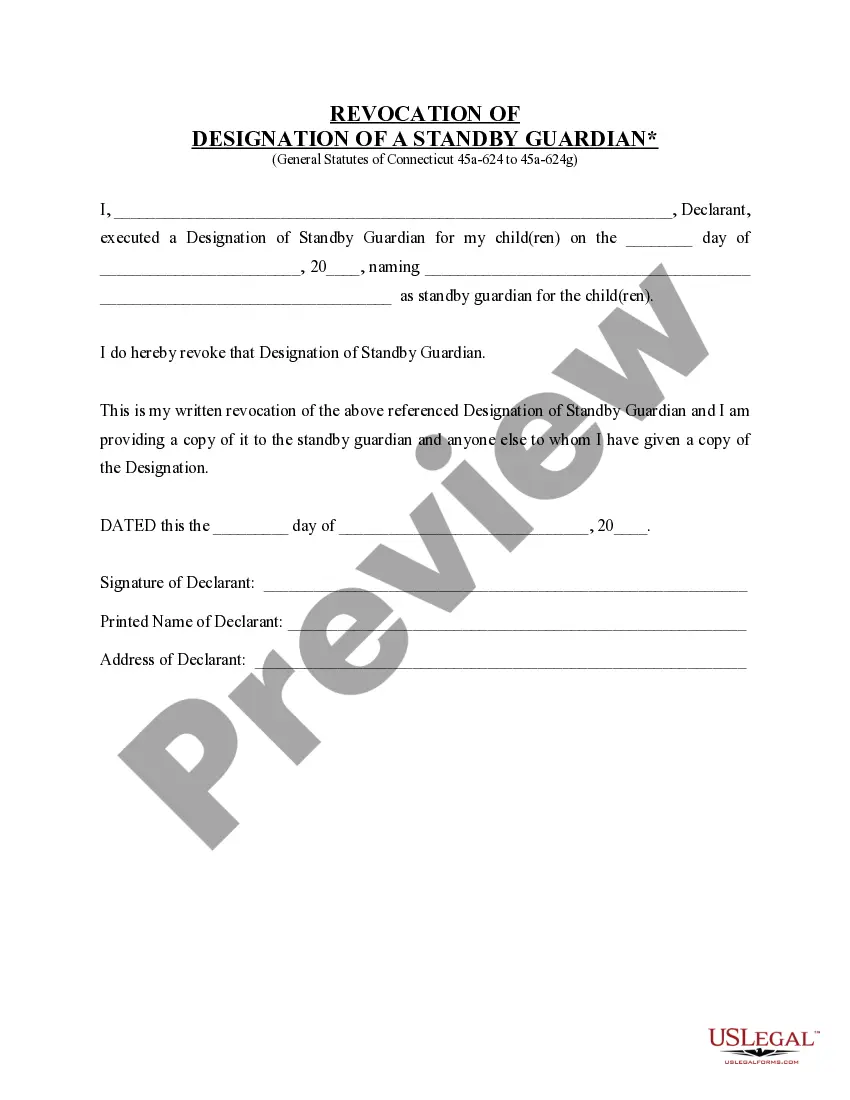
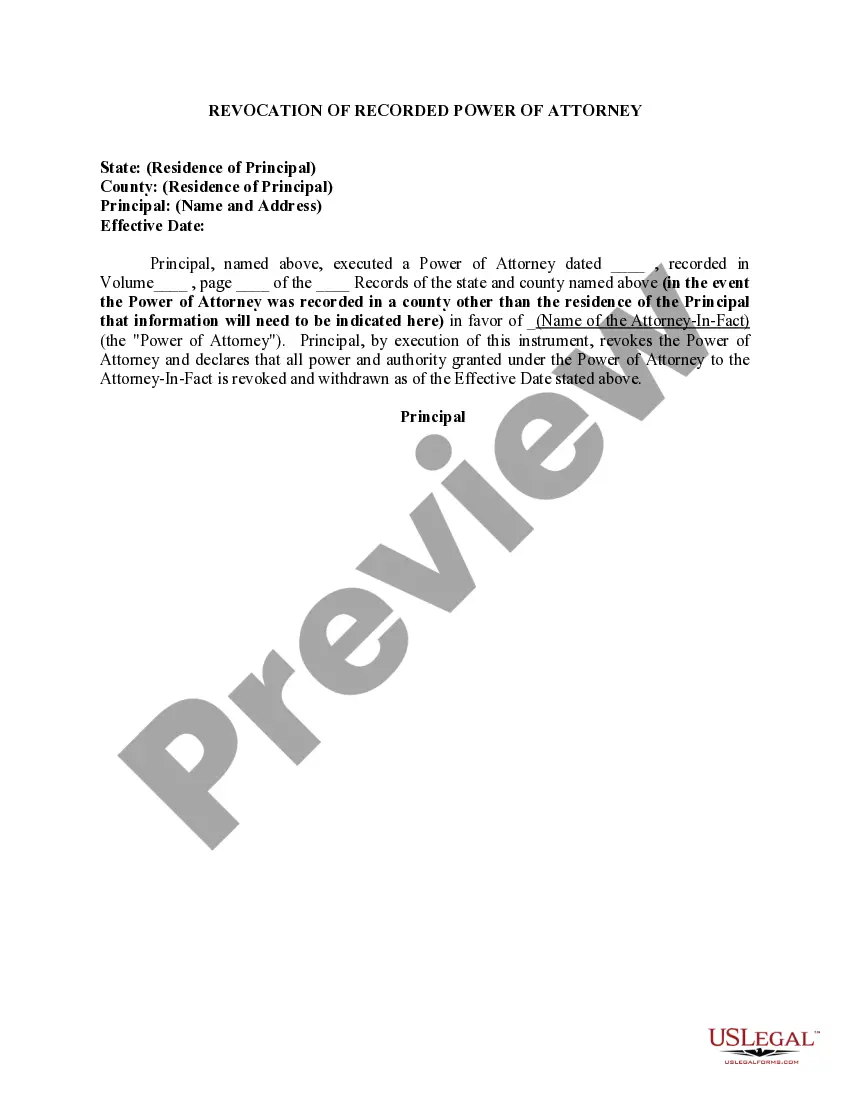
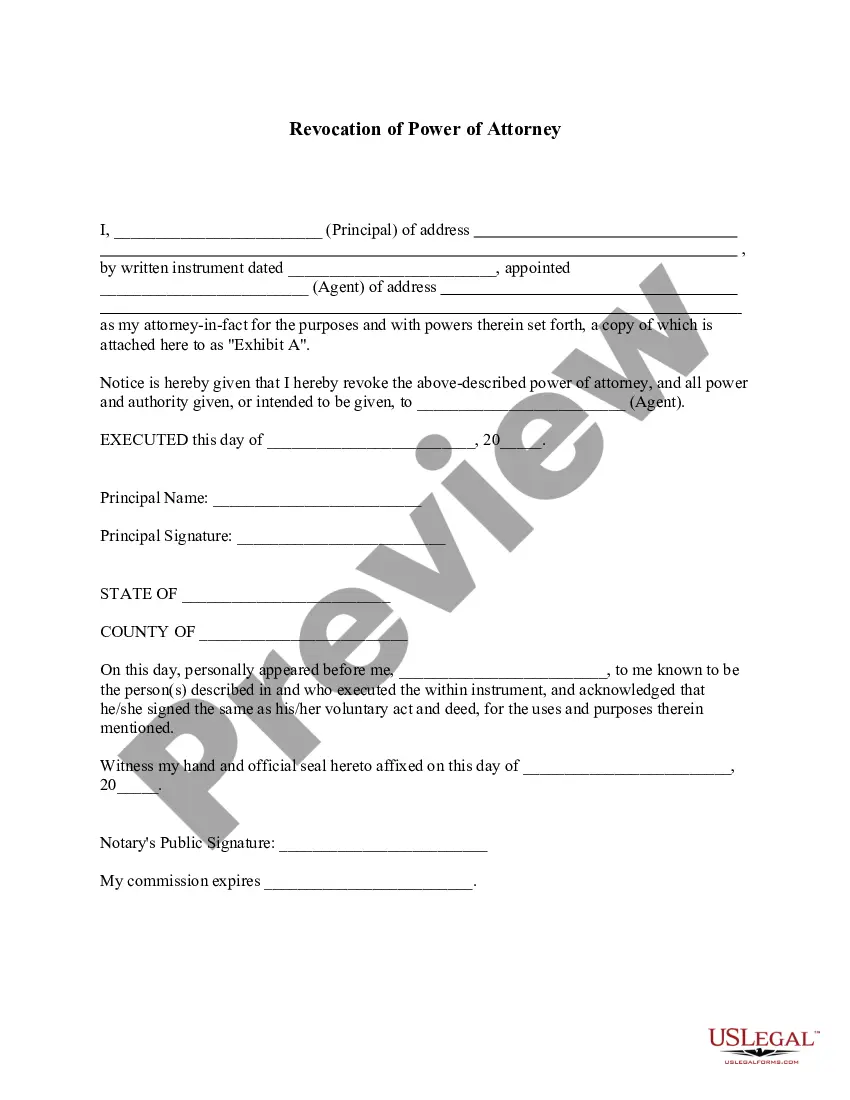
The Revocation of Designation of Standby Guardian is a legal document that allows a parent to revoke their previous designation of a standby guardian for their children. This form specifically overrides choices made in Form CT-P009, ensuring that the appointed standby guardian is no longer recognized in the event of an emergency. It provides clarity and peace of mind by allowing the principal to update or change their designated guardian as circumstances evolve.
Main sections of this form
- Identification of the principal, who is revoking the designation.
- Details of the original standby guardian being revoked.
- Statement of revocation, clearly indicating the intent to revoke the previous designation.
- Signature of the principal and, if necessary, a witness.
- Date of revocation to establish a timeline of the legal decisions made.
When to use this document
This form is essential when a parent decides that their previously appointed standby guardian is no longer suitable for any reason. For example, if family dynamics change, the principal might have a new trusted individual to designate or could wish to remove a designated guardian altogether in light of new circumstances.
Who should use this form
This revocation form is suitable for:
- Parents or legal guardians who have previously designated a standby guardian.
- Individuals wishing to update their designated standby guardian due to changing family situations.
- Guardians looking to ensure that their wishes are accurately reflected in legal documents.
Completing this form step by step
- Identify yourself as the principal, providing your full name and contact information.
- Clearly outline the previous standby guardian's details to avoid any confusion.
- Include a straightforward statement that revokes the previous designation.
- Sign and date the form to validate the revocation.
- If required, have a witness sign the form to reinforce its legal validity.
Does this form need to be notarized?
This form does not typically require notarization unless specified by local law. However, having it notarized can strengthen its legal standing in some jurisdictions.
Get your form ready online
Our built-in tools help you complete, sign, share, and store your documents in one place.
Make edits, fill in missing information, and update formatting in US Legal Forms—just like you would in MS Word.
Download a copy, print it, send it by email, or mail it via USPS—whatever works best for your next step.
Sign and collect signatures with our SignNow integration. Send to multiple recipients, set reminders, and more. Go Premium to unlock E-Sign.
If this form requires notarization, complete it online through a secure video call—no need to meet a notary in person or wait for an appointment.
We protect your documents and personal data by following strict security and privacy standards.

Make edits, fill in missing information, and update formatting in US Legal Forms—just like you would in MS Word.

Download a copy, print it, send it by email, or mail it via USPS—whatever works best for your next step.

Sign and collect signatures with our SignNow integration. Send to multiple recipients, set reminders, and more. Go Premium to unlock E-Sign.

If this form requires notarization, complete it online through a secure video call—no need to meet a notary in person or wait for an appointment.

We protect your documents and personal data by following strict security and privacy standards.
Common mistakes
- Failing to sign and date the form, which could render it invalid.
- Not notifying the standby guardian of the revocation, leading to potential misunderstandings.
- Using outdated forms or templates that do not comply with current laws.
Advantages of online completion
- Convenient access to legally vetted templates, available for download at any time.
- Easily editable to customize to your specific needs without complicated legal jargon.
- Reliable forms drafted by licensed attorneys, ensuring compliance with legal standards.
Looking for another form?
Form popularity
FAQ
Custody typically refers to the legal relationship that allows a parent to make decisions regarding their child's life and upbringing. In contrast, guardianship grants a person the authority to care for a child, often in situations where parents cannot fulfill their roles. Understanding these differences helps maintain clarity in family dynamics, and if conflicts arise, the Connecticut Revocation of Designation of Standby Guardian offers a pathway to address concerns effectively.
To prevent someone from obtaining guardianship, a parent can contest the application in court, citing valid reasons why guardianship is not in the child's best interest. It may involve presenting evidence of parental capability and stability. Legal support can be beneficial in navigating this process, and understanding how the Connecticut Revocation of Designation of Standby Guardian can assist in reclaiming one's parental rights is essential.
Standby guardianship in Connecticut is a legal arrangement that allows a designated individual to take care of a child when the parent is temporarily unable to do so. This arrangement is put in place through a formal designation, which outlines the guardian's responsibilities and powers. It provides peace of mind for parents, knowing their child will be cared for without a lengthy court process, and understanding how to navigate the Connecticut Revocation of Designation of Standby Guardian is crucial if changes need to be made.
A guardian holds significant power over the child's well-being, including making critical decisions about education, healthcare, and living arrangements. However, this power is not absolute, as it is guided by the court's orders and the specific terms of the guardianship. Understanding the scope of this power is vital, especially if there are concerns, leading individuals to consider the Connecticut Revocation of Designation of Standby Guardian process.
In Connecticut, guardianship can override certain parental rights, particularly when it involves the welfare of the child. A court may grant guardianship if it believes that the parent's decisions are not in the child's best interest. This emphasizes the need for clarity in guardianship roles, and if situations change, parents can pursue the Connecticut Revocation of Designation of Standby Guardian to regain their rights.
Under guardianship, a parent may lose some decision-making powers regarding their child's upbringing. This can affect choices related to education, health care, and general welfare. It is essential to understand that while guardianship is meant to protect the child, it can diminish parental authority, highlighting the importance of the Connecticut Revocation of Designation of Standby Guardian process if necessary.
A standby guardian in Connecticut has the right to make decisions regarding the child's care and welfare when the parent is unavailable. This includes the ability to seek medical treatment, make educational choices, and provide for the child's daily needs. The rights of a standby guardian are designed to ensure a smooth transition and continuity in the child's living situation, especially in emergencies.
A standby guardian in Connecticut is a person designated to care for your children should you become unable to do so temporarily or permanently. This designation ensures a smooth transition in caretaking, prioritizing the children's welfare. If your circumstances change, you can easily implement a Connecticut Revocation of Designation of Standby Guardian to alter your choice, providing you with peace of mind.
To apply for a conservatorship in Connecticut, you must file a petition with the probate court and provide supporting documents regarding the proposed conservatee's incapacity. Following the filing, a court hearing will take place to assess the evidence and make a decision. Utilizing platforms like US Legal Forms can help streamline the process and ensure all required documentation is in order for your conservatorship application.
Connecticut recognizes various forms of guardianship, including guardianship of the person and guardianship of the estate. Each type serves a different function; guardianship of the person addresses personal care, while guardianship of the estate concerns financial management. Familiarizing yourself with these types is vital when considering the implications of a Connecticut Revocation of Designation of Standby Guardian.