California Complaint for Breach of Implied Covenant of Good Faith and Fair Dealing
What is this form?
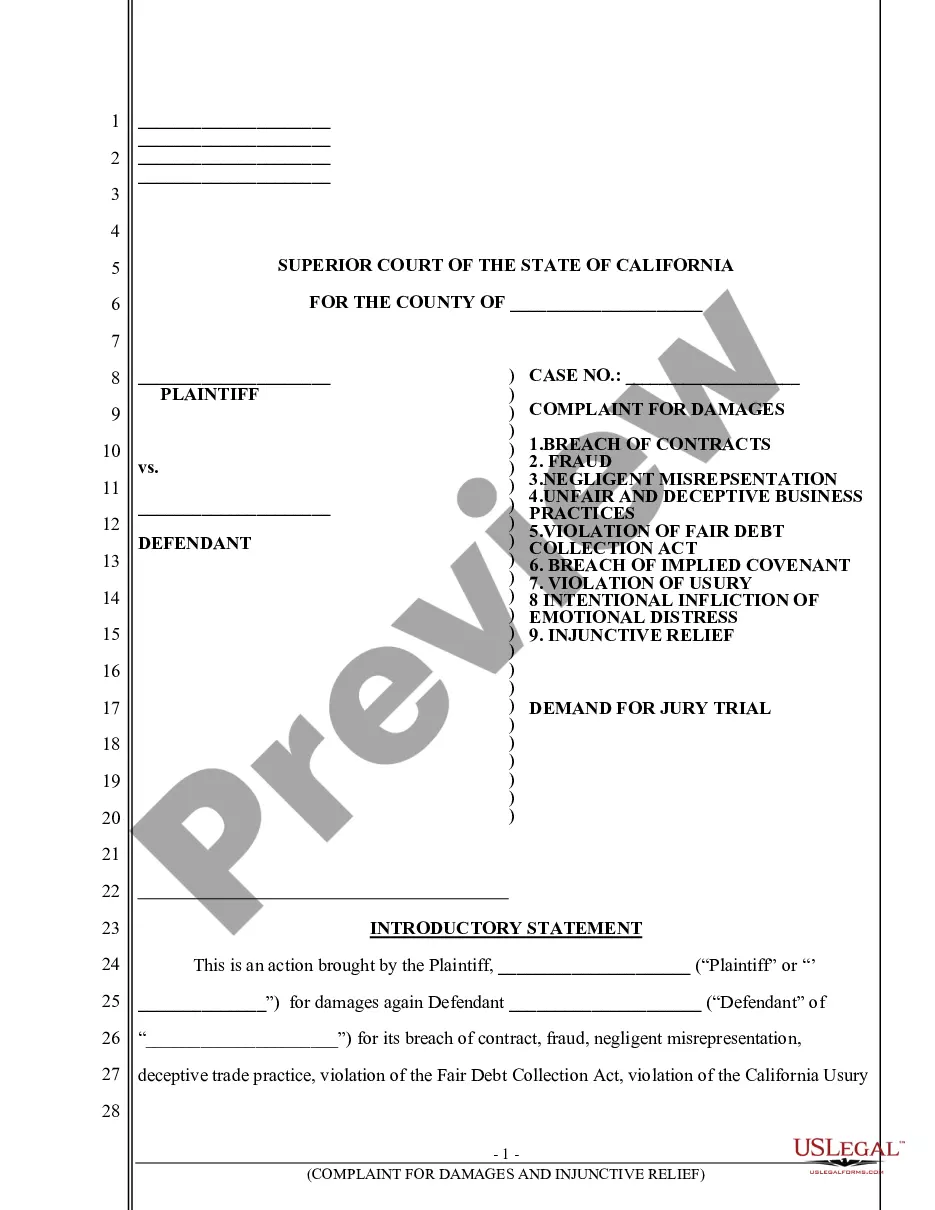
The Complaint for Breach of Implied Covenant of Good Faith and Fair Dealing is a legal document used to initiate a lawsuit claiming that one party has violated the implied terms of good faith and fair dealing within a contract. This form is essential when the plaintiff believes that the actions of the defendant have unjustly deprived them of the benefits of a contract, and it seeks to recover damages as a result of that breach. Unlike other legal complaints, this form specifically addresses contractual relationships and the inherent obligations of good faith that exist between the parties involved.
What’s included in this form
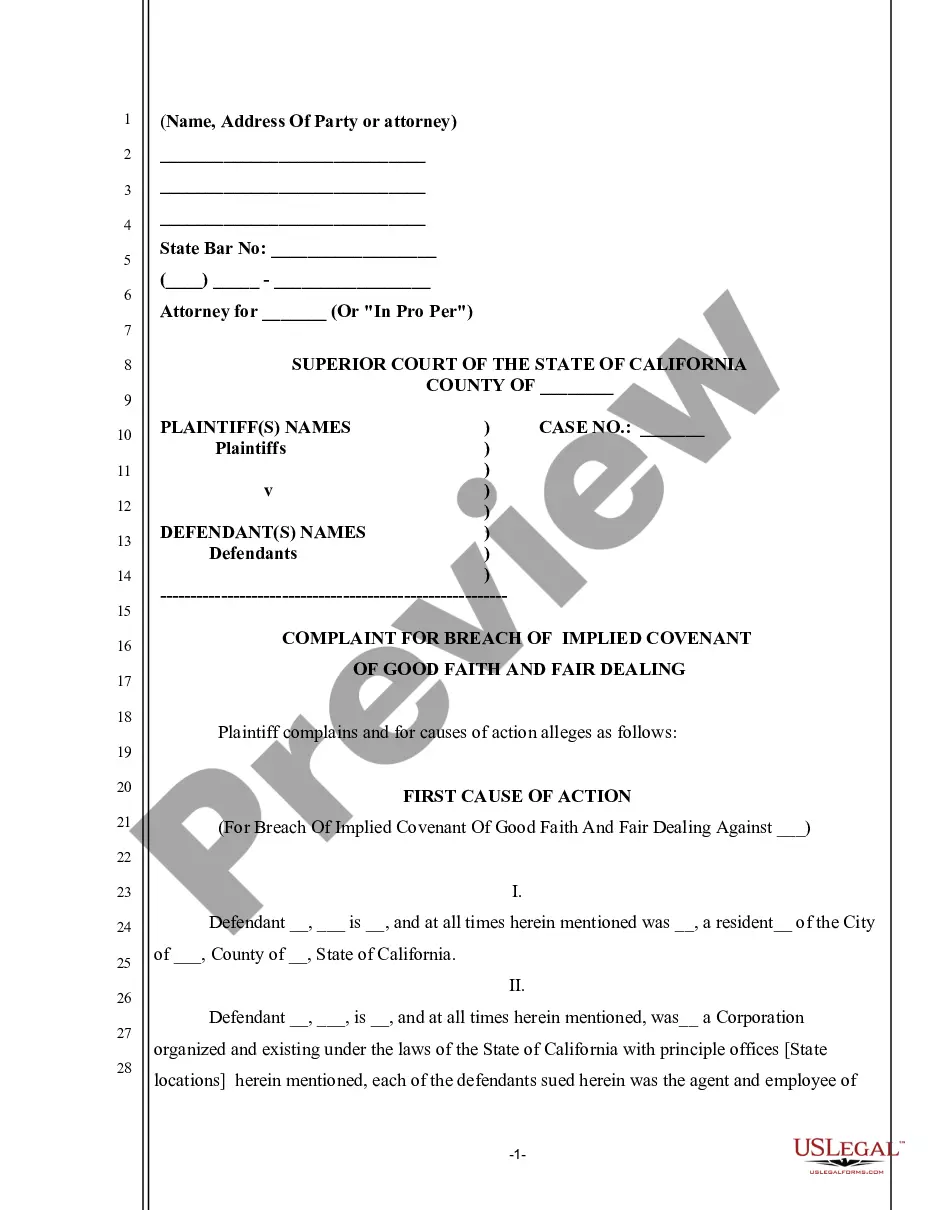
- Title section including case number and court information
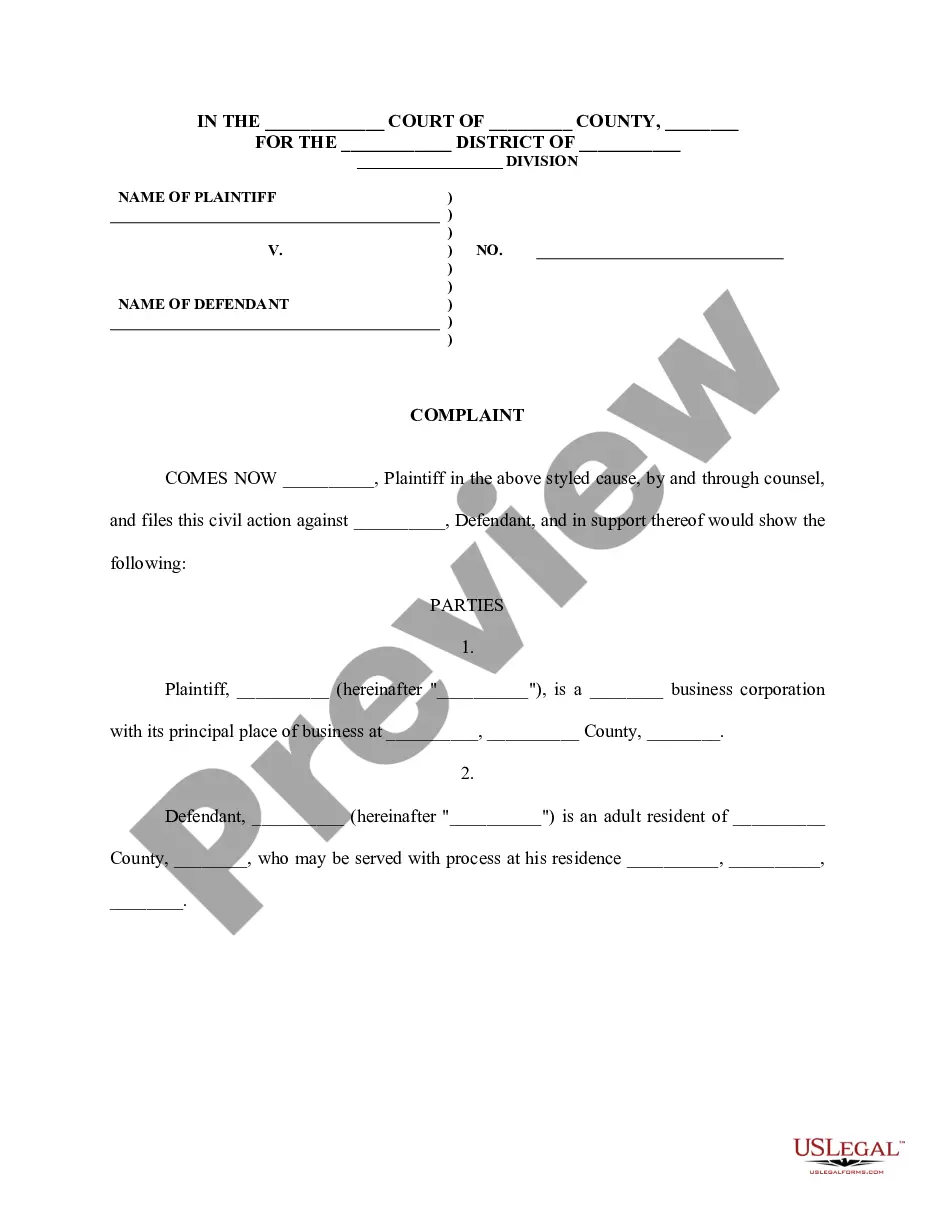
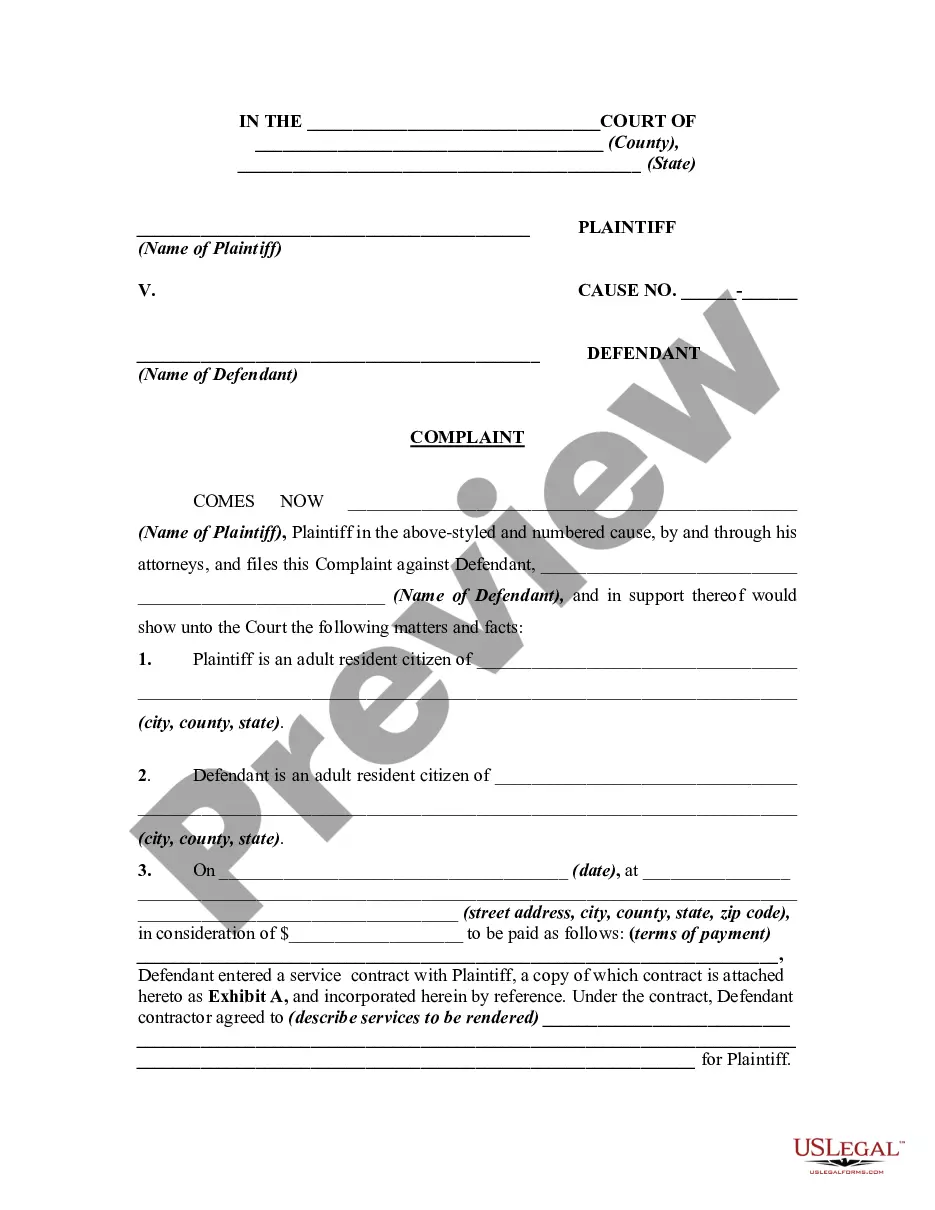
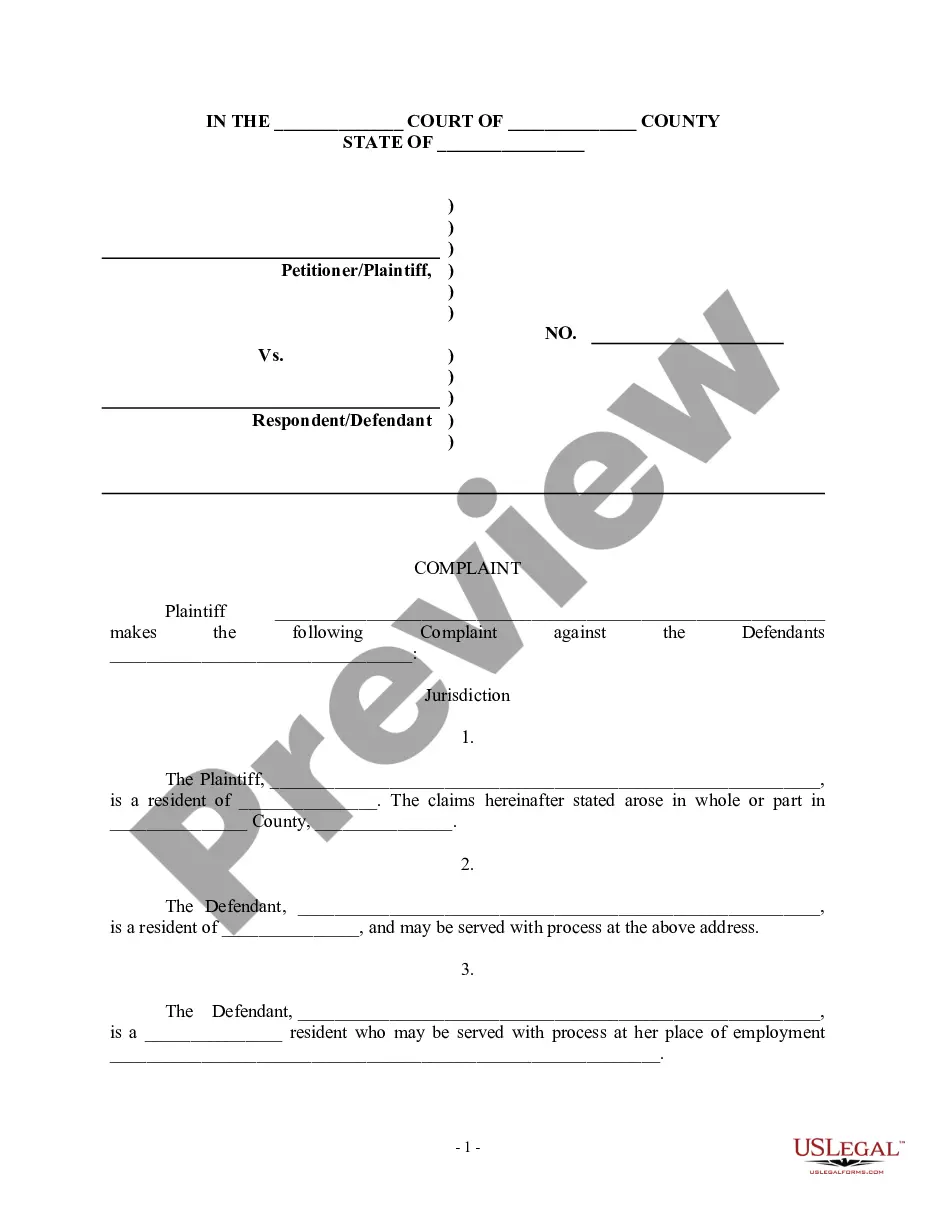
- Identification of plaintiff and defendant, including their legal statuses
- Statement of facts outlining the breach of the implied covenant
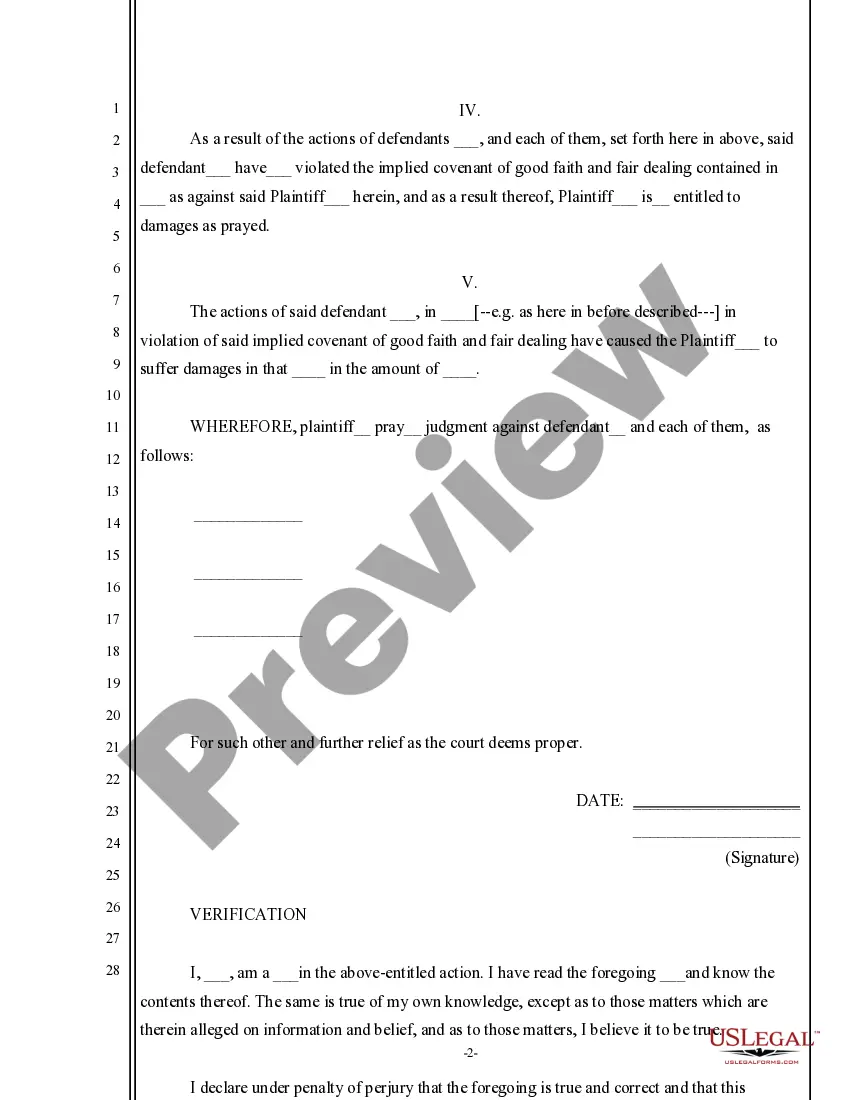
- Specifically describes the damages suffered by the plaintiff
- Prayer for relief, stating the desired judgment against the defendant
- Verification section for attesting to the truthfulness of the claims

Common use cases
This form should be used when a party to a contract believes that the other party has acted in bad faith or has failed to uphold their contractual obligations. Common scenarios include disputes in employment agreements, real estate transactions, or any other contractual arrangement where one party's actions undermine the purpose of the agreement, leading to financial or other damages for the harmed party.
Intended users of this form
- Individuals who are parties to a contract in California
- Businesses seeking to enforce contractual agreements
- Any party that believes they have been harmed by the breach of good faith by another contracting party
- Legal representatives acting on behalf of plaintiffs in breach cases
How to prepare this document
- Identify the parties involved: fill in the names of the plaintiff and defendant.
- Provide the case number and relevant court details at the top of the form.
- Explain the circumstances that led to the claim, detailing the specific actions that breached the covenant.
- Specify the damages suffered as a result of the breach, including any financial figures if applicable.
- Sign and date the verification section to attest to the accuracy of the claims made in the complaint.
Does this document require notarization?
Notarization is not commonly needed for this form. However, certain documents or local rules may make it necessary. Our notarization service, powered by Notarize, allows you to finalize it securely online anytime, day or night.
Get your form ready online
Our built-in tools help you complete, sign, share, and store your documents in one place.
Make edits, fill in missing information, and update formatting in US Legal Forms—just like you would in MS Word.
Download a copy, print it, send it by email, or mail it via USPS—whatever works best for your next step.
Sign and collect signatures with our SignNow integration. Send to multiple recipients, set reminders, and more. Go Premium to unlock E-Sign.
If this form requires notarization, complete it online through a secure video call—no need to meet a notary in person or wait for an appointment.
We protect your documents and personal data by following strict security and privacy standards.

Make edits, fill in missing information, and update formatting in US Legal Forms—just like you would in MS Word.

Download a copy, print it, send it by email, or mail it via USPS—whatever works best for your next step.

Sign and collect signatures with our SignNow integration. Send to multiple recipients, set reminders, and more. Go Premium to unlock E-Sign.

If this form requires notarization, complete it online through a secure video call—no need to meet a notary in person or wait for an appointment.

We protect your documents and personal data by following strict security and privacy standards.
Common mistakes
- Failing to adequately describe the breach and its impact on the plaintiff.
- Not including all necessary parties in the complaint.
- Omitting signatures or dates in the verification section.
- Using vague language that does not clarify the basis for the claim.
Benefits of using this form online
- Convenience of accessing and downloading the form anytime.
- Editable templates allow for easy customization based on unique circumstances.
- Forms drafted by licensed attorneys ensure legal validity and compliance.
- Reduced risk of errors with clearly defined instructions throughout the template.
Legal use & context
- Permits plaintiffs to seek remedies for breaches in contract dealings.
- Establishes a legal basis for enforcing the terms of a contract obligating good faith between parties.
- Applicable in various contractual relationships under California law.
Main things to remember
- The Complaint for Breach of Implied Covenant of Good Faith and Fair Dealing is critical for those facing contractual disputes.
- Completion and accuracy of the form are vital for its effectiveness.
- This form is specific to California's legal standards regarding implied covenants in contracts.
Looking for another form?
Form popularity
FAQ
In California, the statute of limitations for filing a California Complaint for Breach of Implied Covenant of Good Faith and Fair Dealing is typically two years. This period starts from the moment you become aware of the breach. It is essential to act swiftly, as delays can jeopardize your ability to seek compensation. If you need assistance, US Legal Forms offers resources and templates to help you navigate this process efficiently.
Yes, there is a statute of limitations for breach of implied contract in California, which is typically two years. This timeframe begins when the breach occurs or when you become aware of it. Understanding the implications of a California Complaint for Breach of Implied Covenant of Good Faith and Fair Dealing is vital for navigating these limitations effectively. If you need assistance, consider using US Legal Forms for expert guidance.
In California, the 3-year statute of limitations applies to actions based on unwritten contracts and certain types of claims involving personal injury or damage to property. This means you have three years to initiate any legal proceedings relevant to these claims. If you believe a breach of implied covenant of good faith and fair dealing has occurred, it is important to act quickly to ensure your case is filed within this timeframe.
The statute of limitations for implied indemnity in California is generally two years. This period starts from the moment you learn about the indemnity obligation due to another party's actions. If an implied covenant of good faith and fair dealing is involved in your case, it's crucial to take action within this timeframe to protect your interests.
To establish a cause of action for breach of contract in California, you must demonstrate four elements: the existence of a contract, your fulfillment of contractual obligations, the other party’s breach, and resulting damages. Each element must be clearly substantiated for a successful claim. If you feel that an implied covenant of good faith and fair dealing has been violated, your California Complaint may address these elements convincingly.
In California, the 5-year rule pertains to the statute of limitations for written contracts. This means that if you have a complaint regarding a breach of contract, including a California Complaint for Breach of Implied Covenant of Good Faith and Fair Dealing, you typically have five years from the date of the breach to file your claim. It is crucial to keep this timeline in mind to preserve your legal rights and seek proper remedies.
To prove a breach of good faith, a party must show that the other party acted in bad faith or failed to honor the contract's intent. They need to present evidence, such as communications or documentation, demonstrating misconduct. Filing a California Complaint for Breach of Implied Covenant of Good Faith and Fair Dealing may involve gathering this evidence carefully. Working with a knowledgeable platform like uslegalforms can help streamline this process and ensure proper documentation.
An example of breach involves a landlord who fails to provide necessary repairs, jeopardizing a tenant's living conditions while still collecting rent. Such actions undermine the agreement's spirit and intent. If the tenant wishes to pursue a California Complaint for Breach of Implied Covenant of Good Faith and Fair Dealing, they must show how the landlord's behavior violated their rights. Understanding these examples can help parties navigate their contracts more effectively.
Breaching the duty of good faith means failing to act honestly or fairly in the performance of a contract. This behavior may involve deceiving another party or intentionally sabotaging their ability to benefit from the agreement. In a California Complaint for Breach of Implied Covenant of Good Faith and Fair Dealing, demonstrating this breach requires clear proof of intent or misconduct. Parties should strive to uphold good faith to avoid these legal disputes.
A tortious breach of the covenant occurs when one party not only breaches the contract but also engages in wrongful conduct beyond the contractual terms. This behavior can inflict emotional distress or economic harm. In a California Complaint for Breach of Implied Covenant of Good Faith and Fair Dealing, proving tortious conduct can lead to additional damages. Victims should gather evidence to support their claims of such acts.