California Quitclaim Deed from Corporation to Individual
What is this form?
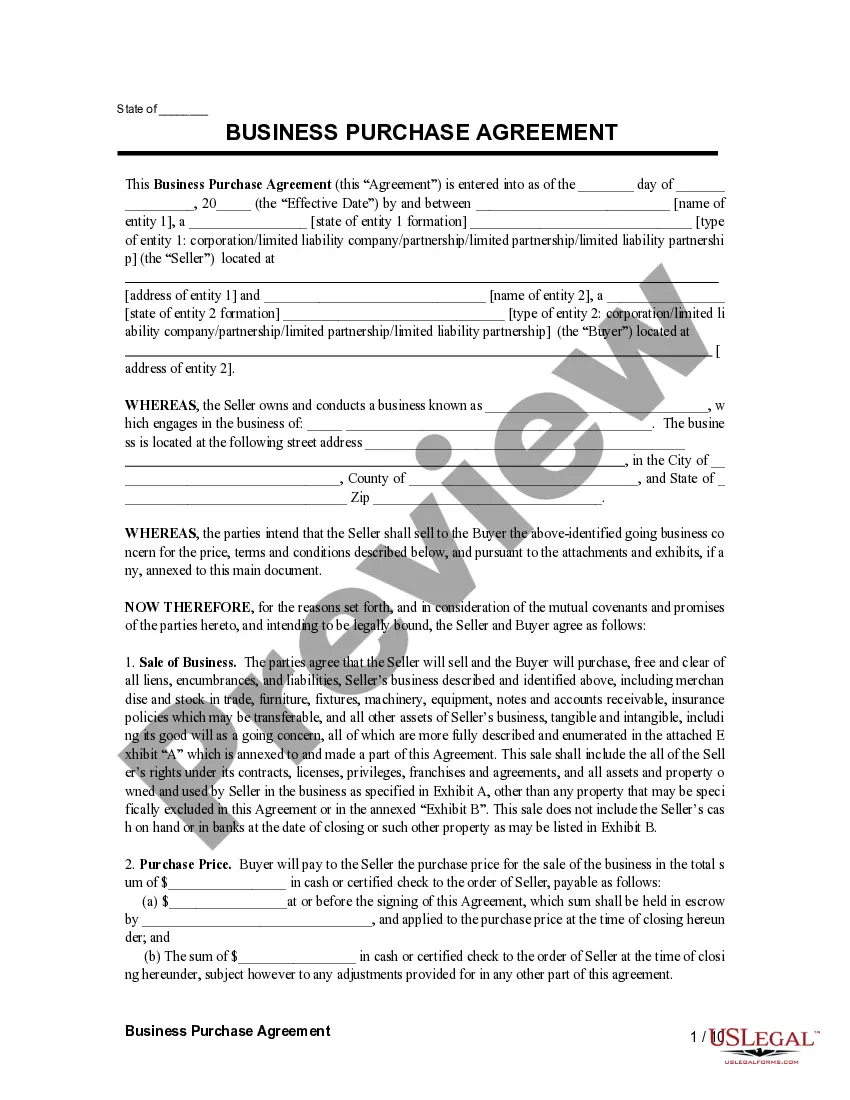
The Quitclaim Deed from Corporation to Individual is a legal document that allows a corporation (the Grantor) to transfer ownership of real estate to an individual (the Grantee). This form communicates that the Grantor relinquishes any claim to the property without guaranteeing a clear title. Unlike other types of deeds, such as warranty deeds, a quitclaim deed does not provide any warranties or guarantees about the propertyâs title or ownership history. This makes it ideal for specific transactions like transfers between family members or to resolve title issues quickly.
Main sections of this form
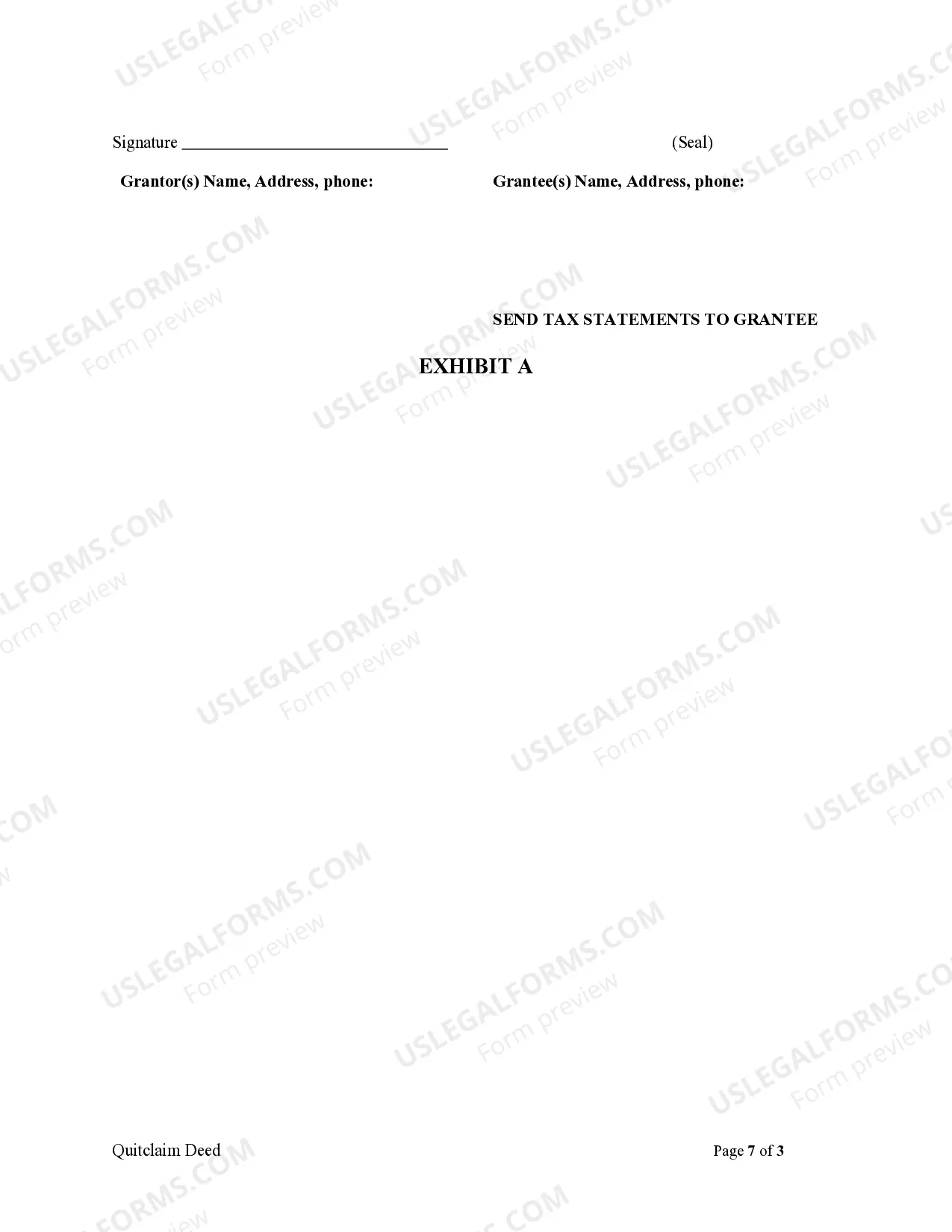
- Identification of the Grantor (Corporation) and Grantee (Individual)
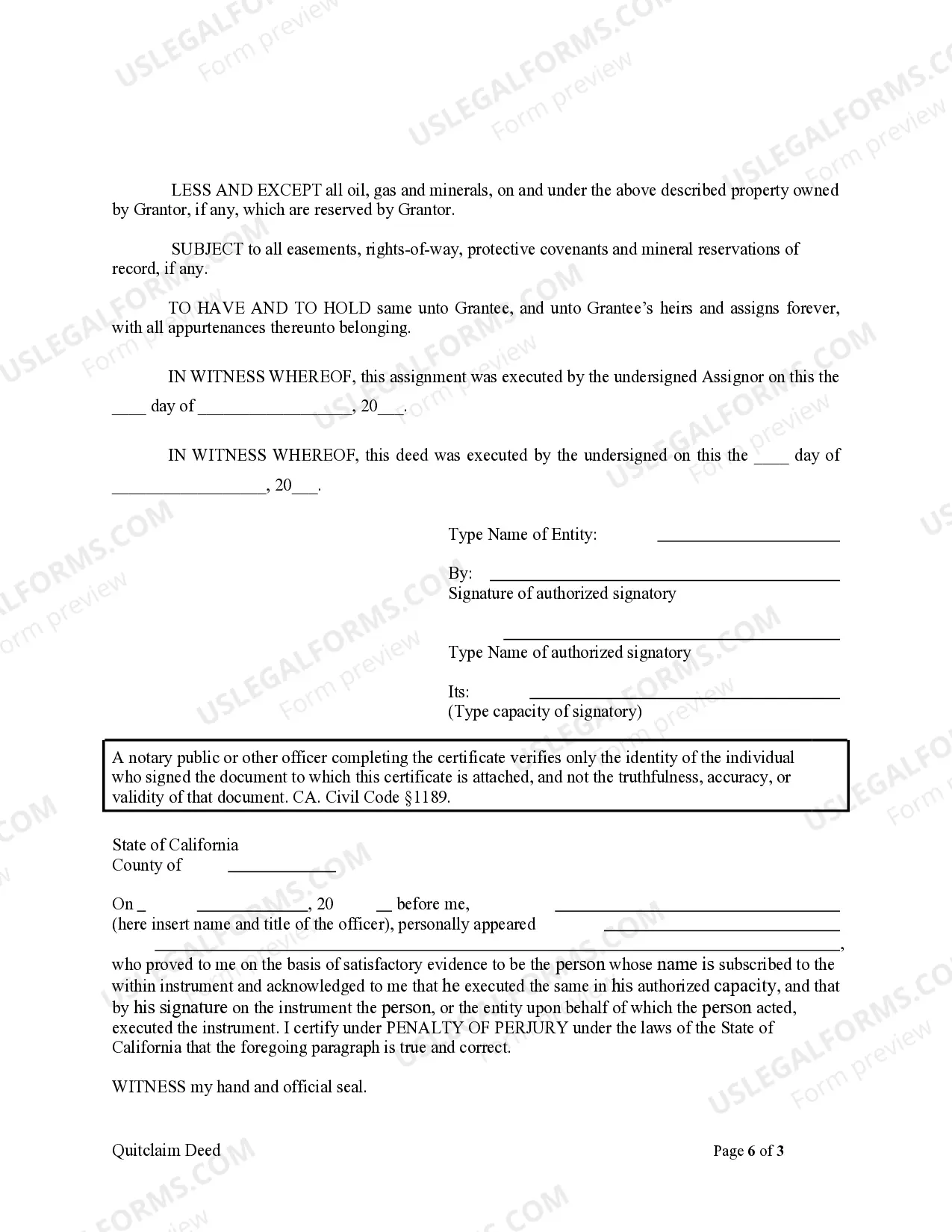
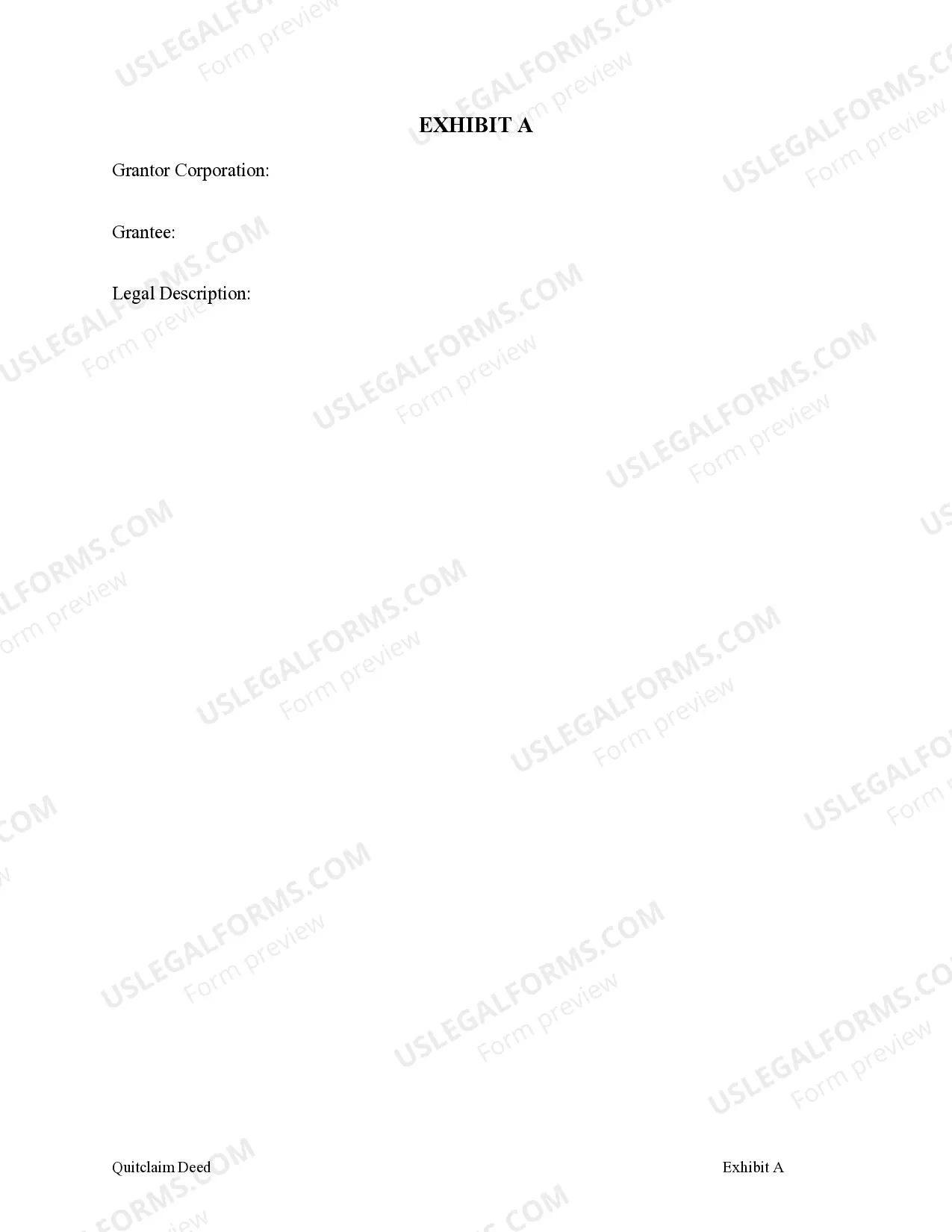
- Description of the property being transferred
- Statement of consideration (payment)
- Legal language confirming the quitclaim transfer of rights
- Signature and date line for the Grantor
- Space for notarization, if required



Situations where this form applies
This form is useful when a corporation wishes to transfer property ownership to an individual without the complexities of a warranty deed. Common scenarios include internal corporate restructurings, such as moving property to a board member or when settling estate claims. It can also be used when resolving title discrepancies or transferring property to individuals in informal arrangements.
Who should use this form
- Corporations transferring property to individuals
- Individuals receiving property from a corporate entity
- Estate planners seeking to facilitate transfer of assets
- Lawyers or legal professionals handling asset transfers
Steps to complete this form
- Identify the Grantor by providing the corporation's legal name and state of incorporation.
- Fill in the Grantee's name and marital status.
- Describe the property being transferred, including its address and legal description.
- Enter the consideration (payment) amount in the designated space.
- Sign the form in the presence of a notary public if required.
- Date the document appropriately to ensure legality.
Does this document require notarization?
This form does not typically require notarization unless specified by local law. However, having it notarized can enhance its legal validity, particularly in situations involving property transactions.
Get your form ready online
Our built-in tools help you complete, sign, share, and store your documents in one place.
Make edits, fill in missing information, and update formatting in US Legal Forms—just like you would in MS Word.
Download a copy, print it, send it by email, or mail it via USPS—whatever works best for your next step.
Sign and collect signatures with our SignNow integration. Send to multiple recipients, set reminders, and more. Go Premium to unlock E-Sign.
If this form requires notarization, complete it online through a secure video call—no need to meet a notary in person or wait for an appointment.
We protect your documents and personal data by following strict security and privacy standards.

Make edits, fill in missing information, and update formatting in US Legal Forms—just like you would in MS Word.

Download a copy, print it, send it by email, or mail it via USPS—whatever works best for your next step.

Sign and collect signatures with our SignNow integration. Send to multiple recipients, set reminders, and more. Go Premium to unlock E-Sign.

If this form requires notarization, complete it online through a secure video call—no need to meet a notary in person or wait for an appointment.

We protect your documents and personal data by following strict security and privacy standards.
Mistakes to watch out for
- Failing to properly identify the Grantor and Grantee.
- Leaving out the property description or entering incorrect information.
- Not having the document notarized when required.
- Omitting the consideration amount, which may lead to legal issues.
Advantages of online completion
- Convenient access to legal documents without needing in-person meetings.
- Editable templates that allow customization for specific needs.
- Fast downloading and printing, enabling immediate use.
- Drafted by licensed attorneys to ensure compliance with state laws.
Looking for another form?
Form popularity
FAQ
The most common way to transfer ownership is through a deed, primarily a grant deed or a quitclaim deed. A California Quitclaim Deed from Corporation to Individual is particularly useful when the transfer is straightforward and there are no disputes about the title. It allows individuals to claim interest in a property quickly. It is advisable to consult with legal professionals or use platforms like US Legal Forms to ensure a proper transfer.
The granting clause in a special warranty deed typically contains the word 'grant'. This clause outlines the transfer of property rights from the seller to the buyer and specifies the interest that is transferred. In cases involving a California Quitclaim Deed from Corporation to Individual, the granting clause serves to clarify what ownership is being conveyed. Knowing the key elements of these clauses can aid in the transfer process.
A quitclaim deed cannot be used to resolve title disputes or to transfer property with outstanding liens. If the individual requires a clean title without encumbrances, a quitclaim deed would not be appropriate. Instead, a more secure deed type would be necessary to protect the buyer's interests. US Legal Forms can assist you in selecting the right deed for your needs.
When a corporation transfers ownership, the deed must be signed by an authorized officer of the corporation. Typically, this is the president or another executive officer designated by corporate by-laws. Including this signature on a California Quitclaim Deed from Corporation to Individual is critical to validate the transfer. Always check that the transfer complies with state regulations for corporation-held properties.
The warranty deed provides the best protection to the buyer, assuring that there are no hidden claims against the property. While a California Quitclaim Deed from Corporation to Individual transfers ownership, it does not offer the same level of protection. Buyers should always consider their options and ensure they are fully informed before proceeding with any type of deed. Using comprehensive forms from US Legal Forms can help mitigate risks.
The most common way to transfer real property is through a deed. A California Quitclaim Deed from Corporation to Individual offers a simple method for transferring ownership. This type of deed ensures that whatever interest the corporation has in the property is transferred to the individual. However, it's essential to understand that this deed does not provide guarantees about the property's title.
Co-ownership in California typically involves joint tenancy or tenancy in common. Each co-owner has an ownership interest in the property, allowing them to use it jointly. If one co-owner wishes to transfer their share, they can use a California Quitclaim Deed from Corporation to Individual to convey their interest while ensuring that the remaining owner's rights remain intact. Understanding your rights and responsibilities as a co-owner is essential, so consider legal guidance if you have specific questions.
To remove someone from a deed in California, you will need to execute a California Quitclaim Deed from Corporation to Individual. This form allows the current owner to relinquish their interest in the property to the remaining owners. After completing the deed, remember to record it with the local county recorder's office to ensure the removal is officially documented.
When a corporation transfers ownership of property, the deed must typically be signed by an authorized officer of the corporation. This is often the president or another designated individual, who must sign the California Quitclaim Deed from Corporation to Individual on behalf of the corporation. Additionally, it's crucial to ensure that the deed is notarized for it to be legally binding and enforceable.
Yes, you can remove a co-owner from a property in California, but it often requires their consent unless you have a legal reason to do so. Usually, you would initiate the process using a California Quitclaim Deed from Corporation to Individual, which allows you to transfer ownership rights. However, should disputes arise, you may need legal assistance to navigate the complexities of property law.