Arizona Default of Promissory Note and Demand for Payment
What is this form?
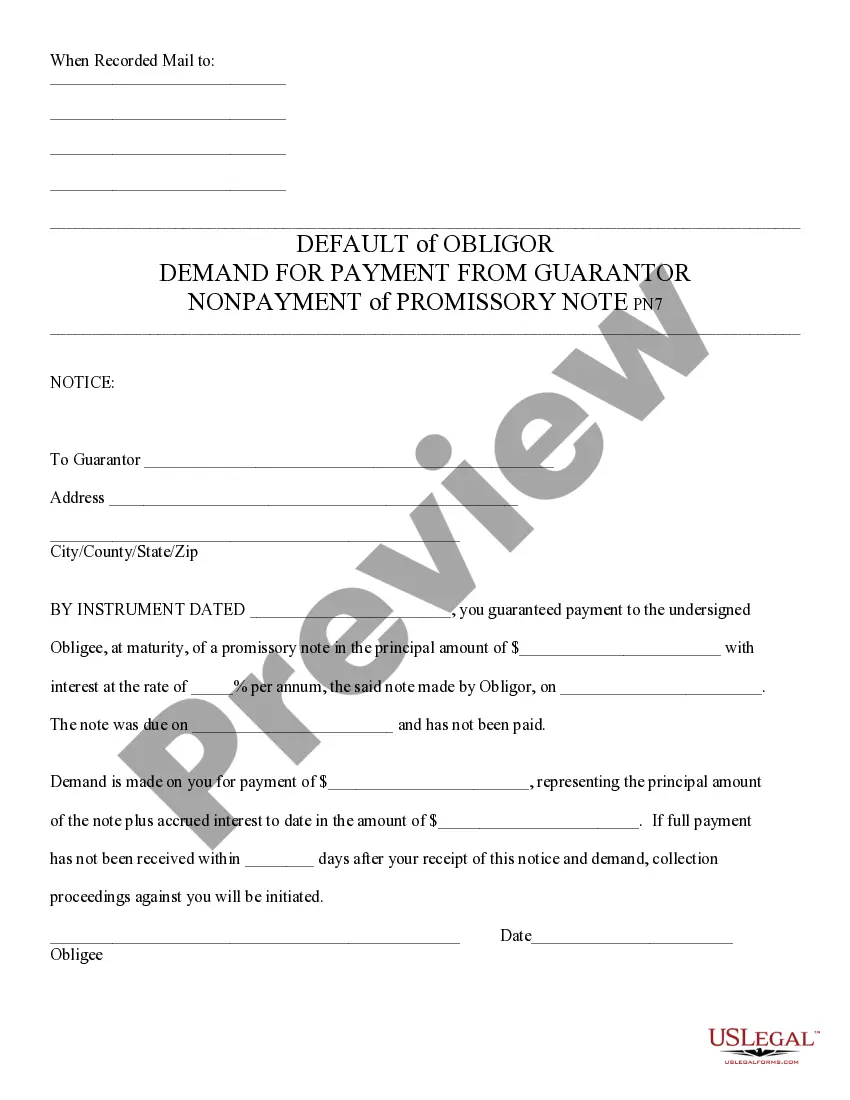
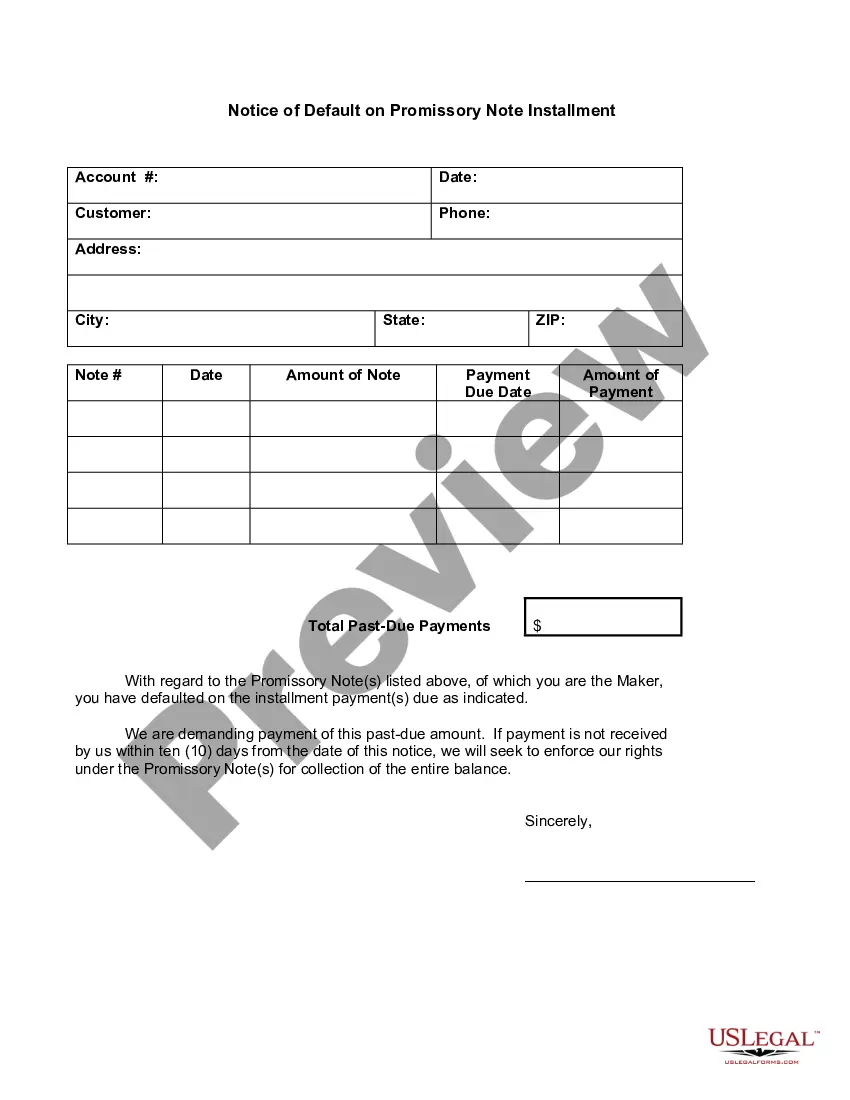
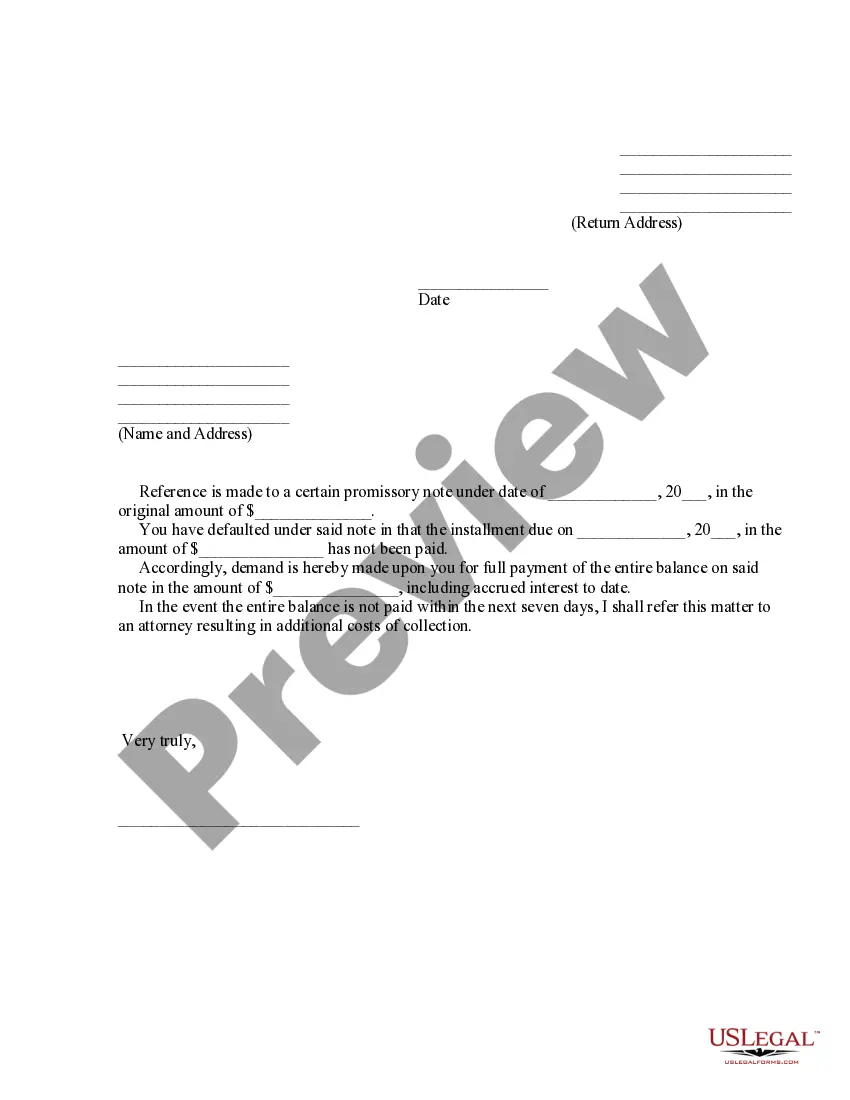
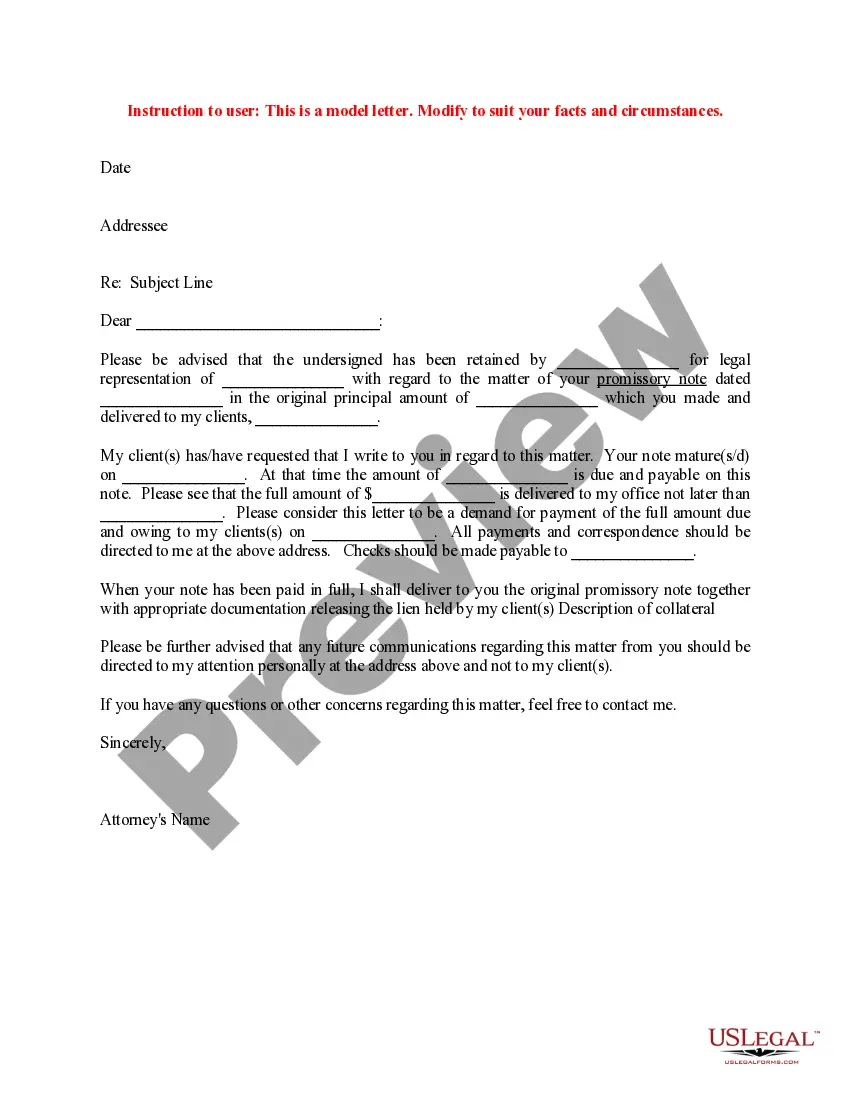
The Default of Promissory Note and Demand for Payment is a legal document used to notify a guarantor that a promissory note is in default. This form requires the guarantor to pay the total amount due under the note, which includes both principal and accrued interest. It is specifically designed for use in Arizona and differs from general demand letters as it formally outlines the default status of the note and specifies the consequences of non-payment.
Key parts of this document
- Details of the promissory note, including the principal amount and interest rate.
- Identification of the guarantor and their address.
- Notification of default status and demand for payment.
- Payment deadline, after which collection proceedings may begin.
- Signature block for the obligee.
When to use this form
This form should be used when the borrower (obligor) has failed to meet the repayment obligations of a promissory note, and the guarantor is being notified of the default. It serves as a formal request for payment and is typically necessary when attempting to collect the amount owed before initiating legal action to recover the debt.
Intended users of this form
This form is suitable for:
- Creditors seeking to enforce a promissory note against a guarantor.
- Guarantors who need to understand their obligations when the primary borrower defaults.
Instructions for completing this form
- Identify all parties involved: the obligor, obligee, and guarantor.
- Enter the date the promissory note was executed.
- Specify the principal amount, interest rate, and due date of the note.
- Calculate and input the total amount due, including accrued interest.
- Set a deadline for payment and sign the form.
Does this document require notarization?
In most cases, this form does not require notarization. However, some jurisdictions or signing circumstances might. US Legal Forms offers online notarization powered by Notarize, accessible 24/7 for a quick, remote process.
Get your form ready online
Our built-in tools help you complete, sign, share, and store your documents in one place.
Make edits, fill in missing information, and update formatting in US Legal Forms—just like you would in MS Word.
Download a copy, print it, send it by email, or mail it via USPS—whatever works best for your next step.
Sign and collect signatures with our SignNow integration. Send to multiple recipients, set reminders, and more. Go Premium to unlock E-Sign.
If this form requires notarization, complete it online through a secure video call—no need to meet a notary in person or wait for an appointment.
We protect your documents and personal data by following strict security and privacy standards.

Make edits, fill in missing information, and update formatting in US Legal Forms—just like you would in MS Word.

Download a copy, print it, send it by email, or mail it via USPS—whatever works best for your next step.

Sign and collect signatures with our SignNow integration. Send to multiple recipients, set reminders, and more. Go Premium to unlock E-Sign.

If this form requires notarization, complete it online through a secure video call—no need to meet a notary in person or wait for an appointment.

We protect your documents and personal data by following strict security and privacy standards.
Mistakes to watch out for
- Failing to accurately calculate the total amount due, including interest.
- Not providing sufficient delivery method for the notice to the guarantor.
- Leaving out important details about the original promissory note.
Why complete this form online
- Convenience of downloading the form immediately after purchase.
- Editability allows for personalization to fit specific situations.
- Ensures compliance with legal standards and requirements specific to Arizona.
Looking for another form?

Form popularity
FAQ
In Arizona, the statute of limitations for collecting most debts is six years. This means creditors can legally pursue payment for this duration after the debt becomes due. However, it's important to note that specific types of debts might have different timelines. If you face an Arizona Default of Promissory Note and Demand for Payment, knowing this timeline can help you navigate your options effectively.
In a promissory note, the person who signs the document is primarily liable for repaying the debt. This means that if the borrower defaults, the lender can pursue that individual for repayment. The terms outlined in the promissory note, including interest rates and payment schedules, clarify the obligation. Understanding your liability is crucial, especially in relation to an Arizona Default of Promissory Note and Demand for Payment.
The default rate on a promissory note can vary based on the terms set by the lender, but it typically reflects a higher interest rate after a default occurs. In the context of an Arizona Default of Promissory Note and Demand for Payment, this rate serves to compensate the lender for the added risk and delay in receiving payment. Understanding these terms before signing a promissory note can help you make informed decisions. If you find yourself in default, consider resources from uslegalforms to navigate your options.
If you default on a promissory note, the lender may initiate a process to recover the owed amount. This often involves sending a Demand for Payment to formally request the outstanding balance. As a result of an Arizona Default of Promissory Note, the lender could also seek legal action to enforce repayment, which may lead to wage garnishment or property liens. It's essential to address the situation promptly to avoid further complications.
The default clause of a promissory note outlines the circumstances under which the borrower is considered in default, typically including failure to make timely payments. This clause is essential as it informs the borrower of their obligations and the consequences of non-compliance. Being aware of the default clause can provide clarity on handling an Arizona Default of Promissory Note and Demand for Payment.
A promissory note does not need to be witnessed in Arizona, but having witnesses can strengthen the document, especially in the case of disputes. While notarization is not mandatory, it serves to validate the signatures and can safeguard against claims of fraud. Properly executed notes are crucial for addressing an Arizona Default of Promissory Note and Demand for Payment effectively.
If you default on a promissory note, the lender has the right to initiate legal proceedings to recover the owed amount. This can lead to the lender seeking a judgment against you, which may include garnishing wages or placing liens on your property. Understanding the ramifications of an Arizona Default of Promissory Note and Demand for Payment can help you avoid these serious consequences.
In Arizona, notarizing a promissory note is not strictly required, but it is highly recommended for added legal protection. A notarized document can provide a level of credibility and ease any potential disputes. When dealing with an Arizona Default of Promissory Note and Demand for Payment, having a notarized document can help clarify intentions and obligations.
In Arizona, the statute of limitations for written contracts, which includes promissory notes, is six years. After this period, you cannot be legally compelled to fulfill the terms of the contract, thus protecting those who face financial difficulties. Understanding these time limits is essential for anyone involved in an Arizona Default of Promissory Note and Demand for Payment situation.
The statute of limitations on a promissory note in Arizona is six years, similar to that of other written contracts. This means that a lender has six years to take legal action to enforce the note if payments are missed. Being aware of this timeframe can significantly influence how you handle payments and any disputes regarding the Arizona Default of Promissory Note.