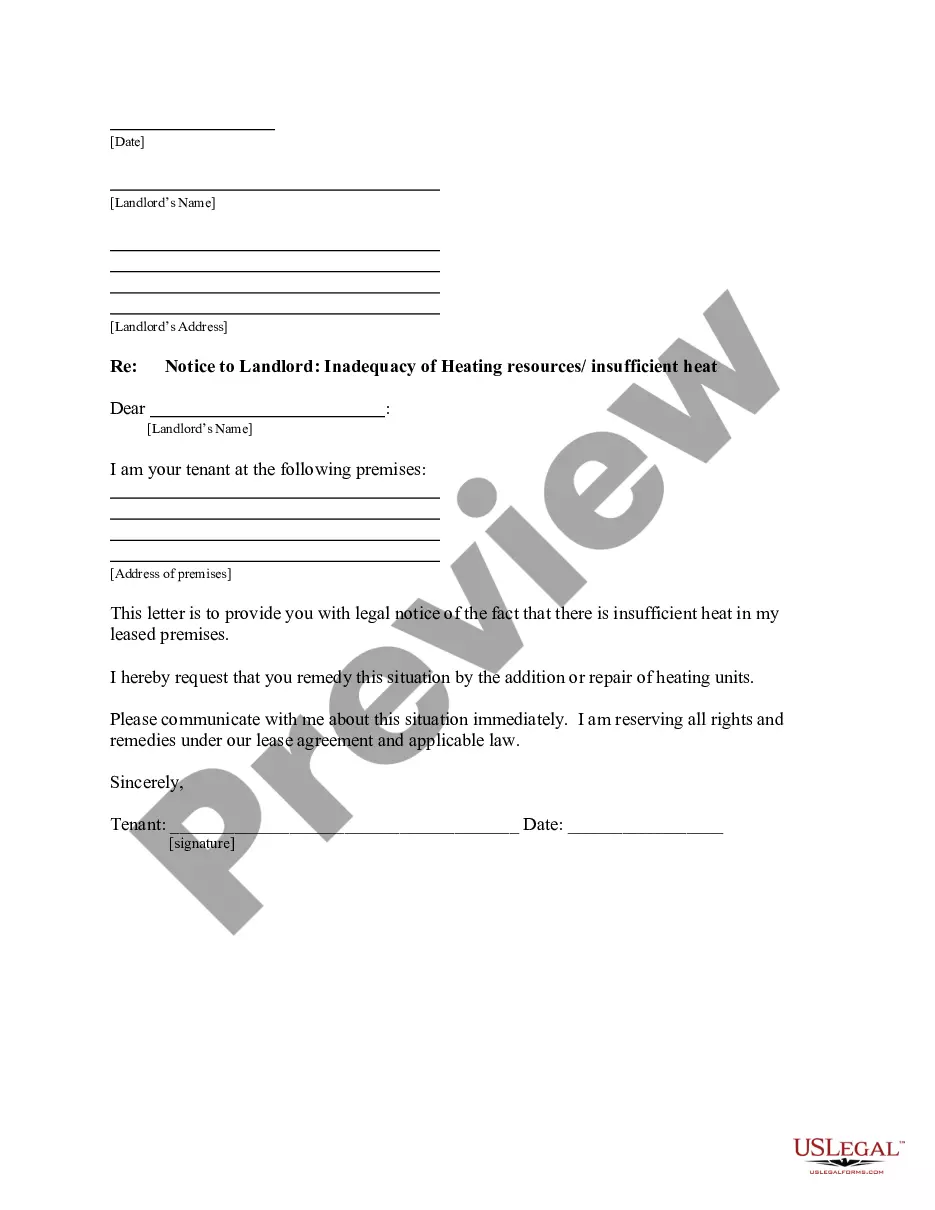
Arkansas Letter from Tenant to Landlord about Inadequacy of heating resources insufficient heat
About this form
This form is a letter from a tenant to a landlord, notifying them of inadequate heating resources in a leased property. The purpose of this letter is to provide legal notice regarding insufficient heat and request necessary repairs or additions to heating units. Unlike general complaint letters, this form serves a specific legal function, ensuring the tenant's rights are reserved under the lease agreement and applicable laws.
Key parts of this document
- Tenant's details including name and address
- Landlord's information or authorized agent's contact
- Clear statement of inadequate heating conditions
- A request for repairs or additions to heating resources
- Reservation of rights under the lease agreement
- Date and signature fields for official notice


Common use cases
This form should be used when a tenant experiences insufficient heat in their living space and has exhausted informal remedies, such as verbal complaints to the landlord. It serves as an official request for action and legal documentation that the landlord has been made aware of the issue. Using this letter is important for maintaining a record of communications related to heating inadequacies.
Who this form is for
- Residential tenants experiencing inadequate heating
- Renters seeking to formally notify their landlords of heating issues
- Individuals who want to ensure their rights are protected under lease agreements
How to prepare this document
- Identify and enter your name and address at the top of the letter.
- Provide the landlord's name and address to ensure proper delivery.
- Clearly articulate the issue of insufficient heat in the premises.
- Include your request for repairs or additions to the heating system.
- Sign and date the letter to formalize the notice.
Notarization requirements for this form
This form usually doesn’t need to be notarized. However, local laws or specific transactions may require it. Our online notarization service, powered by Notarize, lets you complete it remotely through a secure video session, available 24/7.
Get your form ready online
Our built-in tools help you complete, sign, share, and store your documents in one place.
Make edits, fill in missing information, and update formatting in US Legal Forms—just like you would in MS Word.
Download a copy, print it, send it by email, or mail it via USPS—whatever works best for your next step.
Sign and collect signatures with our SignNow integration. Send to multiple recipients, set reminders, and more. Go Premium to unlock E-Sign.
If this form requires notarization, complete it online through a secure video call—no need to meet a notary in person or wait for an appointment.
We protect your documents and personal data by following strict security and privacy standards.

Make edits, fill in missing information, and update formatting in US Legal Forms—just like you would in MS Word.

Download a copy, print it, send it by email, or mail it via USPS—whatever works best for your next step.

Sign and collect signatures with our SignNow integration. Send to multiple recipients, set reminders, and more. Go Premium to unlock E-Sign.

If this form requires notarization, complete it online through a secure video call—no need to meet a notary in person or wait for an appointment.

We protect your documents and personal data by following strict security and privacy standards.
Typical mistakes to avoid
- Failing to include the landlord's correct address.
- Not specifying the exact heating issue or symptoms.
- Neglecting to reserve rights under the lease agreement.
- Sending the letter without a date or signature.
Why complete this form online
- Easy access and convenience for instant downloading.
- Editable fields allow for personalization specific to your situation.
- Prepared by licensed attorneys, ensuring legal accuracy.
Looking for another form?


Form popularity
FAQ
In Arkansas, you can sue your landlord for issues such as negligence, breach of contract, and failure to provide essential services like heat. If your landlord does not respond to an Arkansas Letter from Tenant to Landlord about Inadequacy of heating resources insufficient heat, you may need to explore legal action. Always consult legal professionals or resources like US Legal Forms to navigate the process effectively.
Renters in Arkansas have various rights, including the right to a habitable dwelling, which encompasses adequate heating. If you experience insufficient heat, you can send an Arkansas Letter from Tenant to Landlord about Inadequacy of heating resources insufficient heat to formally address the issue. Knowing your rights can empower you to advocate for yourself effectively and ensure your landlord complies with their obligations.
Landlord neglect occurs when a landlord fails to fulfill their legal responsibilities to maintain a rental property. This might include not providing adequate heating, which can lead to situations requiring an Arkansas Letter from Tenant to Landlord about Inadequacy of heating resources insufficient heat. Tenants have a right to live in safe and habitable conditions; if these issues arise, it's essential to document them for potential legal actions.
You can file a complaint against your landlord in Arkansas by contacting the Arkansas Real Estate Commission or your local housing authority. Often, submitting an Arkansas Letter from Tenant to Landlord about Inadequacy of heating resources insufficient heat can help outline your concerns. Additionally, local ombudsman or tenant rights organizations may provide guidance and support in addressing your grievances.
Yes, Arkansas landlords are legally required to provide a functioning heating system to ensure safe and habitable living conditions. This obligation is part of the broader responsibility to maintain rental properties and address issues like inadequate heating resources. If tenants face heating problems, they should consider sending an Arkansas Letter from Tenant to Landlord about Inadequacy of heating resources to formally request repairs. This approach helps to document the issue and initiate the necessary steps for resolution.
The new renters law in Arkansas brings significant changes to tenant rights and landlord responsibilities. This law aims to enhance tenant protections, ensuring adequate living conditions, including proper heating during colder months. Tenants experiencing issues like insufficient heat can use an Arkansas Letter from Tenant to Landlord about Inadequacy of heating resources to communicate their needs clearly. This law empowers tenants by providing them with tools to address concerns directly with their landlords.
Act 1052 is legislation in Arkansas that impacts landlord-tenant relationships, specifically regarding housing conditions. Under this act, tenants are granted the right to request repairs and improvements to properties, ensuring they live in safe and healthy environments. When faced with issues such as insufficient heat, tenants can use an Arkansas Letter from Tenant to Landlord about Inadequacy of heating resources to formally notify their landlords of necessary repairs. This letter serves as a key document in addressing heating inadequacies effectively.
To become a landlord in Arkansas, start by purchasing a rental property or securing a lease on a property. It’s vital to understand the local laws governing rental agreements and tenant rights. Consider utilizing resources like USLegalForms for templates and guidance on leases and tenant communications. This preparation will enable you to operate successfully and responsibly.
If you have concerns about your landlord’s actions, you can report them to local housing authorities or the Arkansas Attorney General’s office. These organizations provide guidance on tenants' rights and can help resolve disputes. Additionally, consider using resources like USLegalForms to draft formal complaints or letters. Taking this step can help to ensure that your rights as a tenant are protected.
Yes, Arkansas law generally requires landlords to provide basic heating during the winter months. This obligation ensures that tenants have a safe and habitable living environment. If your landlord does not meet this requirement, you may consider sending an Arkansas Letter from Tenant to Landlord about Inadequacy of heating resources insufficient heat. This letter formally documents your concerns and initiates the repair process.