Arkansas Quitclaim Deed from Individual to Individual
What is this form?
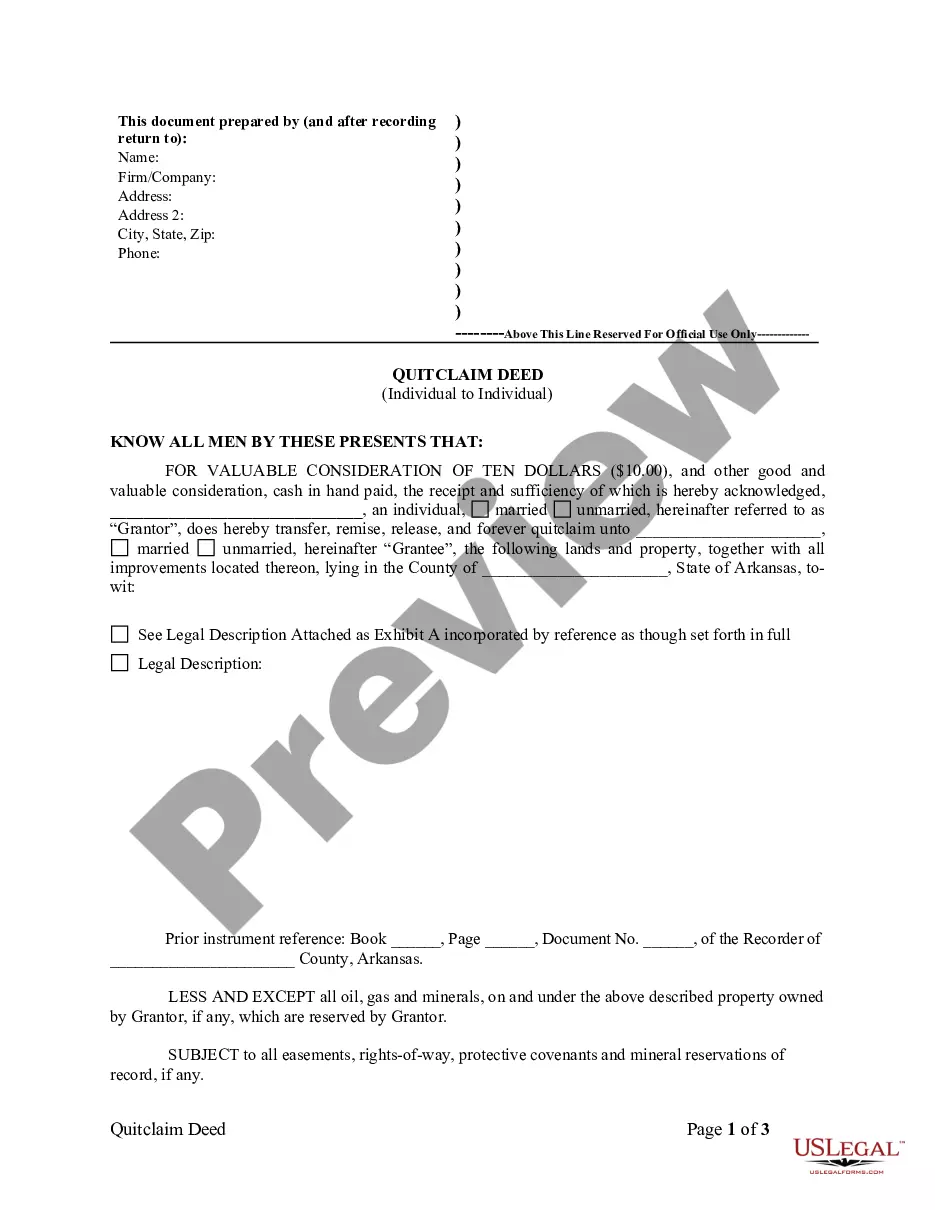
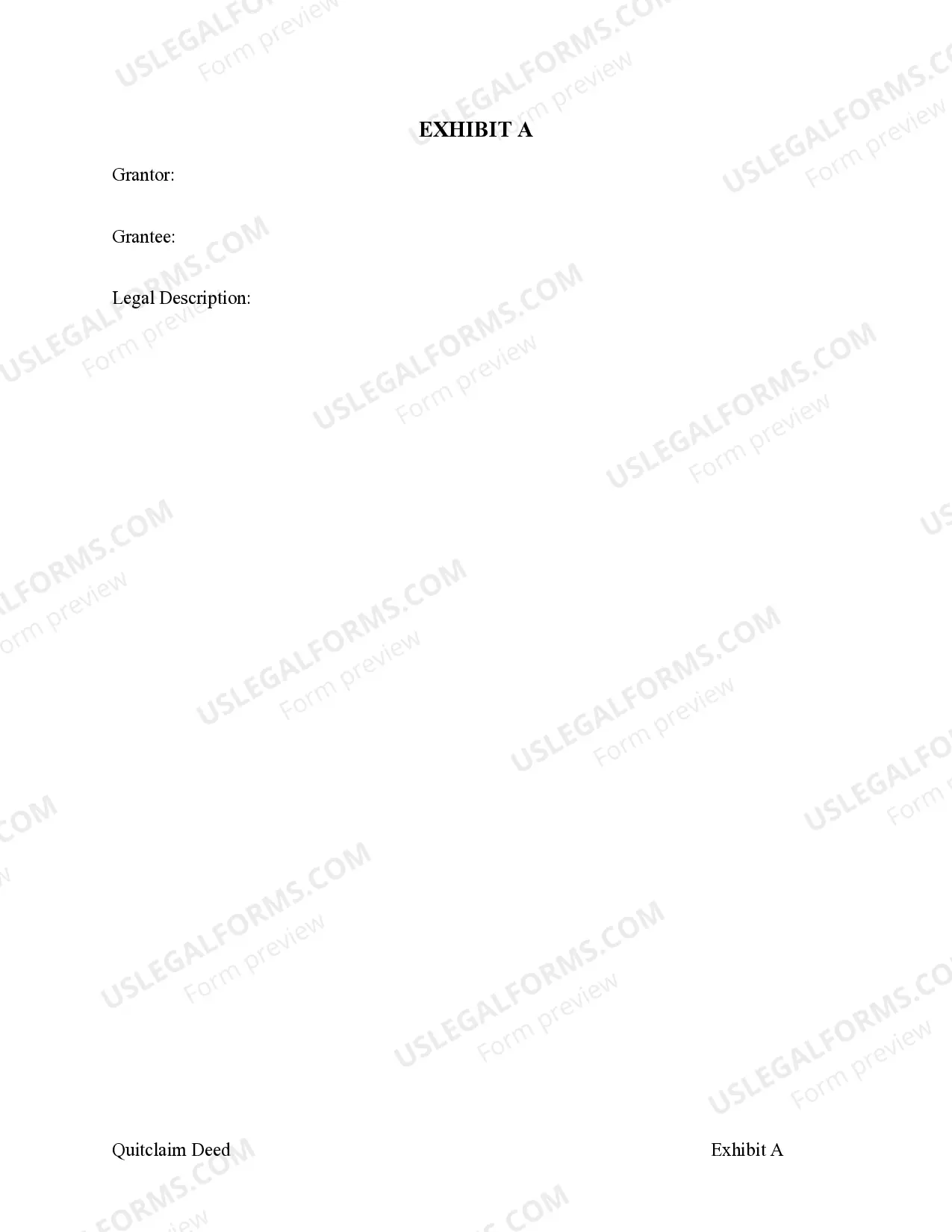
The Quitclaim Deed from Individual to Individual is a legal document that allows one individual (the Grantor) to transfer their interest in a property to another individual (the Grantee) without making any guarantees about the title's validity. This type of deed is commonly used in situations where the Grantor is relinquishing rights, such as between family members or friends. It is distinct from warranty deeds, which provide more security regarding the title and ownership status.
What’s included in this form
- Names and addresses of the Grantor and Grantee.
- Description of the property being transferred.
- Details about the reservation of rights, such as oil, gas, and minerals.
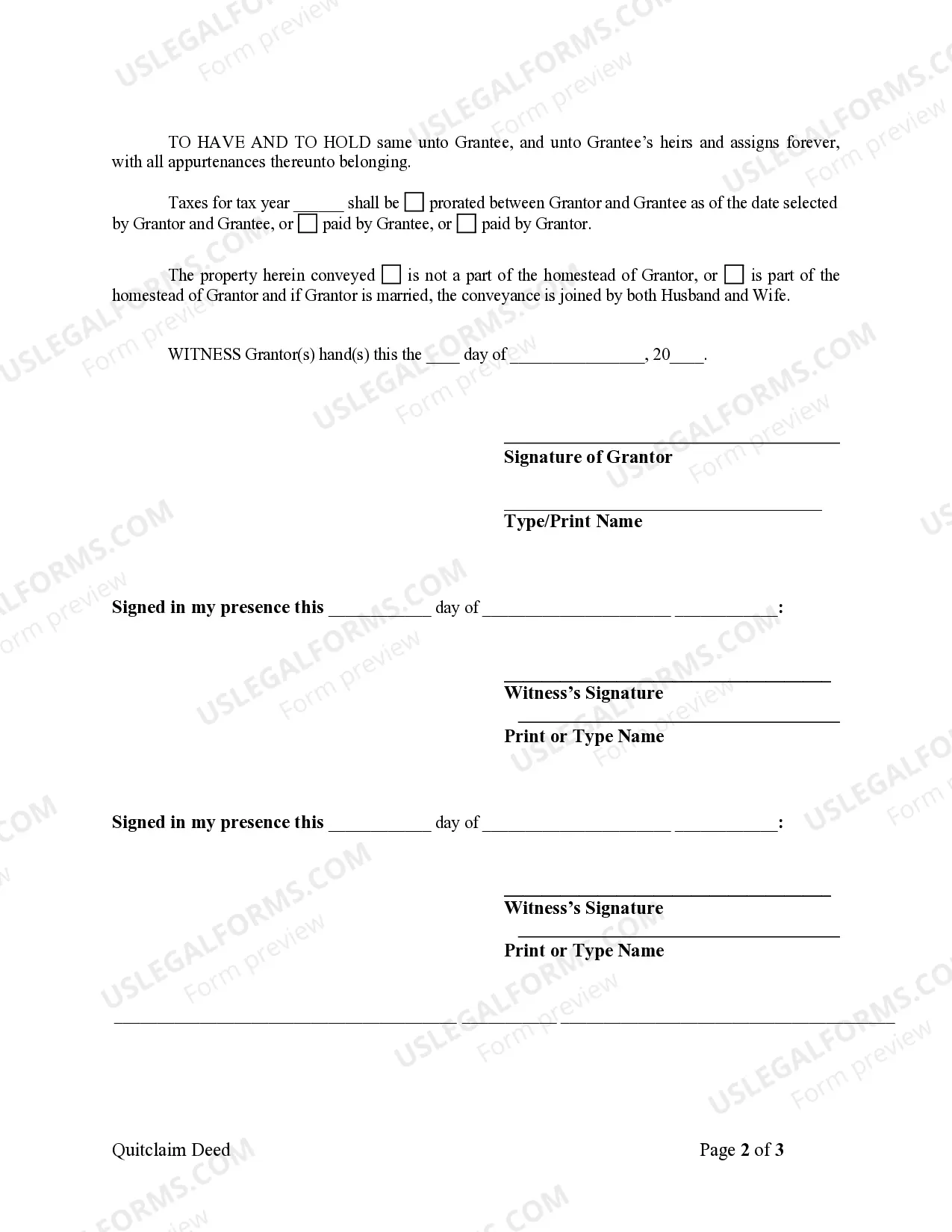
- Provisions for prorating taxes based on the transfer date.
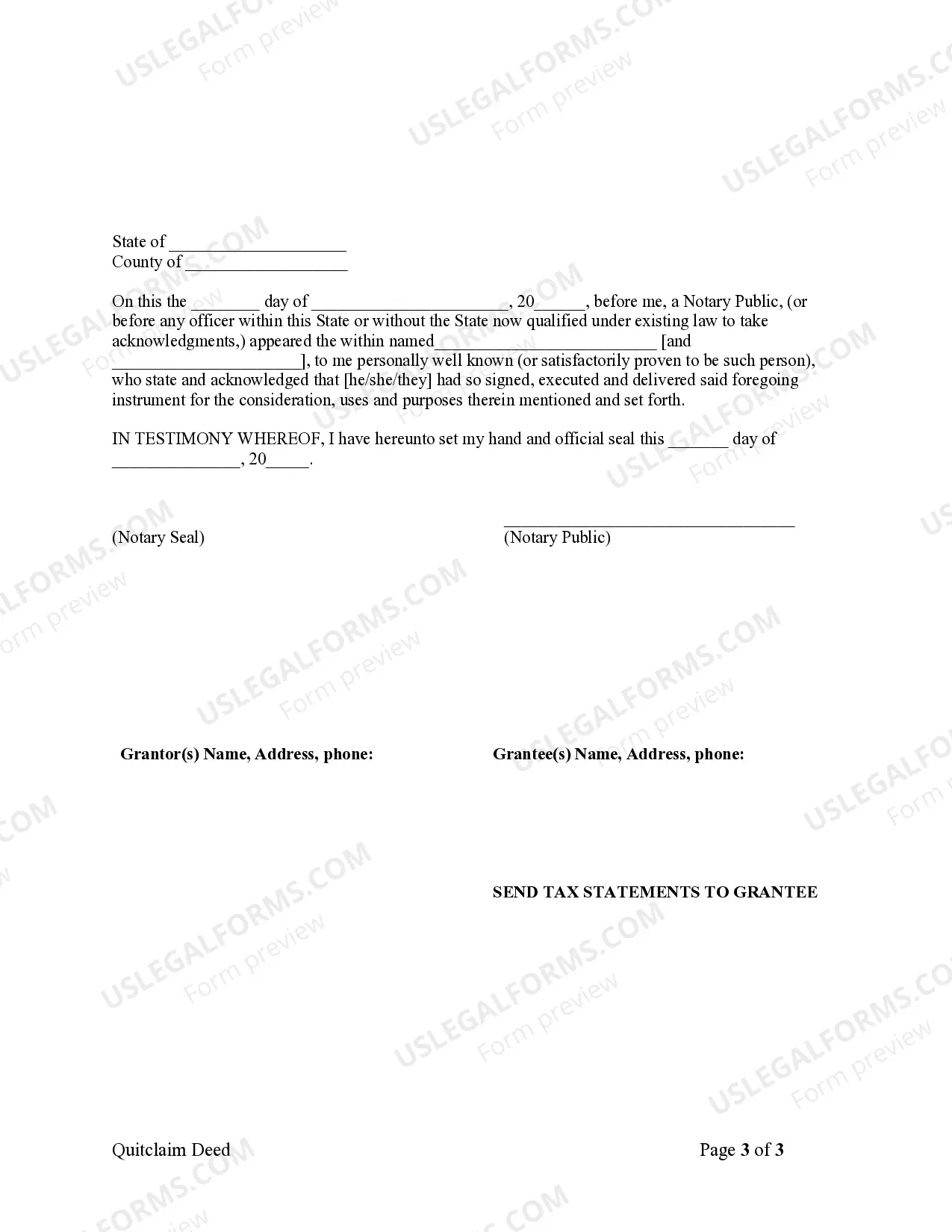
- Signatures of the Grantor and witnesses, along with notarization details.





Situations where this form applies
This Quitclaim Deed is useful when you need to transfer property between individuals without a financial transaction, such as in cases of family inheritance, transfer of property between friends, or for estate planning. It is especially beneficial when both parties have trust in each other and are aware of the property's title status.
Who this form is for
- Individuals transferring property to family members or friends.
- People engaged in property settlement or divorce agreements.
- Grantors who wish to clarify their intentions regarding property ownership without a warranty.
Instructions for completing this form
- Identify the parties involved: include the names and addresses of the Grantor and Grantee.
- Describe the property: provide a legal description of the property being transferred.
- Specify reservations: note any reservations of rights related to oil, gas, or minerals.
- Enter tax provisions: decide how property taxes will be prorated or paid.
- Obtain signatures: have the Grantor sign in front of witnesses, and ensure notarization if required.
Does this document require notarization?
This form must be notarized to be legally valid. US Legal Forms provides secure online notarization powered by Notarize, allowing you to complete the process through a verified video call.
Get your form ready online
Our built-in tools help you complete, sign, share, and store your documents in one place.
Make edits, fill in missing information, and update formatting in US Legal Forms—just like you would in MS Word.
Download a copy, print it, send it by email, or mail it via USPS—whatever works best for your next step.
Sign and collect signatures with our SignNow integration. Send to multiple recipients, set reminders, and more. Go Premium to unlock E-Sign.
If this form requires notarization, complete it online through a secure video call—no need to meet a notary in person or wait for an appointment.
We protect your documents and personal data by following strict security and privacy standards.

Make edits, fill in missing information, and update formatting in US Legal Forms—just like you would in MS Word.

Download a copy, print it, send it by email, or mail it via USPS—whatever works best for your next step.

Sign and collect signatures with our SignNow integration. Send to multiple recipients, set reminders, and more. Go Premium to unlock E-Sign.

If this form requires notarization, complete it online through a secure video call—no need to meet a notary in person or wait for an appointment.

We protect your documents and personal data by following strict security and privacy standards.
Typical mistakes to avoid
- Failing to include the full legal description of the property.
- Not having the form notarized when required by state law.
- Omitting signatures from witnesses or the Grantor.
- Incorrectly stating tax payment responsibilities.
Why use this form online
- Convenience of downloading from home at any time.
- Editability to customize the form before finalizing.
- Access to templates reviewed by licensed attorneys ensuring reliability.
- Quick turnaround for important property transactions.
Looking for another form?







Form popularity
FAQ
This form transfers an ownership interest in real property from one individual (the Grantor) to another (the Grantee) without guarantees about the title's validity. It's commonly used for transfers between family members, friends, or in estate planning where a warranty is not desired. It includes the grantor and grantee names, property description, right reservations, tax prorations, and signatures with witnesses and notarization details.
Not necessarily required in every case, but this form provides for the Grantor's signature, witnesses, and notarization details. In Arkansas, notarization and witnesses help establish the deed's execution. For specifics about whether notarization is required in a given situation, consult a licensed attorney.
Using this form is a common way to transfer property between family members. It’s designed for transfers without a title warranty and lists who is transferring property, who’s receiving it, the property description, and any reserved rights. It’s particularly suitable for estate planning and informal family transfers.
To transfer property from one person to another in Arkansas using this form, fill in the Grantor and Grantee names and addresses, describe the property, note any reservations (such as oil, gas, or minerals), prorate taxes, and obtain signatures of the Grantor with witnesses and notarization.
Mistakes to avoid include omitting the property description or misidentifying the grantor or grantee, failing to address reservations of rights, forgetting to prorate taxes, or neglecting to obtain the required signatures, witnesses, or notarization.
This Arkansas Quitclaim Deed From Individual To Individual differs from a warranty deed because it transfers interest without any guarantees about the title's validity. No covenants of title are included, and the document may include reservations of rights. A warranty deed, by contrast, provides title guarantees and covenants.