What is Annulment?
Annulment is a legal process that declares a marriage null and void. These documents are used when the marriage is deemed invalid from the start. Explore state-specific templates for your needs.
Annulment documents in Colorado help declare a marriage invalid. Our attorney-drafted templates are quick and easy to fill out.

Use this to officially annul a marriage or civil union, invalidating it due to reasons like lack of consent or legal incapacity.
Accept service of court documents without formal delivery, allowing you to participate in annulment proceedings while retaining your rights.
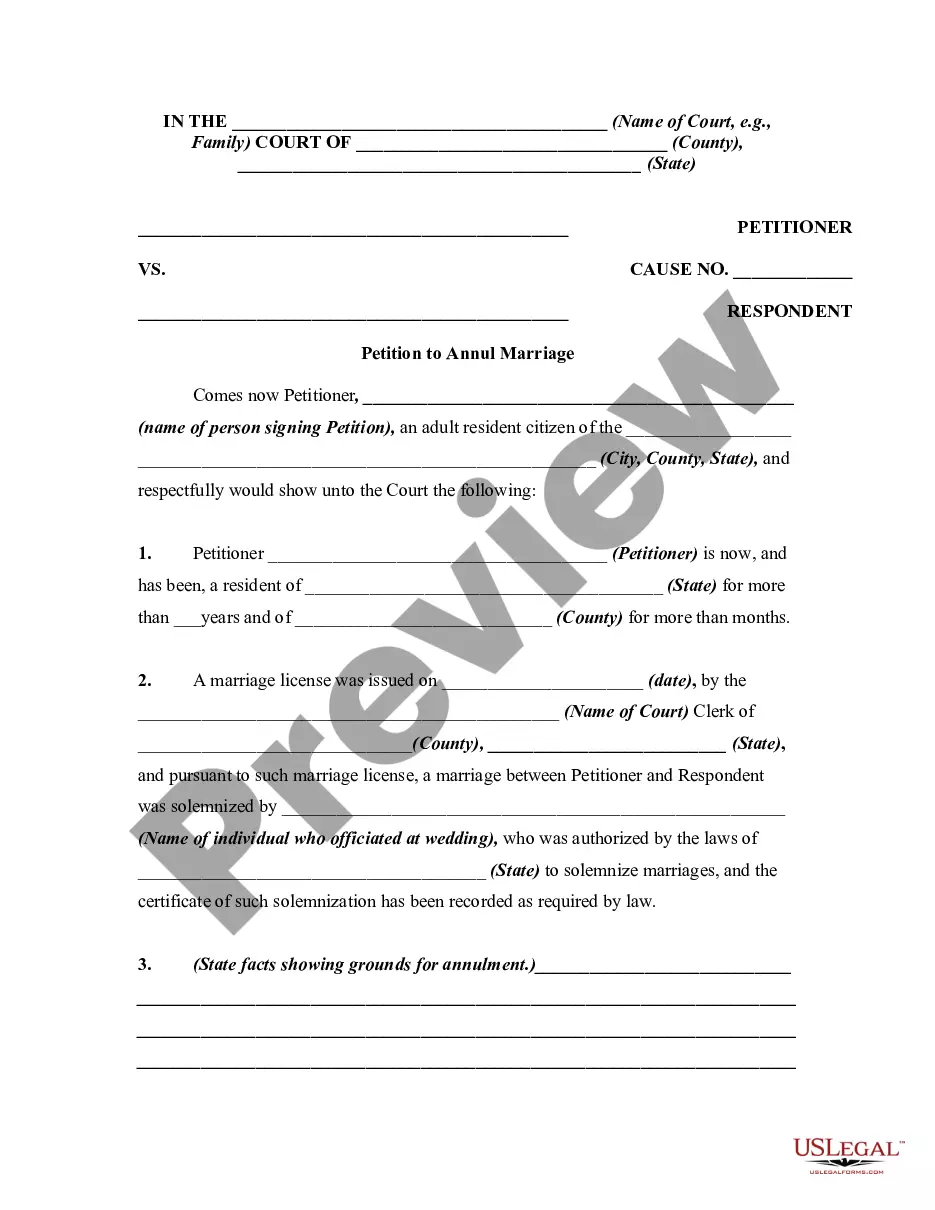
Request annulment of a marriage or civil union with valid grounds, establishing its legal invalidity.
Secure a court declaration to declare a civil union invalid, freeing individuals from legal responsibilities and entitlements.
Invalidates a marriage or civil union for specific legal reasons, allowing couples to navigate their rights and responsibilities in Colorado.
Respondents in annulment cases must understand their rights and obligations after receiving this critical court notice.
Use this to confirm that legal documents were properly served in annulment cases, ensuring compliance with court procedures.
Respond to a petition for annulment and outline your position on the case.
File for an annulment when your marriage has no children or shared property, addressing specific legal grounds for cancellation.
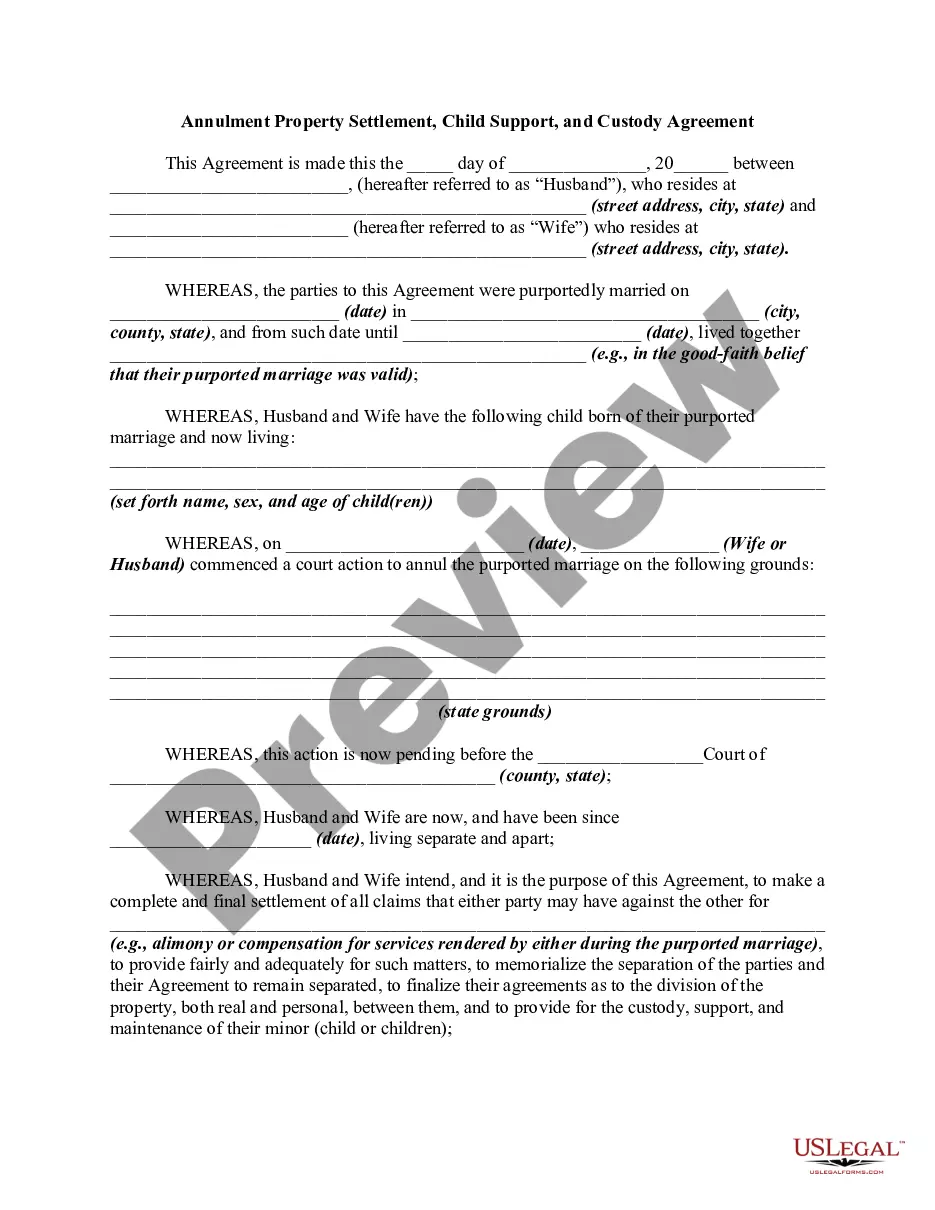
Finalize agreements for property division, child support, and custody after annulment proceedings.
Annulment is different from divorce and declares a marriage invalid.
Common grounds for annulment include fraud, coercion, or incapacity.
Annulments can affect property division and child custody arrangements.
A decree of annulment is the final legal document confirming the annulment.
Many annulment documents may need to be notarized or witnessed.
Begin your annulment process with these simple steps.
Annulment declares a marriage invalid, while divorce legally ends a valid marriage.
Generally, annulments are sought soon after the marriage, but exceptions may apply.
Common grounds include fraud, coercion, or mental incapacity at the time of marriage.
Typically, an annulment requires court proceedings to finalize the legal status.
Property division in annulments can be complex and is determined by the court.