Alaska Revocation of Statutory Power of Attorney
About this form
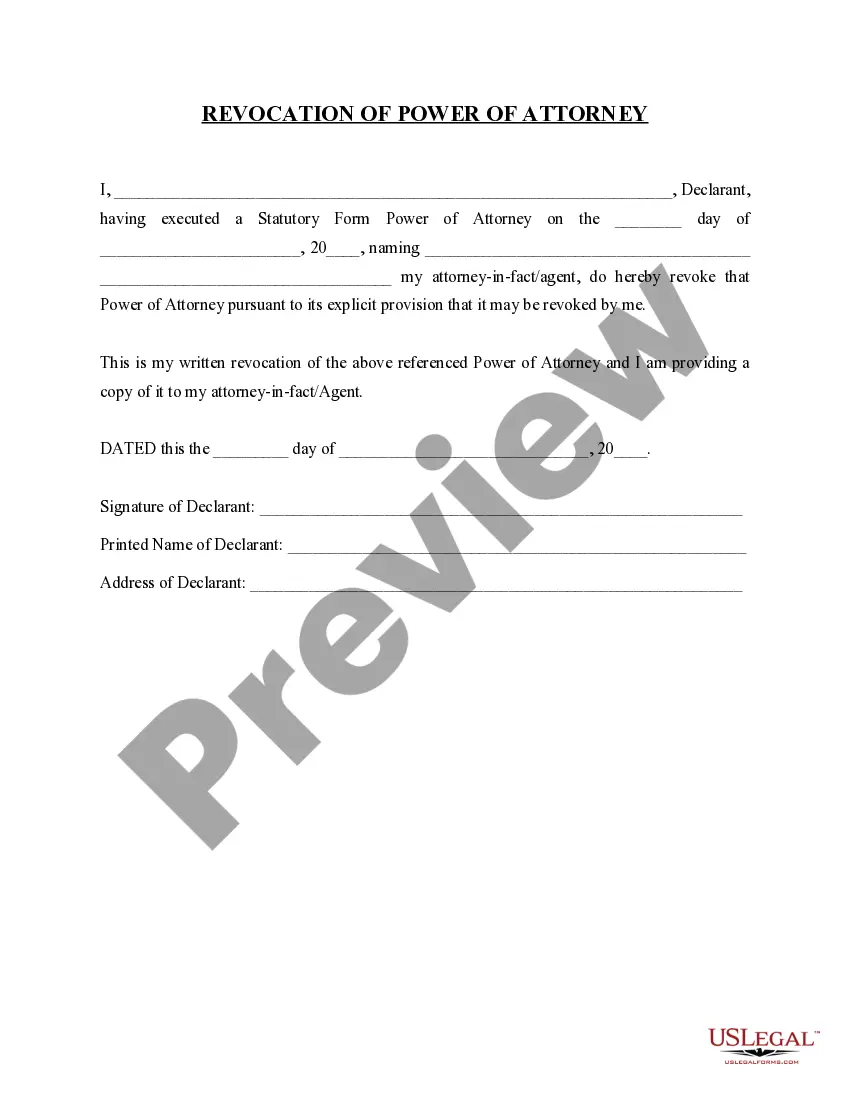
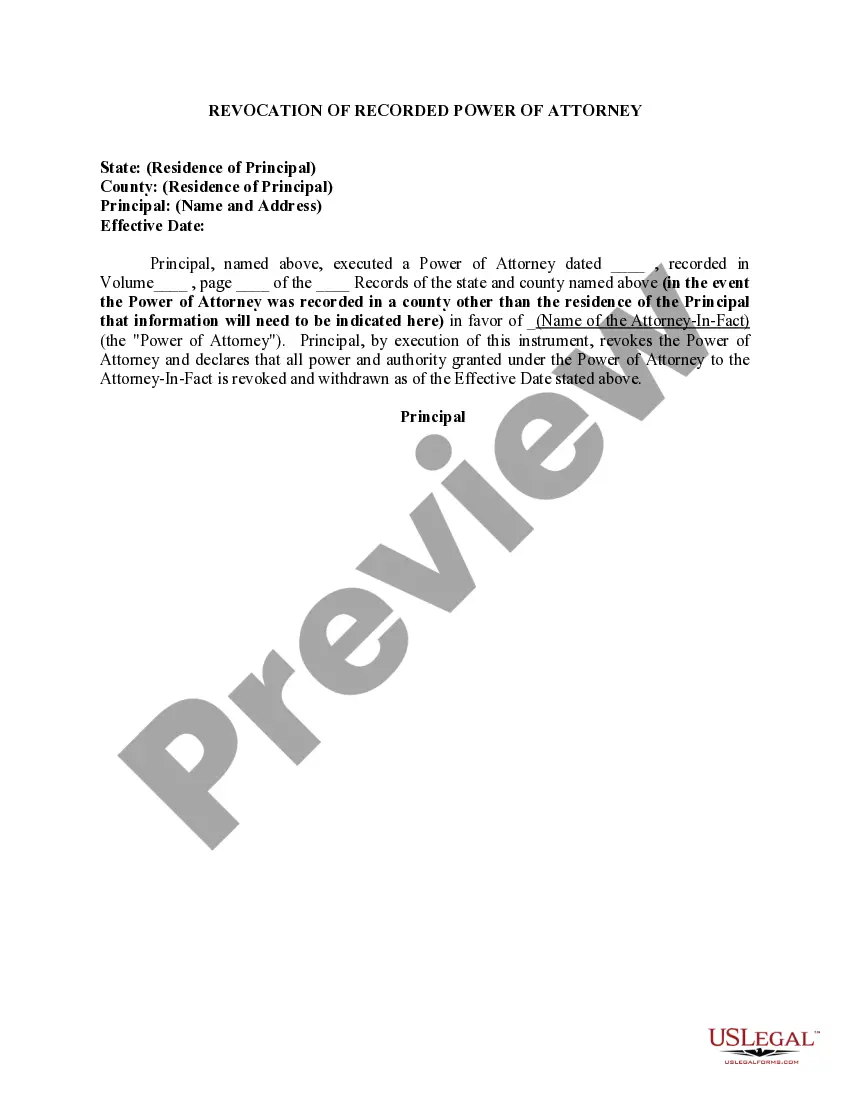
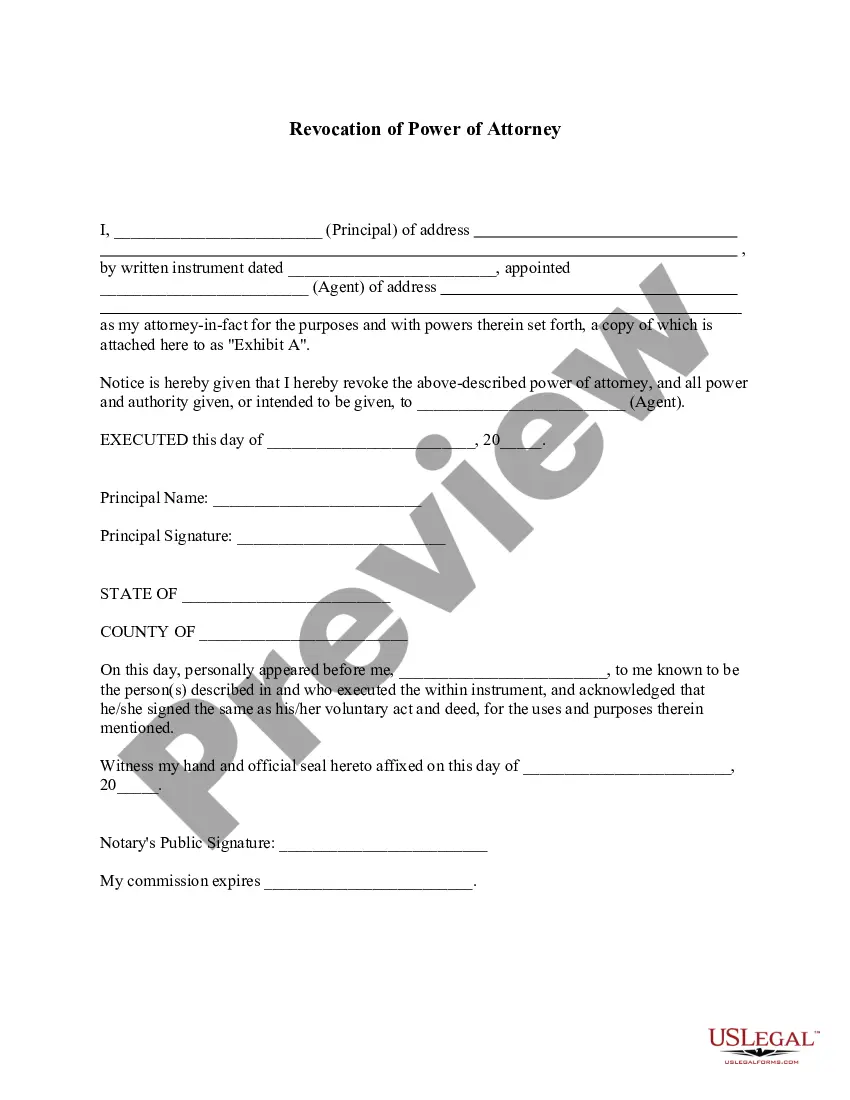
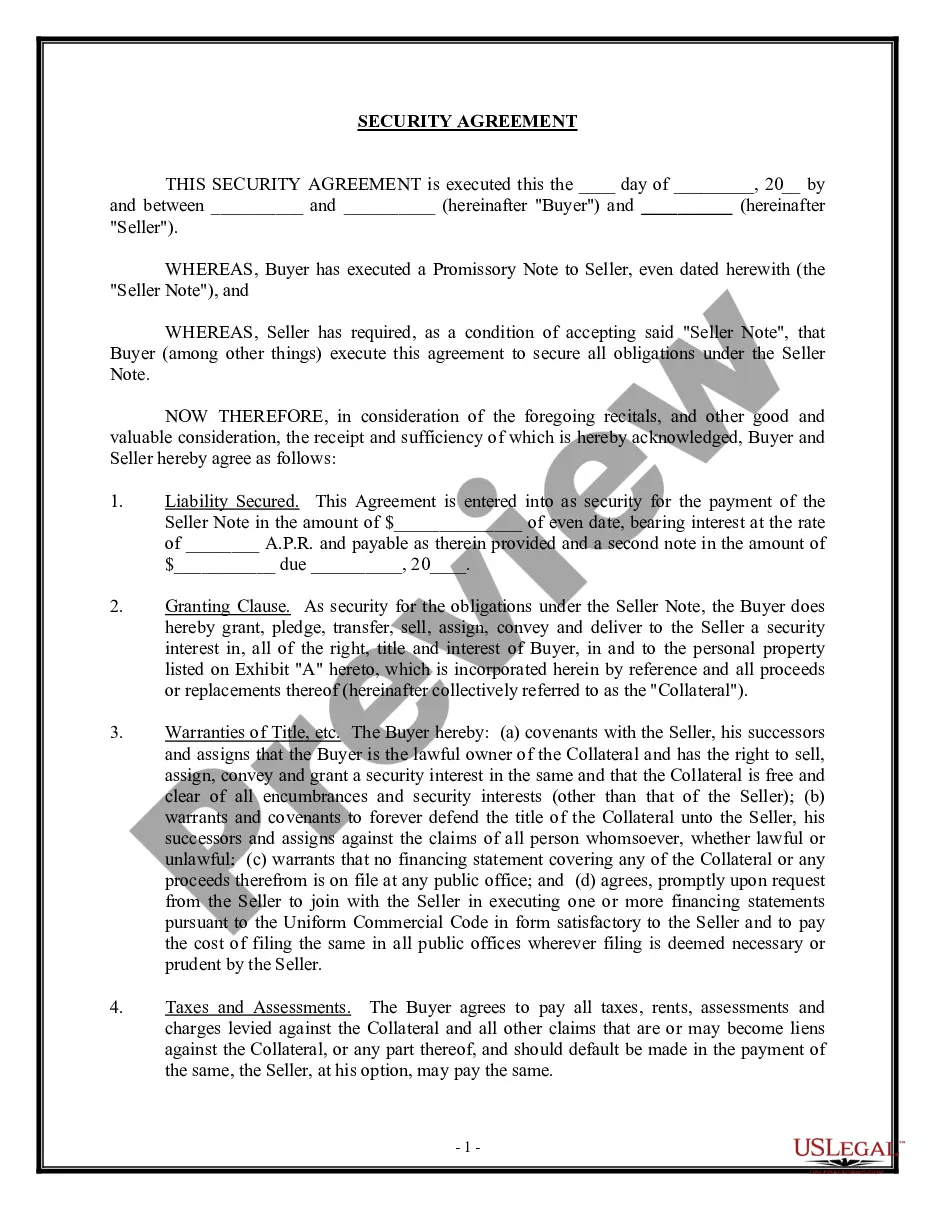
The Revocation of Statutory Power of Attorney allows a declarant to formally revoke a previously granted power of attorney. This document is essential for terminating any authority that an agent may have had, ensuring that past decisions made by the agent are no longer valid. Unlike creating a new power of attorney, this form is solely focused on revoking existing powers associated with the prior document.
Form components explained
- Name of the declarant who is revoking the power of attorney.
- Date of execution of the original Statutory Power of Attorney.
- Name of the attorney-in-fact or agent being revoked.
- Statement of revocation based on the provisions of the original document.
- Date when the revocation is executed.
- Signature and printed name of the declarant.
When this form is needed
This form should be used when you decide to end the authority granted to an individual as your attorney-in-fact. Common situations include changes in personal circumstances, the agent's failure to act in your best interests, or if you simply wish to appoint a different agent. It's important to complete this form to avoid any confusion regarding the validity of the agent's decisions on your behalf.
Who should use this form
- Individuals who have previously executed a Statutory Power of Attorney.
- Those who wish to revoke the authority of their existing attorney-in-fact.
- Anyone currently in a situation where their power of attorney no longer reflects their wishes.
How to complete this form
- Identify yourself as the declarant at the beginning of the form.
- Fill in the date you executed the original Statutory Power of Attorney.
- Provide the name of the attorney-in-fact or agent you are revoking.
- Include the date of revocation.
- Sign the document and print your name clearly.
- Provide your current address for verification purposes.
Notarization requirements for this form
This form needs to be notarized to ensure legal validity. US Legal Forms provides secure online notarization powered by Notarize, allowing you to complete the process through a verified video call, available anytime.
Get your form ready online
Our built-in tools help you complete, sign, share, and store your documents in one place.
Make edits, fill in missing information, and update formatting in US Legal Forms—just like you would in MS Word.
Download a copy, print it, send it by email, or mail it via USPS—whatever works best for your next step.
Sign and collect signatures with our SignNow integration. Send to multiple recipients, set reminders, and more. Go Premium to unlock E-Sign.
If this form requires notarization, complete it online through a secure video call—no need to meet a notary in person or wait for an appointment.
We protect your documents and personal data by following strict security and privacy standards.

Make edits, fill in missing information, and update formatting in US Legal Forms—just like you would in MS Word.

Download a copy, print it, send it by email, or mail it via USPS—whatever works best for your next step.

Sign and collect signatures with our SignNow integration. Send to multiple recipients, set reminders, and more. Go Premium to unlock E-Sign.

If this form requires notarization, complete it online through a secure video call—no need to meet a notary in person or wait for an appointment.

We protect your documents and personal data by following strict security and privacy standards.
Mistakes to watch out for
- Failing to sign the form in front of a notary.
- Omitting the date of revocation.
- Not providing a copy of the revocation to the agent.
- Using vague language instead of specific terms regarding revocation.
Quick recap
- The Revocation of Statutory Power of Attorney is vital for ending an agent's authority.
- Be clear and specific when completing the form.
- Notarization is required to validate the revocation.
- Provide a copy to the former attorney-in-fact for their records.
Looking for another form?






Form popularity
FAQ
Until an attorney-in-fact's powers are properly revoked, they can continue to legally act for the principal. To cancel a Power of Attorney, the principal can create a document called a Revocation of Power of Attorney or create a new Power of Attorney that indicates the previous Power of Attorney is revoked.
A principal can rescind a Power of Attorney at any time, even if the Power of Attorney has a specified end date, so long as the principal is competent and the attorney-in-fact is notified. Third parties (such as a bank or the Land Titles Office) should also be notified of the revocation.
The Principal can override either type of POA whenever they want. However, other relatives may be concerned that the Agent (in most cases a close family member like a parent, child, sibling, or spouse) is abusing their rights and responsibilities by neglecting or exploiting their loved one.
"In case you forget to mention when and under what circumstances your power of attorney can be revoked, and if the power of attorney does not state it is irrevocable, then the power of attorney can be revoked if you execute a document cancelling it.
A principal can revoke the power of attorney while he or she is still mentally competent. A principal can complete a formal written document requesting the revocation of a power of attorney at any time, for any reason, while he or she is still competent. The principal must sign and notarize the revocation request.
You can end your lasting power of attorney ( LPA ) yourself - if you have mental capacity to make that decision. You need to send the Office of the Public Guardian ( OPG ) both: the original LPA. a written statement called a 'deed of revocation'
A revocable POA which has only been notarized can be cancelled or revoked by issuing a notice/letter of revocation to the Attorney. Once the deed is drafted and registered, copy of it should be sent to the Attorney intimating him of the revocation.