West Virginia Southern District Bankruptcy Guide and Forms Package for Chapters 7 or 13
About this form
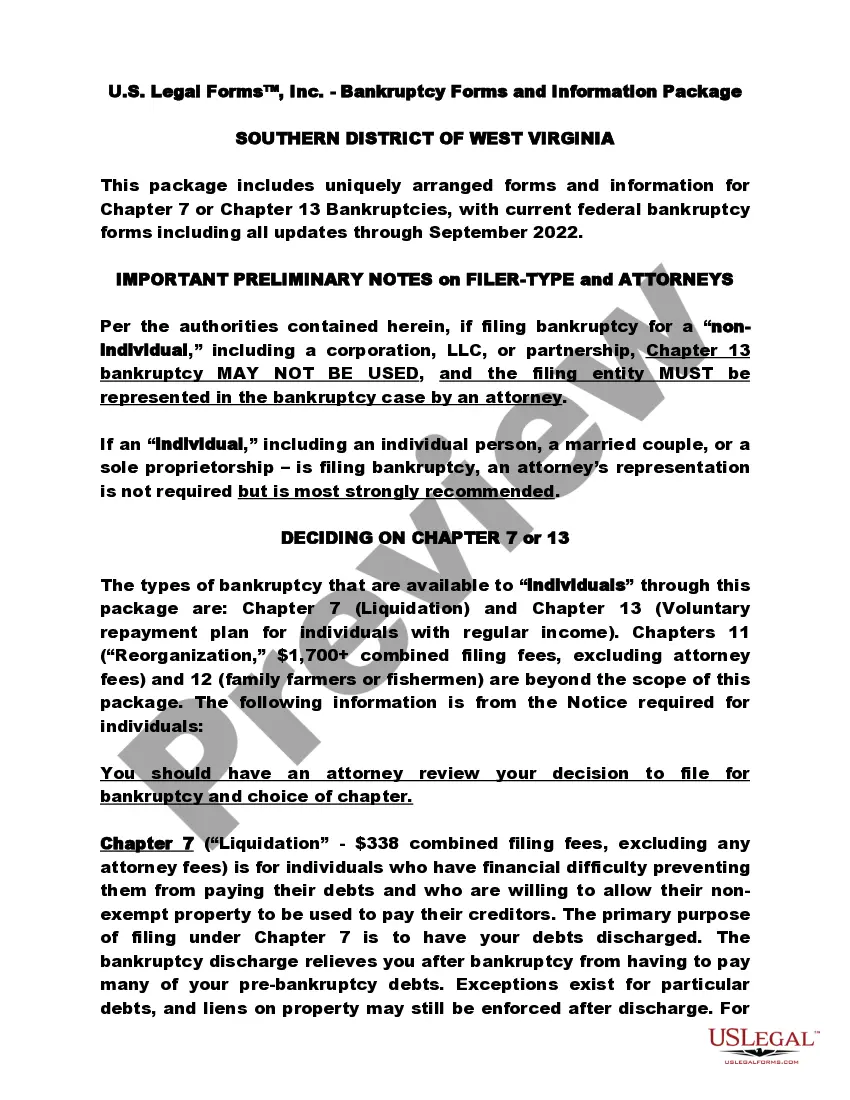
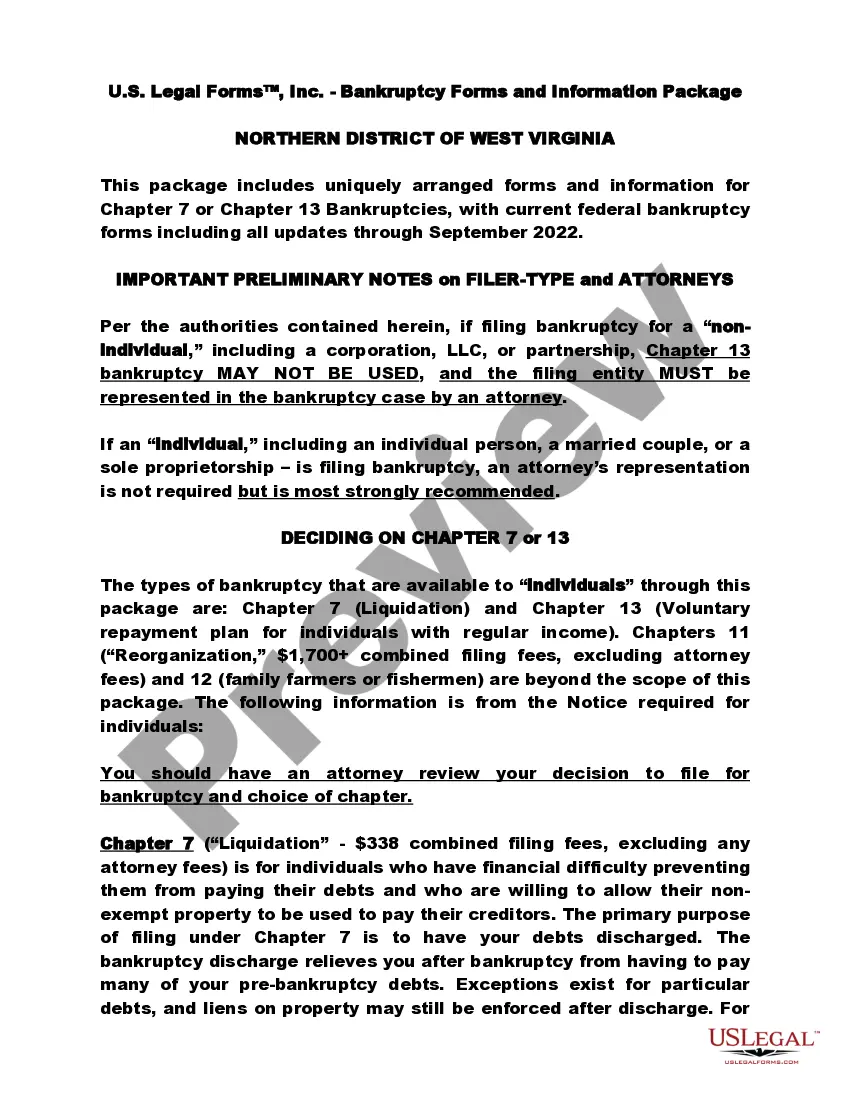
The West Virginia Southern District Bankruptcy Guide and Forms Package for Chapters 7 or 13 offers essential legal documents and instructions for individuals filing for bankruptcy. This package includes specific forms and resources tailored for both Chapter 7 (liquidation) and Chapter 13 (repayment plan) bankruptcies, making it distinct from other forms of bankruptcy documentation by providing comprehensive guidance for each option.
Key components of this form
- Instructions for choosing between Chapter 7 and Chapter 13 bankruptcy.
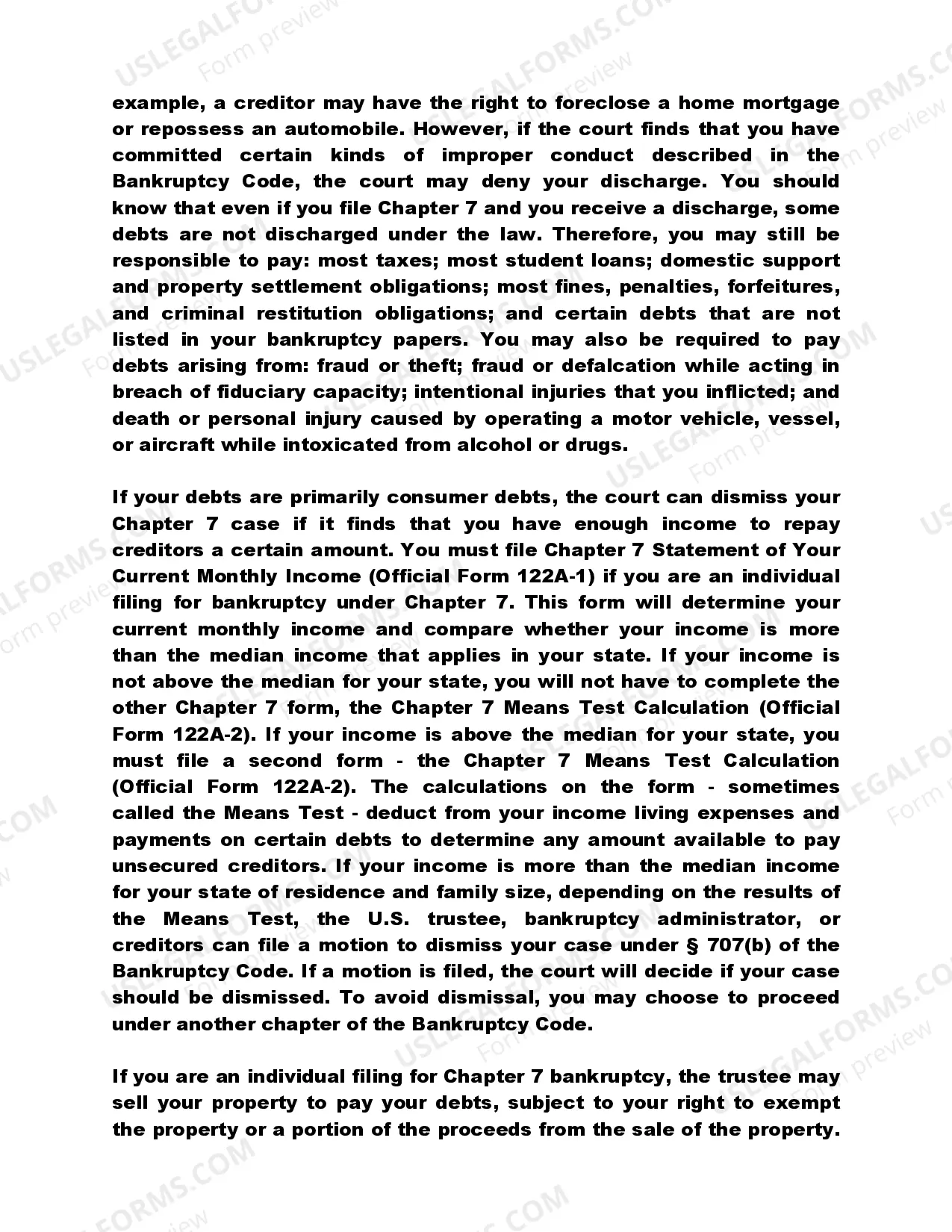
- Official Form 122A-1: Statement of Current Monthly Income for Chapter 7 filers.
- Official Form 122A-2: Chapter 7 Means Test Calculation, if applicable.
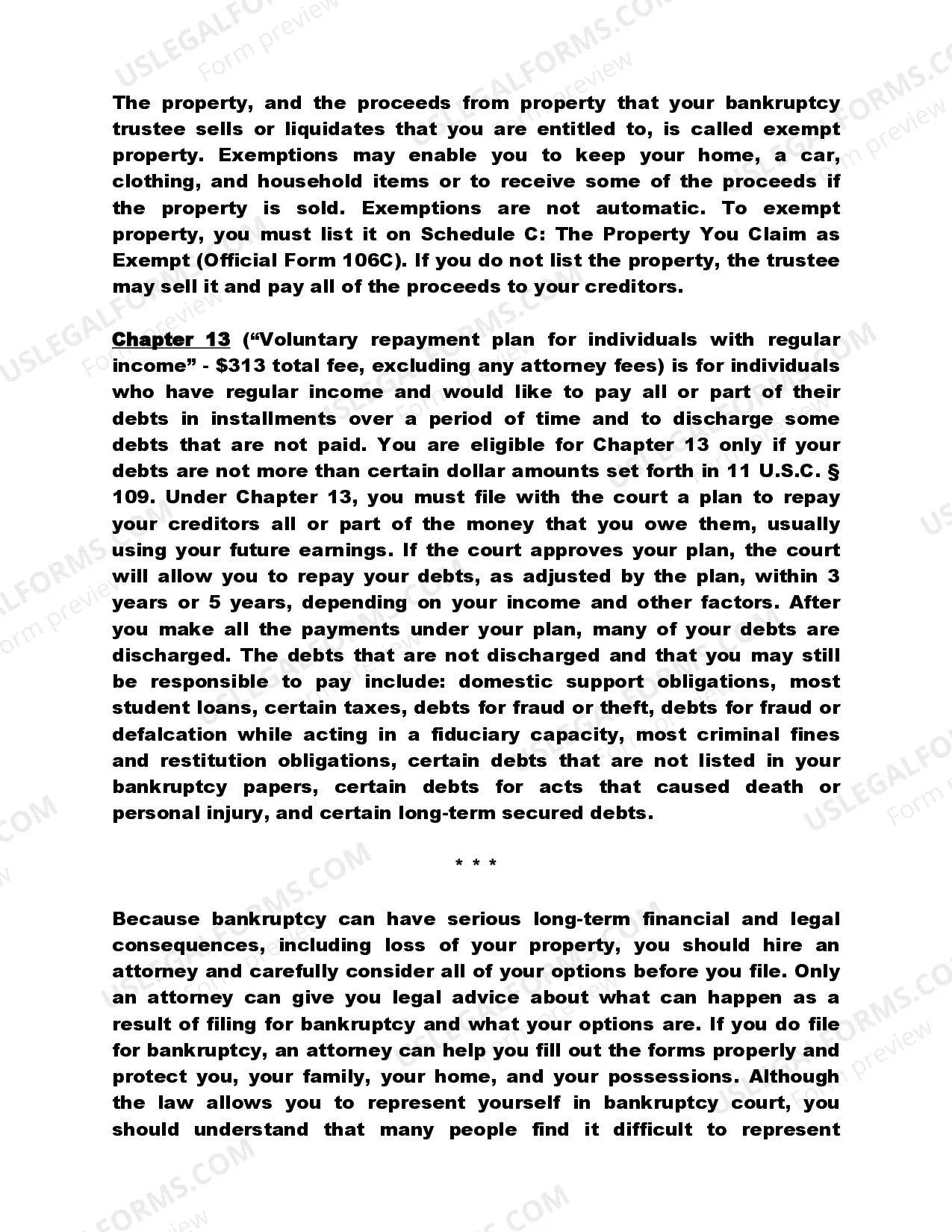
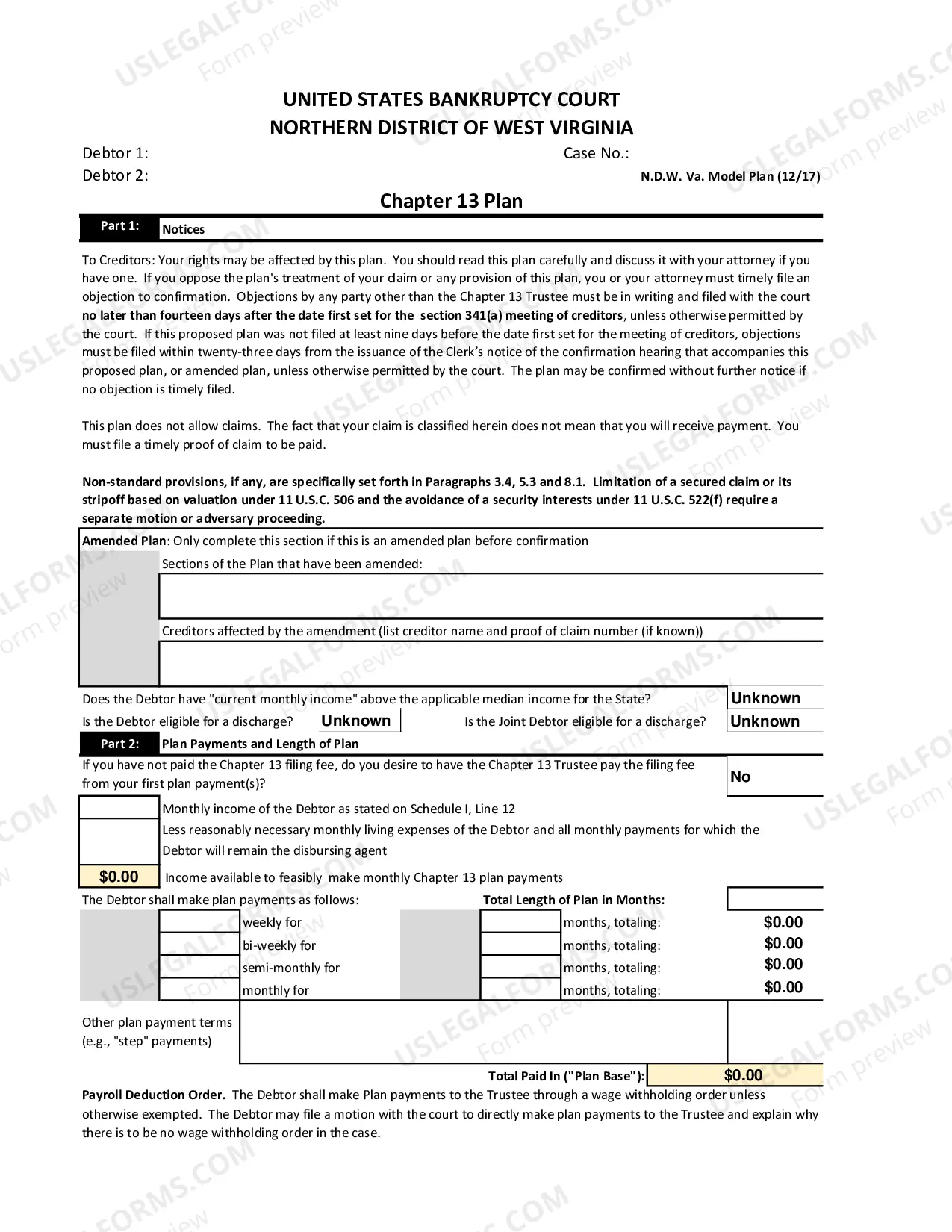
- Chapter 13 repayment plan template for scheduling and estimating payments.
- Schedule C: The Property You Claim as Exempt for protecting certain assets.
- Helpful resources and preliminary notes for understanding the bankruptcy process.
Common use cases
This form package should be utilized when an individual is facing financial difficulties and is considering bankruptcy as a solution. It is particularly relevant for those unsure whether to file for Chapter 7 or Chapter 13 bankruptcy, as it provides detailed insights into both options, their eligibility requirements, and the processes involved.
Who should use this form
This package is designed for:
- Individuals filing for bankruptcy alone or with their spouse.
- Individuals with a regular income considering Chapter 13 for debt repayment.
- Individuals unable to pay their debts and considering Chapter 7 liquidation.
- Debtors seeking legal guidance on bankruptcy filings without mandatory attorney representation.
Completing this form step by step
- Determine your filing type: assess if Chapter 7 or Chapter 13 is appropriate based on your financial situation.
- Gather necessary financial documentation, including income statements and debts.
- Fill out the Official Form 122A-1 to provide your current monthly income details.
- If necessary, complete the Official Form 122A-2 to assess eligibility through the Means Test.
- Prepare the Chapter 13 repayment plan or Schedule C for claiming exemptions, as applicable.
- Review all information with an attorney, if possible, before submitting your forms to the court.
Notarization guidance
This form usually doesn’t need to be notarized. However, local laws or specific transactions may require it. Our online notarization service, powered by Notarize, lets you complete it remotely through a secure video session, available 24/7.
Get your form ready online
Our built-in tools help you complete, sign, share, and store your documents in one place.
Make edits, fill in missing information, and update formatting in US Legal Forms—just like you would in MS Word.
Download a copy, print it, send it by email, or mail it via USPS—whatever works best for your next step.
Sign and collect signatures with our SignNow integration. Send to multiple recipients, set reminders, and more. Go Premium to unlock E-Sign.
If this form requires notarization, complete it online through a secure video call—no need to meet a notary in person or wait for an appointment.
We protect your documents and personal data by following strict security and privacy standards.

Make edits, fill in missing information, and update formatting in US Legal Forms—just like you would in MS Word.

Download a copy, print it, send it by email, or mail it via USPS—whatever works best for your next step.

Sign and collect signatures with our SignNow integration. Send to multiple recipients, set reminders, and more. Go Premium to unlock E-Sign.

If this form requires notarization, complete it online through a secure video call—no need to meet a notary in person or wait for an appointment.

We protect your documents and personal data by following strict security and privacy standards.
Common mistakes
- Failing to consult with an attorney when unsure about bankruptcy options.
- Not accurately reporting income or assets on the bankruptcy forms.
- Omitting debts from the bankruptcy filings, leading to complications.
- Choosing the incorrect chapter based on individual financial circumstances.
Why use this form online
- Convenient access from anywhere at any time for instant download.
- Editable forms that allow you to customize your information easily.
- Reliability as the forms are drafted by licensed attorneys to ensure legal compliance.
- Immediate availability of resources and instructions to guide you through the process.
Summary of main points
- The West Virginia Bankruptcy Guide provides essential resources for filing Chapter 7 or Chapter 13.
- Individual applicants can choose the appropriate chapter based on their unique financial situations.
- It is crucial to accurately fill out forms to avoid common mistakes that could hinder your bankruptcy process.
- The package offers a convenient online solution with editable templates and expert legal guidance.
Looking for another form?

Form popularity
FAQ
What Documents Do You Need to File for Bankruptcy? Tax Returns. Income Documentation. Vehicle Registration, Proof of Value & Insurance. Retirement And Bank Account Statements. Identification. What Information Do You Need to Complete the Bankruptcy Forms? Credit Counseling Requirement.
Identifying Information. The Voluntary Petition for Individuals Filing for Bankruptcy form acts as the cover sheet for your paperwork. Your Property. Your Exempt Property. Your Collateralized Debt. Your Other Debt. Your Contracts and Leases. Your Codebtors. Your Income.
Avoid Transferring Assets Before Filing for Chapter 7 Bankruptcy. Avoid Favoring Creditors Before a Bankruptcy Filing. Avoid Making Credit Card Purchases Before a Chapter 7 Filing. Avoid Depositing Unusual Amounts Before Filing Bankruptcy.
Chapter 7 is the most common type of bankruptcy and is often referred to as a straight bankruptcy. Under Chapter 7, you can eliminate most of your unsecured debts and some secured debts by surrendering your assets. Unsecured debts are debts not secured with collateral, including most personal loans and credit cards.
Analyze your debt. Determine your property exemptions. Make sure you are eligible. Redeem or reaffirm secured debts. Fill out the bankruptcy forms. Take a credit counseling course. File the forms. Pay the filing fee or request a fee waiver.
However, when you file for bankruptcy, you never really have to go to court. The only appearance you are required to make is attending the 341(a) Meeting of Creditors. The 341(a) Hearing is held around 30-35 days after your bankruptcy case is filed.
There is no minimum amount of debt you must have in order to file for bankruptcy relief. While the amount of your debt is an important factor to consider, there are other more important factors to take into account in determining if a bankruptcy filing is in your best interest.
There is not a specific cash exemption available under federal bankruptcy exemptions. However, there is a wildcard exemption you can use to protect up to $1,325 in any property. You can also use up to $12,575 of any unused portion of a homestead exemption to protect cash in a Chapter 7 case.